Bathroom renovation material costs in Sydney typically range from $3,000 for a basic refresh to over $15,000 for premium finishes, with tiles, fixtures, and waterproofing forming the largest portion of your material budget.
With Sydney building costs continuing to rise sharply, understanding exact material allowances helps homeowners avoid blowouts and make confident decisions before committing to any suppliers.
This guide breaks down each material category with realistic Sydney price ranges, hidden cost traps, and practical advice on where to invest for lasting value.
Understanding Bathroom Renovation Material Costs in Sydney
Material costs usually account for 35 to 45 percent of a total bathroom renovation budget in Sydney, with labour and trades making up the balance. For a standard 6 to 8 square metre bathroom, expect material spend between $5,000 and $12,000 for a mid-range fit-out, climbing to $20,000 or more for premium specifications.
Several factors drive your final material spend. Bathroom size sets the baseline for tile and waterproofing volumes, while specification level builder-grade, mid-range, or premium dictates fixture and finish quality. Existing layout matters too: keeping plumbing in place reduces both material waste and labour hours.
Sydney’s market also influences cost. Freight, supplier markups, and warehouse availability vary between metro and outer suburbs, and lead times on imported tiles or custom vanities can push budgets up when substitutions are made under pressure.
A useful early planning rule: budget separately for finishes (tiles, paint, tapware), fixtures (toilet, vanity, shower), and consumables (waterproofing, adhesives, sealants). Treating these as distinct line items prevents the common mistake of underestimating the smaller categories that quietly add thousands.
Material Cost Tiers at a Glance
| Category | Builder-Grade | Mid-Range | Premium |
| Floor and wall tiles (per m²) | $25–$40 | $50–$90 | $120–$300+ |
| Waterproofing membrane (per m²) | $25–$30 | $30–$38 | $38–$45 |
| Toilet suite | $300–$500 | $600–$1,200 | $2,000–$3,500 |
| Vanity (supply only) | $400–$900 | $1,200–$2,500 | $2,800–$6,000 |
| Shower set (rail, head, mixer) | $300–$600 | $600–$1,200 | $1,200–$2,500 |
| Tapware (mixer) | $120–$250 | $250–$600 | $600–$1,500 |
| Plumbing materials (total) | $800–$1,200 | $1,200–$1,800 | $1,800–$2,500 |
| Electrical materials (total) | $600–$900 | $900–$1,400 | $1,400–$1,800 |
Tiling and Waterproofing Material Costs
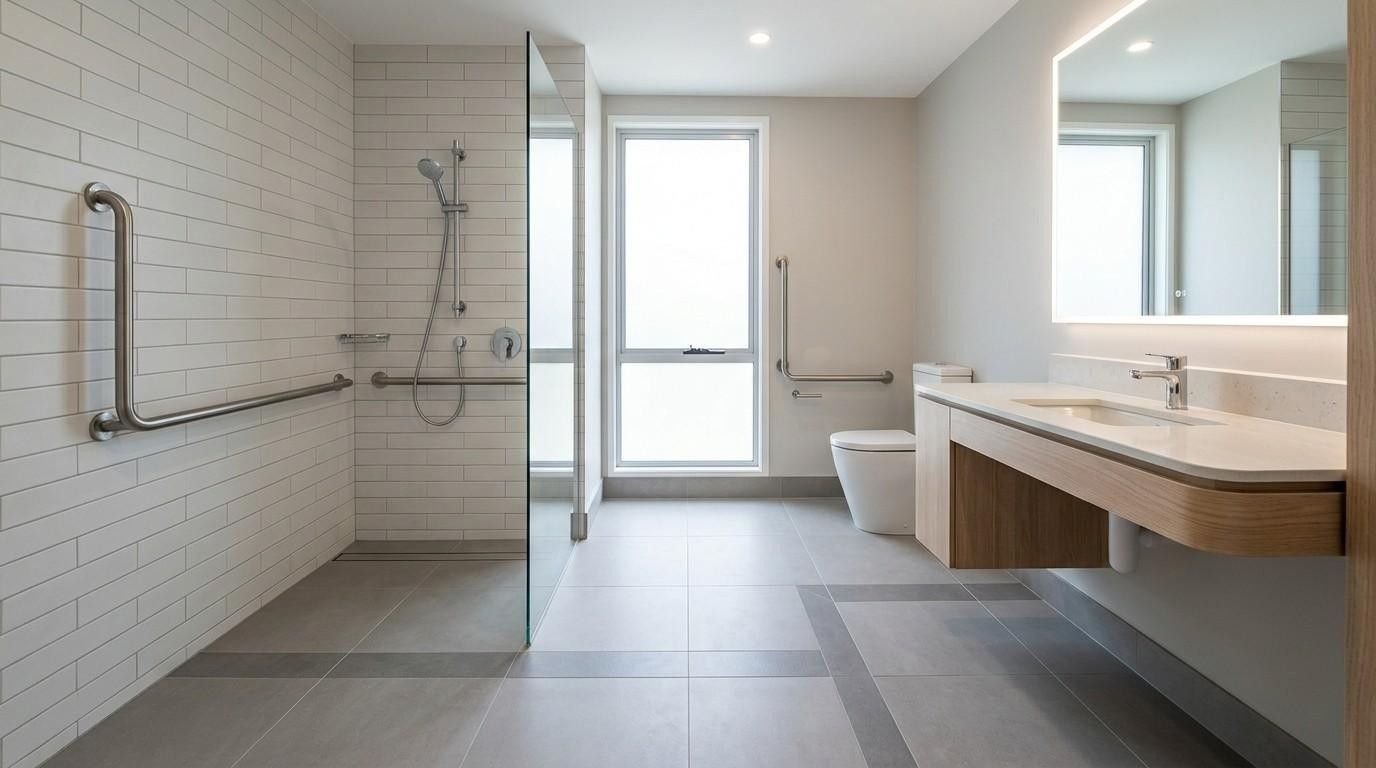
Tiling and waterproofing typically consume the largest single share of your material budget, often 25 to 35 percent of total material spend. For an average Sydney bathroom of 7 square metres including walls and floor, tile coverage usually totals 30 to 40 square metres.
Tile prices vary widely. Builder-grade ceramic wall tiles start around $25 to $40 per square metre. Mid-range porcelain runs $50 to $90 per square metre. Premium options including large-format porcelain, natural stone, or feature tiles range from $120 to $300 per square metre and higher for marble or designer ranges.
Beyond the tiles themselves, allow for tile adhesive, grout, edging trims, and underlay. These consumables add roughly $15 to $25 per square metre to your tiled-area cost and are commonly underestimated.
Waterproofing is a regulated essential, not an optional finish. Membrane materials cost $25 to $45 per square metre of treated area, and Australian Standard AS 3740 requires specific zones to be sealed, including the shower recess floor and walls to a minimum height, the floor waste surrounds, and any bath surround. Cutting corners here is the single most expensive mistake a renovator can make, with rectification often costing tens of thousands.
Bathroom Fixtures and Fittings Cost Breakdown
Fixtures and fittings represent the second-largest material category, and personal preference creates the widest cost variance here of any section in your budget. The gap between builder-grade and premium in this category alone can exceed $8,000 on materials.
Toilets and Cisterns
Basic back-to-wall suites start at $300 to $500. Mid-range wall-faced or rimless designs sit between $600 and $1,200. Premium concealed-cistern wall-hung toilets with framing systems can reach $2,000 to $3,500 including the in-wall cistern hardware.
Basins and Tapware
Vanity basins range from $120 for ceramic drop-ins to $800 or more for stone or feature basins. Mixer taps vary from $120 builder-grade to $600 to $1,500 for premium brassware finishes such as brushed brass, matte black, or PVD-coated options. Quality matters here: cheap cartridges often fail within two to three years.
Showers, Mixers and Screens
A complete shower set including rail, head, and mixer ranges $300 to $2,500. Frameless glass screens cost $700 to $1,800 depending on size and glass thickness. Niches, shelves, and rain-head ceiling outlets each add $200 to $800 in material cost. Allow extra for behind-wall mixers, which require additional rough-in materials.
Vanities, Cabinetry and Storage Material Costs
Vanity selection drives a significant portion of bathroom material spend and varies more than most categories. A flat-pack vanity from a major retailer can be acquired for $400 to $900. Mid-range pre-finished vanities with stone tops sit at $1,200 to $2,500. Custom-built joinery with engineered stone or natural stone tops typically ranges $2,800 to $6,000 depending on size, drawer mechanisms, and finish.
Material choice matters for longevity. Moisture-resistant board, sealed edges, and quality drawer runners separate vanities that last 15 years from those that swell within five. Solid timber and veneer faces add $500 to $1,500 over standard laminate.
Mirror cabinets and shaving cabinets range from $250 builder-grade to $900 for backlit, demister-equipped units. Open shelving, niches, and tall storage towers each add $300 to $1,200 in materials.
For investors and owner-occupiers planning multiple wet areas, joinery efficiencies matter. Consolidating cabinetry orders across bathroom and kitchen upgrades in the same year often unlocks supplier discounts and reduces delivery costs across both projects.
Plumbing and Electrical Material Costs
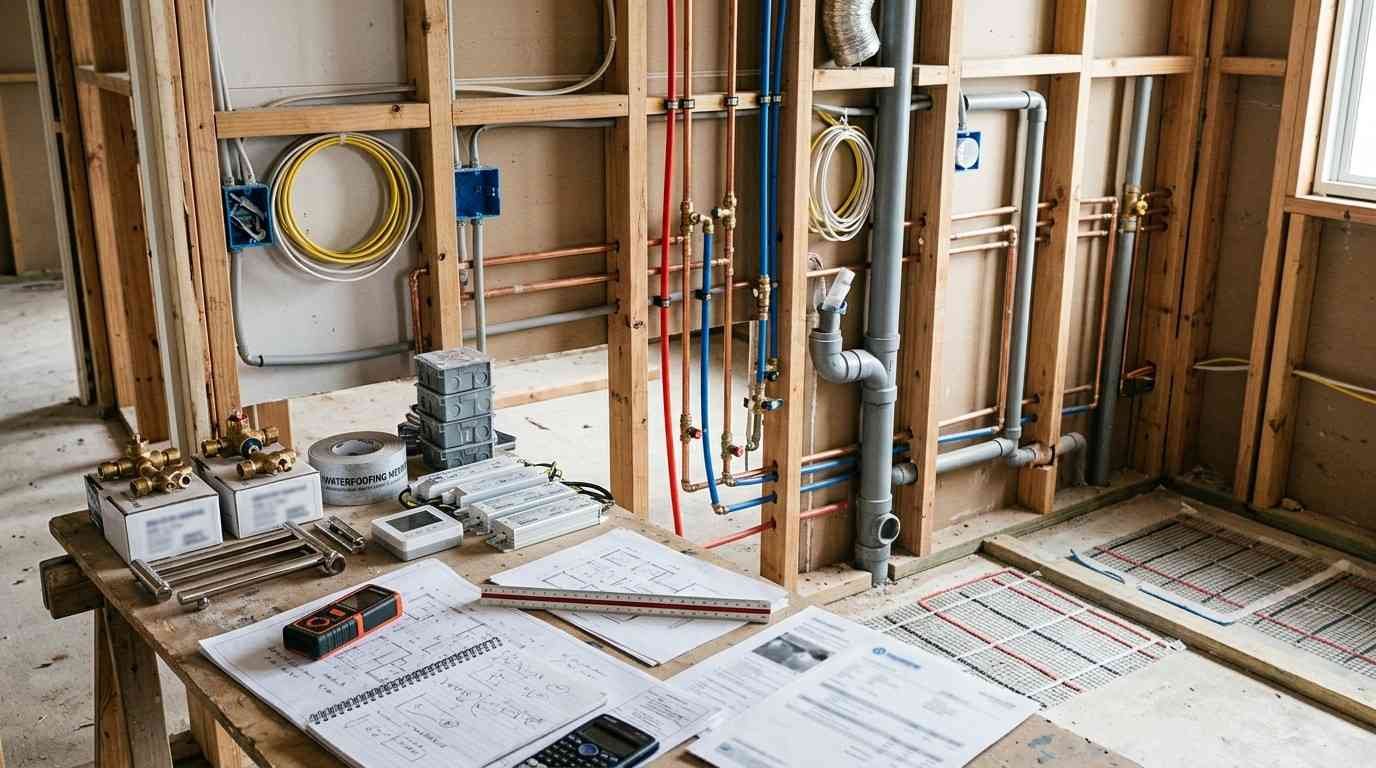
Plumbing and electrical materials sit behind the walls but make up a meaningful 8 to 15 percent of total material spend. These costs increase substantially if you relocate fixtures or upgrade the rough-in.
Plumbing materials include copper or PEX pipework, fittings, isolation valves, drainage, floor wastes, and tempering valves. Allow $800 to $2,500 depending on layout complexity and whether you replace existing risers. Brass push-fit and quality drainage fittings cost more than budget alternatives but reduce leak risk.
Electrical materials cover cabling, GPOs, lighting circuits, exhaust fan ducting, and switching. Budget $600 to $1,800 for materials in a standard refit. LED downlight fittings range $25 to $90 each, with IP-rated zone-compliant fittings required above showers and baths. Exhaust fans with integrated lights and humidity sensors cost $180 to $450.
Heated towel rails, in-slab heating, and smart controls are increasingly popular additions. Hydronic or electric heated rails range $250 to $900. Under-tile heating mats add $120 to $200 per square metre plus thermostat materials.
Hidden Material Costs and Budget Buffers
The most damaging budget surprises come from materials nobody quoted at the start. These hidden costs commonly add 10 to 20 percent to a bathroom renovation budget and catch first-time renovators most often.
Demolition consumables bins, dust protection, plastic, and PPE add $300 to $800. Subfloor repairs after old tile removal frequently reveal rotted timbers, failed waterproofing, or uneven concrete needing self-levelling compound at $45 to $80 per square metre.
Wall lining replacements, water-resistant plasterboard, and cement sheet upgrades cost $30 to $50 per square metre and are almost always required when removing original tiles. Bulkheads, soffits, and ceiling repairs add another $400 to $1,200 in materials.
Delivery charges, supplier minimums, and tile breakage allowances (industry standard is 10 percent over-order) commonly add $500 to $1,500 that quotes rarely include. Lead times on imported tiles or discontinued ranges can also force mid-project substitutions, which almost always cost more than the original allowance.
A buffer of 10 to 15 percent of total material spend is realistic insurance. Older homes and full layout changes warrant the higher end of that range.
How to Reduce Bathroom Material Costs in Sydney
Reducing material spend without compromising quality comes down to timing, sourcing, and sequencing decisions made before work begins.
Order tiles and fixtures before demolition starts. Locking in selections early eliminates the substitution premium that hits budgets when trades are already on site waiting.
Buy from local suppliers where possible for standard lines. Imported tiles carry freight surcharges and breakage risk that erode the per-square-metre saving, and local stock is easier to match if you need replacements mid-project.
Keep the existing plumbing layout wherever the floor plan allows. Relocating a toilet or shower adds $800 to $2,000 in rough-in materials alone, before any labour cost. Staying in the same footprint is the single highest-leverage cost decision in the whole project.
Consolidate orders across trades. Combining tile, adhesive, grout, and waterproofing into a single supplier order often unlocks trade pricing and reduces delivery fees across the whole material budget.
Prioritising Material Spend for Long-Term Value
Smart material allocation focuses spend on items that deliver lasting performance, daily comfort, and resale strength. Not every category deserves equal investment, and knowing where to concentrate the budget separates renovations that hold up from those that need revisiting within a decade.
Waterproofing always comes first. It is invisible, unglamorous, and the single most important spend in any bathroom. Never compromise on membrane quality or installer experience, because rectification costs dwarf the original saving.
Tiles and tapware deserve the next priority. Tiles dominate visual impact and replacement cost is enormous, so choosing well once is cheaper than re-tiling in ten years. Quality tapware with ceramic-disc cartridges and PVD finishes lasts decades, while cheap chrome rarely makes it past five years.
Vanities, mirrors, and accessories sit in the middle priority band. These are replaceable in 10 to 15 years without major structural works, so mid-range selections often deliver better value than premium upgrades. For property investors, focus on durability and neutral finishes rather than designer statements. For owner-occupiers, allocate emotional-value spend to items used daily showers, basins, and lighting rather than feature walls that date quickly. Sequencing trades and consolidating material orders across multiple projects in the same year is the most reliable way to protect your overall renovation budget.
Conclusion
A clear material cost breakdown is the foundation of a confident, on-budget bathroom renovation, separating realistic decisions from costly assumptions across tiles, fixtures, joinery, and hidden allowances.
Sydney homeowners who plan material spend by category and protect it with a sensible buffer consistently finish on time, on budget, and with finishes built to last.
At Sydney Home Renovation, we help you cost every material category with transparent pricing and trusted suppliers, so your bathroom renovation delivers long-term value without surprises.
Frequently Asked Questions
How much should I budget for bathroom materials in Sydney?
Allow $5,000 to $12,000 for a mid-range bathroom material fit-out and $15,000 to $25,000 for premium finishes. Material spend typically equals 35 to 45 percent of your total renovation cost.
What is the typical material vs labour cost split in a bathroom renovation?
Materials usually represent 35 to 45 percent of the total budget, with labour and trades covering the remaining 55 to 65 percent. Complex layouts and premium finishes shift the ratio slightly toward materials.
Are imported tiles cheaper than locally supplied ones in Sydney?
Imported tiles are often cheaper per square metre but lead times, freight surcharges, and breakage risk can erase the saving. Local suppliers usually offer faster replacements when issues arise mid-project.
How much should I allow for waterproofing materials?
Budget $25 to $45 per square metre of treated area for membrane materials alone, with most Sydney bathrooms needing 10 to 20 square metres of waterproofing depending on layout and shower configuration.
What hidden material costs catch homeowners out most often?
Subfloor repairs, wall lining replacement, tile breakage allowances, delivery charges, and mid-project selection changes are the most common hidden material costs, typically adding 10 to 20 percent to the original budget.
Should I spend more on tapware or tiles?
Both deserve quality investment. Tiles dominate visual impact and are expensive to replace, while quality tapware with ceramic-disc cartridges lasts 15 to 25 years versus 3 to 5 years for budget alternatives.
How much contingency should I add to my material budget?
A 10 to 15 percent contingency on top of your total material budget is realistic for Sydney bathroom renovations. Older homes and full layout changes warrant the higher end of that range.