The kitchens we’re renovating for Sydney homeowners this year look nothing like those built a decade ago. Functional minimalism, warm earthy tones, integrated appliances, and sustainable materials have replaced the cold, high-gloss aesthetic that dominated the 2010s. As we move toward 2026, these same principles are only deepening, so this guide reflects both where 2026 design has landed and where it’s heading next.
Whether you’re planning a full kitchen renovation or a targeted refresh, understanding what’s trending now helps you make smarter design decisions and invest in finishes that hold long-term value. Kitchen design is being shaped by how Australians actually live: cooking more at home, entertaining in open spaces, and demanding kitchens that work as hard as they look good.
This guide covers every major kitchen design trend for 2026, from layouts and cabinetry to benchtops, colours, lighting, appliances, and sustainability, plus realistic renovation costs for Sydney homeowners.
What Are the Biggest Kitchen Design Trends for 2026?
The defining theme across 2026 kitchen design is intentionality. Every element, from cabinet hardware to benchtop profile, is chosen with purpose. Kitchens are no longer just functional rooms. They’re the architectural centrepiece of the home, expected to balance beauty, practicality, and longevity in equal measure.
Three macro shifts are driving the biggest changes in kitchen design this year: a move toward restrained, clutter-free aesthetics, a departure from the cool grey and white palettes that defined the previous decade, and a demand for seamless integration between appliances, cabinetry, and surfaces.
The Shift Toward Functional Minimalism
Functional minimalism is the dominant design philosophy shaping kitchens in 2026. This isn’t minimalism for its own sake. It’s a deliberate reduction of visual noise so the kitchen feels calm, considered, and easy to maintain.
In practical terms, this means concealed storage over open shelving, integrated appliances that disappear behind cabinetry panels, handleless drawer and door systems, and benchtops kept clear of unnecessary items. The result is a kitchen that photographs beautifully but, more importantly, functions without friction day to day.
We see functional minimalism as a sound investment for Sydney homeowners renovating this year. Kitchens designed around clean lines and quality materials age well, avoiding the dated look that trend-heavy designs often develop within five to seven years.
Warm Neutrals and Earthy Tones Replace Cool Greys
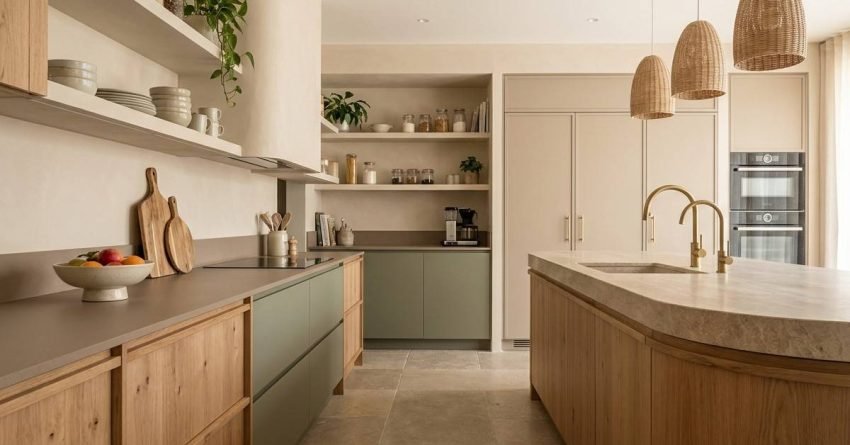
The cool grey kitchen, once the default choice for renovators across Sydney, has been decisively replaced by warm neutrals and earthy tones. Designers and homeowners are gravitating toward shades that feel grounded and organic: warm whites, soft linens, sandy beiges, terracotta accents, and muted greens.
This shift reflects a broader interior design movement toward biophilic principles, bringing the warmth and texture of the natural world into the home. Warm tones pair naturally with timber elements, stone benchtops, and woven textures, creating kitchens that feel layered and lived-in rather than sterile.
For property investors and renovators targeting resale appeal, warm neutrals offer a significant advantage. They photograph well, appeal to a broad buyer demographic, and complement the natural light conditions common in Sydney homes.
Integrated Appliances and Seamless Cabinetry
Integrated appliances, including refrigerators, dishwashers, ovens, and rangehoods concealed behind matching cabinetry panels, are no longer a luxury reserved for high-end renovations. Seamless integration has become a mainstream expectation across mid-range and premium kitchen projects in Sydney.
The appeal is straightforward. Integrated appliances eliminate visual interruptions, allowing the cabinetry design to read as a continuous, cohesive surface. Combined with handleless door systems and flush-mounted hardware, the result is a kitchen that feels architecturally resolved rather than assembled from separate components.
We always advise that appliance selection needs to happen early in the design process, before cabinetry is specified, to ensure accurate sizing and panel compatibility.
Kitchen Layout Trends Shaping Sydney Homes in 2026
Layout is the foundation of every successful kitchen renovation. No amount of premium finishes will compensate for a layout that disrupts workflow, limits storage, or fails to connect the kitchen to the way a household actually lives. Sydney homeowners are rethinking kitchen layouts with a sharper focus on how the space integrates with the rest of the home.
Open-Plan Kitchens Evolving Into Zoned Living Spaces
The fully open-plan kitchen, where cooking, dining, and living zones blur into one undifferentiated space, is being refined rather than abandoned in 2026. The new approach introduces subtle zoning: defined areas for cooking, preparation, dining, and relaxation that feel connected but distinct.
This evolution is driven by practical experience. Fully open kitchens can feel chaotic during cooking, allow cooking odours and noise to permeate living areas, and create visual clutter when the kitchen isn’t tidy. Zoned layouts address these issues without sacrificing the sense of openness that makes open-plan living so appealing.
In Sydney homes, zoning is typically achieved through changes in ceiling height, strategic placement of kitchen islands, material transitions between flooring zones, and carefully positioned lighting that defines each area without physical barriers.
The Rise of the Kitchen Island as a Multi-Use Hub
The kitchen island has become the most requested single element in Sydney kitchen renovations, and its role has expanded well beyond food preparation. Islands are now designed as multi-use hubs, combining prep space, casual dining, storage, appliance integration, and social connection in a single structure.
Waterfall-edge benchtops, integrated wine fridges, built-in power outlets, and seating overhangs are standard island features in 2026 renovations. Some homeowners are incorporating secondary sinks or induction cooktops into island designs, creating a genuine second workstation that supports entertaining and family cooking simultaneously.
For Sydney homes with sufficient floor area, we consistently see a well-designed island rank among the highest-value additions in a kitchen renovation, improving both daily functionality and resale appeal.
Galley and Single-Wall Kitchens Making a Comeback
While islands dominate larger kitchen renovations, galley and single-wall layouts are experiencing a genuine resurgence, particularly in Sydney apartments, terrace houses, and compact urban homes where floor space is limited.
The renewed interest in galley kitchens reflects a growing appreciation for efficiency. A well-designed galley kitchen concentrates the work triangle (sink, cooktop, and refrigerator) into a tight, logical sequence that minimises unnecessary movement. When executed with quality cabinetry and considered finishes, a galley kitchen feels sophisticated and intentional rather than a compromise.
Single-wall kitchens are similarly gaining traction in open-plan apartments where the kitchen occupies one wall of a combined living and dining space. The key to making single-wall layouts work is maximising vertical storage through floor-to-ceiling cabinetry and integrating appliances to maintain a clean, uninterrupted visual line.
Kitchen Cabinet and Storage Trends for 2026
Cabinetry accounts for the largest single cost component in most kitchen renovations, and it has the greatest influence on the overall aesthetic. Cabinet design this year is being driven by three converging priorities: visual simplicity, maximum storage efficiency, and material quality that justifies long-term investment.
Handleless Cabinetry and Push-to-Open Mechanisms
Handleless cabinetry has moved from a premium design choice to a mainstream expectation in 2026 kitchen renovations. The absence of visible handles creates a cleaner, more continuous surface across the kitchen, reinforcing the functional minimalism aesthetic that defines this year’s design direction.
Two primary mechanisms deliver the handleless look: integrated J-pull profiles, where the top or bottom edge of the door is recessed to create a finger grip, and push-to-open or touch-latch systems, where a gentle press releases the door or drawer. Both approaches are practical and durable when specified with quality hardware.
We consider handleless cabinetry a sound long-term choice for Sydney renovators. It avoids the dated appearance that decorative hardware can develop as trends shift, and it’s easier to clean, which is a practical advantage in a high-use kitchen environment.
Floor-to-Ceiling Storage Solutions
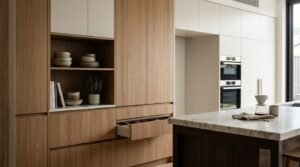
Floor-to-ceiling cabinetry is one of the most impactful storage upgrades available in a kitchen renovation, and its popularity has grown significantly. By extending cabinetry from floor to ceiling, renovators eliminate the dust-collecting gap above upper cabinets, maximise vertical storage capacity, and create a more architecturally resolved kitchen aesthetic.
In Sydney homes where kitchen footprints are often constrained by terrace house or apartment layouts, floor-to-ceiling storage can meaningfully increase functional storage without expanding the kitchen’s physical footprint. Tall pantry cabinets, integrated appliance towers, and full-height refrigerator surrounds are the most common applications.
Floor-to-ceiling cabinetry requires careful planning around ceiling heights, cornice profiles, and lighting placement to avoid a heavy or oppressive visual effect. Mixing open and closed storage within the full-height run, incorporating a section of open shelving or a display niche, helps maintain visual balance.
Mixed Material Cabinetry: Timber, Lacquer, and Stone Combinations
Single-material cabinetry, where an entire kitchen sits in one colour or finish, is giving way to mixed material approaches. The most popular combinations pair a warm timber veneer with a painted lacquer finish, or contrast a natural stone benchtop with a matte lacquer cabinet door in a complementary tone.
This approach adds visual depth and tactile interest to the kitchen without introducing complexity or visual noise. The key is restraint: limiting the palette to two or three materials and ensuring they share a consistent tonal relationship, warm with warm, cool with cool.
In Sydney kitchens, the most requested mixed material combination this year is a warm oak or blackbutt timber lower cabinet paired with a warm white or soft linen upper cabinet, finished with a natural stone or engineered stone benchtop in a complementary vein pattern.
Butler’s Pantries and Scullery Trends for 2026
The butler’s pantry, once reserved for large executive homes, has become one of the most requested additions in Sydney kitchen renovations where floor plans allow for it. We’re seeing homeowners use this secondary space to house small appliances, bulk pantry storage, and prep zones, keeping the main kitchen visually clear and camera-ready.
A well-designed scullery typically includes a secondary sink, additional bench space, and open shelving or tall pantry units, all concealed behind a door or around a corner from the main kitchen. This lets the primary kitchen stay minimal while the scullery absorbs the mess of daily cooking and food storage.
For Sydney homes with the spatial flexibility, a butler’s pantry adds genuine day-to-day function and can be a meaningful drawcard for buyers who entertain frequently or run a busy household.
Kitchen Benchtop and Surface Trends in 2026
The benchtop is the hardest-working surface in the kitchen and one of the most visible. Benchtop selection this year is being driven by a combination of aesthetic preference, practical durability, and the desire for surfaces that feel genuinely premium rather than merely decorative.
Engineered Stone vs. Natural Stone Benchtops
The engineered stone versus natural stone debate has shifted meaningfully, driven in part by regulatory changes affecting engineered stone products in Australia. Following the Safe Work Australia ban on engineered stone containing crystalline silica above one percent, effective July 2024, the market has seen renewed interest in natural stone alternatives, particularly marble, granite, and quartzite, alongside compliant engineered stone products reformulated to meet the new standards.
Natural stone benchtops offer genuinely unique veining and character that no engineered product can replicate. Marble remains the prestige choice for premium Sydney kitchens, though its susceptibility to etching and staining requires a maintenance commitment that not all homeowners are prepared for. Quartzite, a natural stone often confused with quartzite-branded engineered products, offers comparable aesthetics with greater hardness and stain resistance.
Compliant engineered stone products continue to dominate mid-range kitchen renovations in Sydney due to their consistency, durability, and competitive pricing. For renovators prioritising practicality and budget efficiency, a quality engineered stone benchtop in a natural stone-inspired pattern remains an excellent choice.
Waterfall Edges and Thick-Profile Benchtops
The waterfall edge, where the benchtop material continues vertically down the side of the island or cabinet run to the floor, remains one of the most requested benchtop details in 2026 Sydney kitchen renovations. It creates a sculptural, furniture-like quality that elevates the island from a functional element to a design statement.
Thick-profile benchtops, typically 40mm to 60mm in stone or engineered stone, are similarly popular, lending a sense of solidity and craftsmanship that thinner profiles can’t achieve. The visual weight of a thick benchtop anchors the kitchen and communicates quality, making it a particularly effective choice for islands and peninsulas that serve as the kitchen’s focal point.
Both details add cost to a renovation budget, but they deliver disproportionate visual impact relative to their price premium, making them a worthwhile investment for homeowners focused on long-term property value.
Textured and Fluted Surfaces as Design Features
Texture has emerged as one of the defining surface trends in 2026 kitchen design. Fluted timber panels on island bases, ribbed glass cabinet inserts, honed stone benchtops, and textured tile splashbacks are all being used to introduce tactile interest and visual depth into kitchens that might otherwise feel flat or one-dimensional.
Fluting, a series of parallel vertical grooves, is particularly popular on island bases and butler’s pantry cabinetry, where it adds an artisanal, handcrafted quality that contrasts effectively with the clean lines of handleless upper cabinetry. Honed or leathered stone finishes on benchtops offer a matte, tactile alternative to the polished surfaces that dominated previous years.
For Sydney renovators, textured surfaces represent a relatively low-cost way to add design sophistication. A fluted timber panel on an island base can be achieved within a modest budget while delivering a result that reads as considered and premium.
Sink and Tapware Trends for 2026
Sinks and tapware have become genuine design statements rather than purely functional afterthoughts in 2026 Sydney kitchens. Undermount stone-colour composite sinks and integrated stone sinks that match the benchtop material are increasingly popular, reinforcing the seamless, uninterrupted aesthetic that defines this year’s design direction.
Matte black, brushed brass, and brushed nickel tapware finishes are the most requested options, often chosen to coordinate with pendant lighting and cabinet hardware for a cohesive material story across the kitchen. Pull-down mixer taps with integrated filtration or boiling water functions are also gaining traction, adding genuine day-to-day convenience alongside their design contribution.
For renovators working with a considered material palette, matching tapware finish to hardware and lighting is one of the simplest ways to make a kitchen feel intentionally designed rather than assembled piece by piece.
Kitchen Colour Trends for 2026 in Sydney
Colour is the most immediately visible design decision in a kitchen renovation, and the palette choices Sydney homeowners are making this year represent a clear departure from the cool, monochromatic schemes of the previous decade.
Warm White and Off-White Kitchens
Warm white remains the single most popular kitchen colour choice in Sydney, but the specific tone has shifted. The bright, blue-toned whites that characterised kitchens of the 2010s have been replaced by softer, creamier whites with yellow or pink undertones, shades that feel warmer, more organic, and more compatible with the natural materials and earthy accents that define 2026 kitchen design.
Popular warm white tones in Sydney kitchens include Dulux Antique White USA, Taubmans Vivid White with a warm base, and custom lacquer finishes in linen and parchment tones. These shades work across a wide range of kitchen sizes and orientations, making them a reliable choice for renovators seeking broad appeal.
For property investors renovating for resale or rental, a warm white kitchen is the safest and most commercially effective colour choice available. It appeals to the widest buyer and tenant demographic, photographs well in real estate marketing, and provides a neutral backdrop that allows prospective buyers to project their own style onto the space.
Deep Greens, Sage, and Olive Tones
Green has established itself as the defining accent colour in 2026 kitchen design, appearing across a wide tonal range from deep forest and hunter greens to softer sage and muted olive shades. The appeal of green in the kitchen is its connection to nature. It introduces an organic, grounded quality that complements the warm neutrals, timber elements, and stone surfaces that characterise contemporary kitchen design.
Deep green cabinetry, particularly on lower cabinets or islands paired with warm white uppers, creates a sophisticated, layered palette that feels both current and enduring. Sage and olive tones offer a softer interpretation of the same principle, working well in kitchens with abundant natural light where a deeper tone might feel heavy.
For Sydney homeowners, green kitchen cabinetry represents a considered design choice rather than a passing trend. The tonal range within the green family is broad enough to accommodate different light conditions, home styles, and personal preferences, and the connection to natural materials ensures it stays relevant well beyond this year.
Two-Tone Kitchen Colour Schemes
Two-tone kitchens, where upper and lower cabinetry are finished in different but complementary colours, are one of the most popular design approaches in 2026 Sydney kitchen renovations. The combination creates visual interest and depth without the complexity of a multi-material palette, and it allows homeowners to introduce a bolder colour choice on lower cabinets while maintaining a lighter, more neutral upper cabinet that keeps the kitchen feeling open.
The most effective two-tone combinations pair a warm white or soft linen upper cabinet with a deeper tone below: forest green, navy, charcoal, or warm terracotta. The benchtop and splashback materials then serve as the connective tissue between the two tones, drawing the palette together into a cohesive whole.
For renovators uncertain about committing to a bold colour throughout the entire kitchen, a two-tone approach offers a practical middle ground, allowing design personality to be expressed through the lower cabinetry while the upper cabinets maintain the broad appeal of a neutral tone.
Kitchen Splashback and Tile Trends for 2026
The splashback is one of the most design-expressive elements in the kitchen, and it’s being used with increasing confidence as a feature surface rather than a purely functional one this year. The trend is toward tiles and materials that introduce texture, character, and handcrafted quality into the kitchen.
Subway Tiles Evolving: Arched, Bevelled, and Handmade Variations
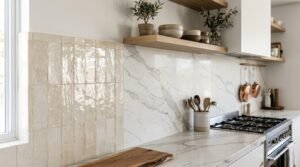
The classic rectangular subway tile hasn’t disappeared from Sydney kitchens, but it has evolved significantly. Standard flat subway tiles in white or off-white are being replaced by more characterful variations: arched or scalloped profiles, bevelled edges that catch light differently across the day, and handmade tiles with slight surface irregularities that introduce an artisanal quality.
These evolved subway tile formats retain the practical advantages of the original (easy to clean, widely available, and compatible with a range of kitchen styles) while delivering a more considered, design-forward result. Laid in a vertical stack bond rather than the traditional horizontal brick pattern, they read as distinctly contemporary.
For Sydney renovators working within a moderate splashback budget, an evolved subway tile in a warm off-white or soft grey tone, laid in a vertical stack bond, represents an excellent balance of design currency and long-term appeal.
Large-Format Tiles and Slab Splashbacks
Large-format tiles, typically 600mm x 1200mm or larger, and full slab splashbacks in stone or engineered stone are the premium splashback choice in 2026 Sydney kitchen renovations. The appeal is the reduction of grout lines, which creates a cleaner, more continuous surface that’s easier to maintain and more visually impactful.
Stone slab splashbacks, where the benchtop material continues up the wall to the underside of the upper cabinets, create a particularly cohesive and luxurious result, especially when the stone features dramatic veining that reads as a continuous composition across the horizontal and vertical surfaces.
Large-format tiles and stone slabs require precise substrate preparation and skilled installation to achieve a flat, level result. The cost premium over standard tile formats is real, but the visual and maintenance benefits justify the investment in kitchens where the splashback is a prominent design feature.
Textured and Zellige-Style Tiles for Character
Zellige tiles, handmade Moroccan terracotta tiles with a distinctive irregular glaze that creates a mosaic of colour variation and light reflection, have become one of the most sought-after splashback materials in 2026 Sydney kitchen renovations. Their appeal lies in their imperfection: each tile is unique, and the cumulative effect of a full splashback installation is a surface that feels genuinely handcrafted and alive.
Australian-made interpretations of the zellige aesthetic, using similar handmade production techniques with locally relevant colour palettes, are increasingly available through Sydney tile suppliers, offering the visual appeal of zellige at a more accessible price point and with shorter lead times than imported Moroccan originals.
For homeowners seeking a splashback that functions as a genuine design statement, zellige-style tiles in warm terracotta, sage green, or soft white tones are among the most effective choices available this year.
Kitchen Flooring Trends for 2026
Kitchen flooring choices in 2026 Sydney renovations are trending toward warm, natural-look materials that carry the biophilic palette down to the floor plane. Wide-plank engineered timber in warm oak and blackbutt tones is the most popular flooring choice, valued for its durability and visual continuity with adjoining living areas in open-plan homes.
Large-format porcelain tiles that mimic natural stone or timber are also popular in kitchens with underfloor heating or higher moisture exposure, offering the warmth of natural materials with greater practical resilience. We generally recommend continuing the same flooring material from the kitchen into adjoining living and dining zones, which reinforces the zoned-but-connected layout approach that defines 2026 open-plan design.
For Sydney renovators on a tighter budget, a durable engineered timber or timber-look tile in a warm tone delivers strong visual impact without the cost premium of natural hardwood.
Kitchen Lighting Trends for 2026
Lighting is the most underinvested element in most kitchen renovations, and it’s also one of the most transformative. Kitchen lighting design has moved well beyond the single downlight grid that characterised renovations of the previous decade, toward layered, considered schemes that serve both functional and atmospheric purposes.
Layered Lighting: Task, Ambient, and Accent Combinations
Layered lighting, combining task lighting, ambient lighting, and accent lighting within a single kitchen, is the defining lighting approach in2026. Each layer serves a distinct purpose: task lighting illuminates work surfaces for safe and efficient food preparation, ambient lighting provides general illumination for the overall space, and accent lighting highlights architectural features, open shelving, or display elements.
Layered lighting requires planning at the design stage, before walls are closed and electrical rough-in is completed. Retrofitting additional lighting circuits after a renovation is complete is expensive and disruptive, so we always encourage early planning.
A well-executed layered lighting scheme also allows the kitchen to transition between functional daytime use and a warmer, more atmospheric evening setting, a quality that significantly enhances the daily experience of the space.
Statement Pendant Lights Over Kitchen Islands
Statement pendant lights positioned over the kitchen island are one of the most visually impactful lighting choices available this year, and their popularity in Sydney kitchen renovations continues to grow. A well-chosen pendant, or a series of pendants at consistent heights, anchors the island visually, defines the dining or social zone, and introduces a decorative element that expresses the homeowner’s design personality.
The most popular pendant styles in 2026 Sydney kitchens include rattan and woven natural fibre pendants that complement the earthy, biophilic aesthetic, sculptural glass pendants in amber, smoked, or clear finishes, and industrial-inspired metal pendants in matte black or brushed brass that provide a grounding contrast to lighter cabinetry tones.
The practical rule for pendant placement over kitchen islands is to position the bottom of the pendant approximately 700mm to 800mm above the benchtop surface, with pendant diameter scaled to the island length, typically one large pendant or two to three smaller pendants for a standard 1800mm to 2400mm island.
Under-Cabinet LED Lighting for Function and Atmosphere
Under-cabinet LED strip lighting has become a standard specification in 2026 kitchen renovations, valued for both its functional contribution to task lighting and its atmospheric effect during evening use. Positioned beneath upper cabinets to illuminate the benchtop and splashback below, LED strip lighting eliminates the shadows cast by overhead downlights and creates a warm, continuous glow that enhances the visual quality of the splashback material.
The preference this year is for warm white LED strips, typically 2700K to 3000K colour temperature, that complement the warm neutral palette of contemporary kitchen design. Dimmable LED systems allow the intensity to be adjusted between full task lighting during food preparation and a softer ambient level during dining and entertaining.
For Sydney renovators, under-cabinet LED lighting represents one of the highest-value lighting investments available: relatively low in cost, straightforward to install during a renovation, and delivering a daily functional and aesthetic benefit that’s immediately noticeable.
Kitchen Appliance Trends and Technology in 2026
Appliance selection has a direct impact on both the visual outcome and the functional performance of a kitchen renovation. The dominant appliance trends in Sydney kitchens this year reflect the broader design direction: integration, simplicity, and technology that enhances the cooking experience without adding visual complexity.
Integrated and Panel-Ready Appliances
As noted in the cabinetry section, integrated appliances, concealed behind matching cabinet panels, are the defining appliance trend in 2026 kitchen renovations. Integrated refrigerators, dishwashers, and microwave drawers are the most commonly specified integrated appliances in Sydney kitchens, with integrated coffee machines and wine fridges increasingly popular in premium renovations.
Panel-ready appliances, designed to accept a custom cabinet door panel that matches the surrounding cabinetry, offer a more accessible route to the integrated look than fully built-in appliances, and they’re compatible with a wider range of appliance brands and price points. For Sydney renovators working within a mid-range budget, panel-ready dishwashers and refrigerators offer the visual benefit of integration without the cost premium of fully integrated models.
Integrated appliances require precise cabinetry dimensions and adequate ventilation allowances. We always confirm these specifications with the appliance supplier before cabinetry is manufactured, to avoid costly adjustments during installation.
Induction Cooktops and Flush-Mounted Rangehoods
Induction cooktops have become the dominant cooktop choice in new and renovated Sydney kitchens, driven by their energy efficiency, precise temperature control, and the clean, flush aesthetic they create when set into a stone or engineered stone benchtop. The absence of gas burners eliminates the visual and practical complexity of a gas connection, and the flat glass surface is significantly easier to clean than a gas cooktop with cast iron grates.
Flush-mounted or integrated rangehoods, concealed within the overhead cabinetry or recessed into a bulkhead above the cooktop, complement the integrated appliance aesthetic by eliminating the visual prominence of a traditional canopy rangehood. Ceiling-mounted rangehoods in a minimal cylindrical or flat profile are also popular for kitchens where the overhead cabinetry doesn’t extend above the cooktop position.
For Sydney homeowners considering a switch from gas to induction, the transition typically requires an electrical upgrade to accommodate the higher amperage draw of an induction cooktop, a cost we factor into the renovation budget from the outset.
Smart Kitchen Technology and Connected Appliances
Smart kitchen technology, including connected appliances, voice-controlled lighting, and integrated home automation systems, is gaining traction in premium Sydney kitchen renovations, though adoption remains more selective than in some international markets. The most practically useful smart kitchen features are those that integrate seamlessly into daily routines without requiring significant behavioural change: refrigerators with internal cameras that allow remote inventory checking, ovens with app-based temperature monitoring, and lighting systems that can be adjusted by voice or smartphone.
Our practical advice for Sydney renovators considering smart kitchen technology is to invest in infrastructure (conduit pathways, additional power circuits, and robust Wi-Fi coverage in the kitchen zone) rather than committing to specific smart appliances at the renovation stage. Technology evolves rapidly, and the appliances available in two to three years will likely offer better functionality than current models at comparable price points.
Sustainable Kitchen Design Trends for 2026
Sustainability has moved from a niche consideration to a mainstream priority in 2026 kitchen design, driven by a combination of environmental awareness, rising energy costs, and the growing availability of sustainable materials and products at accessible price points. For Sydney homeowners and property investors, sustainable kitchen design also represents a practical financial consideration: energy-efficient appliances and water-saving fixtures reduce ongoing operating costs, while durable, responsibly sourced materials reduce the frequency and cost of future renovation cycles.
Recycled and Reclaimed Materials in Kitchen Renovations
Recycled and reclaimed materials are being incorporated into 2026 Sydney kitchen renovations with increasing sophistication. Reclaimed timber, salvaged from demolished buildings, old wharves, or decommissioned industrial structures, is being used for island benchtops, open shelving, and feature wall panels, introducing genuine history and character that new materials can’t replicate.
Recycled glass tiles, reclaimed brick splashbacks, and benchtops fabricated from recycled glass aggregate are also gaining traction in design-forward Sydney kitchens. These materials carry an inherent narrative, a provenance story that adds meaning and individuality to the renovation, while diverting waste from landfill.
Reclaimed materials require more careful sourcing and preparation than new materials, and their availability can be unpredictable. We recommend working with a renovation contractor experienced in sourcing and working with reclaimed materials to achieve a high-quality result.
Energy-Efficient Appliances and Water-Saving Fixtures
Energy-efficient appliances are a standard specification in 2026 Sydney kitchen renovations, driven by the combination of rising electricity costs and the improved performance of high-efficiency models. Induction cooktops consume significantly less energy than gas equivalents for equivalent cooking output. Dishwashers with high WELS (Water Efficiency Labelling and Standards) ratings use substantially less water per cycle than older models, reducing both water bills and environmental impact.
Refrigerators account for a significant proportion of household electricity consumption due to their continuous operation, making energy star ratings a critical selection criterion. Choosing a refrigerator with a high energy star rating of five stars or above under the Australian Energy Rating system can meaningfully reduce annual electricity costs compared to a lower-rated model of equivalent capacity.
For property investors renovating rental properties in Sydney, specifying energy-efficient appliances is increasingly a competitive advantage in the rental market, where tenants are acutely aware of ongoing utility costs and actively seek properties with lower running expenses.
Locally Sourced Timber and Eco-Friendly Finishes
Locally sourced Australian timber species (blackbutt, spotted gum, tallowwood, and Victorian ash) are among the most popular sustainable material choices in 2026 Sydney kitchen renovations. These species are available from sustainably managed Australian forests certified under the Australian Forestry Standard, offering a responsible alternative to imported timber products with longer supply chains and less transparent sourcing practices.
Eco-friendly cabinet finishes, water-based lacquers and paints with low volatile organic compound content, are now widely available from Australian cabinet manufacturers and represent a straightforward sustainability upgrade with no compromise on finish quality or durability. Low-VOC finishes also improve indoor air quality during and after the renovation, a practical benefit for households with children, elderly residents, or occupants with respiratory sensitivities.
How Much Does a Kitchen Renovation Cost in Sydney in 2026?
Understanding realistic kitchen renovation costs is essential for planning a project that delivers the design outcomes you want within a budget you can manage. Sydney kitchen renovation costs vary significantly based on kitchen size, material selections, appliance specifications, and the extent of structural or services work required.
The table below reflects typical 2026 market pricing for Sydney kitchen renovations across three budget tiers.
| Budget Tier | Price Range | Typical Kitchen Size | What’s Included |
| Budget | $15,000–$30,000 | 8–12 sqm | Flat-pack/semi-custom cabinetry, laminate or entry-level engineered stone benchtop, standard tile splashback, mid-range freestanding appliances, basic lighting |
| Mid-Range | $30,000–$60,000 | 12–20 sqm | Custom/semi-custom cabinetry, engineered or natural stone benchtop, quality tile or stone slab splashback, integrated/panel-ready appliances, pendant + LED lighting |
| Premium | $60,000+ | 20+ sqm | Fully custom cabinetry, natural stone benchtops and splashbacks, fully integrated premium European appliances, architectural lighting, possible structural changes |
Budget Kitchen Renovation: $15,000 to $30,000
A budget kitchen renovation in Sydney, typically covering a small to medium kitchen of 8 to 12 square metres, generally includes new flat-pack or semi-custom cabinetry, a laminate or entry-level engineered stone benchtop, standard tile splashback, mid-range freestanding appliances, and basic lighting upgrades.
At this budget level, structural changes such as moving walls, relocating plumbing, or upgrading electrical services are generally not feasible without compromising the quality of finishes. We recommend working within the existing kitchen footprint, focusing budget on the elements with the greatest visual impact: cabinetry, benchtop, and splashback.
For first-time renovators and property investors renovating for rental return, a well-executed budget kitchen renovation delivers a significant improvement in the kitchen’s functionality and appearance without the financial exposure of a mid-range or premium project.
Mid-Range Kitchen Renovation: $30,000 to $60,000
A mid-range kitchen renovation in Sydney, covering a medium to large kitchen of 12 to 20 square metres, allows for custom or semi-custom cabinetry, engineered stone or natural stone benchtops, a quality tile or stone slab splashback, integrated or panel-ready appliances, and a considered lighting scheme including pendants and under-cabinet LED strips.
At this budget level, minor structural modifications, such as removing a non-load-bearing wall to open the kitchen to an adjacent dining area, or relocating a sink or dishwasher within the existing plumbing zone, are typically achievable without exceeding the budget envelope.
Mid-range kitchen renovations represent the most common project type we see among Sydney owner-occupiers renovating their primary residence. The budget is sufficient to achieve a genuinely high-quality result with premium-feeling finishes, while remaining within reach for most homeowners with access to renovation finance or equity in their property.
Premium Kitchen Renovation: $60,000 and Above
A premium kitchen renovation in Sydney, covering a large kitchen of 20 square metres or more, or a smaller kitchen with exceptional material and appliance specifications, encompasses fully custom cabinetry, natural stone benchtops and splashbacks, fully integrated appliances from premium European brands, architectural lighting design, and potentially structural modifications including wall removal, ceiling alterations, or kitchen relocation.
At this budget level, the renovation is typically designed in collaboration with a kitchen designer or interior designer, with the renovation contractor responsible for construction, coordination of trades, and project management. The result is a kitchen that functions as a genuine architectural feature of the home, with material and finish quality that’s immediately apparent and enduring.
For Sydney homeowners in premium property markets, the Eastern Suburbs, Lower North Shore, and Inner West, a premium kitchen renovation is often a prerequisite for achieving top-of-market sale prices. Well-executed kitchen renovations are consistently cited by real estate agents as among the highest-return pre-sale investments available.
How to Apply 2026 Kitchen Trends to Your Sydney Home Renovation
Understanding kitchen design trends is valuable, but applying them effectively to your specific home, budget, and lifestyle requires a more considered approach. Not every trend suits every kitchen, and the most successful renovations balance design currency with timeless functionality and genuine personal relevance.
Prioritising Trends That Add Long-Term Property Value
The most commercially sound approach to incorporating 2026 kitchen trends into a renovation is prioritising those that add demonstrable long-term property value over those that are purely aesthetic or fashion-driven. Trends with strong value-adding credentials include functional minimalism, which ages well and appeals broadly, integrated appliances, which signal quality and are increasingly expected by buyers, quality benchtop materials, which are immediately visible and tactilely apparent, and energy-efficient appliances, which reduce ongoing costs and appeal to environmentally conscious buyers.
Trends with a higher risk of dating, such as very specific colour choices, highly decorative hardware, or niche material selections with limited mainstream appeal, are better approached as accent elements rather than primary design decisions. A deep green island base can be repainted if tastes change; a deep green benchtop can’t.
For property investors renovating for resale or rental, we always stress the discipline of prioritising value-adding trends over purely personal preferences. The kitchen renovation that maximises return on investment isn’t necessarily the most design-forward one. It’s the one that delivers the highest quality within the available budget, in a palette and style that appeals to the broadest possible buyer or tenant demographic.
Balancing Trend-Driven Design With Timeless Functionality
The most enduring kitchen renovations in Sydney use current trends as a framework for expressing timeless design principles rather than as a checklist to be followed literally. The underlying principles (quality materials, logical layout, adequate storage, good lighting, and a coherent colour palette) remain constant regardless of which specific trends are current in any given year.
A kitchen designed around these principles, with 2026 trends expressed through material choices, colour palette, and hardware details, feels current today and stays relevant for ten to fifteen years, the typical lifecycle of a quality kitchen renovation. A kitchen designed primarily around trend-driven choices without a strong functional and aesthetic foundation tends to feel dated within three to five years, requiring earlier reinvestment.
Our practical guidance for Sydney renovators is to invest the majority of the budget in the elements that are most expensive to change (cabinetry structure, benchtop material, layout, and appliances) and express trend-driven design personality through the elements that are most cost-effective to update: paint colour, splashback tiles, lighting fixtures, and hardware.
Working With a Renovation Contractor to Bring Your Kitchen Vision to Life
Translating a kitchen design vision into a completed renovation requires more than design inspiration. It requires construction expertise, trade coordination, accurate cost planning, and project management discipline. The gap between a beautiful kitchen design and a successfully delivered kitchen renovation is bridged by the quality of the contractor responsible for execution.
When selecting a renovation contractor for a Sydney kitchen project, the most important criteria are transparency in pricing, demonstrated experience with projects of comparable scope and budget, clear communication throughout the project, and a structured approach to managing the trades (cabinetry, tiling, plumbing, electrical, and plastering) that a kitchen renovation requires.
We believe a detailed, itemised quote that clearly separates labour, materials, and allowances gives you the information you need to make informed decisions about where to invest and where to economise. A single lump-sum figure without breakdown makes it impossible to understand where your money is going or to make meaningful adjustments if the budget needs to flex.
Conclusion
The kitchen design trends shaping Sydney homes this year reflect a clear shift toward quality, functionality, and enduring aesthetic value. From warm neutral palettes and integrated appliances to sustainable materials and layered lighting, the most compelling kitchens being renovated right now are those built around considered design principles rather than fleeting fashion.
Applying these trends effectively means balancing design ambition with realistic budgeting, prioritising the elements that add long-term property value, and working with a contractor who brings both construction expertise and honest cost guidance to the project.
At Sydney Home Renovation, we help homeowners and property investors plan and deliver kitchen renovations that stay on budget, on schedule, and built for long-term value. Contact our team today to discuss your kitchen renovation project and receive a detailed, transparent quote.
Frequently Asked Questions
What kitchen design style is most popular in Sydney in 2026?
Functional minimalism is the dominant kitchen design style in Sydney in 2026. It combines clean lines, handleless cabinetry, integrated appliances, and warm neutral colour palettes to create kitchens that feel calm, considered, and easy to maintain over the long term.
What benchtop material is trending for kitchens in 2026?
Natural stone, particularly quartzite and marble, and compliant engineered stone products are the most popular benchtop materials in 2026 Sydney kitchens. Waterfall edges and thick 40mm to 60mm profiles are the most requested details, adding sculptural quality and craftsmanship.
Are open-plan kitchens still popular in 2026?
Open-plan kitchens remain popular in 2026, but the approach has evolved toward zoned layouts that define distinct cooking, dining, and living areas within the open-plan space. This addresses noise, odour, and visual clutter while preserving the connected, social quality that makes open-plan living appealing.
What colour cabinets are trending in 2026?
Warm whites, soft linens, and deep greens are the most popular cabinet colours in Sydney kitchens in 2026. Two-tone combinations, pairing a warm white upper cabinet with a deeper tone below, are particularly popular for balancing bold personality with broad appeal.
How long does a kitchen renovation take in Sydney?
A typical Sydney kitchen renovation takes between four and eight weeks from commencement of on-site work, depending on scope. The design, planning, and procurement phase before on-site work begins typically adds a further four to twelve weeks to the overall timeline.
What kitchen features add the most value to a Sydney property?
The kitchen features that consistently add the most value are quality benchtop materials, integrated appliances, functional storage solutions, and a coherent, broadly appealing colour palette. A well-executed renovation can deliver a return of between 50 and 80 cents for every dollar spent.
Should I follow kitchen trends or choose a timeless design?
The most effective approach uses 2026 kitchen trends as a framework for expressing timeless design principles rather than following them literally. Invest most of your budget in cabinetry, benchtop, layout, and appliances, and express trend-driven personality through paint, tiles, and lighting.
What kitchen flooring works best in Sydney homes?
Wide-plank engineered timber in warm oak or blackbutt tones is the most popular kitchen flooring choice in 2026, valued for durability and visual continuity with adjoining living spaces. Large-format porcelain tiles that mimic timber or stone are a practical alternative for higher-moisture areas.