
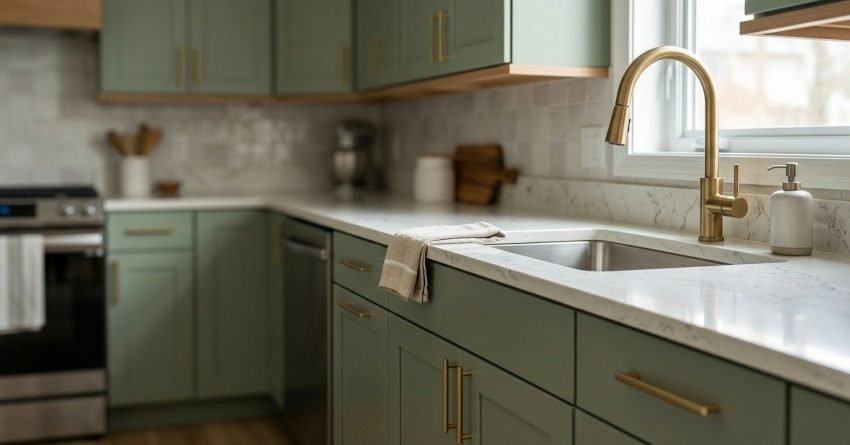
The cheapest way to redo a kitchen in Sydney is to work with your existing layout, reface or repaint cabinets, replace benchtops, and upgrade fixtures. We typically see this deliver a near-new result for $8,000 to $15,000 rather than $30,000 or more. Smart sequencing and targeted upgrades separate a budget renovation that looks great from one that simply looks cheap.
We see kitchen renovations as one of the highest-return investments in any Sydney property, but only when costs are controlled from the start. Without a clear plan, budgets spiral fast.
This guide breaks down real Sydney costs, the highest-value upgrades for the lowest spend, hidden cost traps, and a practical step-by-step planning framework.
How Much Does It Cost to Redo a Kitchen in Sydney?
Understanding where your budget sits before you start is the single most important step in any kitchen renovation. We find Sydney renovation costs vary significantly based on scope, materials, labour, and whether structural or services work is involved. Knowing the three budget tiers helps you set realistic expectations.
| Tier | Cost Range | Typical Scope |
| Budget | $8,000–$15,000 | Cabinet refacing, new benchtop, splashback, fixture upgrades |
| Mid-range | $15,000–$40,000 | Full replacement, semi-custom cabinetry, stone benchtops, new appliances |
| Premium | $40,000+ | Custom joinery, structural changes, high-end appliances |
As a rough benchmark, we typically see full kitchen renovations in Sydney land between $1,200 and $2,500 per square metre, depending on finish level and whether layout changes are involved.
Budget Kitchen Renovation (Under $15,000)
A budget kitchen renovation in Sydney typically falls between $8,000 and $15,000 and focuses on cosmetic upgrades rather than structural changes. This tier covers cabinet refacing or repainting, new benchtops, updated tapware, a new splashback, and basic appliance replacements.
Everything stays intact: existing layout, plumbing, and electrical positions. At this price point, flatpack cabinetry from suppliers like IKEA or Kaboodle replaces custom joinery. Laminate or reconstituted stone benchtops replace engineered stone.
The key constraint is scope discipline. Every decision to move a wall, shift plumbing, or upgrade to premium materials pushes the project out of this tier immediately.
Mid-Range Kitchen Renovation ($15,000 to $40,000)
The mid-range tier covers a full kitchen replacement. New semi-custom or custom cabinetry, engineered stone benchtops, quality appliances, new flooring, updated lighting, and professional installation across all trades sit within this bracket.
We consider this the most common renovation tier for owner-occupiers upgrading a primary residence. It allows for meaningful design improvements and a longer functional lifespan, typically 15 to 20 years with quality cabinetry and benchtops.
Labour accounts for a significant portion of mid-range budgets. Coordinating a kitchen installer, electrician, plumber, and tiler efficiently is where an experienced renovation contractor adds real value.
Premium Kitchen Renovation ($40,000 and Above)
Premium kitchen renovations in Sydney start at $40,000 and can exceed $100,000 for large, architecturally designed spaces with custom joinery and structural modifications. This tier involves bespoke cabinetry, high-end European appliances, and complex lighting design.
For most homeowners focused on budget renovation, this tier is not the target. But understanding it clarifies why decisions like moving a kitchen island can rapidly escalate costs even in a modest project.
What Is the Cheapest Way to Redo a Kitchen Without a Full Renovation?
A full kitchen strip-out is not always necessary. For kitchens with sound cabinet boxes, functional plumbing, and a workable layout, we find targeted cosmetic upgrades deliver the highest return for the lowest spend.
Reface or Paint Existing Cabinet Doors
If the cabinet carcasses, the structural boxes fixed to the wall, are in good condition, replacing only the doors and drawer fronts can transform the kitchen for a fraction of the full replacement cost. Professional cabinet door replacement typically costs between $2,500 and $6,000 depending on the number of doors and material.
Two-pack polyurethane painting of existing doors costs between $1,500 and $3,500 and delivers a factory-smooth, durable finish. New handles and hinges added at the same time complete the transformation for $200 to $600.
Replace Benchtops Without Moving Plumbing
Old laminate or damaged benchtops age a kitchen significantly. Replacing them without altering plumbing positions keeps costs controlled.
Laminate benchtop replacement costs approximately $800 to $1,500. Reconstituted stone such as Caesarstone or Silestone ranges from $2,000 to $4,500 installed, depending on linear metres and edge profile.
The critical cost control here is keeping the sink in its existing position. Moving a sink requires a licensed plumber to relocate waste and water lines, adding $800 to $2,000 to the project.
Upgrade Tapware, Handles, and Fixtures Only
For structurally sound kitchens, a fixture-only upgrade can refresh the space for under $2,000. Quality tapware from brands like Methven, Caroma, or Oliveri ranges from $150 to $600, with installation adding $150 to $300.
Cabinet handles across a full kitchen cost $200 to $800. While fixture upgrades alone will not transform a heavily dated kitchen, they are a legitimate first step for landlords managing tight budgets.
Which Kitchen Upgrades Add the Most Value for the Least Cost?
We find three upgrades consistently deliver the highest value-to-cost ratio in Sydney kitchens.
New splashback installation draws the eye immediately and signals a well-maintained kitchen. A standard subway tile splashback costs approximately $600 to $1,500 installed. A glass splashback costs between $800 and $2,000.
Lighting upgrades are consistently underestimated. Three to five recessed LED downlights cost approximately $600 to $1,200, and under-cabinet LED strip lighting adds $300 to $700. The combined $900 to $1,900 investment makes even a budget kitchen feel considered.
Flooring replacement is high-impact and often achievable without removing cabinetry. Vinyl plank flooring installation costs approximately $35 to $65 per square metre, making a standard 12 to 15 square metre floor cost between $420 and $975 in materials plus $400 to $800 in labour. We recommend vinyl plank for budget renovations because it is waterproof, durable, and installs over most existing subfloors.
What Are the Biggest Cost Drivers in a Kitchen Renovation?
Three categories account for the majority of kitchen renovation spend: labour, cabinetry, and appliances.
Labour is typically the highest single cost, often accounting for 35 to 50 percent of the total project budget. Sydney trade rates in 2025 sit at approximately $85 to $120 per hour for a licensed electrician, according to figures published by Master Electricians Australia; $90 to $130 per hour for a licensed plumber, and $60 to $90 per hour for a tiler.
Cabinetry is typically the second highest cost. Flatpack cabinetry costs approximately $3,000 to $8,000 in materials. Semi-custom cabinetry from a local joiner costs $8,000 to $18,000, and fully custom cabinetry runs $18,000 to $40,000 or more.
Appliances represent a high and often underestimated cost. A basic appliance package costs approximately $2,500 to $5,000. Choosing a recirculating range hood over a ducted one avoids $400 to $1,200 in additional electrical work, and retaining energy-efficient appliances that are still functional is usually the most cost-effective approach.
How to Cut Kitchen Renovation Costs Without Cutting Corners
Reducing costs does not mean accepting a lower-quality result. It means making smarter decisions about layout, materials, and procurement.
Keep the existing layout. This is the single most effective cost-saving decision we recommend. A layout change that moves the sink by even one metre can add $1,500 to $3,500 in plumbing labour alone.
Choose flatpack or semi-custom cabinets. A poorly installed flatpack kitchen looks worse than a well-installed one, regardless of material quality. We suggest allocating $1,500 to $2,500 for professional installation rather than attempting a DIY fit-out.
Source materials independently. Most contractors apply a margin of 15 to 30 percent on materials they supply. Purchasing tiles, tapware, and handles directly from suppliers like Beaumont Tiles or Reece Plumbing and providing them for installation only can meaningfully reduce costs.
Can You Use Secondhand Materials to Cut Costs Further?
We often see homeowners overlook secondhand and ex-display materials as a genuine cost-saving avenue. Demolition yards, kitchen showroom clearance sales, and marketplace listings can supply cabinetry, benchtops, and appliances at 30 to 60 percent below retail.
The trade-off is time and consistency. Sourcing matching secondhand cabinetry in the right dimensions takes patience, and appliances should always be checked for working condition and remaining warranty before purchase.

Common Budget Mistakes to Avoid
We see the same budget mistakes repeat across Sydney kitchen renovations. Moving the sink or cooktop without budgeting for the plumbing and electrical cost is the most expensive one.
Skipping itemised quotes in favour of a single lump-sum figure is another common error. It hides where money is actually going and makes it hard to trim scope later.
Underestimating hidden costs, particularly compliance work in older homes, is the third major mistake. We always recommend a 15 to 20 percent contingency on top of the planned budget.
What Hidden Costs Should You Budget for in a Kitchen Redo?
Hidden costs are the most common cause of budget overruns. Older Sydney homes, particularly those built before 1990, frequently have electrical and plumbing systems that do not meet current standards under the National Construction Code.
When a licensed electrician or plumber opens walls during a renovation, they are legally required to bring non-compliant work up to current standards. We suggest budgeting $1,000 to $3,000 for compliance work in any renovation older than 20 years.
Waterproofing under the sink area is not mandatory in kitchens as it is in bathrooms, but we recommend it. A waterproofing membrane costs approximately $200 to $400 and prevents costly water damage later.
Most cosmetic renovations in NSW do not require council approval. Structural changes, however, require a Development Application or Complying Development Certificate, which typically cost $500 to $3,500 depending on the pathway. Confirm requirements with your local council or a licensed building certifier through NSW Fair Trading before committing to a structural design.
Should You DIY or Hire a Contractor?
The answer depends on scope, skill level, and what is legally permitted in NSW. Homeowners can legally paint, install flatpack cabinetry, lay floating floors, and install non-electrical tile splashbacks without a licence.
All electrical and plumbing work must be performed by a licensed tradesperson under NSW law. Performing licensed trade work without the appropriate licence creates serious liability issues, particularly at the time of property sale.
| Scope | Full Contractor | DIY (Where Permitted) |
| Cabinet door replacement | $2,500–$4,500 | $800–$1,500 (materials only) |
| Benchtop replacement | $2,000–$4,500 | $1,200–$2,500 (materials + plumber) |
| Splashback (tiles) | $800–$1,500 | $300–$700 (materials only) |
| Vinyl plank flooring | $900–$1,800 | $400–$900 (materials only) |
| Fixture upgrades | $600–$1,200 | $300–$600 (materials + plumber) |
The DIY savings of $3,000 to $7,000 is real, but it assumes competent execution and no rectification work. For first-time renovators, we often recommend a hybrid approach: DIY on painting and flooring, contractor for cabinetry and trades.
How to Plan a Budget Kitchen Renovation Step by Step
We recommend a firm budget with a 15 to 20 percent contingency before selecting a single tile. A $15,000 budget with a 15 percent contingency means committing $12,750 to planned work and holding $2,250 in reserve.
Rank every planned upgrade by visual impact relative to cost. Cabinet doors, benchtops, splashback, and flooring should be prioritised over less visible items like premium appliances.
Always request itemised quotes from at least three licensed contractors. A quote that is 30 to 40 percent below the median typically reflects unlicensed labour, inferior materials, or an incomplete scope.
How Long Does a Budget Kitchen Renovation Take?
| Renovation Scope | Typical Duration |
| Fixture and handle upgrade only | 1–2 days |
| Cabinet door replacement + benchtop | 3–5 days |
| Full cosmetic renovation (no layout change) | 1–2 weeks |
| Full kitchen replacement (flatpack, same layout) | 2–3 weeks |
| Full kitchen replacement (layout change) | 3–5 weeks |
We find lead times for cabinetry, benchtops, and appliances in the current Sydney market can add 4 to 12 weeks to the overall timeline. Planning material procurement early, ideally before finalising the contractor, is one of the most effective ways to compress the project timeline.

Is It Worth Renovating a Kitchen Before Selling?
We consistently see kitchen renovations cited as one of the highest-return pre-sale improvements available to Sydney vendors. A well-executed budget renovation for $10,000 to $15,000 can add $20,000 to $40,000 to the sale price in the right market segment.
The return is highest in the $700,000 to $1.5 million price bracket, where buyers expect a functional, presentable kitchen. In the sub-$600,000 market, a basic fixture upgrade and fresh paint may deliver a better return than a full renovation.
Sydney buyers consistently prioritise benchtop quality, storage capacity, and appliance condition. We recommend professional installation even on a budget renovation, since a poorly fitted flatpack kitchen is visible to buyers and can undermine the entire sale presentation.
Conclusion
Redoing a kitchen on a budget in Sydney is entirely achievable when the right strategies are applied in the right sequence. Keeping the existing layout, choosing flatpack cabinetry, prioritising high-impact cosmetic upgrades, and budgeting realistically for hidden costs are the foundations of genuine value without financial overrun.
The difference between a budget renovation that looks great and one that looks cheap comes down to planning, material selection, and installation quality. Getting those elements right requires honest budgeting, itemised quotes, and experienced tradespeople.
At Sydney Home Renovation, we help homeowners and property investors plan and deliver kitchen renovations that stay on budget, on schedule, and built to last. Contact us today for a transparent, itemised quote and practical advice on the smartest way to redo your kitchen.
Frequently Asked Questions
What is the cheapest way to update a kitchen on a tight budget?
The cheapest way to update a kitchen is to reface or repaint existing cabinet doors, replace the benchtop, and upgrade tapware and handles without changing the layout. This typically costs $4,000 to $8,000 in Sydney.
Can I redo a kitchen for under $10,000 in Sydney?
Yes, if the scope is limited to cosmetic upgrades and the existing layout, plumbing, and electrical positions are retained. Flatpack cabinetry and independent material sourcing are the most effective ways to stay within this budget.
How much do new kitchen cabinets cost in Sydney?
New kitchen cabinets cost approximately $3,000 to $8,000 for flatpack products installed, $8,000 to $18,000 for semi-custom cabinetry, and $18,000 to $40,000 or more for fully custom joinery.
What is the most expensive part of a kitchen renovation?
Labour is typically the most expensive component, accounting for 35 to 50 percent of total project cost. Cabinetry, appliances, and benchtops follow, with structural changes adding high cost to any category.
How do I renovate my kitchen cheaply without replacing cabinets?
Focus on repainting or refacing existing cabinet doors, replacing the benchtop, installing a new splashback, upgrading tapware, and refreshing the flooring. These upgrades can be completed for $4,000 to $9,000 in Sydney.
Do I need council approval for a kitchen renovation in NSW?
Most cosmetic kitchen renovations do not require council approval. Renovations involving structural changes require a Development Application or Complying Development Certificate.
How do I find a reliable kitchen renovation contractor in Sydney?
Request itemised quotes from at least three licensed contractors, verify their licence through NSW Fair Trading, ask for references, and confirm current public liability and home warranty insurance.


