
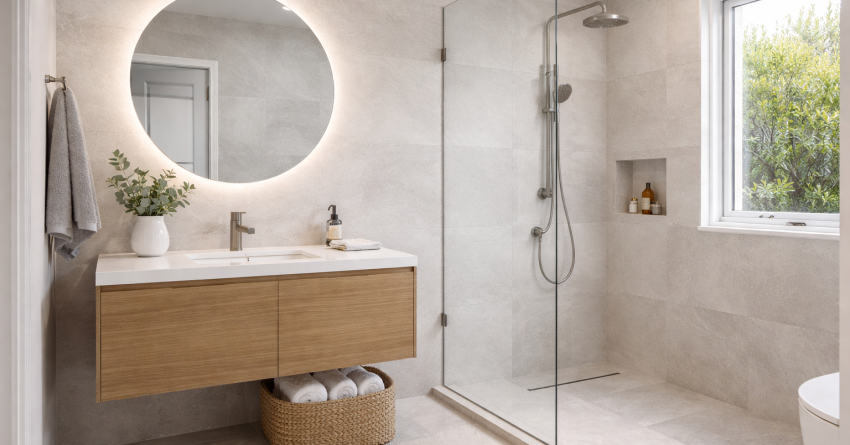
The right bathroom design balances what you love with what your home actually needs. In Sydney, that means accounting for layout constraints, material costs, and compliance requirements before you pick a single tile. Whether you are renovating a compact ensuite in a Surry Hills terrace or overhauling a family bathroom in the Hills District, your design choices directly shape your renovation budget. This guide covers popular styles, room-specific ideas, layout types, the cost impact of every major design element, and the planning steps that keep your project on track.
What Makes a Great Bathroom Design
A great bathroom design does not start with a Pinterest board. It starts with understanding how the space will be used every day, who will use it, and what your renovation budget can realistically support. The best bathroom designs in Sydney homes share a common thread: they look intentional because every decision, from tile format to tapware placement, was made with both purpose and budget in mind.
Design is not decoration. It is the structural and aesthetic framework that determines how water flows, where storage lives, how light enters the room, and whether the finished space adds genuine value to your property.
Balancing Style With Function
Style gets attention. Function keeps a bathroom working for years. The most successful bathroom renovations find the overlap between the two.
A freestanding bathtub looks stunning in a large main bathroom, but in a 4-square-metre ensuite, it eliminates storage and floor space. Matte black tapware photographs well, but in hard water areas of Sydney’s west, it shows mineral deposits faster than brushed nickel. Wall-hung vanities create a sense of openness and make floor cleaning easier, but they require solid stud or block wall backing during the rough-in stage, which adds to labour costs when the wall needs reinforcing.
Every design decision carries a functional consequence and a cost consequence. The goal is to make choices where style and function reinforce each other rather than compete.
How Layout Shapes Your Renovation Budget
Layout is the single biggest cost lever in any bathroom renovation. Keeping the existing layout, meaning the toilet, shower, and vanity stay in their current positions, avoids the most expensive part of the job: moving plumbing.
Relocating a toilet drain in a Sydney home on a concrete slab can add $2,000 to $5,000 or more to plumbing costs alone. Moving a shower from one wall to another means rerouting hot and cold supply lines, adjusting waterproofing membranes, and potentially modifying floor falls for drainage compliance.
Getting a clear cost comparison from your contractor before committing to a new layout is essential. Sometimes a small layout adjustment delivers a dramatically better result. Other times, the cost of moving plumbing eats into the budget needed for quality finishes, and knowing the difference early saves thousands.
Bathroom Layout Types and What They Cost
The physical configuration of your bathroom how fixtures are arranged within the footprint is a design decision that carries real cost consequences. Four layouts dominate Sydney renovations.
A single-wall layout places all fixtures along one wall. It is the most compact and cost-efficient option, common in ensuites and apartment bathrooms under 5 square metres. Plumbing runs are short, which keeps labour costs down.
An L-shape layout positions the vanity and toilet on one wall and the shower or bath on the adjacent wall. It suits bathrooms of 5 to 8 square metres and creates a natural separation between wet and dry zones. This is the most common layout in Sydney family bathrooms.
A galley layout runs fixtures along two parallel walls. It works well in long, narrow bathrooms and allows a generous shower at one end with the vanity and toilet at the other. Plumbing on two walls adds cost compared to a single-wall configuration.
A wet room removes the shower screen entirely, waterproofing the entire floor and lower walls. It creates a seamless, open feel and suits contemporary and minimalist designs. Wet rooms require a higher waterproofing specification and a perfectly graded floor fall, which adds $1,500 to $3,000 to the waterproofing and tiling scope compared to a standard shower recess.
Choosing the right layout for your footprint before selecting any fixtures is one of the most cost-effective decisions in the entire renovation process.
Popular Bathroom Design Styles in Sydney
Sydney’s housing stock ranges from Federation cottages in the Inner West to modern apartments in Zetland and established family homes across the Northern Beaches. The design style you choose should respond to your home’s architecture, your personal taste, and the practical realities of your space and budget.
Modern Minimalist Bathrooms
Modern minimalist design is the most popular style in Sydney bathroom renovations right now. It relies on clean lines, neutral colour palettes, and a deliberate reduction of visual clutter.
Key features include large-format wall and floor tiles (typically 600x600mm or larger) in whites, greys, or warm concrete tones. Wall-hung vanities with push-to-open drawers keep the look streamlined. Frameless shower screens, recessed niches instead of corner caddies, and concealed cistern toilets all contribute to the minimal aesthetic.
From a budget perspective, minimalist design can be cost-effective because it avoids complex tile patterns and decorative mouldings. The quality of each element matters more when there are fewer elements in the room; a cheap vanity or poorly finished tiling is far more visible in a minimalist space. Budget between $25,000 and $40,000 for a full minimalist bathroom renovation in Sydney, depending on size and fixture quality.
Coastal and Natural Bathroom Designs
Coastal design suits Sydney’s lifestyle and geography. It draws on natural materials, soft colour palettes, and organic textures to create a relaxed, light-filled space.
Timber-look porcelain floor tiles are a practical alternative to real timber in wet areas. Terrazzo, natural stone-look surfaces, and matte white subway tiles are common wall treatments. Brushed brass or brushed nickel tapware adds warmth without the maintenance challenges of unlacquered brass.
Rattan or timber-framed mirrors, open shelving, and greenery complete the look. Ventilation is critical in this style because natural materials and humid environments do not mix well without proper airflow. Budget $28,000 to $45,000 for a mid-range to high-end coastal bathroom in Sydney, with natural stone tiles and specialty finishes pushing material costs toward the upper end.
Classic and Heritage-Inspired Bathrooms
Sydney has thousands of Federation, Victorian, and Art Deco homes where a heritage-inspired bathroom design feels right. This style uses traditional elements like subway tiles with dark grout, pedestal basins, high-level or low-level cistern toilets, and cross-handle tapware in chrome or aged brass.
Penny round floor tiles, wainscoting, and framed mirrors are common. Freestanding clawfoot bathtubs remain a signature piece, though they require adequate floor space and structural support.
Heritage bathrooms often cost more than modern designs because of specialty fittings, custom joinery, and the need to work within older building structures. Plumbing in pre-1960s Sydney homes may need upgrading to meet current Australian Standards, which adds to the scope. Budget $30,000 to $55,000 depending on the level of heritage detail and structural work required.
Small Bathroom Design Ideas That Maximise Space
Small bathrooms are the norm in Sydney apartments and many older homes. A well-designed small bathroom can feel significantly larger than its footprint suggests.
The most effective strategies include wall-hung vanities and toilets that free up visible floor area, and large-format tiles with minimal grout lines that reduce visual fragmentation. A single glass shower panel instead of a full shower screen enclosure opens the space considerably. Recessed mirror cabinets combine storage with the mirror, and light, consistent colour palettes avoid high-contrast breaks that make a room feel smaller.
Pocket doors or barn-style sliding doors save the swing space of a standard hinged door. Niche shelving built into shower walls eliminates the need for protruding storage.
In small bathrooms, every centimetre matters during the design phase. A 50mm adjustment to vanity depth or shower width can be the difference between a comfortable space and a cramped one. Finalising dimensions with your contractor before ordering any fixtures avoids costly changes mid-build.
Small bathroom renovations in Sydney typically range from $18,000 to $30,000, with costs influenced heavily by waterproofing complexity and fixture selection.
Bathroom Design Ideas by Room Type
Different bathrooms serve different purposes. The design approach for an ensuite differs from a family bathroom, a powder room, or a combined laundry-bathroom. Each room type has distinct functional requirements that shape layout, fixture selection, and budget allocation.
Ensuite Bathroom Design Ideas
An ensuite is a private space connected to the main bedroom, used daily by one or two people. The design can prioritise personal preference and comfort over the durability demands of heavy family use.
Double vanities are popular in ensuites where space allows, giving each person their own basin and storage. Walk-in showers with rainfall showerheads and a handheld option offer a premium feel. Heated towel rails and underfloor heating are common upgrades in ensuites where space is used first thing in the morning, and the comfort return on these additions is high relative to their cost.
In a compact ensuite, a single vanity with a wide mirror and layered lighting will feel more spacious than a cramped double. Prioritising shower size over bathtub inclusion makes sense unless a bath is genuinely used regularly. For ensuites under 4 square metres, a 900x900mm shower recess is the practical minimum; 1000x1000mm or larger transforms the daily experience. Underfloor heating in a small ensuite typically adds $600 to $1,000 to the electrical scope and is one of the highest-satisfaction upgrades we see in Sydney projects.
Main Family Bathroom Designs
The family bathroom needs to handle the most traffic and the widest range of users, from young children to adults. Durability, easy cleaning, and practical storage are the priorities.
A bathtub is often essential in a family bathroom, particularly for homes with children under eight. A shower-over-bath combination saves space while keeping both options available. Semi-frameless shower screens are easier to clean than fully framed options and more affordable than frameless.
Storage is critical. A vanity with deep drawers, a mirrored cabinet above, and a recessed niche in the shower will cover most storage needs. Light grey floor tiles and white wall tiles with matching grout are a practical combination; they do not show dirt immediately and photograph well for resale.
Powder Room and Guest Bathroom Ideas
A powder room is a small bathroom without a shower, typically near the living areas of the home. It is used by guests and does not need the same level of storage or wet-area infrastructure as a full bathroom.
This is the room where a design risk pays off. A bold feature tile, a statement vanity, or a vessel basin on a timber shelf creates impact in a space that is only 1.5 to 3 square metres. Statement lighting a decorative pendant or a backlit mirror elevates a powder room from functional to memorable.
Because powder rooms do not require waterproofing to the same extent as a full wet area, renovation costs are lower. Ventilation still matters: even without a shower, a powder room generates humidity and odour, and a quality exhaust fan with a timer is worth including in the scope. A powder room renovation in Sydney typically costs $8,000 to $18,000 depending on fixture quality and whether plumbing needs relocating.
Laundry-Bathroom Combo Designs
Combined laundry-bathrooms are common in Sydney apartments and smaller homes where floor space is limited. The design challenge is making the space feel like a bathroom when showering and a functional laundry when washing clothes.
Stacking the washer and dryer in a tall cupboard with bifold or sliding doors is the most effective way to conceal laundry appliances. A deep laundry tub can double as a utility basin with the right tapware. Cabinetry in this room needs to be moisture-resistant; standard MDF flatpack will degrade quickly in the elevated humidity a combined space generates. Specify moisture-resistant board (HMR) or a fully wrapped cabinet as a minimum.
Ventilation is especially important in combo rooms. A quality exhaust fan rated for the combined room size, not just the bathroom zone, is essential to prevent moisture damage to appliances and cabinetry. An inline fan ducted to the exterior, rather than a recirculating unit, is the correct specification for this room type.
Key Design Elements That Impact Your Budget
Your bathroom design is made up of individual elements, and each one carries a different cost weight. Understanding where the money goes helps you make smarter trade-offs during the design phase rather than discovering budget problems during construction.
Tiles and Flooring Choices
Tiles are typically the most visible design element and one of the largest material costs. The price range is enormous, from $25 per square metre for basic ceramic tiles to $150 or more per square metre for natural stone or designer porcelain.
Tile size affects labour cost. Large-format tiles (600x1200mm or bigger) require fewer grout lines and can look more seamless, but they need a perfectly flat substrate and experienced tilers. Cutting large tiles for niches, corners, and around fixtures generates more waste, so ordering 10 to 15 percent extra is standard practice.
Slip resistance matters in wet areas. Australian Standard AS 4586 classifies tiles by R-rating: R9 is the minimum for residential wet areas, R10 is recommended for shower floors and bathrooms used by children or older adults, and R11 suits outdoor or commercial wet areas. Specifying the correct R-rating is a compliance requirement, not just a safety preference, and it affects tile selection before aesthetics enter the conversation.
Mosaic tiles and intricate patterns increase labour time significantly. A feature wall in hexagonal marble mosaic might cost three times more to install than a simple large-format tile wall, even when the tile price per square metre is similar. For a standard Sydney bathroom of 5 to 8 square metres, expect to spend $1,500 to $5,000 on tiles alone, with installation adding $1,500 to $3,500 depending on complexity.
Vanities, Basins, and Storage
The vanity is the functional centrepiece of most bathrooms. Wall-hung vanities start at around $600 for a basic 750mm unit and can exceed $3,000 for custom or premium brands. Freestanding vanities are generally less expensive but take up more visual space.
Basin type matters. An undermount basin creates a clean look and is easy to wipe down. A vessel basin adds height and visual interest but can be harder to clean around. Inset basins are the most affordable option.
Custom joinery for vanities and storage allows you to maximise every millimetre of space, which is particularly valuable in small Sydney bathrooms. Custom work typically costs $2,000 to $5,000 depending on materials and complexity, compared to $600 to $2,000 for off-the-shelf options.
Tapware and Fixtures
Tapware is a small line item that has an outsized impact on the finished look. Chrome remains the most affordable and durable finish. Matte black is popular but shows water spots and fingerprints. Brushed nickel and brushed brass sit in the mid to upper price range and offer good durability with a warmer aesthetic.
A full tapware package for a bathroom, including basin mixer, shower mixer, showerhead, and bath spout where applicable, ranges from $400 to $2,500 depending on brand and finish. Choosing a single tapware finish and carrying it consistently through the room is one of the simplest ways to make a bathroom look considered and complete.
Shower Screens and Bathtubs
A frameless shower screen is one of the most requested features in Sydney bathroom renovations. Prices range from $800 for a single fixed panel to $2,500 or more for a full frameless enclosure with a hinged door. Semi-frameless screens offer a good middle ground at $500 to $1,200. Fully framed screens are the most affordable but date a bathroom quickly.
Freestanding bathtubs range from $800 for acrylic to $5,000 or more for composite stone. Back-to-wall baths save space while still offering a freestanding look. Built-in baths with tiled surrounds are the most affordable option and work well in family bathrooms.
In bathrooms under 6 square metres, a larger, well-designed shower typically adds more daily value than a bathtub. The decision comes down to how the household actually uses the space.
Lighting and Ventilation
Lighting is often underestimated in bathroom design. A single ceiling downlight is not enough. Layering lighting with a combination of overhead ambient light, task lighting around the vanity mirror, and accent lighting where the space allows creates a room that functions well at every time of day.
LED strip lighting behind mirrors or under wall-hung vanities creates a soft glow that adds depth to the room. All bathroom lighting must be rated for wet areas IP44 or higher for zones near water.
Ventilation is not optional. Australian building standards require mechanical ventilation in bathrooms without adequate natural ventilation. A quality exhaust fan rated for your room size prevents mould, protects finishes, and extends the life of your renovation. Budget $200 to $800 for a good exhaust fan with timer function, plus installation.
How to Plan a Bathroom Renovation Around Your Design
A beautiful design means nothing when the renovation runs over budget, stalls mid-project, or results in compliance issues. Planning is where design ideas become buildable, affordable realities.
Setting a Realistic Budget for Your Design Vision
Starting with the total amount you are willing to spend and working backwards is the most effective approach. In Sydney, a basic bathroom renovation starts at around $15,000 to $20,000 for a straightforward update with standard fixtures. A mid-range renovation with quality finishes and some layout changes typically falls between $25,000 and $40,000. High-end renovations with premium materials, custom joinery, and structural modifications can exceed $50,000.
These ranges assume a standard-sized bathroom of 4 to 8 square metres. Larger bathrooms, difficult access (such as upper floors without a lift in apartment buildings), and heritage properties push costs higher.
Allocating your budget roughly as follows gives a reliable starting framework: 40 percent for labour (plumbing, tiling, waterproofing, electrical, carpentry), 35 percent for materials and fixtures, 15 percent for project management and compliance, and 10 percent as a contingency for unexpected issues. Knowing the full scope of what a bathroom renovation involves from demolition through to final inspection before committing to a budget prevents the most common cause of cost overruns: underestimating the trades required.
Which Bathroom Upgrades Add the Most Resale Value
Not every renovation dollar returns equally at sale. In the Sydney market, the upgrades that consistently add measurable resale value are those that appeal to the broadest range of buyers: neutral colour palettes, quality tapware in a single consistent finish, frameless or semi-frameless shower screens, and a well-lit vanity area.
Waterproofing done correctly is invisible but critical buyers and their building inspectors look for evidence of moisture damage, and a bathroom with a failed membrane will cost far more to remediate than it would have to waterproof properly in the first place. Underfloor heating, heated towel rails, and quality exhaust fans are mid-range upgrades that buyers notice and value without requiring a premium budget. Overly personalised finishes, bold feature tiles, unusual colour combinations, or highly trend-specific fixtures narrow buyer appeal and can reduce rather than add value in a resale context.
Where to Spend and Where to Save
Not every element in your bathroom needs to be top-of-the-range. Strategic spending means putting money where it delivers the most impact on daily use, longevity, and resale value.
Spend more on waterproofing (never cut corners here), quality tapware that will not corrode or leak, a good exhaust fan, and tiles in high-visibility areas like the shower feature wall. Save on tiles in low-visibility areas (behind the toilet, inside cupboards), basic chrome accessories that can be upgraded later, and standard electrical fittings. Off-the-shelf vanities from reputable suppliers often deliver excellent value compared to custom options, especially in standard-sized bathrooms.
The shower is the most-used feature in most bathrooms. Investing in a quality showerhead, solid mixer valve, and well-waterproofed shower recess delivers daily returns.
Working With a Renovation Contractor in Sydney
A good contractor does more than build. They help translate design ideas into a practical scope of work, identify potential problems before they become expensive surprises, and coordinate the trades needed to deliver a compliant, quality result.
When choosing a contractor in Sydney, look for a current NSW contractor licence, proof of insurance, a clear written quote that separates labour and materials, and references from recent bathroom projects. Asking to see completed work in person is always worthwhile.
Communication matters as much as skill. Your contractor should explain costs clearly, flag risks early, and keep you informed throughout the project. A renovation that stays on budget almost always starts with a contractor who plans thoroughly and communicates honestly.
Bathroom Design Trends in Sydney for 2026
Design trends shift, but the best ones solve real problems or improve daily experience. Here are the trends gaining traction in Sydney bathroom renovations this year.
Colour Palettes and Material Trends
Warm neutrals are replacing cool greys. Expect to see more greige (grey-beige), warm white, and soft clay tones on walls and floors. Sage green and deep navy are appearing as accent colours in cabinetry and feature tiles.
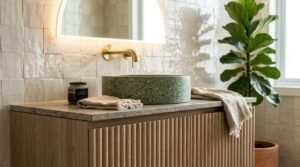
Fluted or ribbed surfaces are trending on vanity fronts, feature walls, and even shower niches. Terrazzo has moved from floors to basins and benchtops. Curved edges on mirrors, shower screens, and vanity profiles are softening the hard lines of recent minimalist trends.
Natural stone-look porcelain tiles continue to dominate because they deliver the aesthetic of marble or travertine without the sealing and maintenance requirements. Zellige-style tiles, with their handmade, slightly irregular finish, are popular for feature walls and splashbacks.
Smart Bathroom Features Worth the Investment
Smart features are becoming more accessible and more practical. Heated towel rails with timers are now standard in many Sydney renovations. Sensor-activated tapware reduces water waste and is particularly useful in family bathrooms.
Smart mirrors with integrated LED lighting, demister pads, and Bluetooth speakers are dropping in price. A quality smart mirror now starts at around $500 to $800. Underfloor heating is a worthwhile investment in Sydney’s cooler months, especially in bathrooms with tile floors. Electric underfloor heating mats cost $500 to $1,200 for a standard bathroom, plus installation; the running cost is minimal because the space is small and heating is typically only needed for short periods.
Water-Efficient Fixtures and Sustainable Design
Water efficiency is increasingly relevant in Sydney renovations, both for running costs and for buyers who factor sustainability into purchase decisions. The WELS (Water Efficiency Labelling and Standards) scheme rates tapware, showerheads, and toilets on a star scale; a 3-star or higher rated showerhead uses significantly less water than an unrated fixture without a noticeable reduction in shower experience.
Low-flow basin mixers and dual-flush toilets are now standard in most mid-range to high-end Sydney renovations. Specifying WELS-rated fixtures across the bathroom adds minimal cost at the selection stage and reduces ongoing water bills. For investment properties, water-efficient bathrooms are increasingly a selling point with tenants and buyers who are conscious of utility costs.
Common Bathroom Design Mistakes to Avoid
Even well-intentioned renovations go wrong when common mistakes are not anticipated. These are the errors we see most often in Sydney bathroom projects.
Prioritising Aesthetics Over Practicality
Choosing a beautiful tile that is impossible to clean, selecting a basin that splashes water onto the floor, or installing a shower niche at the wrong height are all examples of aesthetics overriding function.
Every design choice should pass a simple test: will this still work well and look good in five years of daily use? Trends fade. Functionality does not.
Ignoring Waterproofing and Compliance
Waterproofing is the most critical element of any bathroom renovation, and it is completely invisible once the tiles go on. In NSW, waterproofing must comply with AS 3740 and be carried out by a licensed waterproofer. A waterproofing certificate is required, and your contractor should provide one.
AS 3740 defines three waterproofing zones. Zone 1 covers the shower recess floor and walls to a minimum height of 1,800mm. This is the highest-risk area and requires the most robust membrane specification. Zone 2 covers the floor area immediately outside the shower and around the bath, typically to 100mm up the wall. Zone 3 covers the remainder of the bathroom floor. Each zone has a minimum membrane thickness and application requirement, and a licensed waterproofer will apply the correct specification to each.
Cutting costs on waterproofing is the most expensive mistake you can make. A failed waterproofing membrane can cause structural damage, mould, and the need to strip and redo the entire bathroom. The cost of proper waterproofing, typically $1,000 to $2,500 for a standard bathroom, is a fraction of the cost of remediation.
Underestimating Hidden Renovation Costs
Hidden costs catch first-time renovators off guard. Common surprises include asbestos in walls or flooring (common in pre-1990 Sydney homes), rotten timber framing behind tiles, outdated plumbing or electrical that must be brought up to code, and unexpected drainage issues.
A 10 percent contingency buffer in your budget is the minimum. For older homes, 15 percent is safer. Your contractor should conduct a thorough assessment before quoting and flag any areas of uncertainty. A quote that seems unusually low often does not account for these hidden variables, and the difference surfaces mid-build, when your options are limited.
For bathroom renovations that are part of a broader property upgrade, planning the sequence of trades across multiple rooms simultaneously rather than room by room reduces mobilisation costs and avoids the disruption of repeated access to finished areas.
Conclusion
Bathroom design is where creative vision meets construction reality. The ideas that deliver the best results are the ones shaped by honest budgeting, practical layout decisions, and a clear understanding of how materials, fixtures, and labour costs interact in a real Sydney renovation.
Your bathroom should reflect how you live, not just how a showroom looks. Understanding the cost impact of every design choice and planning with a realistic budget sets you up for a renovation that adds lasting value to your home and your daily routine.
We help Sydney homeowners and investors turn bathroom design ideas into finished spaces that are built right, priced honestly, and delivered on schedule. Contact Sydney Home Renovation today to discuss your project and get a transparent, detailed quote for your bathroom renovation.
Frequently Asked Questions
How much does a bathroom renovation cost in Sydney?
A basic bathroom renovation in Sydney starts at $15,000 to $20,000. Mid-range renovations typically cost $25,000 to $40,000, and high-end projects can exceed $50,000 depending on size, layout changes, and fixture selections.
What bathroom design style adds the most value to a Sydney home?
Modern minimalist and coastal-inspired designs appeal to the broadest range of buyers. Neutral palettes, quality fixtures, and clean layouts deliver strong resale value. We recommend avoiding overly personalised finishes when resale is a priority.
Can I renovate a small bathroom without it feeling cramped?
Yes. Wall-hung vanities, large-format tiles, frameless shower panels, and light colour palettes all make small bathrooms feel larger. Recessed storage and good lighting eliminate visual clutter even in bathrooms under 4 square metres.
How long does a bathroom renovation take in Sydney?
A standard bathroom renovation takes 2 to 4 weeks from demolition to completion. Complex projects involving layout changes or custom joinery may take 4 to 6 weeks. Ordering materials early in the planning phase avoids the most common cause of delays: fixture supply lead times.
Do I need council approval for a bathroom renovation in Sydney?
Most like-for-like bathroom renovations do not require council approval. Significant layout changes, structural wall alterations, or plumbing stack modifications in a strata building may require approval. Your contractor should advise on the compliance requirements specific to your project.
What is the most important thing to get right in a bathroom renovation?
Waterproofing. A failed membrane causes structural damage, mould, and a full bathroom strip-out. We always use a licensed waterproofer, obtain a waterproofing certificate, and never reduce the scope in this area.
Should I choose a bathtub or a larger shower for my bathroom?
Families with young children benefit from a bathtub in at least one bathroom. For ensuites and smaller bathrooms, a well-designed walk-in shower typically adds more daily value and uses space more efficiently than a bathtub.


