Choosing the right bathroom color is one of the most critical decisions in any renovation—it affects daily comfort, resale value, and how long your investment stays fresh. While trendy colors might look appealing in magazines, they often date quickly, forcing costly updates within just a few years. The smartest approach combines classic, enduring colors with strategic accent choices that provide personality without risk.

Understanding which colors stand the test of time helps you avoid expensive mistakes and ensures your bathroom remains attractive to future buyers. Whether you’re renovating your family home or updating an investment property, the right color foundation protects your budget and maximizes long-term value.

This guide covers proven timeless bathroom colors, strategic application methods, and practical combinations that work across different bathroom sizes, styles, and budgets—helping you make confident color decisions that won’t need changing in five years.

Why Choosing the Right Bathroom Color Matters for Long-Term Value

Bathroom color choices directly impact renovation costs, property appeal, and how frequently you’ll need to update the space. Unlike living areas where repainting is straightforward, bathrooms involve tiles, waterproofing, and fixtures—making color changes significantly more expensive and disruptive.

Color Psychology and Bathroom Functionality

Bathrooms serve multiple purposes throughout the day—morning preparation, evening relaxation, and everything between. Research in environmental psychology shows that color directly affects mood, perceived cleanliness, and spatial perception. Cool tones like whites and soft greys promote feelings of cleanliness and calm, while warm neutrals create comfort without overwhelming small spaces.

The right color makes bathrooms feel larger, brighter, and more hygienic. White reflects up to 80% of available light, making even windowless bathrooms feel more spacious. Conversely, dark or saturated colors absorb light, requiring additional artificial lighting and potentially making compact bathrooms feel cramped.

Color also affects perceived maintenance. Light neutrals show water spots and soap residue more readily, encouraging regular cleaning. Medium greys and beiges hide minor imperfections while still maintaining a fresh appearance—a practical consideration for busy households or rental properties.

Impact on Property Resale Value

Real estate data from Domain indicates that neutral bathroom renovations recover 60-80% of their cost at resale, while bold color choices often recover less than 50%. Buyers struggle to see past personalized color schemes, mentally adding renovation costs to their purchase calculations.

Timeless colors appeal to the broadest buyer pool. A classic white or grey bathroom allows potential buyers to envision their own style without immediately planning changes. This psychological advantage translates directly to faster sales and stronger offers—particularly important for investment properties where turnover speed affects overall returns.

Sydney’s diverse property market includes heritage homes, modern apartments, and suburban family houses. Neutral, timeless colors work across all these contexts, whereas trendy choices might suit one property type but alienate buyers in other segments.

Avoiding Costly Color-Related Renovation Mistakes

Changing bathroom colors after installation is expensive. Wall paint is the easiest element to modify, costing $800-1,500 for a standard bathroom. However, tile colors are permanent without complete removal—a process costing $3,000-8,000 including waterproofing, new tiles, and labor.

Vanity replacement due to color regret adds $2,000-6,000 depending on size and quality. Fixture changes (toilets, basins, taps) can add another $1,500-4,000. These costs accumulate quickly when trendy color choices fall out of favor within 3-5 years.

Choosing timeless colors from the start eliminates these future expenses. Even if you eventually want a refresh, neutral foundations allow simple updates through accessories, towels, and minor accent changes—costing hundreds rather than thousands.

The Foundation: Classic Neutral Bathroom Colors

Neutral colors form the backbone of timeless bathroom design. They provide flexibility, maximize light, appeal to broad audiences, and allow easy updates through accessories and accents. These colors have remained popular across decades because they solve fundamental bathroom challenges—limited space, moisture management, and resale appeal.

White: The Ultimate Timeless Choice

White dominates bathroom design for practical reasons. It maximizes light reflection, creates a clean aesthetic, works with any accent color, and appeals universally to homeowners and buyers. Industry surveys show that white remains the most popular bathroom color, appearing in over 65% of renovations across all price points.

Warm Whites vs Cool Whites

Not all whites are equal. Cool whites contain blue or grey undertones, creating crisp, modern aesthetics that pair well with chrome fixtures and contemporary tiles. They work particularly well in bathrooms with abundant natural light, where the coolness prevents the space from feeling sterile.

Warm whites incorporate cream, beige, or yellow undertones, producing softer, more inviting spaces. These work better in bathrooms with limited natural light, as they prevent the cold, clinical feeling that cool whites can create under artificial lighting. Warm whites also complement brass, gold, and timber fixtures more naturally.

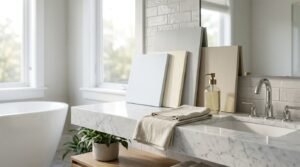
Testing both under your specific lighting conditions is essential. Purchase sample pots and paint large boards (at least 1m x 1m) to view in morning, afternoon, and evening light. The same white can appear dramatically different depending on natural light exposure and artificial bulb temperature.

Best Applications for White in Bathrooms

White works across all bathroom surfaces but requires strategic application. Full white bathrooms (walls, tiles, fixtures) create maximum brightness but demand consistent cleaning to maintain their fresh appearance. They suit minimalist aesthetics and small bathrooms where light reflection is critical.

White walls with contrasting floors provide practical benefits—lighter walls reflect light while darker floors hide water marks and daily wear. This combination works well in family bathrooms and rental properties where maintenance efficiency matters.

White tiles with painted accent walls offer flexibility. Tiles provide permanent water-resistant surfaces in wet areas, while painted walls allow easy color updates without major renovation. This approach balances longevity with adaptability.

Soft Greys: Versatile and Sophisticated

Grey has emerged as the modern neutral, offering sophistication without the starkness of pure white. It hides minor imperfections better than white, pairs beautifully with both warm and cool accent colors, and maintains contemporary appeal without feeling trendy.

Light Grey Tones

Light greys (with 20-30% grey saturation) provide subtle depth while maintaining brightness. They work particularly well in bathrooms with good natural light, creating a soft, calming atmosphere without the clinical feel of pure white. Light greys pair excellently with white fixtures, creating gentle contrast that adds visual interest.

These tones work across different bathroom sizes. In small bathrooms, they add character without reducing perceived space. In larger bathrooms, they prevent the empty feeling that all-white schemes can create. Light greys also complement both modern and traditional design elements, making them versatile across renovation styles.

Popular light grey options include shades with slight blue undertones (creating cool, spa-like atmospheres) or warm undertones (producing softer, more inviting spaces). The undertone choice should align with your fixture finishes and natural lighting conditions.

Medium Grey Applications

Medium greys (with 40-50% saturation) work best as accent elements rather than dominant colors. They create striking feature walls, vanity colors, or floor tiles without overwhelming spaces. In larger bathrooms with abundant light, medium greys can cover more surface area without making spaces feel smaller.

These deeper greys pair beautifully with white fixtures and lighter grey walls, creating sophisticated tonal schemes. They also provide excellent backdrops for metallic fixtures—both chrome and brass pop against medium grey backgrounds.

However, medium greys require careful lighting consideration. In bathrooms with limited natural light, they can feel heavy and dark. Ensure adequate artificial lighting (aim for 300-400 lux in task areas) when using medium greys extensively.

Beige and Cream: Warm Neutrals That Endure

Beige and cream have remained bathroom staples for decades because they create warm, inviting spaces while maintaining neutral versatility. These colors work particularly well in heritage homes, traditional designs, and bathrooms where a softer, less clinical aesthetic is desired.

Beige tones complement timber vanities, brass fixtures, and natural stone beautifully. They create cohesive schemes in homes with timber flooring or warm-toned finishes throughout. Color psychology research indicates that warm neutrals promote relaxation—valuable in bathrooms used for unwinding after long days.

These colors also age gracefully. While pure white can yellow over time (particularly around fixtures and in areas with limited ventilation), beige and cream maintain their appearance more consistently. This longevity makes them practical for investment properties and family homes where frequent updates aren’t feasible.

Application works best when beige and cream are paired with crisp white fixtures and trim. This combination prevents the space from feeling dated or dingy—a common concern with all-beige bathrooms from previous decades. Modern beige bathrooms balance warm walls or floors with bright white sanitaryware and generous lighting.

Off-White and Ivory: Subtle Warmth with Timeless Appeal

Off-whites and ivories occupy the space between pure white and beige, offering subtle warmth without committing to stronger cream tones. These colors work exceptionally well in bathrooms where pure white feels too stark but beige seems too traditional.

Ivory tones pair beautifully with both silver and gold fixtures, providing flexibility in hardware choices. They create soft, elegant backgrounds that allow other design elements—tiles, vanities, mirrors—to become focal points without competing for attention.

These subtle neutrals work across all bathroom sizes and styles. In small bathrooms, they provide warmth without reducing perceived space. In larger bathrooms, they create cohesion without the potential emptiness of pure white. They also photograph well—an important consideration for property marketing.

Timeless Accent Colors That Add Character Without Risk

While neutrals provide foundation, strategic accent colors add personality and visual interest. The key is choosing colors with proven longevity—shades that have remained popular across decades and work within neutral frameworks without dominating them.

Navy Blue: Classic Depth and Elegance

Navy blue has maintained popularity across centuries of interior design. It provides depth and sophistication while remaining neutral enough to work with various styles. Design trend analysis shows navy has appeared consistently in bathroom design since the 1920s, adapting to different eras without feeling dated.

Navy works beautifully as a vanity color, creating striking contrast against white walls and fixtures. It pairs excellently with brass, gold, and chrome hardware, offering flexibility in fixture choices. Navy also hides water marks and minor wear better than lighter colors—practical for family bathrooms.

In tile applications, navy creates dramatic feature walls or floors without overwhelming spaces. Subway tiles in navy blue provide classic appeal with contemporary edge. Navy penny tiles or hexagons add pattern interest while maintaining color timelessness.

The key to navy’s longevity is its association with maritime themes and classic menswear—cultural references that transcend temporary trends. It reads as intentional and sophisticated rather than trendy, helping bathrooms maintain appeal across ownership changes.

Sage Green: Natural and Calming

Sage green connects bathrooms to nature, creating calming, spa-like atmospheres. Unlike brighter greens that can feel dated, sage’s muted, grey-green tone maintains contemporary appeal while referencing traditional color palettes. It has appeared in bathroom design since the Victorian era, experiencing renewed popularity in recent years without feeling trendy.

Sage works particularly well in bathrooms with natural light, where it creates fresh, organic feelings. It pairs beautifully with white fixtures, timber vanities, and natural stone tiles. Sage also complements both brass and chrome fixtures, providing hardware flexibility.

Application works best in moderation—sage accent walls, lower cabinetry, or tile features rather than full-room coverage. This restraint prevents the color from overwhelming spaces while providing sufficient presence to create atmosphere. Sage also works well in painted applications, allowing easy updates if preferences change.

The color’s connection to nature gives it staying power. As long as people value natural, calming environments (a consistent preference across decades), sage green will remain relevant in bathroom design.

Soft Black and Charcoal: Modern Yet Enduring

Black and charcoal might seem risky, but when used strategically, they create timeless sophistication. Black fixtures, frames, and hardware have appeared in bathroom design since the Art Deco period, while charcoal tiles and vanities provide modern interpretations of this classic approach.

Black works best as accent rather than dominant color. Black-framed shower screens, tapware, and mirrors create striking contrast against white or light grey backgrounds. These elements add definition and contemporary edge without reducing light or making spaces feel smaller.

Charcoal tiles (particularly in matte finishes) create depth on floors or feature walls while maintaining practical benefits—they hide water marks, soap residue, and daily wear better than lighter options. Charcoal also provides sophisticated backdrop for white fixtures, creating high-contrast schemes that photograph beautifully.

The key is balancing dark elements with abundant light. Ensure adequate natural light or install quality artificial lighting (aim for 400-500 lux in bathrooms with significant dark surfaces). This prevents spaces from feeling cave-like while maintaining the sophisticated aesthetic that black and charcoal provide.

Muted Earth Tones: Terracotta and Warm Taupes

Muted earth tones—soft terracottas, warm taupes, clay colors—connect bathrooms to natural materials and organic aesthetics. These colors have appeared throughout design history, from Mediterranean villas to mid-century modern homes, maintaining relevance through their connection to natural materials.

Terracotta works beautifully in tile applications, particularly in heritage homes or bathrooms with Mediterranean or Spanish influences. Modern interpretations use muted, dusty terracottas rather than bright oranges, creating sophisticated warmth that pairs well with white fixtures and natural timber.

Warm taupes bridge the gap between grey and beige, offering neutral versatility with subtle warmth. They work across different design styles, complementing both contemporary and traditional aesthetics. Taupes also pair beautifully with a wide range of accent colors, providing flexibility in accessory choices.

These earth tones work best when balanced with crisp whites and natural materials. Terracotta tiles with white grout, taupe walls with white trim, or clay-colored vanities with white countertops create cohesive schemes that feel grounded and timeless rather than trendy.

Color Combinations That Stand the Test of Time

Individual colors matter, but combinations create overall bathroom aesthetics. Certain pairings have proven longevity because they balance contrast with cohesion, provide visual interest without overwhelming spaces, and work across different design styles.

White and Grey Pairings

White and grey combinations dominate contemporary bathroom design while maintaining classic appeal. This pairing works because it provides tonal variation without color complexity—creating sophisticated, cohesive schemes that appeal broadly.

White walls with grey floors is the most popular configuration. It maximizes light reflection on vertical surfaces while providing practical, wear-hiding flooring. Grey floor tiles (in light to medium tones) ground the space and create visual foundation without reducing brightness.

Grey walls with white fixtures creates subtle sophistication. Light to medium grey walls provide depth and character while white sanitaryware maintains brightness and cleanliness associations. This combination works particularly well in bathrooms with good natural light.

Tonal grey schemes use multiple grey shades—light grey walls, medium grey vanity, dark grey floors—creating layered, sophisticated aesthetics. This approach requires careful shade selection to ensure tones complement rather than clash. Stick to greys with similar undertones (all cool or all warm) for cohesion.

These combinations work across bathroom sizes and styles. They suit modern apartments, renovated heritage homes, and suburban family bathrooms equally well. The versatility ensures long-term appeal regardless of broader design trend shifts.

Neutral Base with Navy or Black Accents

Neutral foundations (white, light grey, beige) with navy or black accents create striking, timeless schemes. This approach provides personality and visual interest while maintaining broad appeal and easy adaptability.

White with navy accents offers classic sophistication. White walls and floors with navy vanity, or white walls with navy tile feature, create high-contrast schemes that feel intentional and designed. This combination works particularly well in heritage homes and Hampton-style bathrooms.

Light grey with black accents provides modern edge. Light grey tiles or walls with black tapware, black-framed shower screens, and black mirrors create contemporary aesthetics without feeling trendy. This combination photographs beautifully and appeals to design-conscious buyers.

The key is restraint—accents should comprise 20-30% of visual space rather than dominating. This balance provides sufficient presence to create character while allowing neutral foundations to maintain their calming, spacious qualities.

These combinations also allow easy updates. Changing accent colors (through vanity replacement or repainting) is significantly cheaper than changing foundational tiles or fixtures, providing long-term flexibility within timeless frameworks.

Monochromatic Schemes

Monochromatic schemes use variations of a single color, creating cohesive, sophisticated aesthetics. This approach works particularly well in bathrooms where simplicity and calm are priorities.

All-white schemes with textural variation create interest through materials rather than color. White subway tiles, white hexagon floors, white painted walls, and white fixtures can feel dynamic when different finishes (matte, gloss, textured) and materials (ceramic, stone, paint) are combined.

Tonal grey schemes layer light, medium, and dark greys to create depth without color complexity. This approach suits modern, minimalist aesthetics while maintaining warmth through careful shade selection and material choices.

Beige and cream variations create warm, inviting monochromatic schemes. Ivory walls, cream tiles, beige vanity, and white fixtures (which read as the lightest beige tone) produce cohesive warmth without feeling flat or boring.

Monochromatic schemes require attention to lighting and texture. Without color variation, these elements become critical for creating visual interest and preventing spaces from feeling one-dimensional. Incorporate varied tile patterns, different material finishes, and quality lighting to maintain engagement.

Natural Material Integration

Timeless color schemes often incorporate natural materials—timber, stone, concrete—whose inherent colors provide organic variation within neutral frameworks. These materials bring warmth, texture, and visual interest while maintaining color timelessness.

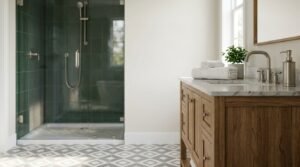
Timber vanities in natural or stained finishes add warmth to white or grey bathrooms. Timber tones range from light oak to dark walnut, all working within neutral color schemes while providing organic character. Timber also ages beautifully, developing patina that enhances rather than detracts from appearance.

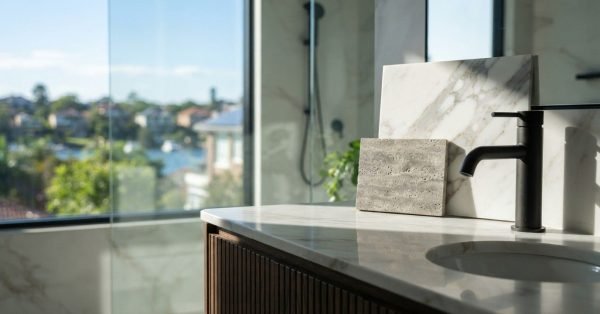
Natural stone tiles—marble, travertine, limestone—bring subtle color variation and luxurious texture. White marble with grey veining works within white and grey schemes while adding premium appeal. Beige travertine complements warm neutral palettes while providing natural pattern interest.

Concrete finishes in polished or textured applications provide industrial-modern aesthetics within grey color schemes. Concrete’s inherent color variation (from light grey to charcoal) creates visual interest while maintaining neutral foundations.

These natural materials have appeared in bathroom design across centuries, ensuring their continued relevance. Their organic origins connect bathrooms to nature—a consistently valued quality regardless of temporary design trends.

Where to Apply Color in Your Bathroom

Color placement significantly impacts both aesthetics and practicality. Understanding which surfaces benefit from which colors helps create cohesive, functional schemes that maintain appeal and minimize maintenance challenges.

Wall Colors: Paint vs Tiles

Walls offer the largest surface area for color application, making their treatment critical to overall bathroom aesthetics. The choice between paint and tiles affects both appearance and long-term flexibility.

Painted walls provide maximum color flexibility and lowest initial cost. Quality bathroom paint (with mold-resistant properties) costs $80-150 per 4L tin, covering approximately 40-50 square meters. Painting allows easy color updates—a standard bathroom repaint costs $800-1,500 including preparation and labor.

However, paint requires proper surface preparation and ventilation. In wet areas (shower surrounds, above baths), paint alone is insufficient—these areas require waterproof membranes and tile coverage. Paint works well on walls outside direct water exposure, particularly when combined with good exhaust ventilation.

Tiled walls provide permanent, waterproof solutions but limit future flexibility. Tile installation costs $80-200 per square meter including materials and labor, making full-wall tiling expensive. However, tiles eliminate ongoing maintenance and provide superior moisture protection.

Strategic tiling—wet areas only—combined with painted walls elsewhere balances cost, flexibility, and practicality. This approach allows color updates through repainting while maintaining waterproof protection where essential.

For timeless appeal, keep wall colors in neutral ranges—whites, light greys, soft beiges. These maximize light, work with various fixture finishes, and appeal broadly. Save stronger colors for smaller accent walls or areas easily changed.

Vanity and Cabinetry Color Choices

Vanities provide significant visual impact while offering color flexibility through replacement or repainting. Vanity color choices affect both aesthetics and perceived bathroom style.

White vanities maintain timeless appeal and work across all bathroom styles. They maximize light reflection, pair with any wall color, and appeal universally to buyers. White vanities suit small bathrooms where brightness is critical and modern aesthetics where clean lines dominate.

Timber vanities in natural or stained finishes add warmth and organic character. Timber works particularly well in bathrooms with white or light grey walls, providing visual interest and textural contrast. Timber vanities suit heritage homes, Hampton styles, and contemporary bathrooms seeking warmth.

Grey vanities (light to medium tones) offer contemporary sophistication. They work beautifully against white walls, creating subtle contrast without strong color commitment. Grey vanities suit modern apartments and renovated homes seeking current aesthetics with long-term appeal.

Navy or black vanities create striking focal points in neutral bathrooms. These work best in bathrooms with good natural light and predominantly white or light grey surroundings. Dark vanities suit design-conscious homeowners but may limit buyer appeal in investment properties.

Vanity replacement costs $2,000-6,000 depending on size and quality, making initial color choice important. However, vanities can be repainted (particularly timber and some laminate options) for $400-800, providing update flexibility without full replacement.

Floor Tile Color Considerations

Floor tiles are permanent installations requiring careful color selection. They affect perceived space, maintenance requirements, and overall bathroom aesthetics.

Light grey floor tiles have become the modern standard. They hide water marks and soap residue better than white while maintaining brightness and spaciousness. Light grey floors work with white, grey, or beige walls and suit all bathroom sizes and styles.

White floor tiles create maximum brightness but show every water mark and require frequent cleaning. They work best in powder rooms and small bathrooms where light reflection is critical and water exposure is minimal. In full bathrooms, white floors demand consistent maintenance.

Medium to dark grey floors provide practical benefits—hiding daily wear while creating sophisticated aesthetics. They work particularly well in larger bathrooms with good natural light. In smaller bathrooms, ensure adequate lighting to prevent spaces from feeling dark or cramped.

Beige and cream floor tiles suit traditional aesthetics and heritage homes. They create warm foundations that complement timber vanities and brass fixtures. These tones work well in bathrooms seeking classic rather than contemporary appeal.

Natural stone floors—marble, travertine, limestone—provide premium aesthetics with inherent color variation. White marble with grey veining, beige travertine, or grey limestone all work within timeless color schemes while adding luxury appeal.

Floor tile installation costs $80-200 per square meter including materials and labor. This significant investment makes color choice critical—select colors that work long-term rather than following temporary trends.

Fixture and Hardware Finishes

Fixtures and hardware—tapware, shower screens, towel rails, toilet roll holders—significantly impact bathroom aesthetics while offering relatively easy update opportunities.

Chrome fixtures remain the timeless standard. Chrome works with all color schemes, maintains contemporary appeal, and suits all bathroom styles. Chrome’s reflective quality adds light and works particularly well in smaller bathrooms.

Brushed nickel provides softer, warmer alternative to chrome. It hides water marks better and suits bathrooms with warm neutral color schemes. Brushed nickel works well in heritage homes and traditional designs while maintaining sufficient modernity for contemporary spaces.

Matte black fixtures create striking contemporary aesthetics. Black tapware, shower screens, and accessories work beautifully against white or light grey backgrounds. However, black fixtures show water marks readily and may feel too trendy for conservative buyers.

Brass and gold fixtures have returned to popularity after decades of absence. Brushed brass or champagne gold suit heritage homes, Hampton styles, and bathrooms with warm color schemes. These finishes pair beautifully with white, beige, or sage green color palettes.

Fixture replacement costs vary—tapware sets cost $300-1,500, shower screens $800-2,500, and accessories $50-200 per item. While less expensive than tile changes, fixture updates still represent significant investment, making initial finish selection important.

For maximum longevity, choose chrome or brushed nickel. These finishes have maintained popularity across decades and work with virtually any color scheme. Save bolder finishes (matte black, brass) for bathrooms where you’re confident in long-term aesthetic preferences.

Colors to Avoid: Trendy Choices That Date Quickly

Understanding which colors to avoid is as important as knowing which to embrace. Certain colors and combinations signal specific eras, making bathrooms feel dated and reducing property appeal.

Overly Bright or Saturated Colors

Bright, saturated colors—vivid blues, strong greens, bold yellows—create immediate visual impact but date quickly. These colors dominate spaces, making them feel smaller and overwhelming neutral elements that provide balance.

Bright blue tiles were popular in the 1950s-60s and again in the 1980s-90s. While they can work in retro-themed renovations, they limit buyer appeal and make bathrooms feel locked in specific eras. Bright blues also clash with most fixture finishes and limit accessory choices.

Strong greens (emerald, kelly green, lime) similarly date bathrooms. These colors were popular in 1970s design and recent trend cycles but lack the staying power of muted sage or grey-green tones. Strong greens overwhelm small spaces and clash with many natural materials.

Bold yellows and oranges create energetic atmosphics but rarely maintain appeal long-term. These colors were popular in 1960s-70s design but feel jarring in contemporary contexts. They also show dirt and age poorly, developing dingy appearances over time.

If you love color, incorporate it through easily changed elements—towels, artwork, accessories—rather than permanent installations. This approach allows color expression without long-term commitment or expensive changes.

Trendy Color Combinations

Certain color combinations signal specific design trends, dating bathrooms as trends evolve. While these might look appealing currently, they lack the longevity of classic neutral combinations.

Grey and yellow was popular in 2010s design but has already started feeling dated. This combination works in some contexts but lacks the timelessness of grey and white or grey and navy pairings.

Teal and coral appeared frequently in mid-2010s design but feels distinctly of that era. These colors work in coastal or tropical contexts but lack broader appeal and longevity.

Millennial pink (dusty rose, blush) dominated late 2010s design but is already receding. While softer than bright pinks, these tones still feel trend-driven rather than timeless.

All-black bathrooms represent current trends but may feel dated within 5-10 years. While black accents maintain appeal, full black schemes (black walls, black tiles, black fixtures) are bold choices that may limit future buyer appeal.

Stick to combinations with proven longevity—white and grey, neutral with navy, beige and white. These pairings have worked across decades and will continue working regardless of temporary trend shifts.

Pattern-Heavy Color Schemes

Patterns add visual interest but can quickly date bathrooms when they reflect specific design eras. Certain pattern and color combinations signal particular decades, making bathrooms feel locked in time.

Geometric patterns in bold colors were popular in 1960s-70s and again in 2010s. While geometric tiles can work in neutral colors (white and grey hexagons, for example), bold colored geometric patterns feel trend-driven and date quickly.

Moroccan-inspired patterns in bright blues, greens, and oranges dominated early 2010s design. While beautiful, these patterns feel distinctly of that era and may not maintain appeal as trends evolve.

Busy floral or botanical patterns in multiple colors create visual chaos in small bathroom spaces. These patterns were popular in Victorian and Edwardian eras and various revival periods but rarely work in contemporary contexts without feeling costume-like.

If you want pattern, choose simple, classic options—subway tiles in neutral colors, hexagon tiles in white or grey, simple border details. These provide visual interest without trend-specific associations that date quickly.

How to Test and Choose Your Bathroom Color Palette

Selecting colors requires more than browsing paint chips or tile samples. Proper testing ensures colors work in your specific bathroom conditions—lighting, size, existing fixtures—before committing to expensive installations.

Lighting Considerations

Bathroom lighting dramatically affects color appearance. Colors that look perfect in showrooms can appear completely different in your actual bathroom, making testing under real conditions essential.

Natural light varies by window size, orientation, and time of day. North-facing bathrooms receive cooler, more consistent light throughout the day. South-facing bathrooms get warmer, stronger light. East-facing bathrooms are bright in mornings but darker in afternoons, while west-facing bathrooms reverse this pattern.

Test colors at different times—morning, midday, afternoon, evening—to see how natural light affects appearance. Colors can shift dramatically between morning and evening light, particularly whites and greys where undertones become more apparent.

Artificial lighting also affects color perception. Warm white bulbs (2700-3000K) make colors appear warmer and can yellow cool whites. Cool white bulbs (4000-5000K) make colors appear crisper but can make warm tones look dingy. Daylight bulbs (5500-6500K) provide the most accurate color rendering but can feel harsh in bathrooms.

Test colors under your actual lighting setup. If you’re planning new lighting, install it before finalizing color choices. The interaction between colors and lighting is too significant to guess—always test in real conditions.

Sample Testing Process

Proper color testing requires more than small paint chips or tile samples. Create large-scale tests that accurately represent how colors will appear when covering significant surface areas.

For paint colors:

  1. Purchase sample pots of your top 3-4 choices
  2. Paint large boards (minimum 1m x 1m) or directly on walls if possible
  3. Place boards in the actual bathroom location
  4. View samples at different times of day for at least 3-4 days
  5. Observe how samples look against existing fixtures, tiles, and flooring
  6. Check appearance under both natural and artificial lighting

For tile colors:

  1. Order large samples (minimum 300mm x 300mm) of top choices
  2. Place samples on floors or prop against walls in actual positions
  3. View with grout color samples (grout significantly affects tile appearance)
  4. Test with water to see how colors look when wet
  5. Observe for several days under different lighting conditions

For vanity and cabinetry colors:

  1. Request large door samples from suppliers
  2. Place samples in bathroom against wall colors
  3. View with countertop samples if choosing simultaneously
  4. Check how hardware finishes look against colors

This testing process requires time and small financial investment ($50-150 for samples) but prevents expensive mistakes. Changing your mind after installation costs thousands—proper testing is cheap insurance.

Coordinating with Existing Fixtures

Unless completing full renovations, you’ll likely work with some existing elements—tiles, fixtures, or cabinetry. New colors must coordinate with these permanent or expensive-to-change elements.

With existing tiles: Pull colors from tile patterns rather than fighting them. If existing tiles have grey veining, choose grey-toned paints or new tiles. If tiles have warm beige tones, select warm neutrals for walls and vanities.

With existing fixtures: White fixtures work with virtually any color scheme. Colored fixtures (almond, bone, pastels from previous eras) are more challenging. If replacing fixtures isn’t feasible, choose wall and floor colors that complement rather than clash—warm neutrals with almond fixtures, cool greys with grey-toned fixtures.

With existing vanities: If keeping existing vanities, select wall and floor colors that enhance rather than fight the vanity color. Timber vanities work with whites, greys, and warm neutrals. White vanities provide maximum flexibility. Colored vanities may require neutral walls to prevent color clashing.

Take photos of existing elements and bring them when selecting new colors. Many paint and tile suppliers can help coordinate colors using photos, ensuring cohesive results.

Budget-Friendly Color Updates

Full bathroom renovations are expensive, but strategic color updates can refresh spaces without major construction or waterproofing work.

Paint updates provide maximum impact for minimum cost. Repainting walls costs $800-1,500 for standard bathrooms—affordable compared to tile replacement. Choose timeless neutrals that work with existing tiles and fixtures while updating the overall feel.

Vanity painting or replacement changes bathroom aesthetics significantly. Painting existing vanities costs $400-800 professionally or $100-200 DIY. New vanities cost $2,000-6,000 but provide fresh aesthetics and often improved storage.

Fixture and hardware updates modernize bathrooms without major construction. New tapware ($300-1,500), shower screens ($800-2,500), and accessories ($300-600 total) create contemporary aesthetics while working within existing tile and layout constraints.

Grout refresh dramatically improves tile appearance. Professional grout cleaning and resealing costs $400-800 for standard bathrooms. Regrouting (removing old grout and installing new) costs $1,200-2,500 but makes old tiles look new.

These updates allow color refreshes within $2,000-5,000 budgets—significantly less than full renovations costing $15,000-35,000. Strategic updates extend bathroom life while maintaining timeless color foundations.

Real-World Examples: Timeless Bathroom Color Schemes in Sydney Homes

Understanding how timeless colors work in actual Sydney renovations helps visualize applications and outcomes. These examples demonstrate proven approaches across different property types and budgets.

Heritage Home Bathroom Updates

Heritage homes require bathroom updates that respect original character while providing modern functionality. Timeless colors help bridge historical aesthetics with contemporary needs.

Terrace house bathroom (Newtown): White subway tiles to ceiling in shower area, soft grey painted walls elsewhere, white fixtures, brass tapware, and timber vanity in natural oak. This combination respects the home’s 1890s origins while providing clean, functional modern bathroom. Total renovation cost $28,000 with colors ensuring long-term appeal.

Federation home ensuite (Mosman): Marble-look porcelain tiles in white with grey veining, white painted walls, white fixtures, and brushed nickel tapware. Classic white and grey scheme suits the home’s 1910s character while maintaining contemporary cleanliness. Renovation cost $32,000 with premium materials ensuring quality matches home value.

Victorian cottage bathroom (Balmain): Beige and cream color scheme with cream painted walls, beige floor tiles, white fixtures, and timber vanity in walnut stain. Warm neutrals complement the cottage’s 1880s origins while avoiding overly modern aesthetics that would clash with home character. Renovation cost $25,000 with colors supporting heritage appeal.

These heritage renovations demonstrate how timeless colors respect original architecture while providing modern functionality—critical for maintaining property value in Sydney’s competitive heritage markets.

Modern Apartment Bathroom Renovations

Modern apartments require bathrooms that maximize limited space while maintaining contemporary aesthetics. Timeless colors help create bright, spacious feelings in compact footprints.

Two-bedroom apartment bathroom (Zetland): Light grey large-format tiles on floors and shower walls, white painted walls, white fixtures, and chrome tapware. Monochromatic grey and white scheme maximizes light in windowless bathroom while maintaining modern aesthetics. Renovation cost $22,000 with colors ensuring broad buyer appeal.

One-bedroom apartment ensuite (Pyrmont): All-white scheme with white subway tiles, white painted walls, white fixtures, and matte black tapware and shower screen for contrast. Maximizes light and space in 3.5 square meter bathroom while black accents provide contemporary edge. Renovation cost $18,000 with timeless foundation allowing easy accent updates.

Studio apartment bathroom (Surry Hills): White walls, light grey floor tiles, white fixtures, and timber-look vanity in light oak. Neutral scheme with timber warmth prevents clinical feeling in 2.8 square meter space while maintaining brightness. Renovation cost $15,000 with colors working for both owner-occupiers and future tenants.

These apartment renovations show how timeless colors maximize space and light—critical in compact urban bathrooms where every design choice affects perceived size and comfort.

Investment Property Bathroom Color Strategies

Investment properties require bathrooms that appeal broadly, minimize maintenance, and maximize rental returns. Timeless colors are essential for achieving these goals.

Three-bedroom house bathroom (Parramatta): Light grey floor tiles, white painted walls, white fixtures, and white vanity with chrome tapware. Neutral scheme appeals to diverse tenant demographics while hiding daily wear. Renovation cost $20,000 with colors ensuring 5-7 year lifespan before updates needed.

Two-bedroom unit bathroom (Bankstown): White walls, medium grey floor tiles, white fixtures, and grey laminate vanity. Practical color choices hide wear while maintaining fresh appearance. Medium grey floors particularly effective in rental properties where cleaning frequency varies. Renovation cost $16,000 with durable finishes and timeless colors maximizing investment returns.

Granny flat bathroom (Blacktown): All-white scheme with white tiles, white painted walls, white fixtures, and chrome tapware. Simple, clean aesthetic appeals to broadest tenant pool while minimizing maintenance complexity. Renovation cost $12,000 with basic but timeless finishes appropriate for secondary dwelling.

These investment renovations demonstrate how timeless colors support financial goals—broad appeal, low maintenance, and long-term value—while keeping renovation costs proportional to expected returns.

Conclusion

Timeless bathroom colors protect your renovation investment by maintaining appeal across decades, maximizing property value, and eliminating costly trend-driven updates. White, grey, beige, and strategic navy or black accents create foundations that work regardless of temporary design shifts, while natural materials add warmth and character within neutral frameworks.

The right color choices balance personal preference with long-term practicality—creating bathrooms you’ll enjoy daily while ensuring future buyers see value rather than renovation requirements. Testing colors properly, understanding lighting impacts, and applying colors strategically across different surfaces ensures cohesive, functional results that stand the test of time.

Whether renovating your family home or updating an investment property, Sydney Home Renovation delivers expert color guidance, transparent budgeting, and quality workmanship that brings timeless bathroom visions to life—on schedule, on budget, and built for lasting value.

Frequently Asked Questions

What is the most timeless color for a bathroom?

White remains the most timeless bathroom color, appearing consistently across all design eras and property types. It maximizes light, works with any accent color, appeals universally to buyers, and provides the most flexibility for future updates.

Should I use the same color throughout my bathroom?

Monochromatic schemes work well but aren’t required. Most successful timeless bathrooms use 2-3 coordinating neutral colors—white walls with grey floors, or beige walls with white fixtures and cream accents—creating visual interest while maintaining cohesion.

Are grey bathrooms still in style?

Grey bathrooms maintain strong popularity and show no signs of dating. Light to medium greys have replaced beige as the modern neutral, working across contemporary and traditional styles while providing practical benefits like hiding water marks better than white.

What bathroom colors add the most value to a home?

Neutral colors—white, light grey, soft beige—add the most value by appealing to the broadest buyer pool. Domain research indicates neutral bathroom renovations recover 60-80% of costs at resale, while bold color choices often recover less than 50%.

How do I choose between warm and cool tones for my bathroom?

Consider your natural lighting and existing fixtures. Bathrooms with abundant natural light can handle cool tones (cool whites, cool greys) without feeling sterile. Limited-light bathrooms benefit from warm tones (warm whites, beiges) that prevent cold, clinical feelings. Match undertones to fixture finishes—brass suits warm tones, chrome suits cool tones.

Can I use dark colors in a small bathroom?

Dark colors work in small bathrooms when used strategically—dark floors with light walls, or dark vanity with light surroundings. Ensure adequate lighting (400-500 lux) and keep at least 60-70% of surfaces light to prevent spaces from feeling cramped.

What’s the best way to add color without painting walls?

Add color through vanities, accessories, towels, artwork, and plants. A navy or timber vanity against white walls provides color impact without permanent commitment. Colored towels, bath mats, and accessories allow seasonal changes without renovation costs.

How often should bathroom colors be updated?

Timeless color schemes rarely need updating—white, grey, and beige bathrooms can remain fresh for 15-20 years with proper maintenance. Trendy colors may feel dated within 3-5 years. Focus on quality finishes and timeless foundations rather than frequent updates.

Are white bathrooms too boring or impractical?

White bathrooms aren’t boring when textural variation and quality materials are incorporated—different tile patterns, varied finishes (matte, gloss), natural materials (timber, stone), and strategic accent colors create interest within white foundations. Practicality depends on maintenance commitment—white shows marks but encourages regular cleaning.

What color grout should I use with timeless tile colors?

Use grout colors that complement rather than contrast with tiles. White tiles work with white or light grey grout. Grey tiles suit grey grout in matching or slightly darker tones. Contrasting grout (dark grout with white tiles) creates pattern interest but can feel trendy—stick to tonal matches for maximum longevity.