Strategic renovations can add $100,000 or more to a Sydney home’s value, and we’ve seen kitchen remodels, bathroom additions, and outdoor living spaces deliver the strongest returns, typically between 60% and 120% ROI when they’re executed properly. The key lies in understanding which improvements Sydney buyers value most, how much to invest, and where to allocate your budget for maximum impact.
Whether you’re preparing to sell or building long-term equity, knowing the difference between value-adding upgrades and costly over-capitalisation can mean the difference between a profitable renovation and a financial misstep. In this guide, we break down the renovations that consistently add six figures to Sydney property values, with transparent cost breakdowns, realistic ROI expectations, and practical budgeting advice to help you plan, prioritise, and execute high-value home improvements with confidence.
Kitchen Renovation: The Highest-Return Investment
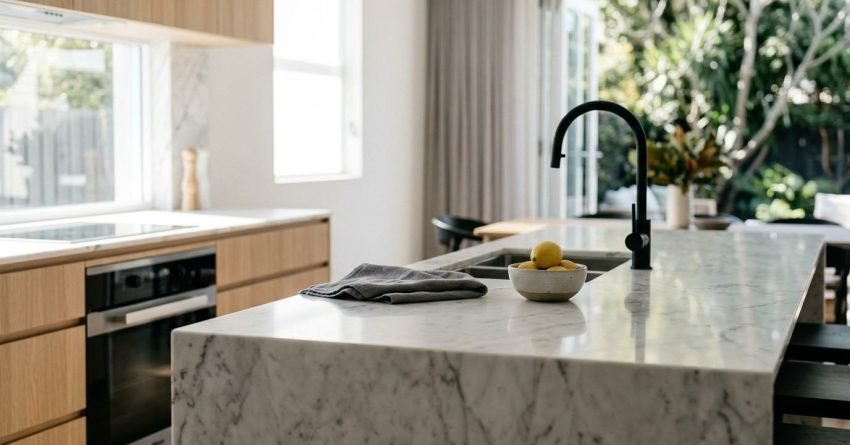
A well-executed kitchen renovation remains the single most effective way to add substantial value to a Sydney home. In our experience, modern, functional kitchens can deliver 70–120% return on investment, with mid-range renovations typically adding $50,000–$80,000 in value and high-end remodels pushing well beyond $100,000 in premium Sydney suburbs.
The kitchen serves as the functional and emotional heart of the home. Buyers make rapid judgments based on kitchen quality, and outdated or poorly designed spaces can significantly depress property values. In Sydney’s competitive market, where buyers expect contemporary finishes and quality appliances, a tired kitchen can cost tens of thousands in negotiating power.
Full Kitchen Remodel vs. Minor Updates
The scope of a kitchen renovation directly impacts both cost and value return. A full kitchen remodel, involving new cabinetry, benchtops, appliances, plumbing, electrical work, and flooring, typically costs $35,000–$65,000 for a standard Sydney kitchen, with luxury renovations reaching $80,000–$120,000 in high-end suburbs like Mosman, Double Bay, or Hunters Hill.
Minor kitchen updates, such as repainting cabinets, replacing benchtops, updating splashbacks, and installing new fixtures, can cost $12,000–$25,000. These still deliver meaningful value increases of $25,000–$45,000, particularly in entry-level and mid-market properties where buyers expect functional spaces but not necessarily premium finishes.
The decision between a full remodel and minor updates depends on the property’s current condition, target market, and overall value bracket. In our project experience, more modest properties often see better ROI from mid-range renovations, while premium properties require high-end finishes to meet buyer expectations and justify price premiums.
Key Elements That Drive Value
Not all kitchen spending delivers equal returns. We focus strategic investment on these high-impact elements to maximise value.
Quality benchtops represent the most visible value signal in any kitchen. Stone benchtops, particularly engineered stone, granite, or marble, are now standard buyer expectations in Sydney. Budget $3,000–$8,000 for quality stone benchtops in a standard kitchen, with premium materials reaching $10,000–$15,000.
Cabinetry quality and layout fundamentally determine kitchen functionality and aesthetic appeal. Soft-close drawers, quality hardware, and well-designed storage solutions add tangible value. Budget $12,000–$25,000 for quality flat-pack or semi-custom cabinetry, or $25,000–$45,000 for custom joinery in premium renovations.
Appliances should match the property’s value bracket. Mid-range properties benefit from quality brands like Bosch, Fisher & Paykel, or Westinghouse (budget $5,000–$8,000 for a full package), while premium homes require high-end brands like Miele, Gaggenau, or Sub-Zero ($15,000–$30,000+).
Lighting design transforms kitchen ambience and functionality. Layered lighting, combining task lighting, ambient lighting, and feature pendants, costs $2,500–$5,000 but dramatically improves perceived quality and liveability.
Cost Breakdown and Expected ROI
For a standard Sydney kitchen renovation (3.5m x 3.5m):
Mid-Range Renovation ($40,000–$55,000):
| Component | Cost |
| Cabinetry and installation | $15,000–$22,000 |
| Stone benchtops | $4,500–$7,000 |
| Mid-range appliances | $6,000–$8,500 |
| Plumbing and electrical | $4,000–$6,000 |
| Tiling (splashback and floor) | $3,500–$5,000 |
| Lighting and fixtures | $2,000–$3,000 |
| Labour and project management | $5,000–$8,500 |
Expected value increase: $50,000–$75,000 (ROI: 90–115%)
Premium Renovation ($65,000–$95,000):
| Component | Cost |
| Custom cabinetry | $28,000–$40,000 |
| Premium stone benchtops | $8,000–$12,000 |
| High-end appliances | $15,000–$22,000 |
| Designer fixtures and fittings | $5,000–$8,000 |
| Premium tiling and flooring | $6,000–$9,000 |
| Comprehensive lighting design | $3,000–$4,000 |
Expected value increase: $80,000–$120,000 (ROI: 85–125%)
The highest ROI typically occurs in the $40,000–$60,000 investment range, where quality finishes meet buyer expectations without over-capitalising. Premium renovations above $80,000 deliver strong absolute value increases but slightly lower percentage returns, making them most appropriate for high-value properties where buyers expect luxury finishes.
Bathroom Addition or Major Renovation
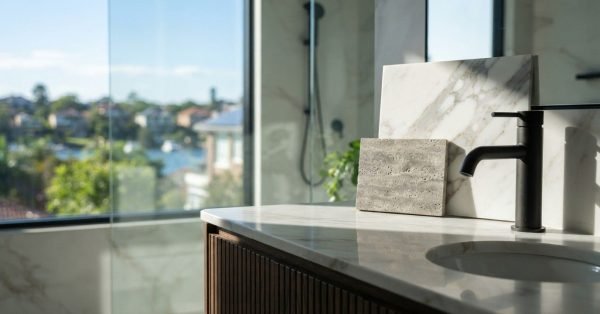
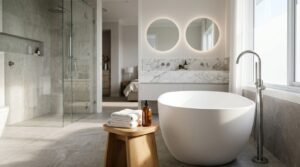
Adding a second bathroom or comprehensively renovating an existing bathroom ranks among the most value-adding renovations for Sydney homes, particularly in properties currently serviced by a single bathroom. Adding a second bathroom can increase property value by $60,000–$100,000, while a high-quality master ensuite renovation typically adds $40,000–$70,000 in established suburbs.
Bathroom count directly impacts property functionality, liveability, and market appeal, especially for families and multi-generational households. In Sydney’s competitive market, three-bedroom homes with only one bathroom face significant buyer resistance and price discounting compared to similar properties with two bathrooms.
Adding a Second Bathroom
Creating a second bathroom involves substantial structural work, plumbing installation, waterproofing, and finishing, making it one of the more complex and costly renovations. Total costs typically range from $25,000–$45,000 for a standard second bathroom, with luxury finishes pushing costs to $50,000–$65,000.
Cost breakdown for adding a second bathroom:
| Component | Cost |
| Structural work and framing | $4,000–$7,000 |
| Plumbing installation (new pipes, drainage) | $5,000–$8,000 |
| Waterproofing and tiling | $6,000–$10,000 |
| Bathroom fixtures (toilet, vanity, shower) | $4,000–$8,000 |
| Electrical work and ventilation | $2,500–$4,000 |
| Labour and project management | $3,500–$8,000 |
The value return depends heavily on property configuration and local market dynamics. In family-oriented suburbs like Epping, Ryde, or Baulkham Hills, adding a second bathroom to a three-bedroom home can increase value by $70,000–$100,000, delivering ROI of 155–220%. In inner-city areas or smaller properties, returns are more modest but still substantial at $50,000–$75,000.
Location within the home matters significantly. A second bathroom positioned near bedrooms, ideally servicing secondary bedrooms, delivers maximum value, while poorly positioned bathrooms requiring long hallway walks provide diminished returns.
Master Ensuite Upgrades
Renovating or adding a master ensuite transforms the primary bedroom into a true master suite, significantly increasing property appeal and value. Ensuite renovations typically cost $18,000–$35,000 for quality mid-range finishes, with luxury renovations reaching $40,000–$55,000.
Mid-range ensuite renovation ($20,000–$30,000):
| Component | Cost |
| Demolition and preparation | $2,000–$3,500 |
| Waterproofing and tiling | $5,000–$8,000 |
| Quality fixtures | $5,000–$8,000 |
| Plumbing and electrical | $3,000–$5,000 |
| Lighting and ventilation | $1,500–$2,500 |
| Labour and finishing | $3,500–$5,000 |
Expected value increase: $35,000–$55,000 (ROI: 115–155%)
Premium ensuites with double vanities, freestanding baths, frameless glass showers, heated floors, and designer tiles can add $50,000–$75,000 in value for properties in the $1.5M–$3M+ range, where buyers expect luxury amenities.
Budget Allocation for Maximum Impact
We prioritise waterproofing and structural integrity first, allocating 20–25% of the budget. Proper waterproofing prevents costly future damage and is never worth compromising to save costs.
Quality tiling deserves 25–30% of the budget, since tiles dominate visual impact in bathrooms. Floor-to-ceiling tiling in showers and feature walls significantly increases perceived value, and we budget $80–$150 per square metre for quality tiles, including installation.
Fixtures should receive 20–25% of the budget and match the property’s value bracket. Mid-market properties suit brands like Caroma, Methven, or Raymor, while premium properties call for designer brands like Rogerseller, Apaiser, or Brodware.
Heated floors, smart toilets, and steam showers add appeal in luxury properties but deliver poor ROI in mid-market homes, so we always match amenity level to buyer expectations for the property bracket.
Outdoor Living Spaces and Landscaping
Sydney’s climate and lifestyle culture make outdoor living spaces exceptionally valuable. Well-designed alfresco areas, decks, and landscaping can add $40,000–$80,000 to property values, and we’ve consistently seen homes with quality outdoor entertaining areas move faster and command stronger offers than comparable properties without outdoor amenity.
Outdoor spaces extend functional living area, enhance lifestyle appeal, and create strong emotional connections during property inspections, making them powerful value drivers in Sydney’s competitive market.
Deck, Patio, and Alfresco Areas
A well-designed deck or covered alfresco area transforms outdoor space into a functional living area, effectively adding usable square metres to a home. Costs vary based on size, materials, and complexity.
Timber deck (20–30m²): Hardwood timber (Spotted Gum, Blackbutt) costs $15,000–$25,000, while composite decking runs $18,000–$30,000, including structural framing, decking boards, balustrades, and installation.
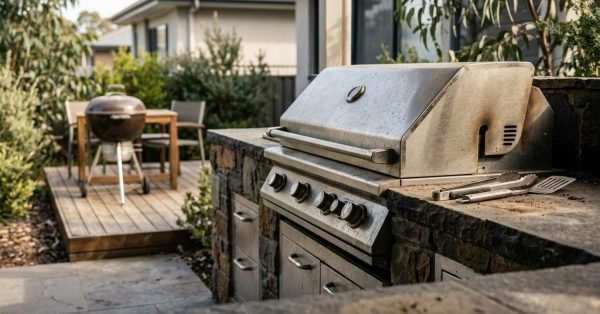
Covered alfresco/patio (20–30m²): A basic roof extension with a concrete slab costs $20,000–$35,000. An insulated roof with quality flooring runs $30,000–$50,000, and a premium design with integrated lighting, heating, and a built-in BBQ reaches $50,000–$75,000.
Expected value increase sits at $35,000–$65,000 for quality deck/alfresco installations, with ROI typically ranging from 140–180% for mid-range projects. In Sydney’s eastern suburbs and northern beaches, where outdoor lifestyle is paramount, premium outdoor spaces can add $70,000–$100,000 to property values.
Swimming Pools and Water Features
Swimming pools present a more complex value equation. While pools add lifestyle appeal and can increase property value, they also narrow the buyer pool and deliver variable ROI depending on location and property type.
In-ground concrete pool (8m x 4m): A basic pool with standard finishes costs $45,000–$65,000. Premium pools with quality tiling and heating run $65,000–$90,000, and luxury pools with water features, lighting, and landscaping reach $90,000–$150,000+.
Pools add $30,000–$60,000 in value in family-oriented suburbs with warm climates, but may add minimal value in inner-city areas where yard space is limited and maintenance is viewed as a burden.
Highest pool ROI occurs in:
- Family suburbs with larger blocks (Kellyville, Castle Hill, Cronulla)
- Warm climate areas (Northern Beaches, Eastern Suburbs)
- Properties valued above $1.5M where pools are expected amenities
- Homes with sufficient yard space for a pool plus a functional outdoor area
For maximum value, we recommend pairing pools with quality landscaping, safe fencing meeting NSW pool safety regulations, and integrated outdoor entertaining areas.
Professional Landscaping and Curb Appeal
Professional landscaping delivers exceptional ROI by creating powerful first impressions. In our experience, quality landscaping can add $20,000–$50,000 in value while costing $8,000–$20,000, an ROI that regularly exceeds most other renovation categories.
Front yard landscaping: A basic refresh (plants, mulch, edging) costs $3,000–$6,000. A comprehensive redesign with new lawn, garden beds, pathway, and lighting runs $8,000–$15,000, while premium landscaping with feature trees and stonework reaches $15,000–$30,000.
Backyard landscaping: Garden bed refreshes and lawn improvement cost $4,000–$8,000, a full transformation runs $12,000–$25,000; and luxury landscaping with mature trees and water features reaches $25,000–$50,000+.
The highest ROI comes from professional designs that balance aesthetic appeal with practical maintenance requirements and create cohesive visual flow between indoor and outdoor spaces.
Additional Living Space: Extensions and Conversions
Adding functional living space through extensions or conversions represents one of the most direct paths to adding $100,000+ in property value, particularly in land-constrained Sydney suburbs. Well-executed home extensions can add $1,500–$3,000 per square metre in value, often exceeding construction costs of $2,500–$4,000 per square metre once total property value is factored in.
Second-Storey Additions
Second-storey additions maximise land value by adding substantial living space without expanding the building footprint, which is particularly valuable in established suburbs where land is expensive.
Typical second-storey addition costs (60–80m²): A basic addition (two bedrooms, bathroom) costs $150,000–$220,000. A comprehensive addition (three bedrooms, two bathrooms, living area) runs $220,000–$320,000, and a premium addition with a master suite, ensuite, and study reaches $280,000–$400,000+.
Expected value increase sits at $180,000–$350,000 for quality second-storey additions, with ROI typically 90–140% depending on location and execution quality. Critical success factors include maintaining architectural harmony with the existing home, structural integrity, natural light, and floor plans that integrate seamlessly with ground-floor living.
Garage Conversions and Granny Flats
Converting garages or building self-contained granny flats creates additional living space or rental income potential, adding significant value in Sydney’s tight housing market.
Garage conversion (20–30m²): A basic conversion (bedroom/study) costs $15,000–$25,000, a comprehensive conversion with ensuite runs $25,000–$40,000, and a self-contained studio reaches $35,000–$55,000.
Granny flat construction (50–70m²): A basic granny flat costs $90,000–$130,000, a quality two-bedroom flat runs $130,000–$180,000, and a premium designer flat reaches $180,000–$250,000.
Under NSW planning rules, granny flats up to 60m² are permitted on blocks over 450m² in most Sydney local government areas, with complying development pathways streamlining approval. Expected value increase runs $30,000–$60,000 for garage conversions and $80,000–$150,000 for granny flats, with particularly strong returns in high-rental-yield suburbs like Parramatta, Liverpool, and Blacktown.
Basement Finishing and Undercroft Development
For properties with existing basements or undercroft areas, converting unused space into functional living areas offers exceptional value potential at relatively modest cost compared to new construction.
Basement/undercroft conversion (40–60m²): A basic conversion (storage to rumpus room) costs $35,000–$55,000, a mid-range conversion with bedroom and bathroom runs $55,000–$85,000, and a self-contained apartment reaches $85,000–$130,000.
Expected value increase sits at $60,000–$120,000, with ROI ranging from 110–170% for well-executed conversions. Success factors include adequate ceiling height (minimum 2.4m, preferably 2.7m+), natural light access, proper ventilation, and compliance with building codes for habitable rooms.
Energy Efficiency and Sustainability Upgrades
Energy efficiency and sustainability features have shifted from niche selling points to mainstream buyer expectations. We’ve noticed growing numbers of Sydney buyers factoring energy efficiency into purchase decisions, particularly around solar panels and quality insulation.
While energy upgrades rarely add dollar-for-dollar value increases, they enhance property marketability, reduce buyer concerns about ongoing costs, and appeal to environmentally conscious purchasers.
Solar Panel Installation
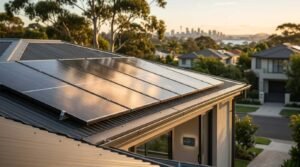
Solar panel systems deliver value through both property value increase and ongoing electricity cost savings, with payback periods typically 4–7 years in Sydney’s sunny climate.
Residential solar system costs: A 5kW system suited to an average home costs $4,500–$7,000, a 6.6kW system for larger homes runs $5,500–$8,500, and a 10kW system for high usage or future EV charging reaches $8,000–$12,000.
According to the Clean Energy Council, well-installed solar systems can add meaningful resale value, particularly in areas with expensive electricity rates and strong environmental awareness. Quality installation matters significantly. We recommend systems from reputable installers with strong warranties, quality inverters (Fronius, SolarEdge, Enphase), and tier-1 panels (LG, SunPower, REC).
Insulation and Climate Control Systems
Proper insulation and efficient climate control dramatically improve home comfort while reducing energy costs, an increasingly important selling point as energy prices rise.
Insulation upgrades: Ceiling insulation for a full home costs $2,000–$4,500, wall insulation retrofits run $4,000–$8,000, and underfloor insulation reaches $2,500–$5,000.
Climate control systems: Ducted air conditioning for a full home costs $10,000–$18,000, split systems for 3–4 rooms run $6,000–$10,000, and ducted heating reaches $8,000–$15,000.
Modern, efficient climate control, particularly ducted reverse-cycle air conditioning, has become an expected feature in Sydney homes valued above $1M. Its absence can reduce negotiating power at sale time.
Water-Saving and Smart Home Technology
Water-saving features and smart home technology appeal to efficiency-focused buyers and demonstrate property modernity, though value increases are typically modest relative to installation costs.
Water-saving features: A rainwater tank (3,000–5,000L) costs $2,500–$5,000, a greywater system runs $3,000–$6,000, and water-efficient fixtures reach $1,500–$3,500.
Smart home technology: A smart lighting system costs $1,500–$4,000, smart security runs $2,000–$5,000, and integrated home automation reaches $5,000–$15,000. In premium properties above $2M, integrated smart home systems are increasingly expected and can influence buyer decisions.
Structural and Cosmetic Improvements
Structural and cosmetic improvements rarely add $100,000 in value individually, but strategic combinations of these updates can collectively increase property value substantially relative to their modest cost. These improvements work by eliminating buyer objections and allowing properties to compete effectively in their price bracket.
Fresh Paint, Flooring, and Fixtures
Fresh paint is one of the highest-ROI renovations available, transforming property presentation for minimal cost while signalling care and maintenance to buyers.
Interior painting: A full interior repaint of a three-bedroom home costs $6,000–$10,000, and premium paint with feature walls runs $8,000–$13,000.
Exterior painting: A full exterior repaint of a single-storey home costs $8,000–$14,000, and a two-storey home runs $12,000–$20,000.
Flooring upgrades: Engineered timber flooring (100m²) costs $8,000–$14,000, hybrid flooring runs $6,000–$10,000, and quality carpet for bedrooms (40m²) reaches $3,000–$5,500.
These seemingly minor updates create a cohesive, modern presentation that significantly enhances buyer perception and willingness to pay premium prices.
Window and Door Replacements
Window and door replacements improve aesthetics, energy efficiency, security, and functionality, delivering value through both visual impact and practical performance.
Window replacements: Aluminium windows for a standard home cost $12,000–$20,000, timber windows for heritage or premium homes run $18,000–$30,000, and double-glazed windows reach $18,000–$28,000.
Door replacements: A quality front entry door costs $2,500–$6,000, sliding door replacement runs $2,000–$4,500, and bifold or stacker doors reach $4,500–$9,000.
Expected value increase runs $18,000–$40,000 for comprehensive window and door upgrades, with the highest returns in older homes where existing windows are single-glazed or visually dated.
Roof Repairs and Exterior Cladding
Roof condition and exterior presentation fundamentally impact buyer confidence and property value. Buyers heavily discount properties with visible roof or exterior issues, making these repairs essential before a sale.
Roof repairs: Minor repairs cost $800–$2,500, roof restoration runs $4,000–$8,000, full Colorbond replacement reaches $15,000–$25,000, and premium roofing (slate, terracotta) climbs to $25,000–$45,000.
A $5,000 roof repair can prevent $20,000–$30,000 in buyer discounting, which is why we treat these repairs as essential rather than optional before listing a property.
Protecting Your Renovation Investment: Insurance and Warranties
A high-value renovation is only as secure as the protections behind it. We always confirm that a licensed builder carries current home warranty insurance before construction begins on any project over $20,000 in NSW, since this protects the homeowner if the builder can’t complete or rectify the work.
Structural work, second-storey additions, and granny flats typically require home building compensation cover, while smaller cosmetic jobs may not. We recommend checking contractor licensing through NSW Fair Trading and confirming public liability cover before signing any contract, particularly on projects involving structural changes or DA approval.
Location-Specific Considerations for Sydney Homes
Sydney’s diverse property markets, complex planning regulations, and varied buyer preferences create location-specific renovation dynamics that significantly impact which improvements deliver maximum value.
Council Regulations and DA Requirements
Understanding local council requirements prevents costly delays and helps prioritise renovations that can proceed under complying development pathways versus those requiring a full Development Application.
Complying development (faster, lower cost): internal renovations, decks and pergolas within setback limits, granny flats meeting size requirements, and carports within height limits.
DA required: second-storey additions, significant extensions beyond complying limits, swimming pools in certain locations, and structural changes affecting the building envelope.
The NSW Planning Portal sets specific requirements for each local government area, with processing times ranging from 20 days for complying development to 3–6 months for a full DA.
Key Sydney council variations:
- Inner West Council: Strict heritage controls in many suburbs. Budget an additional $5,000–$15,000 for heritage compliance in Balmain, Leichhardt, or Annandale.
- Northern Beaches Council: Strong focus on environmental protection, bushfire regulations, and coastal erosion assessments.
- Ku-ring-gai Council: Stringent tree preservation orders; tree removal requires detailed arborist reports.
- Bayside Council: Flood planning controls affect many properties, and flood studies may be required.
We factor $3,000–$8,000 for DA costs and $2,000–$5,000 for consultant reports into every major renovation budget.
Market Trends in Sydney Property Values
Sydney’s property market shows distinct geographic patterns in renovation returns, with different suburbs rewarding different improvement types.
Premium suburbs (Eastern Suburbs, Lower North Shore, Northern Beaches) expect luxury finishes, with outdoor living and high-end kitchens essential for competitive positioning. We recommend budgeting 20–30% above standard costs here for appropriate finish quality.
Family suburbs (Hills District, Sutherland Shire, Northern Suburbs) reward functional space additions like a second bathroom or extra bedroom, with mid-range finishes appropriate and over-capitalisation a genuine risk.
Inner-city and investor-focused areas (Inner West, Parramatta, Canterbury-Bankstown) favour rental yield improvements like granny flats and dual living, with low-maintenance, neutral finishes preferred over high-maintenance luxury.
Emerging suburbs (South West, North West Growth Corridor) compete against new-home stock, so cost-effective, contemporary interior presentation typically delivers better ROI than premium materials.
Renovations That Appeal to Sydney Buyers
Understanding buyer priorities helps focus renovation spending on features that drive purchase decisions and justify premium pricing. In order of what we consistently see move buyers, priorities run: a modern, functional kitchen; multiple bathrooms; outdoor living space; fresh, neutral presentation; adequate storage; reliable climate control; natural light; and energy efficiency.
Features that narrow buyer pool or add minimal value:
- Highly personalised design choices (bold colours, unusual layouts)
- Over-capitalisation with luxury finishes in mid-market properties
- Pools in inner-city or small-block properties
- Excessive bedrooms (five-plus can limit buyer pool)
- Niche features like home theatres or wine cellars in standard homes
Strategic renovation focuses on addressing buyer priorities in order, ensuring each investment expands rather than narrows the potential buyer pool.
Budgeting and Planning for High-Value Renovations
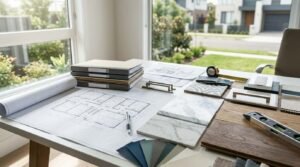
Successful high-value renovations require comprehensive planning, realistic budgeting, and disciplined project management to ensure investments deliver expected returns without cost overruns.
Setting Realistic Budgets and Timelines
Accurate budgeting begins with understanding true renovation costs, including often-overlooked expenses that can add 15–30% to initial estimates.
Direct construction costs typically consume 60–70% of the budget, covering materials, labour, and structural work. Professional fees run 8–12%, covering architects ($3,000–$15,000), engineers ($2,000–$6,000), council fees ($1,500–$5,000), and building surveyors ($1,500–$3,500).
Hidden and contingency costs should account for 15–20% of the budget, covering unexpected structural issues, asbestos removal in pre-1990 homes ($2,000–$8,000), and service upgrades ($3,000–$8,000).
Timeline expectations: kitchen renovations take 4–12 weeks, bathroom additions 8–12 weeks, second-storey additions 6–9 months, granny flats 4–6 months, and full home renovations 4–8 months. We always add 20–40% to these estimates for approvals, weather delays, and material supply issues.
Avoiding Cost Overruns and Hidden Expenses
Cost overruns typically result from inadequate planning, scope creep, and unaccounted-for hidden issues common in older Sydney homes.
Inadequate site investigation is the most common cause we encounter. We recommend a pre-renovation building inspection ($500–$1,200) and asbestos survey ($400–$800) before finalising any budget. Scope creep during construction is the second most common cause, so we finalise all design decisions before work begins and resist mid-project changes.
Choosing a contractor on the lowest quote alone is a frequent mistake. We recommend obtaining three detailed quotes, checking licensing and insurance, and maintaining 15–20% contingency for renovations in homes built before 2000.
Hidden expense checklist: asbestos testing, structural repairs, electrical upgrades, plumbing repairs, termite treatment, waterproofing, council compliance issues, landscaping reinstatement, and temporary accommodation.
Prioritising Renovations for Maximum Return
When budget constraints prevent completing every desired renovation, strategic prioritisation ensures available funds deliver maximum value increase.
Tier 1 (essential): structural and safety issues, kitchen renovation, bathroom addition if the property has only one, fresh paint.
Tier 2 (high value): flooring upgrades, outdoor living space, master ensuite, climate control.
Tier 3 (value-adding): landscaping, energy efficiency, additional living space, premium finishes.
Tier 4 (lifestyle, address last): swimming pool, smart home technology, luxury features.
For a $100,000 renovation budget, we typically allocate $40,000–$45,000 to the kitchen, $25,000–$30,000 to a bathroom addition or renovation, $20,000–$25,000 to paint, flooring, and outdoor space, and $10,000–$15,000 to contingency and fees. This allocation ensures the highest-impact renovations receive appropriate investment while protecting against budget overruns.
Conclusion
Adding $100,000 or more to a Sydney home’s value requires strategic investment in renovations that align with buyer priorities, match the property’s price bracket, and deliver measurable returns. Kitchen renovations, bathroom additions, and outdoor living spaces consistently provide the highest ROI, often exceeding 100%, while comprehensive planning and quality execution keep projects on track.
Success in high-value renovations comes from treating a property as both a home and an investment, making decisions based on market realities rather than personal preference, and working with professionals who understand Sydney’s planning environment. Focusing spending on proven value drivers, modern kitchens, functional bathrooms, appealing outdoor spaces, and fresh presentation creates the foundation for substantial value increases.
We bring transparent cost planning, skilled workmanship, and practical renovation expertise to every project at Sydney Home Renovation, helping homeowners and investors navigate budgeting decisions and execute high-value improvements with confidence. Contact us today to discuss your renovation goals and discover how strategic improvements can add $100,000+ to your home’s value.
Frequently Asked Questions
What home improvement adds the most value in Sydney?
Kitchen renovations consistently deliver the highest value returns in Sydney, typically adding $50,000–$120,000 in property value with ROI ranging from 70–120%. A quality mid-range renovation costing $40,000–$55,000 can increase value by $50,000–$75,000.
How much does a kitchen renovation cost to add $100k in value?
Adding approximately $100,000 in value through a kitchen alone typically requires $65,000–$95,000 in premium finishes, custom cabinetry, and high-end appliances. This level of renovation suits properties valued above $1.5M where buyers expect luxury finishes.
Is adding a second bathroom worth the investment?
Adding a second bathroom delivers exceptional ROI, particularly for three-bedroom homes with only one bathroom. An investment of $25,000–$45,000 typically increases value by $60,000–$100,000, while dramatically improving functionality and market appeal.
Do outdoor living spaces increase property value?
Quality outdoor living spaces, including decks, alfresco areas, and landscaping, add $35,000–$80,000 in value while costing $20,000–$50,000. In Sydney’s climate and lifestyle culture, well-designed outdoor entertaining areas create strong emotional connections during inspections.
What is the ROI on solar panel installation?
Solar panel systems typically add $6,000–$15,000 in direct property value while delivering ongoing electricity savings of $800–$1,800 annually. A quality 6.6kW system achieves payback through combined value increase and energy savings within 4–7 years.
How long does a major home renovation take?
Timeline varies by scope: kitchen renovations need 4–12 weeks, bathroom additions 8–12 weeks, second-storey additions 6–9 months, and full home renovations 4–8 months. We add 20–40% to estimates for approvals and material supply issues.
Should I renovate before selling or price the property lower?
Renovating before selling typically delivers better financial outcomes than discounting, particularly for kitchens and bathrooms. Buyers heavily discount dated kitchens and bathrooms, often by more than the actual renovation would have cost.
What permits do I need for home extensions in Sydney?
Internal renovations typically require only building permits, while extensions and structural changes require either a Complying Development Certificate or a full Development Application. Check specific requirements with your local council or the NSW Planning Portal.
Can cosmetic updates alone add significant value?
Strategic cosmetic updates, fresh paint, quality flooring, modern fixtures, and landscaping can collectively add tens of thousands in value while costing a fraction of that. These updates work by eliminating buyer objections and creating positive first impressions.
How do I avoid going over budget on a major renovation?
Prevent cost overruns by investing in a pre-renovation building inspection, finalising all design decisions before construction begins, maintaining 15–20% contingency, and obtaining detailed fixed-price quotes from licensed, insured contractors.