
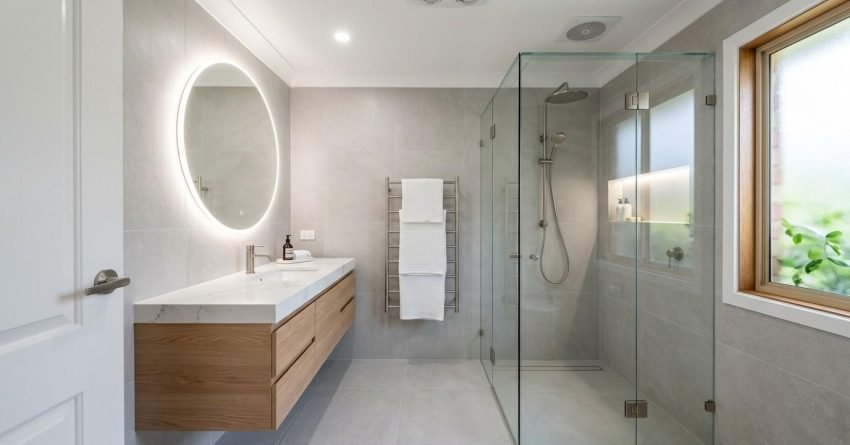
Quality fixtures, functional layouts, and modern finishes consistently deliver the strongest returns on bathroom renovations in Sydney. A well-planned bathroom upgrade can return between 50% and 100% of your investment at sale, making it one of the most value-effective rooms to renovate.
Bathrooms rank second only to kitchens in influencing buyer decisions. Whether you’re preparing to sell, investing in a rental property, or simply want to renovate smart, understanding which upgrades genuinely add value separates a profitable renovation from an expensive mistake.
This guide breaks down exactly what adds the most value to a bathroom in the Sydney market. You’ll learn which upgrades deliver the highest ROI, what mistakes to avoid, and how to budget strategically so every dollar works harder.
Understanding Bathroom Value: What Buyers and Valuers Actually Look For
Before selecting tiles or fixtures, it’s essential to understand how bathroom value is actually measured. What feels like an upgrade to you may not translate to market value.
The Difference Between Personal Preference and Market Value
Personal taste drives many renovation decisions. Bold colours, statement tiles, and unique fixtures might suit your lifestyle perfectly. However, property value is determined by broad market appeal, not individual preference.
Buyers assess bathrooms on functionality, condition, and neutral presentation. A bathroom that photographs well, feels spacious, and shows quality workmanship will outperform a highly personalised space. This doesn’t mean boring. It means timeless finishes, quality materials, and smart design that appeals to the widest buyer pool.
The goal is creating a bathroom that buyers can imagine themselves using without needing to change anything.
How Sydney Property Valuers Assess Bathroom Renovations
Valuers in Sydney consider several factors when assessing bathroom improvements. According to the Australian Property Institute, key valuation criteria include:
- Quality of fixtures and fittings relative to the property’s price bracket
- Compliance with waterproofing and building standards
- Functional layout and efficient use of space
- Condition and age of existing components
- Number of bathrooms relative to bedrooms
A renovated bathroom in a median-priced Sydney home should match the expectations of that market segment. Over-specification wastes money. Under-specification leaves value on the table.
High-Impact Upgrades That Add the Most Value
These upgrades consistently deliver the strongest returns across Sydney’s property market. They combine visual impact with functional improvement.
Quality Fixtures and Tapware
Tapware and fixtures are the first things buyers notice and touch. Cheap, builder-grade fixtures signal a budget renovation. Quality tapware from brands like Caroma, Phoenix, or Methven signals attention to detail.
Matte black and brushed nickel finishes remain popular in 2025, though chrome offers timeless durability. Expect to invest $800 to $2,500 on quality tapware for a standard bathroom. This relatively modest spend creates an outsized impression of quality.
Mixer taps with ceramic disc cartridges last longer and feel more substantial than cheaper alternatives. Buyers notice the difference, even subconsciously.
Modern Vanity Units with Storage
Vanities anchor the bathroom visually and functionally. A dated laminate vanity with a cracked basin immediately ages the entire room.
Modern floating vanities create a sense of space and make cleaning easier. Stone or solid-surface benchtops with undermount basins look premium and photograph well. Soft-close drawers and adequate storage solve practical problems buyers care about.
Budget $1,200 to $4,000 for a quality vanity unit depending on size and materials. Wall-hung designs with concealed cisterns maximise floor space in smaller Sydney bathrooms.
Walk-In Showers and Frameless Glass
Walk-in showers with frameless glass panels have become the expected standard in renovated bathrooms. They make spaces feel larger, photograph beautifully, and suit Sydney’s preference for clean, contemporary design.
A quality frameless shower screen costs between $1,000 and $2,500 installed. Pair this with large-format floor-to-ceiling tiles and a linear drain for maximum impact.
Shower niches built into the wall provide practical storage without cluttering the space. Recessed LED lighting above the shower adds a premium touch.
Updated Tiling and Waterproofing
Tiles define the bathroom’s character. Dated tiles in poor condition are the most common reason buyers discount a property’s value.
Large-format tiles (600x600mm or larger) create a modern, spacious feel with fewer grout lines to maintain. Neutral tones like white, grey, and warm beige appeal to the broadest market. Feature walls or decorative tiles can add interest without overwhelming the space.
Critically, proper waterproofing underpins everything. NSW Fair Trading requires licensed waterproofers to complete bathroom membrane work. Cutting corners here creates liability and deters informed buyers.
Budget $80 to $150 per square metre for quality tiles installed, plus $1,500 to $3,000 for compliant waterproofing.
Improved Lighting and Ventilation
Poor lighting makes even beautiful bathrooms feel dingy. Layered lighting transforms the space: ambient ceiling lights, task lighting around mirrors, and accent lighting for atmosphere.
LED downlights with appropriate IP ratings for wet areas are standard. Backlit mirrors or LED mirror cabinets add a luxury feel for relatively modest cost.
Ventilation is equally important. A quality exhaust fan prevents moisture damage, mould growth, and paint deterioration. Buyers increasingly recognise the importance of proper ventilation. Budget $300 to $800 for a quality exhaust fan with timer function.
Layout Changes That Maximise Functionality and ROI
Sometimes the biggest value gains come from reconfiguring space rather than simply updating finishes.
Adding a Second Bathroom or Ensuite
Adding a bathroom where none existed delivers the strongest ROI of any bathroom improvement. A three-bedroom home with one bathroom is functionally limited. Adding an ensuite or second bathroom removes a significant buyer objection.
According to CoreLogic research, an additional bathroom can add $50,000 to $100,000 to a Sydney property’s value, depending on location and property type. The renovation cost typically ranges from $25,000 to $50,000 for a basic ensuite.
This upgrade particularly benefits properties in family-oriented suburbs where multiple bathrooms are expected.
Reconfiguring for Better Flow and Space
Some bathrooms have awkward layouts that waste space or create poor flow. Moving a toilet, repositioning a vanity, or removing a redundant wall can transform functionality.
Layout changes require careful planning. Plumbing relocation adds cost, typically $2,000 to $5,000 depending on complexity. However, a bathroom that flows well and uses space efficiently will always outperform a larger but poorly designed space.
Consider traffic flow, door swing clearances, and sight lines from the doorway. First impressions matter.
Converting a Bath to a Shower (or Vice Versa)
The bath versus shower decision depends on your property type and target market.
Remove the bath in apartments, investment properties, and homes with multiple bathrooms. Showers are more practical for daily use and create more usable space.
Keep or add a bath in family homes with only one bathroom. Families with young children need bathing options. A freestanding bath can also serve as a design feature in larger bathrooms.
The conversion cost ranges from $3,000 to $8,000 depending on tiling and plumbing requirements.
Mid-Range Improvements with Strong Value Returns
These upgrades sit between major renovations and cosmetic updates. They add genuine functionality and perceived value without requiring structural changes.
Heated Towel Rails and Underfloor Heating
Heated towel rails have moved from luxury to expected feature in renovated Sydney bathrooms. They cost between $400 and $1,200 installed and provide daily comfort plus a premium impression.
Underfloor heating costs more, typically $100 to $150 per square metre for electric systems. In smaller bathrooms, this totals $500 to $1,000. Buyers in Sydney’s cooler months appreciate this feature, and it photographs as a selling point.
Frameless Mirrors and Shaving Cabinets
A quality mirror elevates the entire bathroom. Frameless mirrors with polished edges look clean and contemporary. Backlit mirrors add ambiance and practical task lighting.
Shaving cabinets provide hidden storage while serving as the mirror. Quality units with soft-close doors and internal power points cost $500 to $1,500. They solve storage problems buyers care about.
Water-Efficient Fixtures and Sustainability Features
Water efficiency matters to Sydney buyers facing ongoing water costs. WELS-rated fixtures (Water Efficiency Labelling and Standards) signal responsible design.
Dual-flush toilets, low-flow showerheads, and aerating taps reduce water consumption without sacrificing performance. These features cost little extra when specified during renovation but appeal to environmentally conscious buyers.
Cosmetic Updates That Refresh Without Over-Capitalising
Not every bathroom needs a full renovation. Strategic cosmetic updates can refresh a tired space for a fraction of the cost.
Regrouting, Resealing, and Surface Repairs
Discoloured grout makes even quality tiles look dated. Professional regrouting costs $20 to $40 per square metre and dramatically improves appearance.
Resealing around baths, showers, and basins prevents water damage and shows attention to maintenance. Chip repairs on basins or baths cost $200 to $500 and avoid the need for replacement.
Painting and Accessory Upgrades
A fresh coat of paint in a modern neutral tone transforms dated bathrooms. Use moisture-resistant paint formulated for wet areas. Budget $500 to $1,000 for professional painting of a standard bathroom.
New accessories create cohesion: matching towel rails, toilet roll holders, robe hooks, and soap dispensers. A coordinated set costs $200 to $600 and creates a finished, intentional look.
Replacing Dated Hardware and Fixtures
Sometimes the bones are good but the details are tired. Replacing tapware, showerheads, towel rails, and cabinet handles can modernise a bathroom for $1,000 to $3,000 total.
This approach works when tiles and layout are acceptable but fixtures date the space. It’s the most cost-effective refresh for bathrooms that don’t warrant full renovation.
What Doesn’t Add Value: Common Renovation Mistakes to Avoid
Knowing what not to do is as important as knowing what works. These mistakes waste money or actively reduce value.
Over-Personalised Design Choices
Bold tile patterns, unusual colour schemes, and statement pieces that reflect personal taste can alienate buyers. That striking emerald green feature wall might thrill you but concern a buyer who sees a renovation project.
Stick to neutral foundations. Add personality through easily changed elements like towels, plants, and accessories rather than permanent fixtures.
Cheap Materials That Look Cheap
Budget constraints are real, but some savings backfire. Thin, hollow-sounding tapware, flimsy vanity units, and low-quality tiles signal a cheap renovation.
Buyers mentally discount properties with visible cost-cutting. They assume hidden problems match visible ones. Better to renovate a smaller scope with quality materials than a full renovation with cheap finishes.
Ignoring Waterproofing and Compliance
Waterproofing failures cause the most expensive bathroom problems. Leaks damage structural elements, create mould, and can affect neighbouring properties in apartments.
NSW requires waterproofing work to be completed by licensed waterproofers with certificates of compliance. Skipping this step or using unlicensed trades creates legal liability and deters informed buyers who request compliance certificates.
Always obtain waterproofing certificates and retain them for future sale.
Budgeting for Value: How to Prioritise Your Bathroom Renovation Spend
Strategic budgeting ensures your renovation investment translates to property value.
Cost vs. Value Analysis for Sydney Bathrooms
The Housing Industry Association reports that bathroom renovations in Sydney typically cost:
- Basic refresh: $8,000 to $15,000
- Mid-range renovation: $15,000 to $30,000
- High-end renovation: $30,000 to $50,000+
Value recovery varies by property type and location. As a general rule, aim to spend no more than 3% to 5% of your property’s value on a single bathroom renovation. A bathroom in a $1.5 million home shouldn’t exceed $45,000 to $75,000 unless adding significant functionality like an extra bathroom.
Where to Invest and Where to Save
Invest in:
- Quality tapware and fixtures (high visibility, daily use)
- Proper waterproofing (non-negotiable)
- Good lighting (transforms the space)
- Functional storage (solves real problems)
Save on:
- Tiles (mid-range tiles installed well outperform premium tiles installed poorly)
- Accessories (easily upgraded later)
- Decorative elements (trends change)
Setting a Realistic Budget Based on Property Type
Match your renovation to your property’s market position. For a broader view of how bathroom budgets fit within a full property upgrade, the complete guide to whole home renovation covers how to sequence and prioritise room-by-room investment:
- Investment properties: Focus on durability, easy maintenance, and broad appeal. Budget $12,000 to $20,000 for a functional, attractive renovation.
- Family homes: Balance quality with practicality. Budget $20,000 to $35,000 for a renovation that serves daily family use while adding resale value.
- Premium properties: Quality expectations are higher. Budget $35,000 to $60,000 for finishes that match the property’s positioning.
Working with Professionals to Maximise Value
The right professionals protect your investment and ensure quality outcomes.
Why Licensed Tradespeople Protect Your Investment
Bathroom renovations require multiple licensed trades: plumbers, electricians, waterproofers, and tilers. Using licensed professionals ensures:
- Work meets Australian Standards and building codes
- You receive compliance certificates for future sale
- Insurance covers defective work
- Warranties remain valid
Service NSW maintains a licence checker for verifying trade credentials. Always verify before engaging contractors.
Getting Accurate Quotes and Avoiding Hidden Costs
Detailed quotes prevent budget blowouts. A comprehensive quote should itemise:
- Demolition and removal
- Waterproofing (with certificate)
- Plumbing rough-in and fit-off
- Electrical work
- Tiling (including preparation)
- Fixtures and fittings supply
- Installation labour
- Project management and coordination
Request fixed-price quotes rather than estimates. Clarify what’s included and what triggers variations. Common hidden costs include asbestos removal, unexpected plumbing issues, and structural repairs discovered during demolition.
Conclusion
Bathroom renovations deliver strong returns when planned strategically. Quality fixtures, functional layouts, modern finishes, and proper compliance create bathrooms that buyers value and valuers recognise.
The upgrades that add the most value combine visual appeal with practical improvement. Walk-in showers, quality vanities, updated tiling, and good lighting consistently outperform over-personalised or budget-compromised alternatives. Adding a second bathroom remains the single highest-ROI bathroom improvement for suitable properties.
At Sydney Home Renovation, we help homeowners and investors plan bathroom renovations that maximise value without over-capitalising. Our transparent quoting, licensed tradespeople, and practical renovation expertise ensure your bathroom investment delivers the returns you expect. Contact us to discuss your bathroom renovation project and receive a detailed, fixed-price quote.
Frequently Asked Questions
What single bathroom upgrade adds the most value? Quality tapware and fixtures deliver the highest value relative to cost. They’re the first elements buyers notice and touch, creating immediate impressions of quality. Expect to invest $800 to $2,500 for tapware that significantly elevates perceived bathroom value.
Is it worth renovating a bathroom before selling? Yes, in most cases. A dated bathroom is a common buyer objection that leads to lower offers or longer sale times. Even a mid-range renovation costing $15,000 to $25,000 typically recovers 50% to 100% of the investment through higher sale price and faster sale.
How much does a value-adding bathroom renovation cost in Sydney? A mid-range bathroom renovation in Sydney costs between $15,000 and $30,000 including quality fixtures, new tiling, updated vanity, and compliant waterproofing. Basic refreshes start around $8,000, while high-end renovations exceed $40,000.
Does adding a second bathroom increase property value? Adding a bathroom where none existed is the highest-ROI bathroom improvement. In Sydney, an additional bathroom can add $50,000 to $100,000 to property value while costing $25,000 to $50,000 to build. This particularly benefits three-bedroom homes with only one bathroom.
What bathroom features do buyers want most in 2025? Sydney buyers prioritise walk-in showers with frameless glass, quality tapware in matte black or brushed finishes, floating vanities with stone benchtops, large-format neutral tiles, and good lighting. Storage solutions and heated towel rails are increasingly expected in renovated bathrooms.
Should I choose a bath or shower for resale value? It depends on your property. Family homes with only one bathroom should retain a bath for families with young children. Apartments, investment properties, and homes with multiple bathrooms benefit from shower-only configurations that maximise space and suit daily use.
How do I avoid over-capitalising on a bathroom renovation? Limit bathroom renovation spend to 3% to 5% of your property’s total value. Match finish quality to your property’s market position. Focus investment on high-impact, broadly appealing upgrades rather than personalised luxury features. Get multiple quotes and stick to a fixed budget.


