Walk-in showers come with significant downsides including water spillage beyond the shower area, higher installation costs averaging $8,000–$15,000 in Sydney, increased cleaning demands, poor heat retention, and strict minimum size requirements of at least 1.2m x 1m for effective use. While their frameless glass and open design create visual appeal, these practical limitations affect daily functionality, ongoing maintenance, and renovation budgets. This guide examines the real-world drawbacks of walk-in showers, breaks down cost implications, identifies when they’re unsuitable, and presents practical alternatives to help you make an informed bathroom renovation decision that balances aesthetics with functionality and budget.
Understanding Walk-in Showers: What Makes Them Popular
Walk-in showers represent a modern bathroom design featuring an open entry without doors or curtains, typically incorporating frameless or semi-frameless glass panels, floor-level access, and minimalist hardware. The design prioritizes visual openness and accessibility over traditional enclosed shower cubicles.
The Appeal of Frameless Glass and Open Design
Frameless glass panels create an uninterrupted sightline that makes bathrooms appear larger and more luxurious. The absence of bulky frames, tracks, and door mechanisms produces a clean, contemporary aesthetic that aligns with modern interior design trends.
The open-entry configuration eliminates the need to navigate hinged doors or step over raised thresholds. This creates easier access for daily use and presents a more streamlined visual profile compared to traditional shower enclosures with visible frames and hardware.
Why Sydney Homeowners Choose Walk-in Showers
Sydney’s property market values contemporary bathroom finishes, with renovated bathrooms adding 5–10% to property values. Walk-in showers signal modern renovation work and appeal to buyers seeking updated homes.
The design suits Sydney’s climate where bathroom ventilation and natural light are priorities. Large glass panels allow light penetration while maintaining separation from other bathroom fixtures, addressing the spatial constraints common in Sydney’s older housing stock.
Renovation trends in Sydney’s inner suburbs show increasing preference for wet-room style bathrooms, with walk-in showers serving as the centerpiece. This aesthetic preference drives demand despite practical limitations that emerge during daily use.
The Main Downsides of Walk-in Showers
Water Spillage and Splash Issues
Limited Water Containment Without Doors
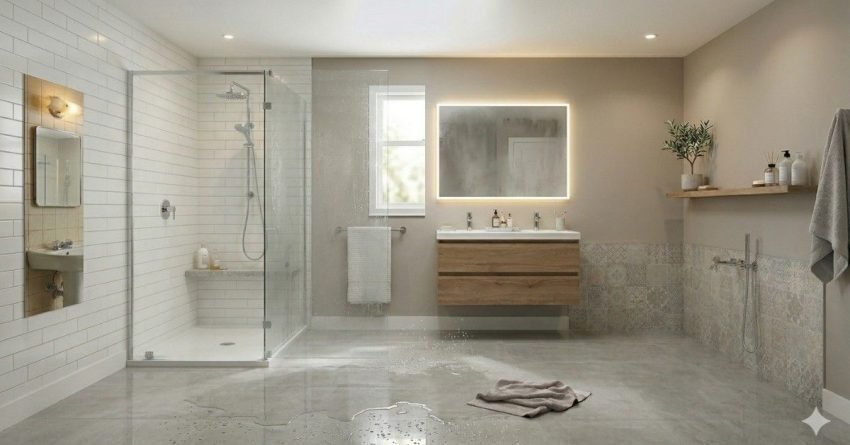
Walk-in showers lack the physical barrier that enclosed showers provide. Water escapes the designated shower area during normal use, particularly when water pressure is high or when the showerhead angle directs spray toward the open entry.
The absence of a door or curtain means every shower session risks water reaching bathroom floors, nearby vanities, and toilet areas. This spillage occurs regardless of user care, as water naturally splashes and bounces off bodies, walls, and the shower floor.
Households with multiple users experience compounded spillage issues. Different heights, shower preferences, and movement patterns create varying water distribution, making it impossible to predict or control where water travels during each use.
Floor Drainage and Slope Requirements
Effective walk-in shower function demands precise floor slope engineering. The entire shower floor must slope toward the drain at a minimum gradient of 1:100, with many installers recommending 1:80 for reliable water flow and prevention of pooling.
Inadequate slope creates standing water that spreads beyond the shower zone. This water migrates across bathroom floors, accumulating in corners and against walls where it promotes mold growth, damages grout, and creates slip hazards.
Proper drainage installation requires specialized waterproofing extending at least 1.8m from the shower area in all directions according to Australian building standards under AS 3740. This extensive waterproofing adds significant cost and complexity compared to contained shower installations.
Lack of Privacy and Exposure
Open Design Challenges in Shared Bathrooms
Walk-in showers provide minimal visual privacy in bathrooms shared by multiple household members. The open design and clear glass panels expose the shower user to anyone entering the bathroom, creating discomfort in family homes.
Couples sharing bathrooms face awkward situations when one person showers while the other uses bathroom facilities. The lack of separation makes simultaneous bathroom use uncomfortable, reducing the practical functionality of the space.
Homes with guests experience heightened privacy concerns. Visitors using bathrooms with walk-in showers have limited privacy if someone needs bathroom access during their shower, creating social discomfort that enclosed showers avoid.
Steam and Heat Retention Problems
Open shower designs fail to contain steam and heat within the shower area. Hot water generates steam that immediately disperses throughout the entire bathroom rather than concentrating around the user.
This steam dispersal creates several problems. Mirrors fog completely, bathroom surfaces become damp, and the shower user experiences heat loss that makes showering less comfortable, particularly during Sydney’s cooler months from June through August.
The lack of heat retention increases hot water consumption. Users compensate for heat loss by raising water temperature or extending shower duration, driving up energy costs compared to enclosed showers that trap heat around the user.
Higher Installation and Waterproofing Costs
Extensive Waterproofing Requirements
Walk-in shower installation demands comprehensive waterproofing that extends far beyond the shower footprint. Building regulations under the National Construction Code require waterproofing coverage across the entire bathroom floor and up walls to heights of 1.8m in wet areas.
This extensive waterproofing involves multiple membrane layers, proper substrate preparation, and certified installation by licensed waterproofers. The process takes longer and costs significantly more than waterproofing for enclosed shower installations with contained water exposure.
Professional waterproofing for walk-in showers costs $2,500–$4,500 in Sydney, representing 20–30% of total shower installation budgets. This cost reflects the larger surface area requiring treatment and the critical importance of preventing water damage in open shower designs.
Floor Slope and Drainage Installation
Creating the necessary floor slope requires specialized formwork and screeding. Installers must build up floor levels, create precise gradients, and ensure smooth transitions between the shower area and surrounding bathroom floor.
The drainage system itself demands careful specification. Linear drains, popular in walk-in showers for their aesthetic appeal, cost $400–$800 compared to $150–$300 for standard center drains. Installation complexity adds $500–$1,000 in additional labor.
Floor preparation and slope creation add 2–3 days to renovation timelines. This extended duration increases labor costs and delays project completion compared to standard shower installations that work with existing floor levels.
Premium Materials and Labour Costs
Walk-in showers typically use larger glass panels than enclosed showers. A standard walk-in installation requires 10mm–12mm toughened glass panels measuring 2m in height, costing $800–$1,500 per panel depending on width and finish.
Frameless glass requires precision measurement and installation. Panels must align perfectly with walls and floors, demanding experienced installers who charge premium rates of $80–$120 per hour compared to $60–$80 for standard shower screen installation.
Hardware costs escalate with frameless designs. Wall channels, support brackets, and specialized hinges for frameless glass cost $300–$600, while standard framed shower screens use basic hardware costing $100–$200.
Space Requirements and Layout Limitations
Minimum Size Requirements for Effective Use
Walk-in showers require minimum dimensions of 1.2m x 1m to function without excessive water spillage. Smaller configurations result in water escaping the shower area during every use, negating the design’s intended benefits.
Comfortable walk-in shower use demands 1.5m x 1m or larger. This size allows users to move freely, adjust shower position, and minimize water spray reaching the open entry. Anything smaller creates cramped conditions and guaranteed spillage.
The shower area itself represents only part of the space requirement. An additional 800mm–1m of clear floor space must remain in front of the shower entry for access, bringing total space allocation to approximately 2.5–3 square meters.
Not Suitable for Small Bathrooms
Sydney’s typical bathroom dimensions in older homes range from 2m x 2m to 2.5m x 2.5m. Installing a walk-in shower in these spaces consumes 50–60% of available floor area, leaving insufficient room for vanities, toilets, and circulation.
Small bathroom installations create impractical layouts where the toilet sits too close to the shower spray zone, vanities become difficult to access, and door swings interfere with fixtures. These compromises reduce overall bathroom functionality.
Bathrooms under 5 square meters generally cannot accommodate walk-in showers without significant layout compromises. Homeowners in these situations achieve better results with enclosed shower solutions that maximize usable floor space, as explored in our complete guide to bathroom renovation.
Cleaning and Maintenance Demands
Glass Panel Water Marks and Soap Scum
Frameless glass panels show every water mark, soap residue, and mineral deposit. Sydney’s water hardness varies by suburb, with western Sydney areas experiencing higher mineral content that accelerates visible buildup on glass surfaces.
Water marks appear within hours of showering. Minerals in water droplets leave white spots as water evaporates, creating a cloudy appearance that obscures the glass clarity that makes walk-in showers visually appealing.
Soap scum accumulates along the bottom edges of glass panels and in corners where water pools. This buildup requires weekly scrubbing with specialized cleaners to prevent permanent etching and discoloration of glass surfaces.
Daily Squeegee and Cleaning Requirements
Maintaining clear glass demands daily squeegeeing after each shower use. This routine takes 2–3 minutes per shower and represents an ongoing time commitment that enclosed shower curtains or frosted glass eliminate.
Skipping daily squeegeeing results in rapid buildup that becomes increasingly difficult to remove. Weekly cleaning sessions extend from 15 minutes to 45–60 minutes when daily maintenance lapses, creating a maintenance burden many homeowners underestimate.
Specialized glass cleaning products cost $12–$20 per bottle and last 4–6 weeks with regular use. Annual cleaning product costs reach $150–$200, adding to the total cost of ownership beyond initial installation expenses.
Grout and Tile Maintenance
Walk-in showers expose larger tile and grout areas to direct water contact. Grout lines require sealing every 12–18 months to prevent water penetration, mold growth, and staining.
The open design means water reaches grout in areas beyond the immediate shower zone. This extended exposure area increases maintenance requirements compared to enclosed showers where water contact remains limited to the shower footprint.
Grout cleaning and resealing costs $300–$500 for professional service or requires 4–6 hours of homeowner labor. This recurring maintenance represents an ongoing cost that compounds over the shower’s lifespan.
Temperature Control and Drafts
Heat Loss in Open Shower Designs
Open shower configurations allow heat to escape continuously during use. Hot water and steam disperse throughout the bathroom rather than concentrating around the user, reducing shower comfort and efficiency.
Users report needing to increase water temperature by 2–3 degrees compared to enclosed showers to achieve similar comfort levels. This temperature increase translates to higher energy consumption and increased hot water system operating costs.
Heat loss from open showers can increase hot water usage by 15–20% according to energy efficiency research. For households showering daily, this represents $80–$150 in additional annual energy costs.
Cold Bathroom Environments
Bathrooms with walk-in showers experience greater temperature fluctuation. The steam and heat that would warm an enclosed shower space instead dissipate, leaving the bathroom cooler during and after shower use.
This cooling effect proves particularly problematic during Sydney’s winter months. Morning showers in cold bathrooms become uncomfortable experiences, with users stepping from warm water into cold air immediately upon exiting the shower.
Bathroom heating becomes necessary in walk-in shower installations where it might be optional with enclosed designs. Adding heated towel rails or bathroom heaters costs $300–$800 for equipment plus installation and ongoing operating costs.
Accessibility Concerns for Some Users
Wheelchair Access Challenges
While walk-in showers eliminate the threshold barrier, they create other accessibility challenges for wheelchair users. The open design provides entry access but offers no support structures for transfers or stability during showering.
Wheelchair users require grab rails, fold-down seats, and specific shower head configurations. These accessibility features work better in enclosed shower designs where walls provide mounting points and structural support for safety equipment, as outlined in AS 1428.1 Design for Access and Mobility.
The large floor area required for wheelchair-accessible walk-in showers (minimum 1.5m x 1.5m) exceeds what most Sydney bathrooms can accommodate. Purpose-built accessible bathrooms typically use enclosed shower designs with integrated safety features.
Safety Considerations for Elderly Users
Elderly users benefit from the step-free entry but face increased fall risks from wet floors extending beyond the shower area. The water spillage inherent to walk-in designs creates slip hazards across larger bathroom floor areas.
The lack of enclosure means no door frame or wall to grasp when entering or exiting. Elderly users who rely on stable support points for balance find walk-in showers less secure than enclosed options with grab rails and door frames.
Steam dispersal reduces visibility for elderly users with vision impairment. Fogged mirrors and steamy bathroom air create navigation challenges that enclosed showers minimize by containing steam within the shower area.
Cost Implications: What to Budget For
Walk-in Shower Installation Costs in Sydney
Complete walk-in shower installation in Sydney ranges from $8,000–$15,000 for standard configurations. This cost includes waterproofing, tiling, glass panels, fixtures, and labor but excludes demolition of existing shower facilities.
Premium installations with large-format tiles, rainfall shower heads, and custom glass work reach $18,000–$25,000. These high-end projects incorporate designer finishes, multiple shower heads, and extensive tile work that elevates material and labor costs.
Budget-conscious installations using standard tiles and basic fixtures start at $6,500–$8,000 but often compromise on waterproofing quality or glass thickness. These cost savings create long-term risks of water damage and premature glass failure.
Waterproofing and Tiling Expenses
Professional waterproofing for walk-in showers costs $2,500–$4,500 depending on bathroom size and substrate condition. This includes membrane application, corner sealing, and certification required for building compliance.
Tiling costs vary by material selection. Standard ceramic tiles cost $45–$65 per square meter installed, while premium porcelain or natural stone tiles reach $85–$150 per square meter. Walk-in showers require 8–12 square meters of wall and floor tiling.
Floor preparation and slope creation add $800–$1,500 to tiling costs. This specialized work ensures proper drainage and prevents water pooling that causes long-term damage and maintenance issues.
Glass Panel and Hardware Costs
Frameless glass panels cost $800–$1,500 per panel for 10mm toughened glass. Standard walk-in installations require 1–2 panels depending on layout, bringing glass costs to $1,600–$3,000 before installation.
Installation labor for frameless glass runs $500–$800 per panel. Installers must precisely measure, cut, and mount panels with minimal tolerance for error, requiring specialized skills and equipment.
Hardware including wall channels, support brackets, and hinges costs $300–$600 for quality components. Budget hardware saves $100–$200 initially but fails prematurely, requiring replacement within 3–5 years versus 10–15 years for premium hardware.
Ongoing Maintenance and Cleaning Costs
Annual maintenance costs for walk-in showers include cleaning products ($150–$200), grout sealing ($300–$500 every 18 months), and glass treatment ($100–$150 for protective coatings). Total annual costs reach $400–$600.
Professional cleaning services charge $120–$180 for deep cleaning sessions. Homeowners using professional cleaning quarterly spend $480–$720 annually maintaining glass clarity and preventing buildup.
Long-term costs include glass replacement ($1,200–$2,000 per panel every 10–15 years) and grout replacement ($800–$1,200 every 8–10 years). These periodic expenses add to total ownership costs over the shower’s 20–25 year lifespan.
When Walk-in Showers May Not Be the Right Choice
Small Bathroom Renovations
Bathrooms under 5 square meters lack sufficient space for functional walk-in shower installation. The minimum 2.5–3 square meter requirement consumes over half the available area, creating cramped layouts with poor circulation.
Small bathroom renovations achieve better results with enclosed shower cubicles measuring 900mm x 900mm. These compact solutions provide full shower functionality while preserving floor space for other fixtures and comfortable movement.
Property investors renovating small bathrooms should avoid walk-in showers. The space constraints create impractical layouts that reduce rental appeal and fail to deliver the visual impact that justifies walk-in shower installation costs.
Family Homes with Young Children
Families with children under 10 face constant water spillage issues. Children’s showering habits create excessive splash, and their inability to squeegee glass or manage water containment results in wet bathroom floors after every use.
Bath time for young children becomes impractical in walk-in showers. The open design provides no water containment for bathing, forcing families to install separate bathtubs or accept that walk-in showers serve only older household members.
Families benefit from shower-bath combinations or enclosed showers with bathtubs. These configurations accommodate children’s bathing needs while providing shower functionality for adults, maximizing bathroom utility across all household members.
Budget-Conscious Renovations
Renovations with budgets under $10,000 for complete bathroom updates cannot accommodate walk-in showers without compromising other essential elements. The $8,000–$15,000 walk-in shower cost leaves insufficient budget for vanities, toilets, flooring, and lighting.
Budget-conscious renovators achieve better value with enclosed shower screens costing $1,500–$3,000 installed. This cost saving allows budget allocation to quality fixtures, improved lighting, and better ventilation that enhance overall bathroom functionality.
First-time renovators often underestimate walk-in shower costs. The premium pricing for waterproofing, glass, and installation creates budget overruns that force compromises elsewhere in the renovation, reducing overall project quality. For a broader view of how bathroom costs fit within a full property upgrade, see our whole home renovation planning guide.
Properties in Cold Climates
Sydney’s western suburbs and elevated areas experience winter temperatures requiring bathroom heating. Walk-in showers in these locations create uncomfortable showering conditions without supplementary heating systems.
The heat loss and steam dispersal inherent to walk-in designs make them poorly suited to cold climates. Enclosed showers retain heat around users, providing comfortable showering without additional heating equipment or energy costs.
Properties in cooler areas achieve better results with enclosed shower designs. The contained environment maintains warmth, reduces energy consumption, and provides comfortable showering year-round without supplementary heating.
Alternatives to Consider
Semi-Frameless Shower Screens
Semi-frameless designs combine the visual appeal of minimal framing with the water containment of enclosed showers. These systems use frameless glass panels with minimal framing only at structural points, costing $2,500–$4,500 installed.
The enclosed design prevents water spillage while maintaining the clean aesthetic that makes walk-in showers attractive. Users gain the visual benefits without the practical drawbacks of open shower configurations.
Semi-frameless screens suit bathrooms from 4 square meters upward. The compact footprint preserves floor space while delivering modern aesthetics and reliable water containment that walk-in showers cannot match.
Shower-Bath Combinations
Combined shower-bath installations provide maximum functionality in single fixtures. These configurations serve both showering and bathing needs, making them ideal for family homes and properties requiring versatile bathroom solutions.
Modern shower-bath combinations use frameless or semi-frameless screens that deliver contemporary aesthetics. Installation costs range from $3,500–$6,500, providing better value than separate shower and bath installations.
The enclosed design contains water completely, eliminating spillage issues while accommodating children’s bathing needs. This versatility makes shower-bath combinations the most practical choice for family bathrooms.
Enclosed Shower Cubicles
Fully enclosed shower cubicles measuring 900mm x 900mm provide complete shower functionality in minimal space. These compact solutions cost $1,800–$3,500 installed, making them the most budget-friendly option.
Enclosed cubicles contain water completely, require minimal waterproofing beyond the shower footprint, and maintain heat effectively. These practical advantages outweigh aesthetic considerations in small bathrooms and budget-conscious renovations.
Modern enclosed cubicles use quality glass and minimal framing that delivers clean aesthetics. The visual difference from walk-in showers becomes negligible while practical performance remains superior.
Hybrid Walk-in Designs with Partial Enclosure
Hybrid designs incorporate walk-in aesthetics with partial enclosure for improved water containment. These configurations use a single glass panel at the shower entry with enclosed sides, balancing openness with functionality.
The partial enclosure reduces water spillage by 60–70% compared to fully open walk-in showers. Users gain the visual appeal of walk-in designs while avoiding the most problematic water containment issues.
Hybrid installations cost $6,000–$10,000, positioning them between fully open walk-in showers and enclosed alternatives. This middle-ground option suits homeowners wanting walk-in aesthetics with improved practical performance.
Making the Right Decision for Your Bathroom Renovation
Assessing Your Bathroom Size and Layout
Measure your bathroom accurately before committing to walk-in shower installation. Bathrooms under 5 square meters generally cannot accommodate walk-in showers without unacceptable layout compromises.
Consider the entire bathroom layout including toilet placement, vanity size, door swing, and circulation space. Walk-in showers work only when adequate space remains for all fixtures plus comfortable movement.
Consult with experienced bathroom designers who can provide realistic assessments of whether your space suits walk-in shower installation. Professional layout planning prevents costly mistakes and ensures functional bathroom design.
Considering Your Household Needs
Evaluate who uses the bathroom and their specific requirements. Families with young children, elderly residents, or multiple users sharing bathrooms face challenges with walk-in shower designs.
Consider privacy needs and showering habits. Households where bathroom privacy matters or where simultaneous bathroom use occurs regularly benefit from enclosed shower designs.
Think beyond aesthetics to daily functionality. The most visually appealing bathroom delivers poor value if it fails to meet household needs or creates ongoing frustration during daily use.
Balancing Aesthetics with Functionality
Walk-in showers deliver visual impact but require practical compromises. Assess whether the aesthetic benefits justify the higher costs, increased maintenance, and functional limitations.
Consider whether semi-frameless or hybrid designs deliver sufficient aesthetic appeal while providing better practical performance. These alternatives often satisfy aesthetic goals without walk-in shower drawbacks.
Remember that bathroom functionality affects daily quality of life. A slightly less dramatic aesthetic that works better practically delivers greater long-term satisfaction than a beautiful bathroom that frustrates users.
Working with Experienced Renovation Contractors
Partner with contractors experienced in walk-in shower installation who understand waterproofing requirements, drainage engineering, and glass installation. Inexperienced installers create water damage risks and premature failures.
Request detailed quotes breaking down waterproofing, tiling, glass, hardware, and labor costs. Transparent pricing helps you understand where money goes and identify potential cost savings without compromising quality.
Ask for references from previous walk-in shower installations. Speaking with past clients reveals real-world experiences with water spillage, maintenance demands, and overall satisfaction that inform your decision.
Conclusion
Walk-in showers present significant practical challenges including water spillage, high installation costs, extensive maintenance requirements, poor heat retention, and strict space requirements that limit their suitability for many Sydney bathrooms. While their frameless glass and open design create visual appeal, these aesthetic benefits come with functional compromises affecting daily use, ongoing costs, and long-term satisfaction.
The decision to install a walk-in shower demands careful assessment of bathroom size, household needs, budget constraints, and willingness to accept higher maintenance demands. Alternative solutions including semi-frameless screens, shower-bath combinations, and hybrid designs often deliver better value by balancing contemporary aesthetics with superior practical performance.
Understanding these downsides before committing to your bathroom renovation helps you make informed decisions that align with your space, budget, and lifestyle requirements. Sydney Home Renovation provides transparent guidance on all shower options, helping you choose solutions that deliver lasting value, reliable performance, and satisfaction with your completed bathroom renovation.
Frequently Asked Questions
Do walk-in showers make the bathroom floor wet? Yes, walk-in showers allow water to escape the shower area during normal use due to the lack of doors or curtains. Water spillage occurs regardless of user care, particularly with high water pressure or angled shower heads. Proper floor slope and drainage help manage this water, but some floor wetness remains unavoidable with open shower designs.
Are walk-in showers more expensive than regular showers? Walk-in showers cost significantly more than enclosed alternatives, ranging from $8,000–$15,000 installed in Sydney compared to $1,800–$4,500 for enclosed shower screens. The higher cost reflects extensive waterproofing requirements, premium glass panels, specialized drainage installation, and increased labor complexity. Ongoing maintenance costs also exceed enclosed shower alternatives.
What is the minimum size needed for a walk-in shower? Walk-in showers require minimum dimensions of 1.2m x 1m to function without excessive water spillage, though 1.5m x 1m provides more comfortable use. Including the required clear access space in front of the shower entry, total space allocation reaches 2.5–3 square meters. Bathrooms under 5 square meters generally cannot accommodate walk-in showers without significant layout compromises.
Do walk-in showers get cold in winter? Yes, walk-in showers experience significant heat loss because the open design allows steam and warmth to disperse throughout the bathroom rather than concentrating around the user. This heat loss increases hot water consumption by 15–20% and makes showering less comfortable during cooler months. Many homeowners add bathroom heating to compensate for this temperature control issue.
Are walk-in showers hard to keep clean? Walk-in showers demand daily maintenance including squeegeeing glass panels after each use to prevent water marks and soap scum buildup. Weekly deep cleaning takes 45–60 minutes when daily maintenance lapses. Annual maintenance costs reach $400–$600 for cleaning products, grout sealing, and glass treatments. The maintenance burden significantly exceeds enclosed shower alternatives.
Can you install a walk-in shower in a small bathroom? Walk-in showers are generally unsuitable for bathrooms under 5 square meters because they require 2.5–3 square meters of space including the shower area and access zone. Installing walk-in showers in small bathrooms creates cramped layouts with poor circulation and insufficient space for other fixtures. Enclosed shower cubicles provide better functionality in compact bathrooms.
Do walk-in showers add value to your home? Walk-in showers can add value in larger, modern bathrooms where they suit the space and target buyer preferences. However, poorly executed installations in small bathrooms or family homes may reduce appeal to buyers needing practical bathroom functionality. The value addition depends on appropriate application rather than the walk-in shower itself.
What are the waterproofing requirements for walk-in showers? Walk-in showers require comprehensive waterproofing extending at least 1.8m from the shower area across the entire bathroom floor and up walls to 1.8m height in wet areas. This extensive waterproofing must be installed by licensed waterproofers and certified for building compliance. Professional waterproofing costs $2,500–$4,500 in Sydney, representing 20–30% of total installation budgets.
Are walk-in showers suitable for elderly people? Walk-in showers offer step-free entry that benefits elderly users but create other challenges including wet floors extending beyond the shower area, lack of support structures for stability, and no door frames to grasp when entering or exiting. Enclosed showers with integrated grab rails, fold-down seats, and contained water typically provide better safety for elderly users.
How much does it cost to install a walk-in shower in Sydney? Walk-in shower installation in Sydney costs $8,000–$15,000 for standard configurations including waterproofing, tiling, glass panels, fixtures, and labor. Premium installations with designer finishes reach $18,000–$25,000. Budget installations start at $6,500–$8,000 but may compromise waterproofing quality or materials. These costs exclude demolition of existing shower facilities.