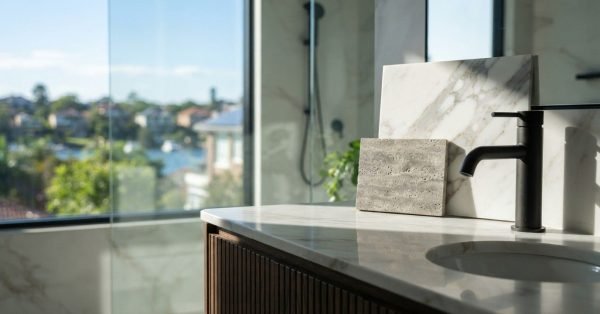
The hardware and accessories you choose determine whether your bathroom renovation looks finished or just functional, and they account for more of your budget than most renovators expect.
Getting these selections right means understanding finish durability, setting a realistic spend, and locking in your choices before the trades arrive. Rush this step, and you end up with mismatched fittings, blown-out costs, and delays that push your whole project back.
This guide walks through every decision from style direction and finish selection to budgeting, common mistakes, and when to loop in your contractor.
Understand the Difference Between Hardware and Accessories
Bathroom hardware refers to the functional, fixed fittings that are plumbed or structurally installed: tapware, showerheads, mixer taps, toilet suites, and cabinet handles. These items connect to your plumbing or cabinetry and require a licensed tradesperson to install.
Bathroom accessories are the supplementary fittings that complete the space: towel rails, robe hooks, toilet roll holders, soap dispensers, mirror cabinets, and shelving. Most accessories are surface-mounted and don’t require plumbing, though some, like heated towel rails, need an electrical connection.
The line between the two matters more than people realise.
Why the Distinction Matters for Budgeting and Planning
Hardware and accessories sit in different budget categories, have different lead times, and involve different trades. Tapware and showerheads are typically specified early because they affect rough-in plumbing positions; change them late and you’re paying to move pipes.
Accessories, by contrast, have more flexibility. You can finalise towel rail placement after tiling is complete, which gives you room to adjust if the layout shifts during the build.
Knowing which category each item falls into helps you sequence your decisions correctly and avoid the costly mistake of locking in accessory positions before the room’s layout is confirmed.
Set Your Style Direction Before You Shop
The single biggest mistake renovators make is shopping for individual pieces before they’ve committed to a style direction. You end up with a chrome towel rail, a matte black showerhead, and a brushed nickel tap, and none of them talk to each other.
Pick your design direction first. Contemporary and minimalist bathrooms suit matte black or brushed nickel. Classic or transitional spaces work well with chrome or brushed gold. Industrial-leaning designs often use gunmetal or raw brass. The finish is the thread that ties the whole room together.
Commit to one finish family before you buy a single item.
How to Match Hardware Finishes Across the Bathroom
Finish consistency doesn’t mean every item must come from the same brand; it means every item must share the same tone and surface treatment. Matte black tapware pairs cleanly with matte black accessories. Brushed nickel works with warm-toned brushed metals but clashes with cool polished chrome.
The practical rule: hold every item you’re considering next to each other under the same light before you commit. Showroom lighting is designed to flatter. Natural light tells the truth.
Limit yourself to two finishes maximum: one dominant, one accent. More than two and the room starts to feel unresolved.
Choose the Right Finish for Durability and Maintenance
A finish that looks stunning in the showroom can look tired within two years if it’s not suited to a high-humidity environment. Bathrooms are hard on surfaces; steam, cleaning products, and daily contact all degrade coatings over time.
PVD (Physical Vapour Deposition) coatings are the most durable option available in residential bathroom hardware. PVD-coated finishes, including matte black, brushed gold, and gunmetal, bond at a molecular level and resist scratching, tarnishing, and corrosion far better than standard electroplated finishes.
Chrome remains the most practical choice for budget-conscious renovators. It’s easy to clean, widely available, and holds up well in ventilated bathrooms.
Finish Comparison – Durability, Maintenance, and Cost
–$
| Finish | Durability | Maintenance | Relative Cost | Best For |
| Chrome | Good | Low – wipes clean easily | $ | Budget to mid-range builds |
| Matte Black (standard) | Moderate | Medium – shows water spots | $$ | Contemporary style |
| Matte Black (PVD) | Excellent | Low – resists tarnishing | $$$ | Premium contemporary builds |
| Brushed Nickel | Good | Low – hides fingerprints | $$ | Transitional and classic styles |
| Brushed Brass/Gold | Moderate | Medium – needs gentle cleaning | Warm, classic, or luxe styles | |
| Gunmetal/Charcoal | Good (PVD) | Low | $$$ | Industrial and contemporary |
The finish you choose affects not just appearance but your ongoing cleaning routine and long-term replacement costs. A cheaper finish that degrades in three years costs more over a decade than a PVD-coated fitting bought once.
Prioritise Function Over Aesthetics
A beautiful bathroom that doesn’t work well is a renovation failure. Function has to come first and in a bathroom, function means storage, water efficiency, ventilation support, and accessibility.
Before you finalise any accessory selection, ask what the room actually needs to do. A family bathroom needs more storage and towel hanging capacity than a guest ensuite. A bathroom used by older occupants or anyone with mobility considerations needs grab rails that meet Australian Standards AS 1428.1, not just decorative ones.
Water efficiency matters too, particularly in Sydney, where water conservation is a genuine concern.
Essential vs Optional Accessories – What to Buy First
Start with the non-negotiables: towel rail or ring, toilet roll holder, robe hook, and a mirror or mirror cabinet. These are the items every bathroom needs to function on day one.
Layer in the value-adds next: a heated towel rail if the budget allows, a recessed niche for shower storage rather than a surface-mounted caddy, and a mirror cabinet if storage is tight. These upgrades improve daily usability and add genuine resale appeal.
Leave the purely decorative items soap dishes, matching dispensers, decorative trays for last. They’re the easiest to add later and the least likely to affect your renovation’s long-term value.
Set a Realistic Hardware Budget
Hardware and accessories are consistently underbudgeted in bathroom renovations. Most renovators allocate a figure for tiles and labour, then treat hardware as an afterthought and end up either overspending at the end or compromising on quality when the budget is already stretched.
For a standard Sydney bathroom renovation, a realistic hardware and accessory allowance sits between $1,500 and $4,000 for a mid-range finish, and $4,000 to $8,000 or more for a premium specification. Tapware alone mixer tap, shower mixer, and hand shower can account for $800 to $2,500 of that figure depending on brand and finish.
Budget the hardware line item at the start of the project, not the end.
Where to Spend More and Where to Save
Spend more on tapware. It’s the most-touched item in the bathroom; it affects water pressure and temperature control every single day, and cheap tapware fails faster than almost anything else in the room. A quality mixer tap from a reputable brand with a solid warranty is worth the premium.
Save on accessories where the finish holds up. A mid-range towel rail in a PVD matte black finish will look as good as a premium one in five years. The difference is in the brand name, not the performance.
Spend more on the showerhead if the shower experience matters to your household. Save on toilet roll holders, robe hooks, and soap dispensers; these are low-wear items where mid-range quality is entirely sufficient.
Buy as a Coordinated Set or Mix Strategically
Buying a coordinated bathroom accessory set from a single supplier range is the lowest-risk approach. The finishes are matched at the factory, the proportions are designed to work together, and you eliminate the guesswork of trying to align items from different brands.
The trade-off is flexibility. A set locks you into one supplier’s range, which may not include every item you need or may include items you don’t want.
Mixing works strategically but only when you’re disciplined about finish consistency. Buy your tapware from one brand, your accessories from another, and verify the finishes side by side before ordering. Don’t rely on product photography alone.
The safest middle ground: buy tapware and shower fittings as a matched set from one supplier, then source accessories separately within the same finish family.
Avoid the Most Common Hardware Mistakes
Scale is the mistake most people don’t see until it’s too late. A towel rail that looks proportionate in a showroom can overwhelm a narrow wall in a small bathroom. Measure your wall space before you select any accessory, and check the product dimensions against your actual room, not just the showroom floor.
Mismatched finishes are the second most common problem, and they’re almost always the result of shopping without a committed style direction. Decide on your finish family first. Then shop.
The third mistake is leaving hardware selections too late. Tapware and shower fittings need to be specified before rough-in plumbing is completed. Order them with enough lead time; some imported ranges take four to eight weeks to arrive. A late order holds up your entire project.
Work With Your Contractor Early
The best hardware decisions happen in collaboration with your contractor, not in isolation. A good contractor brings trade pricing, supplier relationships, and practical knowledge about what installs cleanly and what causes problems on site.
At Sydney Home Renovation, we work through hardware and accessory specifications with our clients at the planning stage before a single wall is opened. We help identify lead times, flag substitution risks, and ensure every selection is compatible with the plumbing and electrical layout we’re building to.
Getting us involved early means your selections are locked in before they can delay the project. It also means you have access to trade pricing and supplier guidance that most homeowners don’t get shopping retail.
Reach out to the team at Sydney Home Renovation before you start browsing showrooms. We’ll help you build a specification that works for your budget, your style, and your timeline.
Conclusion
Hardware and accessories are where a bathroom renovation comes together or falls apart. Finish consistency, functional prioritisation, and realistic budgeting are the three decisions that determine whether the room works as well as it looks.
The choices you make here affect daily usability, long-term maintenance costs, and the resale value of your property. Getting them right from the start is always cheaper than correcting them later.
At Sydney Home Renovation, we help homeowners and investors make these decisions with confidence. Contact us today and let’s plan your bathroom renovation the right way.
Frequently Asked Questions
What hardware finish lasts longest in a bathroom?
PVD-coated finishes last the longest in bathroom environments. The coating bonds at a molecular level, resisting corrosion, tarnishing, and scratching far better than standard electroplated chrome or painted finishes. Chrome is the most practical mid-range option.
How much should I budget for bathroom hardware in Sydney?
A mid-range hardware and accessory budget for a Sydney bathroom renovation sits between $1,500 and $4,000. Premium specifications run $4,000 to $8,000 or more. Tapware alone typically accounts for $800 to $2,500 of that total.
Should I buy bathroom accessories as a set or individually?
Buying as a coordinated set from one supplier range is the lowest-risk approach; finishes are factory-matched, and proportions are designed to work together. Mixing individually works, but only when you verify finishes side by side before ordering.
What is the difference between tapware and bathroom accessories?
Tapware refers to plumbed fittings: mixer taps, showerheads, and hand showers that require a licensed plumber to install. Bathroom accessories are supplementary surface-mounted items like towel rails, robe hooks, and toilet roll holders that don’t require plumbing.
Do I need a WELS-rated showerhead for my renovation?
Yes. Under Australian law, all showerheads sold for residential use must carry a WELS (Water Efficiency Labelling and Standards) rating. A minimum 3-star WELS rating is recommended for Sydney renovations to meet water efficiency expectations and reduce ongoing water costs.
When should I finalise my hardware selections during a renovation?
Tapware and shower fittings must be finalised before rough-in plumbing is completed, typically in the early planning stage. Accessories can be finalised after tiling, but allow four to eight weeks lead time for imported ranges to avoid project delays.