
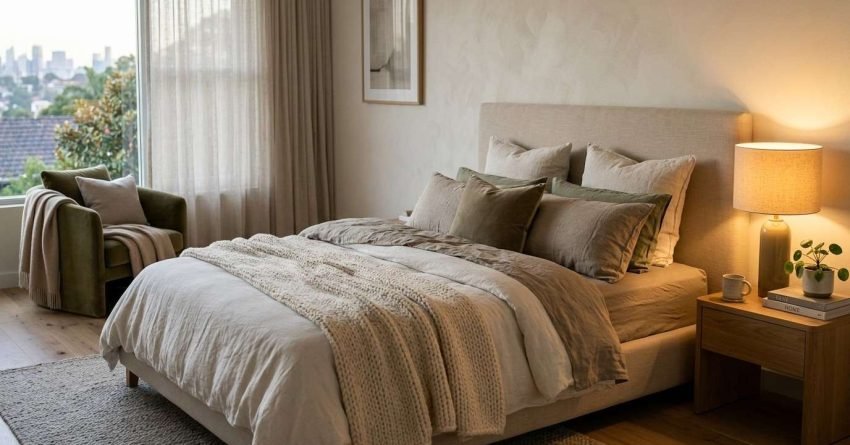
A bedroom sanctuary starts with decluttering, calming colours, soft lighting, and cozy textures working together as one system. We see restless nights and stressful mornings affect Sydney homeowners more often than people realise. Poor sleep affects your health, mood, and daily energy levels in ways that compound over time.
We understand these challenges deeply because we renovate bedrooms across Sydney every week. We transform ordinary rooms into peaceful sleep havens that promote genuine rest and long-term wellness.
This guide reveals the proven steps we use to build a serene bedroom design. You will learn simple changes that create lasting comfort in your Sydney home.
What Makes a Sleep Sanctuary?
A sanctuary bedroom layout combines calm colours, soft textures, and minimal clutter into one cohesive space. The room should feel safe and restful the moment you walk in. Every element works together for better sleep.
Research from the Sleep Health Foundation shows that well-designed bedrooms with calm colours reduce stress and improve overall sleep quality. We see this play out constantly in the Sydney homes we renovate.
We often describe the three S’s of the bedroom: simplicity, softness, and serenity. These guide every design choice we make. The 3-2-1 bedroom method adds three calming elements, two soft lighting sources, and one clear focal point bed. This approach creates a true bedroom wellness space.
Keep Your Room Cool and Comfortable
Temperature-controlled sleep directly affects your rest quality. A 2022 sleep study published in Nature and Science of Sleep confirms that overheating during sleep significantly disrupts rest, especially in warmer climate zones.
Sydney summers make this especially important for us to plan around. Good ventilation and airflow are essential. A ceiling fan’s gentle breeze helps regulate temperature naturally, but it only solves part of the problem.
We often find that hot, stuffy rooms point to a bigger issue than airflow alone. Proper wall and ceiling insulation, combined with double-glazed windows, keeps heat out far more effectively than a fan ever could. Smart thermostats and humidity control finish the job, keeping the room comfortable year-round. When we renovate a bedroom for temperature control, we usually recommend tackling insulation first and layering in ventilation second.
Choosing the Right Mattress and Bedding
We always recommend investing in a supportive mattress and luxurious bedding first. This single change transforms your sleep experience more than almost anything else. A Sleepscore Labs Australia survey shows mattress quality consistently ranks as a top satisfaction factor for better sleep.
The right bed supports your body properly. Linen bedding feels soft against your skin night after night. Quality pillow choices support your neck and head correctly.
Layer your bedding with soft throws and blankets for warmth on cool nights. We like recommending a platform bed with an upholstered headboard as the foundation piece. These investments pay off every single night you sleep in the room.
Declutter & Organize
Clutter-free spaces promote calm and clear thinking. We consistently hear from clients that messy rooms create mental stress and make relaxation nearly impossible.
Decluttering surfaces and using hidden storage keeps your room visually calm. Concealed storage hides everyday items from view entirely. This one step changes how the whole room feels.
Minimize
We encourage minimizing visual clutter for better rest. Remove anything that doesn’t belong in the bedroom. Keep only essential pieces visible.
The 1% rule helps here: tidy just a little each day rather than all at once. Small improvements prevent overwhelming messes from building up. Our clients find this approach far more manageable than a big weekend clean-out.
Zone
We recommend creating separate zones for sleeping, reading, and relaxing. Each area should serve one specific purpose. This kind of organisation improves how the whole room functions.
A relaxation zone needs clear boundaries so your sleep area stays focused on rest. Bed placement matters too; positioning your bed away from the door, with a solid wall behind the headboard, creates a stronger sense of security and calm. Other activities happen in their own designated spots.

Keep Your Room Organised
Smart storage systems are the starting point for a genuinely tidy room. A tidy room supports better sleep, and organisation reduces morning stress too.
Use your dresser and wardrobe efficiently. Keep your nightstand essentials minimal and purposeful. It should hold only what you actually need at night.
A walk-in closet keeps clothing separate from the sleep space entirely, and that separation matters more than people expect. An efficient layout makes daily routines easier. Every item earns its place.
Sensory Experience
A calming bedroom engages all your senses at once. Colours, textures, scents, and sounds work together to create a complete sanctuary.
Colours
We recommend soft, muted wall colours such as pastels, light blues, greens, or earthy neutrals. These shades promote calm and rest. Soft blue is widely recognised as the calmest bedroom colour.
The 60-30-10 rule balances your palette well: a neutral base, an earth-tone secondary layer, and a small accent colour for interest. Green is commonly linked with positive energy, balance, and renewal in a bedroom. We always advise avoiding bright reds and high-contrast neon tones, since they stimulate the mind rather than calm it.
Textures
Layering cozy textures with plush rugs, soft blankets, and quality bedding matters more than most people expect. Touch plays a real role in a minimalist bedroom. Soft surfaces invite relaxation the moment you step into the room.
Flooring makes a bigger difference here than most homeowners realise. A plush rug underfoot feels warm each morning, but if your existing flooring is cold, hard, or worn, no amount of rug-layering fully solves it. We sometimes recommend carpet or engineered timber upgrades alongside soft furnishings for a genuinely warmer feel underfoot. Your armchair fabric and throws add the finishing texture layer.
Scents
We suggest calming scents such as lavender, chamomile, vanilla, or sandalwood. Scent promotes deeper relaxation more than people expect. Gentle aromatherapy diffusion spreads fragrance evenly through the room.
Candles create a soft ambient glow alongside a pleasant scent. Essential oils offer a natural alternative. These scents quietly signal your brain that it’s time to relax.
Sound
We often suggest introducing gentle background sound with a fan or white noise machine. White noise blocks disruptive outside noise effectively. Better soundproofing improves sleep quality even further.
Sydney traffic and neighbourhood noise disturb plenty of sleepers we talk to. A simple white noise solution masks a lot of it, but for busier streets, acoustic insulation in the walls or upgraded window glazing solves the problem at the source rather than covering it up. Consistent background sound helps you stay asleep longer either way.
Lighting & Tech Control
Layered lighting transforms your bedroom atmosphere almost instantly. Light affects your sleep hormones directly. Getting the control right makes a real difference.
Light
We recommend controlling lighting with blackout curtains and warm, dimmable lamps. Blackout curtains block outside light completely. Dimmer switches let you adjust brightness easily throughout the evening.
Natural light diffusion works well during daytime hours. A reading lamp provides focused light for books at night. Vanity lighting helps with morning routines too.
Bedrooms optimised for darkness produce better sleep outcomes overall. Warm bulbs in the evening create a calmer atmosphere than cool white light. Blackout blinds work well in almost any window style if curtains aren’t practical.
Digital Detox
We keep coming back to one rule: keep the bedroom tech-free, avoiding screens at least one hour before sleep. This single change improves rest dramatically. Excessive screen exposure before bed is one of the most common sleep disruptors we hear about.
The 3-2-1 bedtime rule guides the whole evening: reduce food three hours before bed, limit liquids two hours before, and stop screens one hour before sleep. A personal, silent retreat requires real digital boundaries. Charging phones outside the bedroom alone transforms sleep quality for many of the Sydney homeowners we work with.

Comfort & Personal Touches
Bedroom retreat ideas work best when they include personal elements that bring you joy. Your space should reflect your personality, not just a design formula. Real comfort comes from meaningful details.
Bring Nature In
Adding indoor plants brings a natural, soothing element into the space. Plants improve air quality naturally and don’t need much upkeep. Low-maintenance greenery works well for busy homeowners.
Nature-inspired motifs connect the room to the outdoors even without literal plants. An air purifier complements living greenery nicely. These elements support a broader biophilic design approach.
Personalize
Displaying meaningful art, photos, or treasured objects adds real personal comfort. Wall art adds visual interest and warmth. A well-placed mirror reflects light beautifully throughout the day.
A mirror can make a small room feel noticeably larger. Choose wall art that brings a peaceful feeling rather than a busy one. These personal touches are what make the space truly yours.
Create a Nook
A dedicated relaxation area adds real function to your bedroom sanctuary. Special corners serve specific purposes. They enhance the overall feel of the room.
Cozy Corner
We like creating a cozy reading or reflection nook with a comfortable chair. Add a soft throw and a small reading light nearby. This becomes your personal retreat within the larger room.
An armchair creates the perfect spot for this. A side table nearby holds books and tea within easy reach. This small reading nook invites quiet moments daily.
An en-suite bathroom extends the retreat even further if your layout allows it. A soaking tub offers deep relaxation at the end of the day. A rainfall shower starts the morning peacefully.

Refresh vs. Renovation: Knowing When to Call a Professional
Not every bedroom sanctuary needs a full renovation. Sometimes new bedding, a fresh coat of calming paint, and better storage genuinely solve the problem. Other times, the room itself is working against you.
If your bedroom stays hot despite fans and curtains, if outside noise cuts through even with white noise running, or if the layout simply doesn’t allow for proper zoning, these are structural issues rather than styling ones. Insulation, window upgrades, and layout changes require the kind of planning a renovation brings, not just a shopping trip.
We always tell our clients the same thing: try the simple changes first. If the room still doesn’t feel right after that, it’s worth having a proper renovation conversation.
Conclusion
Creating a peaceful sleep haven requires thoughtful planning alongside simple changes that add up over time. Focus on clutter-free spaces, a calming atmosphere, and proper lighting first. These elements work together for better rest and lasting wellness.
Sometimes styling alone isn’t enough, and that’s where structural changes like insulation, soundproofing, or a layout rework make the real difference. Knowing which category your bedroom falls into saves you time and money.
We’re Sydney Home Renovation, and we’ve helped homeowners across Sydney turn ordinary bedrooms into genuine sanctuaries. We understand the local climate challenges and design preferences that matter here. Contact us today for a bedroom retreat consultation, and let’s talk about what your space actually needs.
Frequently Asked Questions
What is the best colour for a calming bedroom sanctuary?
Soft, muted tones work best for us: pastels, light blues, greens, and earthy neutrals. Soft blue is widely considered the most calming choice. We avoid bright reds and neon tones entirely.
How do I make my Sydney bedroom cooler in summer without renovating?
We recommend starting with a ceiling fan, breathable bedding, and blackout curtains. If the room still overheats, insulation and window upgrades solve the deeper issue.
What is the 3-2-1 bedtime rule?
It’s a simple wind-down guide: stop eating three hours before bed, limit liquids two hours before, and switch off screens one hour before sleep. We find it makes falling asleep noticeably easier.
Do plants actually improve sleep quality in a bedroom?
Yes, low-maintenance plants improve air quality and add a calming, natural element. We suggest easy varieties for busy homeowners who want the benefit without the upkeep.
How much clutter is too much in a sleep sanctuary?
If surfaces feel visually busy or storage overflows into view, it’s too much. We recommend the 1% rule: small daily tidying instead of one overwhelming clean-out.
When should I renovate instead of just restyling my bedroom?
We suggest renovating when the problem is structural: persistent heat, outside noise, or a layout that won’t allow proper zoning. Styling changes alone won’t fix those issues.