Failed bathroom waterproofing is one of the most expensive renovation mistakes a homeowner can make, and it rarely announces itself until the damage is already serious. Water finds its way through cracked grout, a compromised membrane, or a poorly sealed junction, and from that point it works silently behind your tiles, inside your walls, and beneath your floor.
Ignoring the early signs turns a manageable repair into a full structural remediation. Understanding what failure looks like and what it costs puts you in control before the damage compounds.
In this guide, I cover the warning signs, the internal damage, the real repair costs, the root causes, and the right way to fix it.
The First Signs of Waterproofing Failure
Most waterproofing failures give you warnings before they become structural problems. The issue is that those warnings are easy to dismiss as cosmetic. They are not.
Surface-Level Warning Signs
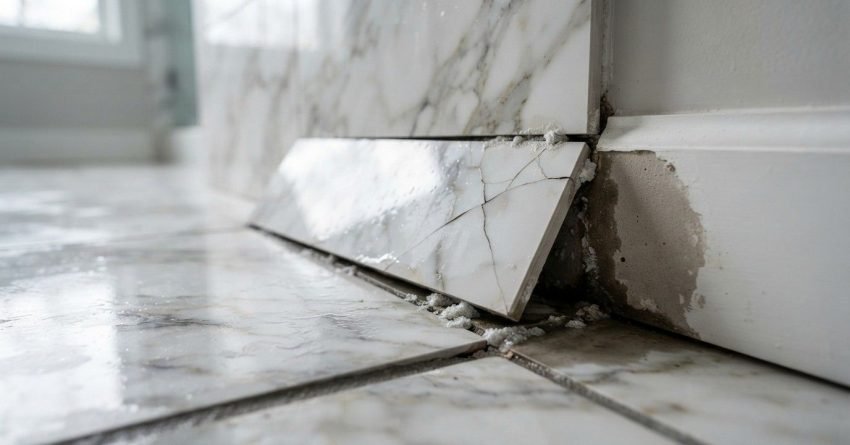
The first things you notice are usually on the surface. Tiles start to lift or feel hollow when you tap them. Grout lines crack, discolour, or develop a white powdery residue called efflorescence, a direct sign that water is moving through the substrate and depositing mineral salts on the surface.
Paint on adjacent walls bubbles or peels. A persistent damp or musty smell lingers even after the bathroom dries out. These are not maintenance issues. They are the bathroom telling you the waterproofing membrane has been breached.
Structural Warning Signs
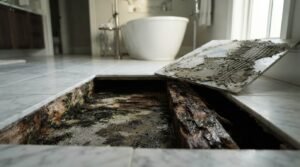
When surface signs go unaddressed, the damage moves deeper. The subfloor starts to feel soft or spongy underfoot, a sign that the timber framing or particleboard beneath the tiles has absorbed moisture and begun to rot.
Walls adjacent to the shower or bath may flex slightly when pressed. Skirting boards warp. In severe cases, you can see water staining on the ceiling of the room below. At this stage, the repair scope has expanded well beyond the bathroom itself.
What Actually Goes Wrong Inside Your Walls and Floor
The surface signs are the visible fraction of the problem. The real damage happens in the layers you cannot see without pulling the bathroom apart.
Water Penetration and Substrate Damage
When the waterproofing membrane fails, water penetrates the substrate, typically fibre cement sheet, compressed sheet, or a concrete slab. These materials are not designed to handle sustained moisture exposure without a functioning membrane protecting them.
Fibre cement sheet swells and delaminates. Compressed sheet loses structural integrity. Timber framing rots. The adhesive bond holding your tiles fails, which is why tile lifting is often the first physical sign of a deeper substrate problem. By the time tiles are moving, the substrate beneath them has usually been compromised for months.
Mould, Mildew, and Air Quality Problems
Sustained moisture in a concealed space is the ideal environment for mould growth. Black mould, including species like Stachybotrys chartarum, can establish itself inside wall cavities and beneath flooring within 24 to 48 hours of water exposure, according to NSW Health’s guidance on mould in buildings.
Once mould colonises a wall cavity, it is not a surface cleaning problem. It requires full removal of the affected material, treatment of the framing, and proper drying before any rebuild begins. The air quality impact on occupants, particularly those with respiratory conditions, is a genuine health concern, not just a cosmetic one.
The Real Cost of Ignoring Waterproofing Failure
The longer waterproofing failure goes unaddressed, the more expensive the repair becomes. What starts as a membrane issue becomes a substrate issue, then a framing issue, then a mould remediation issue, each layer adding cost and complexity.
Repair Costs vs. Prevention Costs
A straightforward waterproofing membrane application during a bathroom renovation in Sydney typically costs between $800 and $1,500 as part of a broader project. Fixing a failed waterproofing system after the fact is a different calculation entirely.
A localised repair removing tiles in a specific zone, reapplying membrane, and retiling runs from $2,000 to $5,000 depending on the extent of substrate damage. A full strip-out where the substrate has failed, framing has rotted, and mould remediation is required can reach $15,000 to $30,000 or more for a standard Sydney bathroom. The membrane itself is never the expensive part. The damage it was supposed to prevent is.
Impact on Property Value
Waterproofing failure does not stay hidden during a building inspection. Licensed building inspectors identify moisture readings, tile movement, and efflorescence as red flags that trigger further investigation. For property investors and owner-occupiers preparing to sell, an unresolved waterproofing issue is a negotiating liability.
Buyers either discount their offer to account for the repair cost or walk away entirely. In a Sydney market where bathroom condition directly influences buyer perception and valuation, a failed waterproofing system is a material defect, not a minor cosmetic issue.
What Causes Bathroom Waterproofing to Fail
Understanding why waterproofing fails is the foundation of preventing it from happening again. There are two primary causes, and they are not mutually exclusive.
Poor Workmanship and Skipped Steps
The most common cause of premature waterproofing failure in Australian bathrooms is poor application. Waterproofing in wet areas is regulated under AS 3740-2021, the Australian Standard for waterproofing of domestic wet areas. This standard specifies membrane thickness, application method, curing time, and the treatment of junctions, corners, and penetrations.
When an unlicensed tradesperson or a cost-cutting contractor skips steps, applies membrane too thin, fails to treat internal corners with reinforcing tape, or tiles before the membrane has fully cured, the system is compromised before the first shower is run. In New South Wales, waterproofing work in wet areas requires a licensed waterproofer, and the work must be inspected and certified. Work done without that certification is a compliance risk as well as a practical one.
Material Degradation Over Time
Even correctly applied waterproofing has a finite lifespan. Most membrane systems used in residential bathrooms are rated for 10 to 15 years under normal conditions. Grout, which is not a waterproofing material despite what many homeowners assume, degrades faster, typically showing signs of failure within 5 to 10 years in a heavily used bathroom.
Movement in the building structure, thermal expansion and contraction, and the mechanical stress of daily use all work against the membrane over time. Junctions between the floor and wall, around penetrations like pipes and drains, and at the base of shower screens are the highest-risk points. These are where failure almost always begins.
How to Fix Failed Bathroom Waterproofing the Right Way
The right fix depends entirely on the extent of the failure. Getting this assessment wrong either underestimating the damage or over-scoping the repair costs money unnecessarily or leaves the problem unresolved.
When a Patch Repair Is Enough
A localised repair is appropriate when the failure is genuinely contained to a small area, the substrate is still structurally sound, and the surrounding membrane is intact and adhering correctly. This typically applies to a failed silicone joint at a shower screen base, a cracked grout line in a low-traffic zone, or a single tile that has lifted without substrate damage beneath it.
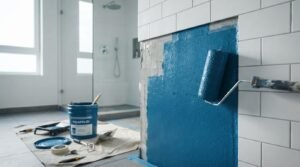
In these cases, the affected tiles are removed, the substrate is assessed, the membrane is reapplied to the affected zone with appropriate overlap onto the existing membrane, and the area is retiled. This is a legitimate repair but only when the scope genuinely supports it. A patch repair applied over a substrate that has already been compromised is money spent twice.
When You Need a Full Strip-Out and Redo
When substrate damage is present, mould has established itself in the wall cavity, or the membrane has failed across multiple zones, a full strip-out is the only correct approach. This means removing all tiles, stripping the substrate back to the framing, assessing and replacing any compromised structural elements, treating for mould, installing new substrate, applying a compliant waterproofing membrane system, and retiling.
This is not a shortcut-friendly process. In New South Wales, the completed waterproofing work requires a compliance certificate from a licensed waterproofer before tiling proceeds. We always recommend getting that certificate; it protects you legally, satisfies your insurer, and gives you documented evidence that the work was done to standard.
Conclusion
Bathroom waterproofing failure is not a cosmetic problem. It is a structural one that compounds silently and becomes significantly more expensive the longer it goes unaddressed. The signs are there early: tile movement, efflorescence, damp smells, and acting on them quickly is always the cheaper path.
At Sydney Home Renovation, we see the full cost of deferred waterproofing repairs regularly. The membrane is never the expensive part. The damage it was supposed to prevent always is.
We help Sydney homeowners and property investors get waterproofing done right the first time or fixed properly when it has already failed. Reach out to the team at Sydney Home Renovation to talk through your bathroom and get a clear, honest assessment of what needs to happen next.
Frequently Asked Questions
How do I know if my bathroom waterproofing has failed?
The most reliable early signs are lifting or hollow-sounding tiles, cracked or discoloured grout, efflorescence on tile surfaces, and a persistent damp or musty smell. If you notice soft spots in the floor or water staining on the ceiling below the bathroom, the damage has already progressed to the substrate or framing.
Can I waterproof over existing tiles?
In most cases, no. Applying a new membrane over existing tiles does not address substrate damage that may already be present, and the bond between the new membrane and the tile surface is rarely reliable enough to meet AS 3740 requirements. A proper repair almost always requires tile removal to assess and treat the substrate directly.
How long does bathroom waterproofing last?
A correctly applied membrane system in a residential bathroom typically lasts 10 to 15 years. Grout degrades faster, often within 5 to 10 years in a heavily used bathroom. High-traffic showers, poor ventilation, and building movement all accelerate wear, particularly at junctions and penetrations.
Is waterproofing failure covered by home insurance?
Generally, no. Most home insurance policies in Australia exclude damage caused by gradual water ingress or maintenance failures. Sudden and accidental damage like a burst pipe is typically covered, but slow waterproofing failure is classified as a maintenance issue. Check your specific policy wording and speak with your insurer directly.
How much does it cost to redo bathroom waterproofing in Sydney?
A localised repair in Sydney typically runs from $2,000 to $5,000 depending on the extent of substrate damage. A full strip-out and redo where substrate replacement, mould remediation, and full membrane reapplication are required can range from $15,000 to $30,000 or more for a standard bathroom. The membrane application itself is a small part of that cost. The bulk of the expense is the damage repair.
Can I fix waterproofing failure myself?
Waterproofing in wet areas in New South Wales must be carried out by a licensed waterproofer and is subject to inspection and certification under AS 3740. DIY waterproofing is not compliant, is not certifiable, and will not satisfy an insurer or a building inspector. It also carries a real risk of repeating the failure that caused the problem in the first place.