
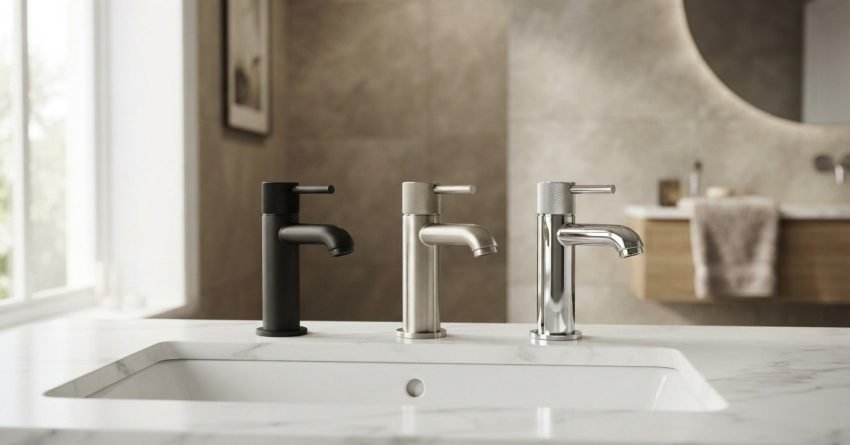
The tapware finish you choose sets the tone for your entire bathroom, and the wrong call costs you more than just aesthetics when it comes time to clean, maintain, or sell.
Finish decisions get made late in a renovation, often under budget pressure. That’s when mistakes happen.
I’m going to walk you through matte black, brushed nickel, and chrome: what each one actually delivers, where each one struggles, and how to match the right finish to your bathroom, your lifestyle, and your renovation goals.
What Your Tapware Finish Actually Does to a Bathroom
Most people treat tapware finish as a styling decision. It’s actually a functional one too.
The finish affects how your fittings wear over time, how much maintenance they demand, and how well they hold up against Sydney’s hard water. Get it right, and your tapware looks sharp for years. Get it wrong, and you’re polishing fixtures every second day.
Finish as a Design Anchor, Not Just a Detail
Tapware is one of the few elements that appears in every zone of a bathroom basin, shower, bath, and accessories. That repetition makes the finish a visual anchor. It ties the room together or pulls it apart.
A finish that clashes with your tile grout, vanity hardware, or mirror frame creates visual noise. One that complements those elements makes the whole room feel considered and intentional.
How Finish Affects Perceived Quality and Resale Value
Buyers and renters notice tapware. It reads as a quality signal even when they can’t articulate why.
According to the Housing Industry Association, bathroom presentation consistently ranks among the top factors influencing buyer perception during property inspections in Australia. A cohesive, well-chosen finish signals that the renovation was done with care and that matters at sale time.
Matte Black Tapware: Bold, Modern, and High-Maintenance
Matte black is the finish that transformed Australian bathroom design over the last decade. It’s dramatic, contemporary, and still very much in demand.
But it comes with trade-offs that not every homeowner is prepared for.
Where Matte Black Works Best
Matte black performs best in bathrooms with strong contrast, white subway tiles, light stone benchtops, or pale grout. The dark finish pops against light backgrounds and anchors a modern or industrial aesthetic.
It also works well in powder rooms and ensuites where the space is used less frequently. Lower traffic means less cleaning, which plays directly to matte black’s biggest weakness.
Durability and Cleaning Reality
Here’s the honest truth about matte black: it shows everything.
Water spots, fingerprints, soap residue, and limescale are all highly visible on a matte surface. Sydney’s water hardness compounds this; mineral deposits build up faster and are harder to remove without damaging the finish. Most manufacturers recommend wiping matte black tapware dry after every use, which is a real commitment in a busy household.
Quality matte black tapware uses PVD (Physical Vapour Deposition) coating, which is significantly more durable than painted or powder-coated alternatives. PVD-coated fittings resist scratching and corrosion far better. Always confirm PVD coating before purchasing; it’s the difference between a finish that lasts a decade and one that chips within two years.
Cost Range in Sydney Bathrooms
Entry-level matte black tapware in Sydney starts around $150–$250 per fitting for basin mixers from mid-tier brands. Quality PVD-coated sets from brands like Meir, Nero, or Caroma sit in the $300–$600 per fitting range. Full bathroom sets basin mixer, shower mixer, and bath spout typically run $900–$2,000 for mid-range quality, and $2,000–$4,500 for premium.
Brushed Nickel Tapware: The Warm Middle Ground
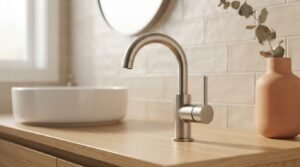
Brushed nickel sits between the drama of matte black and the brightness of chrome. It’s warm, understated, and genuinely forgiving to live with.
For many Sydney homeowners, it’s the finish that looks the most expensive while being the easiest to maintain.
Where Brushed Nickel Works Best
Brushed nickel suits transitional and contemporary bathrooms equally well. It pairs naturally with warm-toned tiles, beige, taupe, terracotta, and greige palettes and complements timber vanities and brass or gold accents without competing with them.
It’s also the most versatile finish for open-plan bathrooms where the tapware needs to work across multiple zones without dominating any single one.
Durability and Cleaning Reality
Brushed nickel’s textured surface is its practical superpower. The fine directional grain hides water spots, minor scratches, and fingerprints far better than either matte black or chrome.
Day-to-day maintenance is minimal; a wipe with a damp cloth is usually enough. The finish doesn’t require drying after every use, which makes it genuinely low-effort in a family bathroom. It’s also resistant to tarnishing under normal bathroom conditions, though prolonged exposure to harsh cleaning chemicals can dull the surface over time.
Cost Range in Sydney Bathrooms
Brushed nickel tapware sits at a similar price point to matte black. Mid-range basin mixers run $200–$450 per fitting, with full bathroom sets from quality brands landing between $800–$2,500. Premium European brushed nickel sets can reach $3,000–$5,000 for a complete bathroom.
Chrome Tapware: The Classic That Never Left
Chrome gets dismissed as the default choice. That’s unfair. It’s the default choice because it works reliably, universally, and at every price point.
In the right bathroom, chrome is the sharpest finish in the room.
Where Chrome Works Best
Chrome is the go-to for cool-toned bathrooms white, grey, and blue-grey palettes where the mirror-bright finish amplifies light and makes the space feel larger. It’s also the strongest choice for small bathrooms where you want to maximise the sense of space.
For investment properties and rentals, chrome remains the most practical finish. It’s widely available, easy to replace, and universally acceptable to tenants and buyers across all demographics.
Durability and Cleaning Reality
Chrome is the most durable finish in terms of the underlying plating process. Electroplated chrome bonds tightly to the brass substrate and resists corrosion well in normal bathroom conditions.
The challenge is water spots and limescale. Chrome’s mirror finish makes mineral deposits immediately visible, and Sydney’s water hardness means they appear quickly. Regular wiping keeps chrome looking sharp, but it requires more frequent attention than brushed nickel. The upside: chrome is the easiest finish to restore. A microfibre cloth and a mild cleaner bring it back to full shine in seconds.
Cost Range in Sydney Bathrooms
Chrome is the most accessible finish across all price tiers. Entry-level chrome basin mixers start at $80–$150 from brands like Caroma and Methven. Mid-range quality sits at $150–$350 per fitting, with full bathroom sets running $500–$1,500. Premium chrome from European brands like Grohe or Hansgrohe runs $1,500–$3,500 for a complete set.
Side-by-Side Comparison: Matte Black vs Brushed Nickel vs Chrome
Here’s how the three finishes stack up across the factors that matter most in a real renovation.
Comparison Table
| Factor | Matte Black | Brushed Nickel | Chrome |
| Aesthetic Style | Bold, contemporary, dramatic | Warm, transitional, versatile | Classic, bright, universal |
| Maintenance Effort | High – shows everything | Low – hides most marks | Medium – water spots visible |
| Durability (PVD/quality) | High (PVD) / Low (painted) | High | Very High |
| Hard Water Performance | Poor – limescale visible | Good – texture hides deposits | Fair – deposits visible, easy to clean |
| Entry-Level Cost (per fitting) | $150–$250 | $200–$300 | $80–$150 |
| Mid-Range Cost (full set) | $900–$2,000 | $800–$2,500 | $500–$1,500 |
| Best For | Design-led renovations, ensuites | Family bathrooms, warm palettes | Rentals, cool palettes, small bathrooms |
| Resale Appeal | Strong in premium market | Broad appeal | Universal |
Which Finish Suits Which Bathroom Type
Matte black is the right call for a design-led ensuite or a bathroom where visual impact is the priority, and the occupants are committed to the upkeep.
Brushed nickel is the strongest all-rounder for family bathrooms, main bathrooms, and any renovation where low maintenance and broad aesthetic appeal matter more than making a statement.
Chrome is the smart choice for investment properties, small bathrooms, and renovations where budget efficiency and universal appeal are the primary drivers.
How to Choose the Right Tapware Finish for Your Renovation
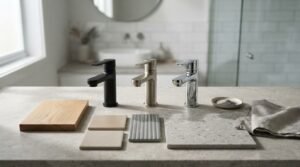
The comparison table gives you the data. This section gives you the decision framework.
Matching Finish to Your Tile and Vanity Palette
Start with your tile grout colour and your vanity finish; these are the two elements that will sit closest to your tapware every day.
Cool greys and whites pair naturally with chrome or matte black. Warm beiges, taupes, and timbers call for brushed nickel or brushed brass. If your vanity has warm-toned hardware, chrome will fight it. If your tiles are stark white with dark grout, brushed nickel can look muddy. Match the temperature of your palette first, then choose your finish.
Rental vs Owner-Occupier Decisions
For a rental property bathroom renovation, chrome is almost always the right answer. It’s cost-effective, universally acceptable, easy to source replacements for, and holds up to tenant use without demanding careful maintenance.
Owner-occupiers have more latitude. If you love the look of matte black and you’re prepared to wipe it down regularly, it’s a legitimate choice. If you want something that looks premium without the upkeep, brushed nickel delivers that better than any other finish.
Mixing Finishes: When It Works and When It Doesn’t
Mixing finishes is a design technique, not a mistake. But it requires intention.
The rule that works consistently: choose one dominant finish for all tapware (basin, shower, bath) and allow one accent finish for accessories (towel rails, toilet roll holder, mirror frame). Two finishes maximum. Three finishes in one bathroom almost always reads as unplanned.
Matte black tapware with brushed brass accessories works. Chrome tapware with brushed nickel accessories works. Matte black tapware with chrome accessories in the same zone does not work; the contrast is too sharp, and the temperature clash is too obvious.
Conclusion
Matte black, brushed nickel, and chrome each deliver something different, and the right choice depends on your bathroom’s palette, your lifestyle, and your renovation goals. There’s no universally correct answer, but there is a correct answer for your specific project.
The finish decision is easier when it’s made early, alongside your tile and vanity selections rather than after them. That’s when it becomes a design decision instead of a compromise.
At Sydney Home Renovation, we help homeowners and investors make these calls with confidence from finish selection through to full installation. Get in touch and let’s plan your bathroom renovation the right way.
Frequently Asked Questions
Is matte black tapware hard to keep clean?
Yes, matte black requires more maintenance than other finishes. Water spots, fingerprints, and limescale are all visible on the matte surface, and Sydney’s hard water accelerates mineral build-up. Wiping the fittings dry after each use keeps them looking sharp.
Does brushed nickel tapware rust or tarnish?
Quality brushed nickel tapware resists tarnishing well under normal bathroom conditions. The finish holds up reliably with basic cleaning. Avoid abrasive cleaners and harsh chemicals, which can dull the surface over time.
Is chrome tapware still in style in 2025?
Chrome is absolutely still relevant in 2025. It suits cool-toned and minimalist bathrooms particularly well, and it remains the strongest choice for investment properties and small bathrooms where light reflection and universal appeal matter.
Can I mix tapware finishes in the same bathroom?
Yes, but keep it to two finishes maximum. Use one dominant finish for all tapware and one accent finish for accessories. More than two finishes in a single bathroom typically reads as unplanned rather than intentional.
Which tapware finish adds the most resale value?
Brushed nickel and matte black both perform well in the premium owner-occupier market. Chrome holds the broadest appeal across all buyer types. The finish that adds the most value is the one that cohesively matches the rest of the bathroom; a mismatched finish in an otherwise quality renovation actively reduces perceived value.


