A concealed cistern toilet hides the water tank inside the wall, delivering a clean, minimal look that’s become one of the most requested features in Sydney bathroom renovations. The system uses an in-wall carrier frame, a wall-mounted flush plate, and a wall-faced or wall-hung pan all working together behind your tiling.
Knowing what you’re getting into before you commit matters. The installation is more involved than a standard close-coupled toilet, and the cost reflects that.
This guide covers how the system works, a clear step-by-step installation overview, the honest pros and cons, and real Sydney pricing so you can decide with confidence.
What Is a Concealed Cistern Toilet?
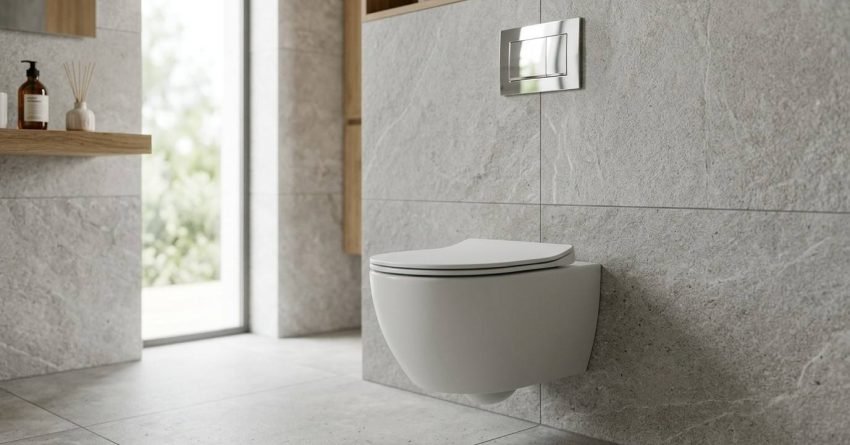
A concealed cistern toilet is a toilet system where the water tank the cistern is mounted inside a wall cavity rather than sitting exposed on top of or behind the pan. The pan attaches directly to the wall, and a flush actuator plate sits flush with the tiled surface.
It’s a fundamentally different setup from a close-coupled toilet, where the cistern sits visibly on the back of the pan. With a concealed system, everything functional disappears behind the wall.
How the Concealed Cistern System Works
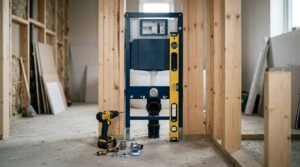
The system has four main components: a steel or polymer in-wall carrier frame, the cistern unit itself, the wall-faced or wall-hung pan, and the flush actuator plate. The frame is fixed to the floor and wall structure during the rough-in stage, before any tiling begins.
Water enters the cistern through an isolation valve connected to your cold water supply. When you press the flush plate, a pneumatic or mechanical actuator triggers the dual-flush valve inside the cistern, releasing either a full 6L flush or a half 3L flush through the pan.
The waste outlet connects directly to the floor or wall waste point during installation. Once the wall is tiled and the pan is bolted to the frame’s threaded rods, the only visible elements are the pan itself and the flush plate.
Concealed vs. Exposed Cistern – Key Differences
A close-coupled toilet has the cistern sitting directly on the pan; it’s a single visible unit, easy to access, and straightforward to repair. A back-to-wall toilet hides the cistern inside a furniture unit or boxed enclosure, but the cistern is still accessible by opening a panel.
A concealed cistern system goes further. The cistern lives inside a tiled wall cavity, accessed only through a removable flush plate or a separate access panel. That’s the core trade-off: you gain a cleaner aesthetic, but you give up easy access.
The installation depth required for a concealed system is typically 120–150mm of wall cavity space. That’s a real consideration in smaller Sydney bathrooms where every centimetre counts.
How to Install a Concealed Cistern Toilet
Installing a concealed cistern toilet is a multi-stage process that spans the rough-in plumbing phase, the wall framing and waterproofing phase, and the fit-off phase after tiling. It’s not a single-day job, and it’s not a DIY project for most homeowners.
Here’s what the full process looks like.
Tools and Materials You Need Before Starting
Before anything goes into the wall, you need the carrier frame and cistern unit (sold together by most brands), the wall-faced or wall-hung pan, the flush actuator plate, and the threaded installation rods that come with the frame kit.
On the tools side: a spirit level, a drill with masonry and timber bits, a shifting spanner, silicone sealant, and a tape measure. You’ll also need the rough-in dimensions from the manufacturer’s installation guide; these vary between brands and must be confirmed before the frame goes in.
The cold water supply line and isolation valve need to be in position before the frame is fixed. Get this confirmed with your plumber before the frame installation begins.
Step-by-Step Installation Process
Step 1 – Frame installation. Fix the carrier frame to the floor and the wall stud or blocking. Use a spirit level to confirm it’s perfectly plumb and level. The frame height is adjustable on most systems, which sets the final pan height.
Step 2 – Plumbing connections. Connect the cold water supply to the cistern inlet. Connect the waste outlet from the pan connection point to the floor or wall waste. Both connections happen before the wall is closed.
Step 3 – Wall construction and waterproofing. Build the stud wall around the frame using moisture-resistant board. Apply waterproofing membrane to the full wet area, including over the board covering the frame. This is a non-negotiable step under Australian standards.
Step 4 – Tiling. Tile over the waterproofed surface. The flush plate opening is cut out during tiling. Leave the access point clear.
Step 5 – Pan installation. Once tiling is complete and cured, slide the pan onto the threaded rods protruding from the frame. Secure with the supplied nuts. Apply silicone to the pan-to-wall joint.
Step 6 – Flush plate fitting. Clip or screw the flush actuator plate into the opening. Test both flush volumes. Check for leaks at all connections.
When to Call a Licensed Plumber in Sydney
In New South Wales, all plumbing work, including connecting water supply lines and waste outlets, must be carried out by a licensed plumber. This isn’t optional. The NSW Fair Trading plumbing licensing requirements are clear: unlicensed plumbing work is illegal and voids your home insurance.
The frame installation and wall construction can be handled by a licensed builder or a competent DIYer in some cases. But the water connections and waste connections are licensed plumber territory. Full stop.
For a Sydney bathroom renovation, the standard approach is to have your plumber complete the rough-in connections during the frame stage, then return for the fit-off after tiling.
Pros of a Concealed Cistern Toilet
The appeal of a concealed cistern toilet goes beyond looks. There are genuine functional benefits that make it a smart choice for the right bathroom.
Space-Saving Design and Aesthetic Appeal
The most obvious advantage is the visual result. Without a visible cistern, the bathroom feels larger and less cluttered. Wall-hung pans, which pair naturally with concealed cisterns, also lift the pan off the floor, making the floor area appear continuous and easier to clean around.
In smaller Sydney bathrooms, this matters practically, not just aesthetically. A wall-hung pan with a concealed cistern can recover 10–15cm of floor depth compared to a close-coupled toilet. That’s real space in a tight ensuite.
The minimalist look also adds perceived value. In investment properties and prestige renovations, a concealed cistern toilet signals quality and attention to detail.
Easier Cleaning and Hygiene Benefits
A wall-hung pan has no base touching the floor, which eliminates the hard-to-reach area around the base of a floor-mounted toilet. Mopping and wiping down the floor becomes a single uninterrupted motion.
The pan itself typically has a rimless design, which removes the internal rim where bacteria and scale accumulate in traditional toilets. Rimless pans are easier to clean thoroughly and more hygienic over time.
There are no exposed pipes, no cistern surfaces to collect dust, and no awkward angles behind the pan. The cleaning routine is genuinely simpler.
Water Efficiency and Dual-Flush Performance
Most concealed cistern systems sold in Australia carry a WELS (Water Efficiency Labelling and Standards) rating of 4 stars or higher. A 4-star dual-flush system uses 4.5L for a full flush and 3L for a half flush, compared to older 9L single-flush toilets.
Over a year, a household of four switching from a 9L single-flush toilet to a 4.5/3L dual-flush system saves thousands of litres of water. In Sydney, where water rates and environmental awareness both run high, that’s a meaningful benefit.
The cistern is also sealed inside the wall, which reduces heat transfer and keeps the water temperature more stable a minor but real factor in flush performance.
Cons of a Concealed Cistern Toilet
The concealed cistern toilet is not the right choice for every bathroom or every budget. The trade-offs are real and worth understanding before you commit.
Higher Upfront Cost and Installation Complexity
The unit cost alone is higher than a standard close-coupled toilet. A quality concealed cistern frame and cistern unit from brands like Geberit, Caroma, or Duravit starts at $400–$700 supply-only, before the pan, flush plate, or any labour.
The installation is also more labour-intensive. You’re not just swapping a toilet; you’re building a wall, waterproofing it, tiling it, and coordinating a plumber across two separate site visits. In Sydney, that adds up. Total installed costs for a concealed cistern toilet typically run $1,500–$3,500 depending on wall type, tiling complexity, and the plumber’s rate.
That’s a significant premium over a close-coupled toilet installation, which typically costs $300–$800 fully installed.
Access Limitations for Repairs and Maintenance
When something goes wrong inside a concealed cistern a faulty flush valve, a slow leak, a worn inlet seal accessing it means removing the flush plate and working through a small opening, or cutting into the tiled wall if no access panel was installed.
Most quality frames include a serviceable access point through the flush plate opening. But it’s still a constrained repair environment. A plumber working through a flush plate opening takes longer and charges more than one working on an exposed cistern.
If the cistern develops a serious leak inside the wall cavity, the repair can involve removing tiles. That’s an expensive outcome. Choosing a quality frame and cistern from a reputable brand, and having it installed the first time correctly, is the best protection against this scenario.
Wall Structural Requirements in Sydney Bathrooms
A concealed cistern system needs a wall cavity of at least 120mm and ideally 150mm to accommodate the frame and cistern. In many Sydney bathrooms, particularly older homes with solid brick or double-brick construction, creating that cavity means building a new stud wall in front of the existing wall.
That adds cost and reduces the room’s footprint. In a bathroom that’s already compact, losing 150mm of depth on one wall is a real sacrifice.
Load-bearing walls add another layer of complexity. You can’t simply cut into a load-bearing wall to create a cistern cavity without structural assessment. A builder or structural engineer needs to confirm the wall type before any work begins.
Concealed Cistern Toilet Cost in Sydney
Cost is one of the most common questions I get about concealed cistern toilets, and the honest answer is: it depends on more variables than most people expect.
Supply-Only vs. Fully Installed Price Ranges
| Item | Price Range (Sydney, 2025) |
| Concealed cistern frame + cistern unit | $400 – $700 |
| Wall-faced or wall-hung pan | $300 – $900 |
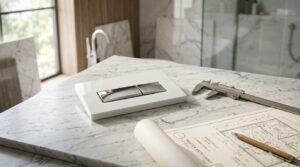
| Flush actuator plate | $80 – $300 |
| Supply-only total (unit only) | $780 – $1,900 |
| Plumber rough-in (first fix) | $300 – $600 |
| Plumber fit-off (second fix) | $200 – $400 |
| Wall framing and waterproofing | $400 – $800 |
| Tiling (cistern wall area) | $300 – $700 |
| Fully installed total | $1,500 – $3,500+ |
These are realistic Sydney market ranges for 2025. Premium brands, complex wall configurations, or heritage bathroom constraints push costs toward the upper end.
What Affects the Final Price
The wall type is the biggest variable. A new stud wall build costs more than installing into an existing wall cavity. Tiling complexity large-format tiles, feature walls, or matching existing tiles adds cost quickly.
The brand and quality tier of the frame and pan matter too. A Geberit or Villeroy & Boch system costs more than a mid-range Caroma or Posh unit, but the quality difference in the cistern mechanism is real and affects long-term reliability.
Plumber rates in Sydney vary. Expect $120–$180 per hour for a licensed plumber in the metro area. A job requiring two site visits, rough-in and fit-off, typically runs 2–4 hours total labour, depending on complexity.
Is a Concealed Cistern Toilet Right for Your Bathroom?
The concealed cistern toilet earns its premium in the right context. In the wrong context, it’s an expensive solution to a problem you don’t have.
Best Scenarios for Choosing a Concealed Cistern
It makes the most sense in a new bathroom build or a full bathroom renovation where the walls are already being opened up. Adding a concealed cistern to an existing renovation costs far less than retrofitting one into a finished bathroom.
Small bathrooms and ensuites benefit most from the space-saving and visual-opening effect. If you’re renovating a Sydney apartment bathroom or a compact ensuite, the floor space recovered and the cleaner aesthetic justify the cost premium.
Investment properties targeting the mid-to-upper rental market or resale benefit from the perceived quality signal. Buyers and renters notice the difference between a wall-hung concealed cistern toilet and a standard close-coupled unit.
It’s a harder sell in a budget renovation, a rental property at the lower end of the market, or a bathroom where the wall structure makes installation genuinely complex. In those cases, a quality back-to-wall toilet with a furniture unit gives you a similar aesthetic at a lower total cost.
Conclusion
We help Sydney homeowners and investors make this call as part of our bathroom renovation planning process. If you’re weighing up the options for your renovation, reach out to Sydney Home Renovation for a straightforward conversation about what makes sense for your specific bathroom and budget.
Frequently Asked Questions
Can I install a concealed cistern toilet myself?
The frame and wall construction can be DIY in some cases, but the plumbing connections, water supply, and waste must be done by a licensed plumber in NSW. Attempting unlicensed plumbing work is illegal and voids your home insurance.
How long does a concealed cistern toilet installation take?
A full installation across both plumbing visits and the wall and tiling work, typically takes two to three days spread across the renovation timeline. The rough-in happens early in the project, and the fit-off happens after tiling is complete.
What brands of concealed cistern are available in Sydney?
Geberit, Caroma, Duravit, Villeroy & Boch, Posh, and Roca are the most commonly specified brands in Sydney. Geberit and Caroma are the most widely stocked and serviced locally, which matters for long-term parts availability.
How do I access the cistern for repairs?
Most concealed cistern systems allow access through the flush plate opening for standard maintenance like replacing the flush valve or inlet seal. For more significant repairs, a separate access panel can be built into the tiled wall during installation; this is worth specifying upfront.
Do concealed cistern toilets leak more than standard toilets?
A correctly installed concealed cistern from a quality brand does not leak more than a standard toilet. The risk comes from poor installation, low-quality components, or skipping waterproofing. Choosing a reputable brand and a licensed installer eliminates most of the risk.
What is the minimum wall depth needed for a concealed cistern?
Most concealed cistern frames require a minimum wall cavity depth of 120mm. A 150mm cavity is more comfortable and allows easier access for servicing. Check the specific frame manufacturer’s requirements before finalising your wall design.
How much does it cost to repair a concealed cistern toilet in Sydney?
A standard repair replacing a flush valve or inlet seal typically costs $150–$350 in Sydney, including a licensed plumber’s call-out and labour. Repairs requiring tile removal are significantly more expensive and depend on the extent of the work needed.