
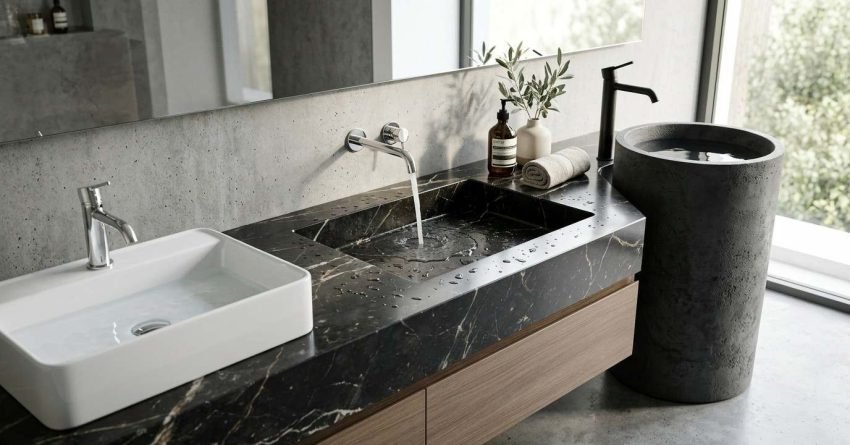
The basin you choose shapes how your bathroom looks, how it functions every day, and how much your renovation costs and the three main types each deliver a completely different outcome.
Homeowners and renovators in Sydney face this decision constantly, and the wrong choice creates problems that are expensive to fix after the fact.
I’ll walk you through above-counter, under-mount, and vessel basins what each one is, where it works, what it costs, and which one fits your renovation.
What Are the Main Bathroom Basin Types?
There are three basin types that dominate residential bathroom renovations in Sydney: above-counter, under-mount, and vessel. Each one sits differently on or in the vanity, installs differently, and suits a different design brief.
Understanding the distinction upfront saves you from choosing a basin that fights your layout, your plumbing, or your budget.
Above-Counter Basins
An above-counter basin sits on top of the vanity benchtop, with the bowl fully visible above the surface. The basin rim rests on the bench, and the plumbing connects underneath through a hole in the benchtop.
They are widely available, straightforward to install, and suit both contemporary and traditional bathroom styles.
Under-Mount Basins
An under-mount basin is fixed beneath the benchtop, with the rim bonded to the underside of the stone or solid surface. The bowl drops below the bench level, leaving a clean, uninterrupted surface around the basin opening.
This installation method requires a solid benchtop material, typically stone, engineered stone, or a solid composite, because the bench carries the basin’s weight.
Vessel Basins
A vessel basin sits entirely above the benchtop as a freestanding bowl. It has no rim contact with the bench surface at all. The basin connects to the drain through a single hole in the benchtop, and the tap is typically wall-mounted or positioned on a raised deck.
Vessel basins are the most visually dramatic of the three types and are used almost exclusively as a design statement.
Above-Counter Basins: What They Are and Where They Work Best
Above-counter basins are the most common basin type in Australian residential bathrooms. They work across a wide range of vanity styles, benchtop materials, and bathroom sizes, which is exactly why they remain the default choice for most renovations.
The installation is simpler than under-mount, and the basin itself is typically less expensive to source.
Design and Aesthetic Appeal
Above-counter basins come in round, oval, rectangular, and square profiles. The exposed bowl becomes part of the bathroom’s visual composition, so the shape and finish matter.
Matte white, gloss white, and concrete-look finishes are the most popular choices in Sydney renovations right now. Coloured basins in charcoal, sage, and terracotta are gaining ground in design-led projects.
The basin sits proud of the bench, which adds visual height to the vanity. In smaller bathrooms, this can make the vanity feel more substantial without increasing its footprint.
Installation Requirements and Practical Considerations
Installation involves cutting a hole in the benchtop to the basin’s template dimensions, sealing the rim-to-bench junction with silicone, and connecting the waste to the drain below. Most above-counter basin installations are completed within a few hours by a licensed plumber.
The rim-to-bench seal is the one maintenance point to watch. Silicone degrades over time and needs resealing every few years to prevent water ingress into the vanity cabinet below.
Cleaning is straightforward; the bowl interior and the bench surface around the rim are both accessible. The junction between the basin rim and the bench does collect soap residue, so it needs regular attention.

Under-Mount Basins: Clean Lines and Everyday Practicality
Under-mount basins are the preferred choice for high-use bathrooms where practicality matters as much as appearance. The flush bench surface makes cleaning faster, and there is no rim edge to trap water or soap.
They cost more to install than above-counter basins, but the functional payoff in a busy family bathroom is real.
Why Under-Mount Works in High-Use Bathrooms
The benchtop surface runs continuously from edge to edge with no interruption. Water, toothpaste, and soap wipe straight off the bench, and into the basin there is no rim to catch debris or create a cleaning obstacle.
This is the reason under-mount basins are the standard choice in family bathroom renovations and ensuite upgrades where the bathroom gets heavy daily use. The surface stays cleaner with less effort.
The visual result is also cleaner. The bench reads as a single unbroken plane, which suits contemporary and minimalist bathroom designs particularly well.
What the Installation Actually Involves
Under-mount installation is more involved than above-counter. The benchtop fabricator cuts the basin opening with a polished edge, and the basin is bonded to the underside of the bench using epoxy adhesive and mechanical clips.
The benchtop must be stone, engineered stone, or a solid composite. Laminate and timber benchtops cannot support an under-mount basin because the material around the opening is exposed to water and carries the basin’s weight.
A licensed plumber connects the waste and tap from below. The tap itself sits on the benchtop surface above the basin, which means the tap hole position needs to be confirmed with the fabricator before the bench is cut.
Vessel Basins: Bold Style and the Trade-Offs Worth Knowing
Vessel basins are chosen for one primary reason: visual impact. They are the most architecturally expressive basin type available, and in the right bathroom, they are genuinely striking.
But they come with trade-offs that matter in everyday use, and those trade-offs are worth understanding before you commit.
Visual Impact and Design Positioning
A vessel basin reads as a sculptural object on the vanity. The bowl sits fully above the bench, often in materials like stone, concrete, hand-formed ceramic, or glass that are chosen as much for their texture and form as their function.
They work best in bathroom renovation projects where the design brief is deliberately bold: a feature ensuite, a powder room, or a master bathroom where the vanity is the focal point of the space.
In a standard family bathroom or a small ensuite, the visual weight of a vessel basin can overwhelm the space rather than elevate it.
Height, Ergonomics, and Maintenance Realities
Vessel basins raise the effective washing height significantly. A standard vanity sits at around 850mm. Add a vessel basin with a bowl height of 150–180mm and the rim sits at 1,000mm or higher, which is comfortable for adults but awkward for children.
Splashing is a genuine issue. Because the bowl sits high and open, water exits the basin more easily during use. The benchtop around the basin needs regular wiping, and the tap position matters a tap that runs water too forcefully into a shallow vessel bowl creates a splashing problem that is difficult to fix after installation.
Cleaning the exterior of the bowl requires wiping around the full circumference, including the underside where the basin meets the bench. It is more work than an above-counter or under-mount basin.

Comparing the Three Basin Types Side by Side
Cost, Installation, Maintenance, and Best Use
| Above-Counter | Under-Mount | Vessel | |
| Typical basin cost (Sydney) | $150–$600 | $200–$800 | $300–$1,500+ |
| Installation complexity | Low | Medium–High | Low–Medium |
| Benchtop requirement | Any material | Stone or solid surface only | Any material |
| Cleaning ease | Moderate | High | Low–Moderate |
| Design style | Versatile | Contemporary / Minimalist | Statement / Bold |
| Best use | Most bathrooms | High-use / Family bathrooms | Feature ensuites / Powder rooms |
| Splashing risk | Low | Very low | Medium–High |
| Child-friendly | Yes | Yes | No |
| Resale appeal | Broad | Broad | Niche |
The cost figures above reflect basin unit pricing only. Installation labour, benchtop modifications, and tap costs are additional and vary by project scope.
Which Basin Type Suits Your Bathroom Renovation?
The right basin type comes down to three things: how the bathroom is used, how much space you are working with, and what you want the renovation to achieve financially.
There is no universally correct answer, but there is a correct answer for your specific bathroom.
Matching Basin Type to Bathroom Size and Layout
In a small bathroom or compact ensuite, above-counter and under-mount basins both work well. Above-counter basins add visual height without increasing the vanity footprint. Under-mount basins keep the bench surface visually open, which makes a small space feel less cluttered.
Vessel basins need space to breathe. A vessel basin in a tight bathroom competes visually with everything else in the room. I generally recommend vessel basins for bathrooms where the vanity has clear visual separation from the toilet, shower, and walls, typically 1,500mm or more of clear vanity wall space.
Budget Considerations and Long-Term Value
Above-counter basins offer the best value across the full cost picture: lower unit cost, simpler installation, and no benchtop material restrictions. For renovators working to a tight budget, above-counter is the practical default.
Under-mount basins cost more upfront: the basin itself, the stone benchtop requirement, and the more involved installation all add to the total. But in a family bathroom, the reduced cleaning effort and the clean visual result justify the premium for most homeowners.
Vessel basins carry the highest unit cost and the most variable installation cost depending on tap positioning and benchtop modifications. For investment properties, vessel basins are a risk; their appeal is niche, and buyers or tenants with children will see them as impractical. For an owner-occupier creating a feature ensuite, the investment makes sense when the design brief calls for it.
Conclusion
Above-counter, under-mount, and vessel basins each serve a different renovation brief, and choosing the right one comes down to how the bathroom is used, what the space allows, and what the renovation needs to achieve.
For most Sydney bathrooms, above-counter and under-mount basins deliver the best combination of practicality, cost efficiency, and broad appeal. Vessel basins earn their place in the right design context.
At Sydney Home Renovation, we help you make this decision with full cost transparency and practical renovation experience behind every recommendation. Get in touch, and we’ll help you choose the right basin for your bathroom and your budget.
Frequently Asked Questions
What is the most practical basin type for a family bathroom?
Under-mount basins are the most practical choice for a family bathroom. The continuous bench surface is faster to clean, there is no rim to trap debris, and the installation is robust enough for heavy daily use.
Are vessel basins hard to keep clean?
Vessel basins require more cleaning effort than the other two types. The exterior bowl surface, the underside rim, and the benchtop around the basin all need regular wiping, and the open bowl design increases splashing during use.
Can I install an above-counter basin on any vanity?
Above-counter basins work on most vanity benchtop materials, including laminate, stone, timber, and solid surface. The benchtop needs to be structurally sound and thick enough to support the basin’s weight at the rim contact point.
Which basin type adds the most value to a bathroom renovation?
Above-counter and under-mount basins both add broad resale appeal because they suit a wide range of buyers. Under-mount basins in a stone benchtop setting tend to read as a quality finish, which supports renovation value in the Sydney market.
How much does basin installation cost in Sydney?
Basin installation by a licensed plumber in Sydney typically costs between $150 and $400 for a standard above-counter or vessel basin. Under-mount installation costs more, generally $300 to $600, because the benchtop fabrication and bonding process adds time and complexity.
What is the difference between an under-mount and a drop-in basin?
An under-mount basin is bonded beneath the benchtop with no visible rim on the surface. A drop-in basin sits in a cut-out with its rim resting on top of the bench. Under-mount gives a cleaner surface finish; drop-in is easier to install and replace.
Do vessel basins require a special tap?
Vessel basins require a tall tap, either a wall-mounted tap or a tall deck-mounted tap, because the basin rim sits significantly higher than a standard above-counter or under-mount basin. Standard tap heights do not reach the vessel bowl comfortably.


