
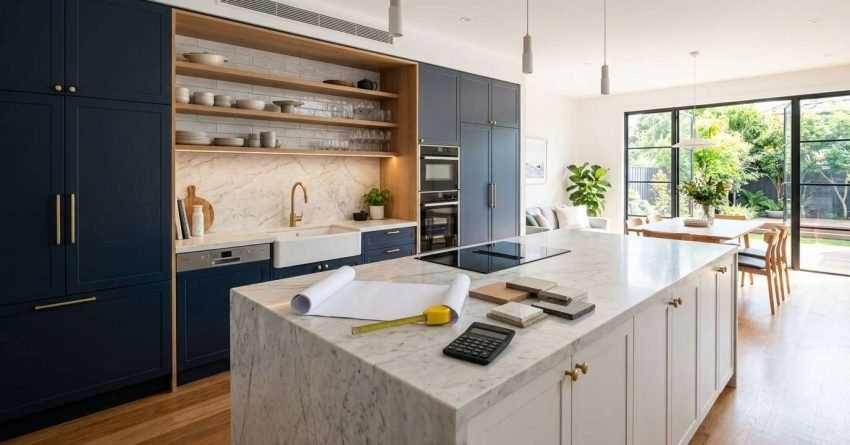
A new kitchen returns 50 to 80 percent of its cost at resale and delivers daily use value from the day it is finished. That makes it one of the most dependable renovations I quote.
For Sydney homeowners, the return arrives twice: measurable value in the property, and a cooking space that works every day.
I have priced enough of these jobs to know the percentage alone decides nothing. What matters is your suburb’s price ceiling, your timeline, the tier you build to, and what the money costs you to borrow. This guide gives you those numbers and the subtraction that turns them into a decision.
Understanding Kitchen Renovation ROI in Australia
A new kitchen is a good investment when the spend stays inside 5 to 10 percent of your property’s value. At that level, Australian kitchen renovations return 50 to 80 percent of cost at resale, and well-planned mid-range projects in strong markets exceed 100 percent. Spend beyond your suburb’s ceiling, and the return collapses.
Return varies with property type, location, and scope. Across the Australian market, kitchens outperform every other room renovation for resale value, and the Housing Industry Association’s Kitchens & Bathrooms Report tracks kitchens as the largest single category of residential renovation spend.
Property valuers work to a rule of thumb: a well-executed kitchen renovation adds $1.50 to $2 in value for every $1 spent, provided you do not overcapitalise for your suburb. Sydney’s market rewards quality upgrades, especially where buyers already expect modern finishes.
Percentages hide the important part. A $40,000 kitchen adds $60,000 in one suburb and $35,000 in another, and the variable is not the kitchen. It is the price ceiling of the street you built it on.
How Long a New Kitchen Holds Its Value
A well-built kitchen serves 15 to 20 years before it reads as dated to a buyer. Finishes and hardware carry that span comfortably, while appliances turn over faster on a 10- to 12-year cycle.
That lifespan sets the renovation clock. A kitchen at year twelve still presents well and rarely justifies replacement on resale grounds alone, and a kitchen past year twenty drags the whole property’s condition rating down.
Age drives transformation value more than any finish choice. The wider the gap between what stands there now and what a buyer expects, the more of your spend comes back.
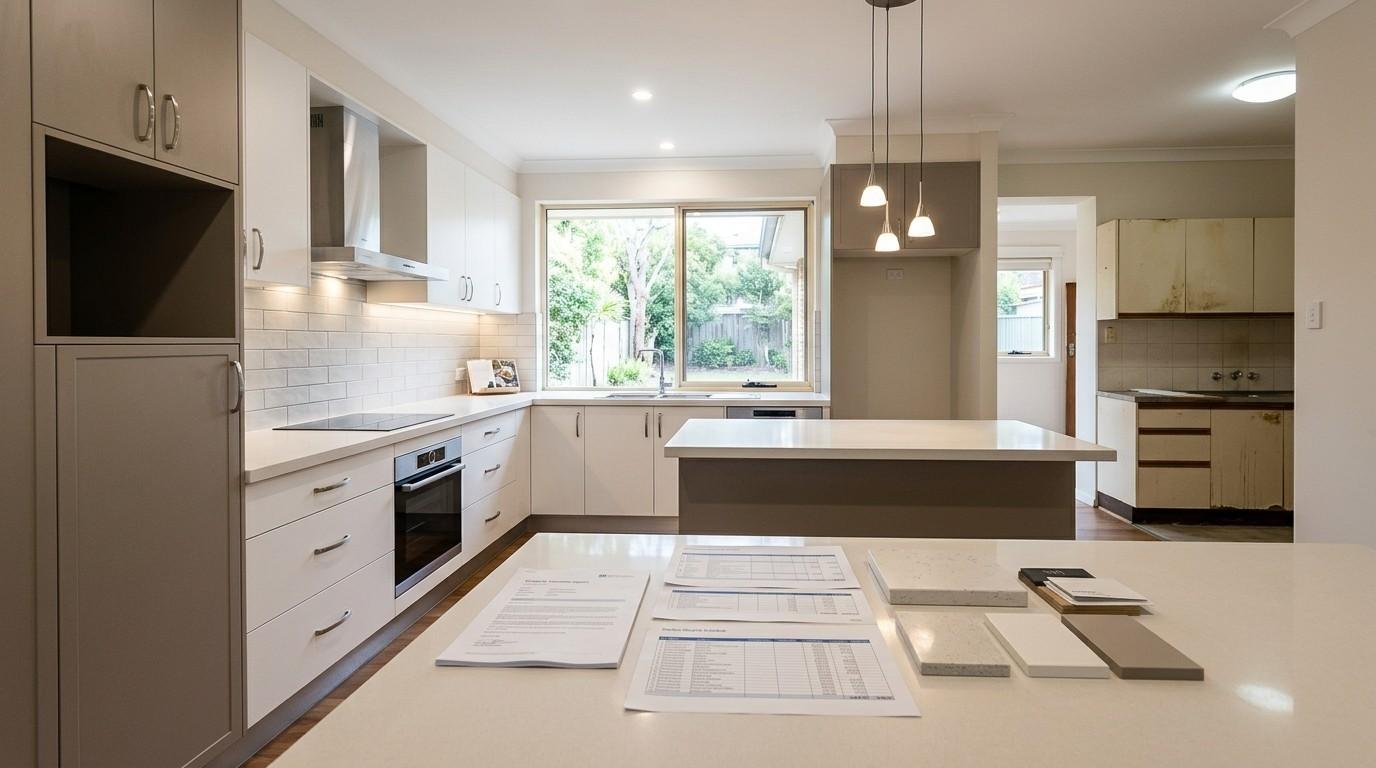
Minor vs Major Kitchen Renovation: Which Returns More?
Percentage return and dollar return move in opposite directions, which is why I always show clients both.
Renovation Tier | Sydney Cost Range | Typical ROI | Best Suited To |
Cosmetic refresh (doors, benchtop, splashback, appliances) | $15,000–$25,000 | 75–100% | Pre-sale presentation, sound existing layout |
Mid-range full renovation (new cabinetry, stone, standard appliances) | $30,000–$50,000 | 60–80% | Most Sydney homes, 5+ year stays |
High-end renovation (custom joinery, premium appliances, layout change) | $60,000–$100,000+ | 40–60% | Premium suburbs, long-term owners |
The pattern holds nationally. Minor remodels recover a higher share of cost than major ones, a finding Remodeling magazine’s Cost vs. Value Report has reproduced for two decades, and major renovations add more total dollars while returning a smaller slice of what you spend.
I steer most clients to the mid-range tier, and a mid-range kitchen renovation clears buyer expectations without pushing past what the suburb supports.
A Worked Example: $45,000 Kitchen on an $1.1M Home
Take an $1.1 million home in a middle-ring Sydney suburb with a tired 1990s kitchen.
A $45,000 mid-range renovation sits at 4.1 percent of property value, comfortably inside the safe band. At a 70 percent return, that adds roughly $31,500 in valuation, leaving $13,500 of unrecovered cost against five years of daily use.
Now push the same kitchen to $95,000 in the same house. Spend hits 8.6 percent of value, return drops toward 50 percent, and the unrecovered figure jumps past $47,000. Same house, same trades, three and a half times the loss.
That subtraction is the whole decision.
How Kitchen Upgrades Affect Property Value
Kitchen condition shapes how buyers judge the entire property. Agents report outdated kitchens among the top reasons buyers negotiate harder or walk away from otherwise suitable homes.
A modern kitchen signals the property has been maintained. It removes the mental renovation invoice a buyer runs while walking through, which produces faster sales and stronger offers.
Valuers treat the kitchen as a condition marker for the whole dwelling. A renovated kitchen lifts the condition rating applied across the property, so the valuation gain often exceeds the isolated value of the room itself.
Days on market move too. A property with a current kitchen clears inspections faster, and shorter campaigns hold price better than long ones where buyers sense hesitation.
The effect spreads past the room. An updated kitchen makes adjoining living and dining areas read as contemporary, and open-plan flow between those three spaces remains among the most requested features in CoreLogic’s Australian housing analysis.
Comparing Kitchen ROI to Other Home Improvements
Kitchens sit at the top of the return table at 50 to 80 percent recovery. Bathroom renovations follow closely at 50 to 70 percent according to the same CoreLogic renovation value analysis, and cosmetic work like painting and flooring returns 60 to 100 percent on a small base.
Structural additions such as extra bedrooms add more absolute value but demand larger budgets and longer programs, typically recovering 40 to 60 percent. A second storey addition is the clearest example, where the dollar gain is large, and the percentage return is modest.
Outdoor work, including decking and landscaping, performs well in Sydney’s climate without matching kitchen consistency. The kitchen’s role in daily life, and its prominence at every inspection, gives it an edge almost nothing else holds.
Factors That Determine Kitchen Investment Value
Not every kitchen renovation returns the same. Four factors decide the outcome: your property’s value and location, the existing kitchen’s condition, the quality of materials and workmanship, and the layout you finish with.
Your property’s value and location set the ceiling on sensible spending. Overcapitalising, meaning spending past what the local market supports, is the mistake I see most. A $100,000 kitchen in a suburb with an $800,000 median never makes financial sense regardless of how good it looks.
Existing condition matters just as much. Replacing a genuinely dated 1980s kitchen returns more than upgrading a functional 2010s space, because buyers price the size of the transformation.
The remaining two factors are within your control on every project, and they separate a kitchen that holds value from one that dates in five years.
Location and Market Conditions
Sydney’s spread means returns differ sharply between suburbs. Premium areas like the Eastern Suburbs and Lower North Shore support higher-end finishes, while Western Sydney buyers rank functionality and value above luxury appointments.
Here is how the bands typically fall across the metropolitan area:
Sydney Region | Sensible Kitchen Spend | Typical Recovery | What Buyers Expect |
Eastern Suburbs / Lower North Shore | $60,000–$120,000 | 50–65% | Custom joinery, integrated appliances, stone |
Inner West / Northern Beaches | $40,000–$75,000 | 60–75% | Stone benchtops, quality cabinetry, island |
Middle-ring (Hills, St George, Ryde) | $30,000–$55,000 | 65–80% | Stone, soft-close, good storage |
Western and South West Sydney | $20,000–$40,000 | 70–85% | Durable surfaces, function, generous storage |
Market conditions shift the number too. In strong seller’s markets, a well-presented kitchen attracts multiple offers, and in slower periods it separates your listing from the competition.
Buyer demographics shape the brief. Family suburbs reward practical storage and durable surfaces, and areas popular with young professionals reward sleek, minimalist design. Knowing your likely buyer is how you spend accurately.
Quality of Materials and Workmanship
Cutting corners on materials or installation costs more than it saves. Buyers and building inspectors identify cheap cabinetry, poorly fitted benchtops, and budget appliances, and the discount they apply exceeds what you saved.
Quality does not mean most expensive. Mid-range selections from reputable suppliers deliver the best value, and stone benchtops, soft-close cabinetry, and decent tapware are now baseline expectations in Sydney.
Poor installation shows up fast. Doors that stop closing, visible benchtop seams, and plumbing faults surface within months, and they damage both daily use and resale.
Kitchen Layout and Functionality
Layout returns more than finishes alone. A kitchen that flows, stores enough, and gives you room to work beats one with expensive surfaces and awkward circulation.
The work triangle, positioning sink, stove, and refrigerator for efficient movement, still governs good kitchen layout design. Modern kitchens add multiple work zones for households where several people cook at once, and the underlying principle of functional flow holds.
Storage drives perceived value. Pull-out pantries, corner organisers, and dedicated appliance housing read as thoughtful, and buyers respond to kitchens where everything has a place.
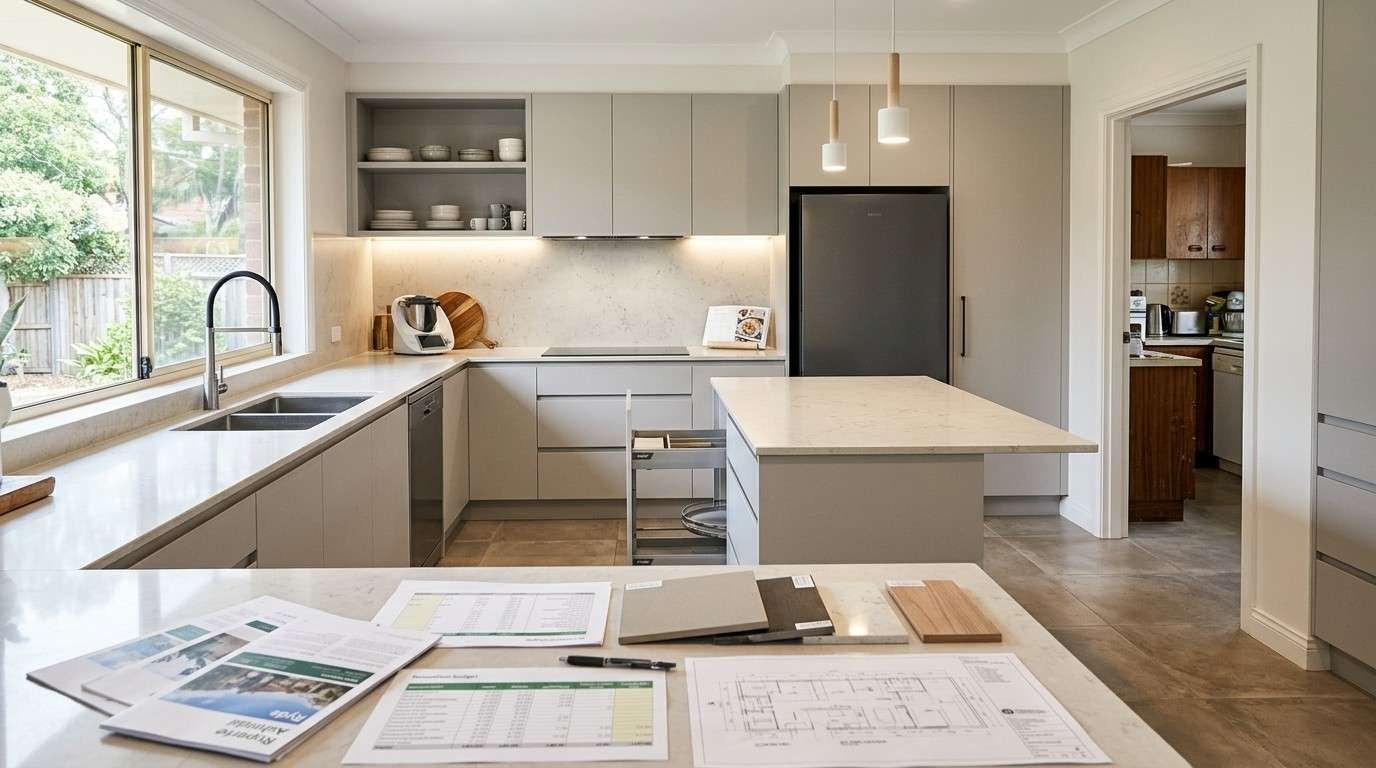
Cost Breakdown for Kitchen Renovations in Sydney
Realistic costing prevents the mid-project surprises that wreck budgets. Sydney kitchen renovation costs span a wide range by scope, size, and finish.
Cosmetic renovations, meaning new doors, benchtop, splashback, and appliances over the existing layout and cabinet boxes, run $15,000 to $25,000. These suit owners who want a visible lift without major disruption.
Mid-range full renovations with new cabinetry, stone benchtops, and standard appliances land between $30,000 and $50,000. This is where most Sydney projects belong.
High-end projects with custom joinery, integrated appliances, and layout changes start at $60,000 and run past $100,000. On a typical mid-range job, the split lands near 40 percent cabinetry, 20 percent benchtops and splashback, 20 percent appliances, and the balance across trades and finishes.
Does Kitchen Size Change the Return?
Size changes the dollar figure far more than the percentage. Sydney kitchens price at roughly $2,000 to $3,500 per linear metre of cabinetry at mid-range spec, so a compact galley costs materially less than a large open-plan run.
Small kitchens often return the higher percentage. The fixed costs of plumbing, electrical, and waterproofing spread across less cabinetry, and the transformation reads just as strongly to a buyer.
Large kitchens carry the opposite risk. More metres means more spend, and a generous kitchen in a modest suburb is the fastest route past the price ceiling I see.
Labour Costs and Timeframes
Labour takes 35 to 45 percent of total cost on a typical Sydney job. That covers cabinetmakers, plumbers, electricians, tilers, and often plasterers and painters, and coordinating them needs either real project management or a contractor who owns the schedule.
Standard renovations run 4 to 8 weeks from demolition to completion, extending where structural changes, council approvals, or custom cabinetry are involved. Planning that honestly lets you arrange alternative cooking and manage the household.
Trade availability moves both price and program. Australian Bureau of Statistics building activity data shows sustained residential renovation demand, so booking early and staying flexible on dates gets better rates than a last-minute scramble.
Material Allowances and Hidden Costs
Material cost swings hard on selection. Laminate benchtops run $200 to $400 per linear metre installed, and premium stone runs $800 to $1,500 per linear metre.
The same spread applies to cabinetry. Flat-pack starts near $150 per linear metre against $600 to $900 for custom joinery, which is the single largest swing factor in most quotes.
Surfaces follow the same pattern. Tiled splashbacks run $80 to $150 per square metre installed against $400 plus for glass or stone, and quality vinyl plank flooring sits at $60 to $110 per square metre against $120 to $200 for engineered timber.
Hidden costs catch people out. Asbestos removal in older homes, electrical upgrades to current standards, plumbing relocation, and structural work for layout changes all arrive after demolition, which is why I build 15 to 20 percent contingency into every budget.
Appliances deserve real allocation. It is tempting to push budget into cabinetry and stone, and then live with appliances that fail the cooking you actually do.
Do You Need Council Approval?
Most kitchen renovations in New South Wales need no development application at all. Replacing cabinetry, benchtops, splashbacks, flooring, and appliances inside the existing footprint generally falls under exempt development, provided you are not touching structure or changing the building’s use.
Approval enters the picture the moment walls move. Removing a load-bearing wall to open the kitchen into living, relocating windows, or altering the roofline shifts the job into complying development or a full DA, and the NSW planning system’s exempt and complying development pathways set out where each line sits.
Older properties add a layer. Heritage listings, strata schemes, and homes in conservation areas carry their own consent requirements, and strata approval for waterproofing and plumbing changes is routinely missed until the work has already started.
Budget the time, not just the fee. A complying development certificate typically turns around in weeks while a DA runs months, and that difference decides whether your kitchen lands before Christmas or after Easter.
Where DIY Saves Money and Where It Costs More
Some scope genuinely suits an owner-builder. Demolition, painting, and flat-pack cabinet assembly save real labour without risking the result.
Electrical and plumbing do not. In New South Wales, that work requires licensed trades, and NSW Fair Trading’s home building rules set the licensing and insurance thresholds you have to meet. Unlicensed work voids insurance, fails at sale, and gets rectified at your cost.
Benchtop templating and installation belong with the fabricator. Stone is unforgiving; a mis-cut slab costs more than the labour you saved, and I tell clients to DIY the reversible work and pay for the rest.
How to Finance a Kitchen Renovation
Every ROI figure you have read so far ignores the cost of the money. That omission is why so many kitchen renovations disappoint on paper.
Most Sydney homeowners fund a kitchen one of four ways: cash savings, redrawing available equity through a home loan increase, a dedicated construction or renovation loan, or an unsecured personal loan. The choice moves your true cost far more than the benchtop you pick.
Equity redraw is the cheapest borrowed money available to most owners, priced at standard home loan rates. The catch is the term, because spreading a $45,000 kitchen across twenty-five remaining loan years costs far more in total interest than the headline rate suggests.
What Finance Costs Do to Your Return
Run the worked example again with borrowing attached. That $45,000 kitchen on the $1.1 million home returned $31,500 in valuation and left $13,500 unrecovered.
Add equity-funded finance at current home loan pricing and pay it down over five years, and the interest adds several thousand dollars to the real cost. The unrecovered figure grows accordingly, and the ROI percentage everyone quotes has not moved at all.
The fix is not avoiding finance. It is matching the repayment term to the ownership term, so you are not paying for a kitchen in year eighteen of a home you sold in year five.
Choosing Between Loan Types
Construction and renovation loans release funds in stages against completed work. They suit larger projects with layout changes, and they impose lender oversight that many owners find useful on a longer program.
Personal loans settle fast and need no property security, which makes them tempting for a cosmetic refresh. The rate premium is steep, so I only see them work where the term is genuinely short.
Speak to a broker before you commit to a scope. Knowing your borrowing capacity first stops you from designing a kitchen you then have to strip back, and it is the cheapest hour in the whole project.
When a Kitchen Renovation Makes Financial Sense
Timing decides how much of the return you actually capture. Selling within 2 to 5 years is the strongest case, because the kitchen gets enjoyed, stays fresh enough to impress buyers, and any defects surface while there is still time to fix them.
Renovating in the fortnight before listing reads as rushed and leaves you no margin. For long-term owners, the calculation changes, and a kitchen used daily for 10 to 20 years justifies itself on function and enjoyment, with resale as the bonus rather than the point.
Signs Your Kitchen Needs Updating
Certain conditions signal strong returns. Original 1970s to 1990s fitouts show dated colours, worn surfaces, and inefficient layouts, and they carry the greatest transformation potential.
Functional faults raise the priority. Insufficient storage, poor lighting, inadequate bench space, and failing appliances damage daily life and buyer perception at the same time.
Style disconnect matters too. A contemporary living area beside a dated kitchen creates a contrast buyers notice immediately, and closing that gap strengthens the whole property.
When to Renovate vs. When to Wait
Some situations favour waiting, and I say so on site. Uncertainty about staying makes heavy investment in a kitchen you will not use a poor trade, and where the suburb’s price ceiling caps the return, a modest update beats a full renovation.
Financial readiness decides quality. Stretching to the limit forces compromises mid-project, and those compromises are exactly what buyers and inspectors find later.
Pre-sale timing has its own maths. A cosmetic refresh completed 6 to 12 months out gives the finishes time to settle and any defects time to surface, and it presents as a maintained home rather than a staged one.
Renovating inside eight weeks of listing rarely pays. You carry full cost against a compressed program, trades charge for the urgency, and buyers read fresh silicone as a cover-up rather than an upgrade.
Market timing applies to sellers. Renovating into a downturn parks your capital in the house longer, and renovating as the market firms positions you to capture the lift.
Five Mistakes That Erase Your Kitchen ROI
I see the same five errors destroy returns:
- Spending past the suburb ceiling. The market pays for the street, not the joinery.
- Buying trend over neutral. Bold colour choices shrink the buyer pool at resale.
- Skipping contingency. No buffer means cutting finishes to cover asbestos or wiring.
- Under-speccing appliances. The one element buyers test by hand.
- Cheapest quote wins. Rectification costs more than the gap between quotes.
Maximising Return on Your Kitchen Investment
Where you place the money changes what you recover. Prioritise what buyers see first, because benchtops, splashback, and cabinetry fronts carry the visual weight and set the tone for the whole room.
Fund those before internal fittings on any resale-driven project. Neutral schemes widen the buyer pool, bold colour suits your taste and narrows the market, and whites, greys, and natural tones let buyers imagine their own version.
High-Impact Upgrades That Add Value
Stone benchtops are now expected in Sydney. Engineered stone delivers durability and consistency below natural stone pricing, and it lifts presentation more than any comparable spend.
Tapware and sinks signal care. These are touched constantly, so quality registers immediately, and reputable brands here return far more than their cost.
Lighting transforms the room. Under-cabinet task lighting, pendants over an island, and adequate general illumination make the space feel larger, and the upgrade costs little against its effect.
Energy Efficiency as a Value Add
Running costs have become a selling point. Buyers now read appliance ratings the way they read benchtop material, and an efficient kitchen carries a credibility that finishes alone do not.
Induction cooktops lead the shift. They cut cooking energy use compared with gas and electric coil, they clean faster, and the Australian Government’s energy rating guidance makes the comparison straightforward when you are specifying appliances.
LED lighting throughout and a high water-rating mixer tap cost little at the point of purchase. They lower ongoing bills, and they signal a kitchen built recently to current standards.
I flag one caution. Moving from gas to induction usually needs a switchboard and circuit upgrade, so price the electrical work before you commit to the cooktop.
Avoiding Overcapitalisation
Research comparable sales before you set a budget. Knowing what similar homes sell for, and what kitchens they carry, calibrates your spend against evidence rather than optimism.
Keep kitchen spend inside 5 to 10 percent of property value. An $1.2 million home supports $60,000 to $120,000, and a $600,000 property belongs closer to $30,000 to $60,000.
Factor in trajectory. Gentrifying areas support higher spend as buyer expectations rise, and established suburbs with stable demographics return more predictably.
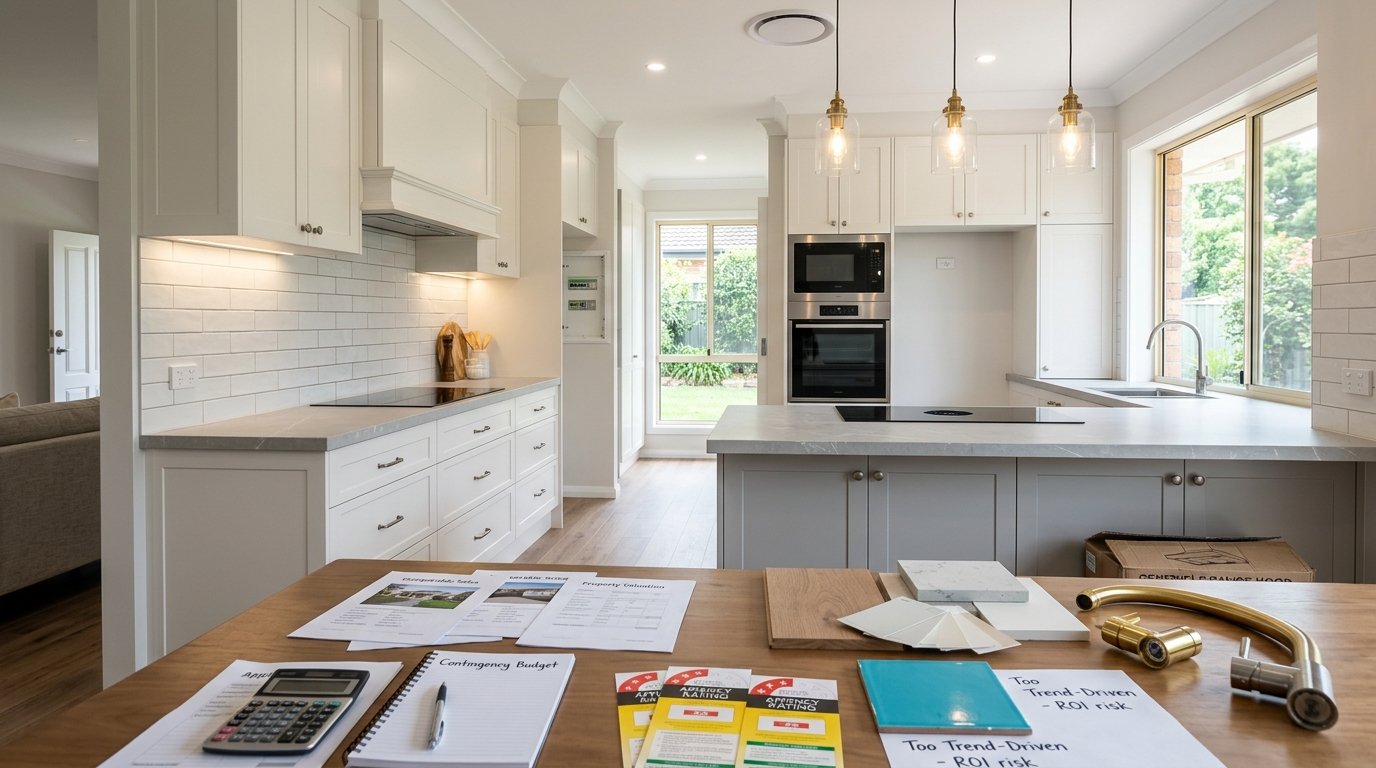
Kitchen Renovations for Investment Properties
Landlords work a different equation. The kitchen has to attract tenants, survive them, and support the numbers at tax time.
Durability outranks fashion. Laminate benchtops in a stone-look finish, soft-close hardware, and mid-tier appliances hold up under tenant turnover better than premium surfaces that mark, and they replace cheaply when they eventually fail.
I spec investment property renovations for a ten-year service life, not a magazine photo. Yield and capital growth pull in different directions, so a cosmetic refresh at $18,000 lifts weekly rent and turns over fast, while a full $45,000 renovation targets valuation for refinancing or sale.
Depreciation and Capital Works Deductions
The tax treatment materially changes the real cost, and almost nobody covers it.
Kitchen renovations on an income-producing property generally fall under capital works, deductible at 2.5 percent per year over 40 years. Plant and equipment items such as ovens, cooktops, and rangehoods depreciate on their own effective-life schedules, and the Australian Taxation Office’s rental property guidance sets out both treatments.
Get a quantity surveyor’s depreciation schedule after completion. Confirm your position with your accountant, because the deduction changes the after-tax cost of the same kitchen.
Making Your Decision: Investment Checklist
Work through these before you commit:
- Timeline. How many years will you own the property? Under two favours cosmetic only.
- Price ceiling. What do renovated comparables in your suburb actually sell for?
- Spend ratio. Does your budget sit inside 5 to 10 percent of property value?
- Current condition. Genuinely dated and dysfunctional, or simply not to your taste?
- Contingency. Do you hold 15 to 20 percent beyond the quoted figure?
- Cash comfort. Can you fund quality work without financial strain?
- Finance cost. If borrowing, does the repayment term match your ownership term?
- Approvals. Does your scope stay inside exempt development, or does a wall move?
- Disruption. Does the household accept 4 to 8 weeks without a kitchen?
- Purpose. Owner-occupier enjoyment, resale presentation, or rental yield?
Dated and dysfunctional returns more than adequate and unfashionable. That single distinction decides most of these projects.
Working With Renovation Professionals
Experienced contractors bring judgement to the brief. They know what your local market rewards, they identify problems before those problems get expensive, and they sequence trades so the program holds.
Get multiple quotes and check references properly. The cheapest quote rarely represents the best value, and we compare renovation quotes line by line against inclusions, exclusions, allowances, and named brands rather than headline totals.
Watch for the gaps that make a low number look competitive. Undisclosed appliance allowances, excluded electrical upgrades, and vague benchtop specifications are where a $38,000 quote becomes a $46,000 invoice.
Document the agreement. Written scope, budget, and program protect both sides and give you a reference point every time a decision comes up mid-build.
Conclusion
A new kitchen is among the soundest improvements available to Sydney homeowners, returning 50 to 80 percent at resale while paying you back in daily use from handover. The result turns on matching spend to your property’s value, your suburb’s expectations, and how long you intend to stay.
The homeowners who do best are the ones who run the subtraction before they choose a benchtop. Get the price ceiling and the spend ratio right, and the finishes look after themselves.
At Sydney Home Renovation, we start with your suburb’s ceiling and your timeline, then build a costed scope that sits inside it, so you know your net position before we lift a tool. Contact our team for a transparent assessment of what your property supports and a detailed quote against it.
Frequently Asked Questions
How much does a kitchen renovation cost in Sydney?
Sydney kitchen renovations run $15,000 to $25,000 for cosmetic updates, $30,000 to $50,000 for mid-range full renovations, and $60,000 to $100,000 plus for high-end projects.
What is the average ROI on a kitchen renovation in Australia?
Australian kitchen renovations return 50 to 80 percent of cost at resale. Well-planned projects in strong markets exceed 100 percent, depending on location, quality, and conditions.
How much value does a new kitchen add to a house?
A well-executed kitchen adds roughly $1.50 to $2 in valuation for every $1 spent, provided the total stays inside 5 to 10 percent of your property’s value.
How long does a kitchen renovation take?
Most full renovations take 4 to 8 weeks from demolition to completion. Cosmetic updates finish in 2 to 3 weeks, and structural changes or custom cabinetry extend to 10 to 12 weeks.
Do I need council approval for a kitchen renovation in NSW?
Most kitchen renovations inside the existing footprint are exempt development. Moving load-bearing walls, altering windows, or changing the structure triggers complying development or a DA.
Should I renovate my kitchen before selling?
Renovating 6 to 12 months before selling delivers the best result. You enjoy the space, it stays fresh for buyers, and defects surface while there is time to fix them.
What kitchen features add the most value?
Stone benchtops, quality cabinetry, modern appliances, and good lighting add the most. Better storage and improved layout matter more to buyers than purely cosmetic changes.
Is it better to renovate or buy a new house with a better kitchen?
Renovating usually costs less than the stamp duty, agent fees, and moving expenses of buying a comparable home with an updated kitchen. Your attachment to the location decides the rest.
How do I avoid overcapitalising on my kitchen renovation?
Research renovated comparables in your suburb, keep spending within 5 to 10 percent of property value, and choose quality mid-range finishes over luxury appointments the market will not pay for.