
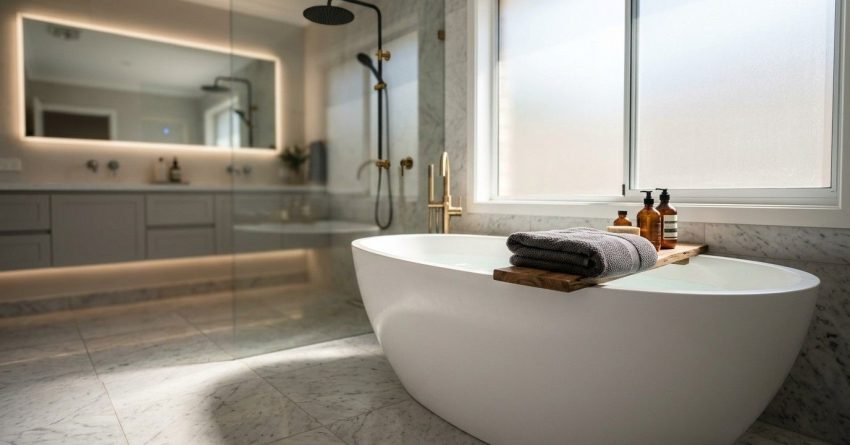
Bathroom renovations are the most in-demand home improvement across Australia, and we see that play out on almost every Sydney job we quote. Homeowners come to us wanting better daily function first, then discover the resale upside as a bonus.
What follows is the ranking we work from, the real cost bands behind each project type, and the honest version of which upgrades return your money.
The Most In Demand Home Improvements, Ranked
Bathroom renovations lead demand nationally, followed by kitchens, flooring, painting, outdoor living, energy efficiency upgrades and home extensions. Bathrooms take the top spot because they combine constant daily use, visible ageing, waterproofing risk, and one of the strongest cost-to-value ratios of any room in the house.
Here is how the main categories compare on demand, typical Sydney spend, and realistic return.
Rank | Improvement | Typical Sydney Cost | Indicative ROI | Main Demand Driver |
1 | Bathroom renovation | $15,000–$35,000 | 70–80% | Daily use, waterproofing age, resale expectation |
2 | Kitchen renovation | $25,000–$50,000 | 60–75% | Buyer focal point, appliance obsolescence |
3 | Flooring replacement | $5,000–$20,000 | 50–70% | Whole-home visual lift for modest spend |
4 | Interior painting | $3,000–$12,000 | 60–100% | Cheapest presentation gain before sale |
5 | Outdoor living/deck | $10,000–$40,000 | 40–60% | Climate, entertaining, lifestyle |
6 | Energy efficiency upgrades | $4,000–$25,000 | Utility savings led | Power costs, rebates, comfort |
7 | Extension or granny flat | $120,000–$350,000 | 50–70% | Floor space, rental income, multigenerational living |
Flooring and painting punch above their weight. Both cost a fraction of a wet-area renovation and lift every room a buyer walks through, which is why we get called for them constantly in the weeks before a campaign launch.
Extensions and granny flats sit lower on frequency but higher on ambition. They add actual square metres rather than improving existing ones, so the demand comes from families who have outgrown a home they do not want to leave.
Why Bathroom Renovations Lead Home Improvement Demand
Bathroom renovations dominate demand for practical and financial reasons that hold true for owner-occupiers and investors alike. A well-executed bathroom changes daily routines and strengthens your property’s market position at the same time.
The average Australian household uses the bathroom multiple times a day, making it one of the highest-traffic areas in any home. That constant use wears out fixtures, grout, and waterproofing membranes far faster than a bedroom or living room.
By the time most people call us, they are fixing years of accumulated problems, not chasing a trend.
Return on Investment Potential
Bathroom renovations deliver strong returns compared with other improvement categories. Industry analysis from CoreLogic’s Australian housing research places well-planned bathroom upgrades in the 70–80% cost-recovery band at resale, with premium finishes in high-demand suburbs clearing that mark.
The return extends past resale arithmetic. A renovated bathroom cuts maintenance costs, removes the water-damage risk sitting behind a failing membrane, and reduces water bills through modern fixtures.
Investors favour bathrooms for a simpler reason. Tenants rank updated bathrooms among their top priorities when choosing a rental, so a modern wet area supports higher weekly rent and shorter vacancy periods.
Lifestyle and Functionality Drivers
Beyond the numbers, expectations for bathroom function have moved a long way in a decade. Features that were once premium are now the baseline in most briefs we receive.
Walk-in showers have largely replaced shower-over-bath configurations. Heated towel rails, underfloor heating and proper ventilation now handle comfort issues that earlier generations simply put up with.
Accessibility shapes a growing share of projects. Grab rails, curbless showers and wider doorways let homeowners future-proof a house while their mobility is still fine, which is far cheaper than retrofitting under pressure later.
Key Factors Driving Bathroom Renovation Popularity
Understanding what pushes bathrooms to the top of the list helps you make better calls on timing, scope and budget.
Property Market Dynamics
Sydney’s competitive market rewards strategic improvement. Buyers expect move-in-ready homes with updated wet areas, and properties with dated bathrooms sit on the market longer or attract discounted offers.
Agents consistently name bathroom condition as a primary influence on buyer perception. A tired bathroom overshadows good features elsewhere, while a well-finished one leaves the impression people remember after an open home.
Timing still matters even without a sale in mind. Renovating during ownership means you enjoy the result and build equity, rather than handing the benefit straight to the next owner.
Waterproofing and Structural Concerns
Many bathroom renovations start as necessity rather than choice. Australian waterproofing standards have tightened considerably, and bathrooms built under older codes develop moisture problems that need full remediation.
Musty odours, bubbling paint and soft flooring near wet areas all point to membrane failure. Once water gets into the structure, damage accelerates, and early renovation costs less than the delayed repair.
Insurance adds urgency here. Policies exclude damage from gradual deterioration and maintenance neglect, which leaves the repair bill with you.
Energy and Water Efficiency
Rising utility costs have pushed efficiency up the priority list. Dual-flush toilets, low-flow showerheads and sensor taps cut consumption without any drop in day-to-day performance.
National water-use data from the Australian Bureau of Statistics shows bathroom fixtures account for roughly 40% of household water use, and Sydney Water reports that upgrading to high WELS-rated fittings reduces bathroom consumption by 30–50%. On a typical Sydney household bill, that saving accumulates across the full service life of the fixtures.
Heating and ventilation follow the same pattern. Modern heat lamps, exhaust fans and heated flooring draw far less power than the units they replace while performing better.
Comparing Bathroom Renovations to Other Popular Home Improvements
The ranked table above sets the order. This section explains why the top contenders land where they do.
Kitchen Renovations
Kitchens are the main competitor for renovation budgets. Both rooms share high daily use, strong influence on value, and visible deterioration over time.
Kitchens cost more because of larger footprints and appliance requirements. A mid-range Sydney kitchen runs $25,000 to $50,000, against $15,000 to $35,000 for a comparable-quality bathroom.
The comparison favours bathrooms on efficiency of spend. Kitchens need extensive work before the result looks transformed, and partial kitchen updates read as unfinished, while a bathroom’s contained footprint lets us deliver a complete result on a tighter budget.
Outdoor Living Spaces
Decks, pergolas and outdoor kitchens have gained real ground as entertaining moved outside. Sydney’s climate makes these spaces usable most of the year, which is why demand holds up.
The limitations are real too. Weather exposure drives ongoing maintenance, council approval adds time, and outdoor areas never carry the essential-function weight of a working bathroom.
Energy Efficiency Upgrades
Solar, insulation and window upgrades deliver measurable utility savings and appeal to buyers who read the running costs before the floor plan. Rebate availability under NSW energy programs has pulled a lot of this demand forward, since a subsidised install changes the payback maths substantially.
These upgrades rarely compete directly with a bathroom project. Most of our clients sequence them, fixing essential wet-area function first, then moving to efficiency work once the house is sound.

Improvements That Rarely Pay Off
The honest counterpart to a demand ranking is knowing where the money disappears. We talk clients out of these regularly.
Swimming pools top the list in most Sydney suburbs. Installation runs well past $50,000; the ongoing maintenance and insurance deter a meaningful share of buyers, and the resale return sits far below the spend.
Highly personalised finishes cause the same problem at a smaller scale. Bold tile choices, feature colours and unusual fixture styles read as character to you and as a renovation cost to a buyer.
Over-capitalisation is the broader trap. Fitting a premium bathroom into a modest suburb pushes your total investment above what local ceiling prices support, so the market simply will not return it.
Garage conversions that remove all covered parking also cost more than they add. In most Sydney streets, secure off-street parking outweighs an extra internal room.
Budgeting for High-Demand Home Improvements
Realistic budgeting is what separates a smooth renovation from a stressful one. Knowing the cost structure lets you allocate funds properly instead of discovering the shortfall halfway through.
Understanding Cost Components
Bathroom renovation costs break into predictable categories, and each needs its own allocation:
- Labour: 40–50% of total budget. Covers demolition, plumbing, electrical, waterproofing, tiling, and fixture installation. Sydney rates reflect the city’s cost base, and licensed trades command a premium.
- Materials and fixtures: 30–40%. Tiles, vanities, toilets, tapware, shower screens and accessories. Specification choices move this figure more than any other decision you make.
- Contingency: 10–15%. Demolition exposes water damage, structural issues and non-compliant previous work. Without this buffer, every surprise becomes a delay.
Setting Realistic Expectations
Costs vary with scope, specification and the property itself. These bands cover most of what we quote in Sydney:
- Budget ($10,000–$18,000). Essential updates with standard fixtures. Suits investment properties where function outweighs finish.
- Mid-range ($18,000–$35,000). Better fixtures, improved storage and more considered tile selections. Most owner-occupier projects land here.
- Premium ($35,000–$60,000+). High-end fixtures, custom cabinetry, natural stone and designer finishes. Appropriate where the renovation has to match the standard of the rest of the home.
Avoiding Cost Blowouts
Overruns hit bathrooms harder than most categories. Three causes account for nearly all of them.
Scope creep does the most damage. Every mid-project addition triggers labour adjustments, material reorders, and schedule disruption, and those compound.
Skipping investigation before demolition guarantees surprises. Having someone assess waterproofing integrity, plumbing runs, and structural elements first keeps the unknowns small.
Underspecified quotes create false economy. A quote without a detailed breakdown hides exclusions that reappear as extras, so we itemise everything up front, and you compare like with like.

Maximising Value from Your Renovation Investment
Where you spend inside the budget matters as much as the budget itself.
Prioritising High-Impact Elements
Bathroom components do not contribute equally to perceived value. Concentrating spend on the high-impact items is how a modest budget still reads as a quality renovation.
Tiles dominate first impressions and deserve proportionate allocation. Quality floor and wall tiles carry the room, and cheap alternatives undermine everything around them.
Vanities are the focal point, so we invest in cabinetry with durable surfaces and storage that actually works. Tapware earns the same treatment because it gets touched constantly, and budget fittings deteriorate fast enough to need replacing well before the rest of the room.
Lighting is the most underrated line item. Layered task, ambient, and accent lighting turns one room into several depending on the time of day.
Where to Save Without Sacrificing Quality
Strategic savings in low-impact areas protect the budget for the things that matter:
- Accessories. Towel rails, roll holders, and robe hooks source economically and upgrade easily later.
- Paint. Quality bathroom-grade paint delivers excellent results without premium pricing.
- Service positions. Keeping plumbing and electrical where they are avoids the expensive infrastructure moves that relocation demands.
Timing Considerations
Timing affects both cost and convenience. Winter sees softer demand for renovation work, which improves availability and gives us more pricing flexibility, though weather complicates jobs needing external access or heavy ventilation.
End-of-financial-year sales occasionally discount fixtures, but chasing a sale price rarely justifies compromising on a fitting you touch every day.
Your own circumstances matter most. Renovating around an extended holiday or a temporary relocation cuts the disruption and lets us work faster.
Working with Renovation Professionals
The contractor you choose determines whether the plan survives contact with the build.
Selecting the Right Contractor
Four checks separate a safe choice from an expensive one:
- Licensing and insurance. NSW requires specific licences for building work, and current certificates of currency should be produced without you having to ask twice.
- Portfolio evidence. Completed projects, ideally seen in person, reveal finish quality that photos flatter.
- References. Previous clients tell you how communication and problem-solving actually went.
- Detailed quotations. Itemised inclusions, exclusions and allowances let you compare quotes honestly and prevent disputes later.
Communication and Project Management
Clear communication prevents most renovation disputes before they start. We document every decision and variation in writing, because verbal agreements fall apart the moment two memories disagree.
Regular progress updates let issues surface early rather than at handover. We also fix site access arrangements up front, so attendance times and facility requirements never become a daily negotiation.
Your involvement helps at three points: confirming specifications before we order, inspecting the waterproofing before tiling covers it, and walking the completed work with us before final payment.
Conclusion
Bathroom renovations hold their position as the most in-demand home improvement because they deliver on every front at once: daily function, risk reduction, and resale value. Kitchens, flooring, and painting follow closely, each earning its place for different reasons.
At Sydney Home Renovation, we plan renovations around the return, not just the finish. Our costing is transparent from the first conversation, so you know exactly what your budget buys before any demolition starts.
If you want to know which improvement makes the most sense for your property and your suburb, talk to our team for an obligation-free consultation. We will assess your space, discuss your goals honestly, and tell you where your money works hardest.
Frequently Asked Questions
How much does a bathroom renovation cost in Sydney?
Mid-range Sydney bathroom renovations run $15,000 to $35,000. Budget projects start near $10,000, and premium builds exceed $50,000, driven by size, fixture quality, and plumbing relocation.
How long does a complete bathroom renovation take?
Most bathroom renovations take two to four weeks from demolition to completion. Complexity, material lead times, and structural modifications all extend that window, so we schedule in detail upfront.
Do I need council approval for a bathroom renovation?
Standard renovations that replace fixtures in existing positions rarely need council approval. Structural changes, additions, and significant plumbing relocations often require development consent, and we confirm this before quoting.
What adds the most value to a bathroom renovation?
Quality tiles, a well-specified vanity with real storage, and updated tapware deliver the strongest value impact. Sound waterproofing adds no visual appeal but protects the entire investment.
Should I renovate my bathroom before selling my house?
Renovating first makes sense when the existing bathroom is dated or damaged, because buyers discount offers to cover the work themselves. Check local ceiling prices to avoid over-capitalising.
Can I live in my house during a bathroom renovation?
Most of our clients stay home throughout, accepting some short-term inconvenience. With a single-bathroom property, we arrange temporary facilities and sequence the critical phases around your routine.
What are the biggest mistakes to avoid in bathroom renovations?
The costly mistakes are underestimating the budget, choosing a contractor on price alone, changing specifications mid-build, and cutting corners on waterproofing. Planning and a real contingency prevent all four.


