The mirror you choose shapes how your bathroom functions every single day, and in Sydney bathrooms, where space is often tight, that choice matters more than most people realise.
Getting this decision wrong costs you either storage you desperately need or visual space you can never get back. Both outcomes hurt. Both are avoidable.
I’ll walk you through the real differences between mirror cabinets and open mirrors covering storage, cost, style, and which one actually suits your bathroom.
What Is a Bathroom Mirror Cabinet?
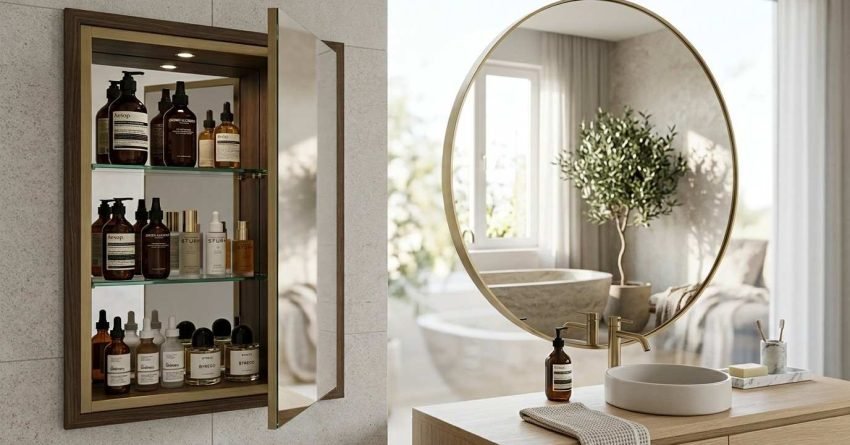
A bathroom mirror cabinet is a wall-mounted unit that combines a reflective mirror surface on the front with an enclosed storage compartment behind it. It functions as both a mirror and a medicine cabinet in one fixture.
Most people know it as a shaving cabinet. The name has stuck even though the storage inside holds far more than razors these days.
Key Features and Storage Functions
Mirror cabinets typically include adjustable internal shelving, a recessed or surface-mounted housing, and a hinged or sliding door. Recessed models sit flush with the wall, which keeps the profile clean and saves depth in the room.
The storage capacity handles toiletries, medications, skincare products, and everyday bathroom essentials. For a family bathroom or a compact ensuite with no vanity drawers, that built-in storage solves a real problem.
What Is an Open Mirror?
An open mirror is a single reflective panel framed or frameless, mounted directly to the bathroom wall with no storage behind it. It does one job: reflect light and give you a clear view.
That simplicity is exactly why designers reach for it first in renovation projects.
Key Features and Aesthetic Functions
Open mirrors come in every shape and size: rectangular, round, arched, custom-cut. A large frameless mirror can make a small bathroom feel twice its actual size by bouncing natural light across the room.
The visual impact is immediate. There are no hinges, no door gaps, no visible hardware to interrupt the surface. For a modern or minimalist bathroom renovation, an open mirror delivers a cleaner, more considered finish.
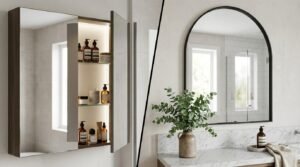
Bathroom Mirror Cabinet vs Open Mirror: The Core Differences
These two options solve different problems. Understanding which problem your bathroom actually has makes the decision straightforward.
Storage and Functionality
A mirror cabinet gives you hidden storage directly at the vanity. Everything you reach for in the morning toothpaste, face wash, medications sits behind the mirror, off the benchtop, and out of sight.
An open mirror gives you none of that. If your vanity has strong drawer and shelf storage already, you won’t miss it. If your bathroom is short on storage, an open mirror leaves that problem unsolved.
Bathroom Size and Space Considerations
In a small bathroom, a recessed mirror cabinet is one of the smartest space decisions you can make. It adds storage without consuming any floor space, and the flush-mounted finish keeps the room feeling open.
Surface-mounted cabinets project from the wall, which can feel bulky in a tight space. An oversized open mirror in the same room, on the other hand, visually expands the space in a way no cabinet can match.
Style, Aesthetics, and Visual Impact
Open mirrors win on aesthetics in almost every design conversation. A large-format frameless mirror or a statement round mirror with a brushed brass frame becomes a focal point that elevates the whole room.
Mirror cabinets have improved significantly in design quality over the past decade. Frameless cabinet fronts, soft-close hinges, and integrated LED lighting now sit comfortably in contemporary bathrooms. But they still read as functional first, decorative second.
Cost Comparison: Mirror Cabinet vs Open Mirror
Cost is one of the clearest differences between these two options, and it’s worth understanding before you lock in a budget.
Supply Costs in Sydney
| Option | Budget Range | Mid-Range | Premium |
| Open Mirror (standard) | $80–$250 | $300–$700 | $800–$2,000+ |
| Mirror Cabinet (surface-mount) | $150–$400 | $450–$900 | $1,000–$2,500+ |
| Mirror Cabinet (recessed) | $300–$600 | $700–$1,400 | $1,500–$3,500+ |
Recessed mirror cabinets cost more to supply because the housing is larger and the installation is more involved. Premium open mirrors, custom shapes, designer frames, and backlit panels can close that gap quickly.
Installation and Labour Costs
A standard open mirror installation in Sydney runs between $80 and $200 in labour, depending on size and wall type. Tiling or rendered walls add complexity and cost.
A surface-mounted mirror cabinet sits in a similar labour range. A recessed cabinet is a different story: cutting into the wall cavity, checking for plumbing and electrical services, and finishing the recess cleanly adds $200 to $600 in labour on top of the supply cost. If the cabinet includes integrated lighting, a licensed electrician is required, which adds a separate trade call-out.
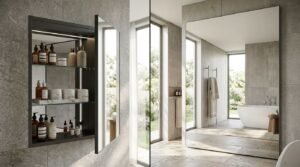
Which One Is Better for Your Bathroom?
There is no universal answer. The right choice depends on your bathroom’s specific constraints and your renovation priorities.
Choose a Mirror Cabinet If…
You have limited vanity storage and need to keep the benchtop clear. A mirror cabinet is the right call for a small bathroom renovation, a family bathroom with multiple users, or any space where clutter is a recurring problem.
It’s also the smarter choice for investment properties. Tenants value practical storage, and a well-specified mirror cabinet signals a thoughtfully finished bathroom without requiring a premium fitout budget.
Choose an Open Mirror If…
Your bathroom already has strong storage through vanity drawers, built-in niches, or freestanding shelving. An open mirror lets you prioritise the visual experience of the room without duplicating storage you don’t need.
It’s the natural choice for a design-led renovation where the mirror is meant to be a feature: a large-format frameless panel above a double vanity, or a round mirror that anchors a boutique-style ensuite.
Impact on Bathroom Renovation Value
Both options add value to a bathroom renovation, but they do it differently. A mirror cabinet adds functional value; it solves a storage problem and makes the bathroom more liveable. That matters to buyers and tenants who use the space practically every day.
An open mirror adds perceived value. A well-chosen mirror makes the bathroom photograph better, feel larger, and read as more considered in design terms. In a competitive Sydney property market, that visual impression influences buyer perception at inspection.
For most owner-occupier renovations, I’d weigh storage need first and aesthetics second. For a high-end renovation or a property being prepared for sale, the open mirror often wins on presentation alone.
Conclusion
Both mirror cabinets and open mirrors have a clear place in bathroom renovation. The decision comes down to your storage situation, your bathroom’s size, and what you want the space to feel like when it’s finished.
Neither option is universally better. One solves a functional problem; the other solves a visual one. The best renovations match the mirror to the bathroom’s actual needs.
At Sydney Home Renovation, we help you make these decisions with confidence, matching the right fittings to your space, your budget, and your long-term goals. Get in touch and let’s plan your bathroom renovation properly.
Frequently Asked Questions
Is a mirror cabinet worth it in a small bathroom?
Yes. A recessed mirror cabinet adds storage without taking up floor space, which makes it one of the most practical upgrades in a compact bathroom. It keeps the benchtop clear and the room feeling open.
How much does a mirror cabinet cost to install in Sydney?
Supply and installation for a standard surface-mounted mirror cabinet in Sydney typically runs between $500 and $1,200 all in. Recessed cabinets with integrated lighting sit higher, often $1,200 to $3,000 depending on complexity.
Do open mirrors make a bathroom look bigger?
Yes. A large open mirror reflects light and creates the visual impression of more space. This effect is strongest with frameless mirrors positioned to catch natural light from a window or skylight.
Can I replace an open mirror with a mirror cabinet without major renovation work?
In most cases, yes. A surface-mounted cabinet installs over the existing wall surface with minimal disruption. A recessed cabinet requires cutting into the wall cavity, which adds labour and needs a check for services behind the wall.
Which mirror type is better for a rental property?
A mirror cabinet is generally the better choice for a rental. It provides practical storage that tenants value, reduces benchtop clutter, and holds up well to daily use. It also signals a well-considered fitout without requiring a premium spend.
Does a mirror cabinet need an electrician?
Only if it includes integrated LED lighting or a demister pad. A standard mirror cabinet without electrical components is installed by a carpenter or handyman. Any wired lighting or heating element requires a licensed electrician.
What is the difference between a recessed and surface-mounted mirror cabinet?
A recessed cabinet sits inside the wall cavity, flush with the wall surface. A surface-mounted cabinet attaches to the wall face and projects outward. Recessed cabinets look cleaner and save depth in the room but cost more to install.