
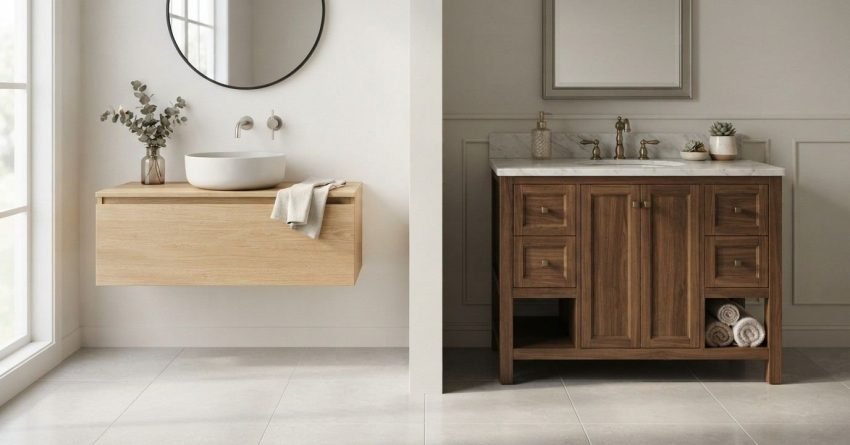
Wall-hung vanities and freestanding vanities are the two dominant choices in Sydney bathroom renovations right now, and the decision between them affects your budget, your trades schedule, and how your finished bathroom actually feels to live in. I’ve worked through both options on dozens of Sydney projects, and the right answer is rarely obvious from a product photo alone.
Choosing the wrong vanity style costs more than the vanity itself. It can mean unexpected waterproofing work, plumbing relocation, or a bathroom that looks great online but feels cramped in real life.
In this guide, I cover what each vanity type actually involves, how they compare on cost and installation, and which one makes more sense for your specific bathroom and budget.
What Is a Wall-Hung Vanity?
A wall-hung vanity, also called a floating vanity, is a cabinet that mounts directly to the wall with no floor contact. The entire unit is suspended, leaving the floor beneath it completely clear. That open floor space is one of the biggest reasons homeowners choose this style.
The defining feature is concealed plumbing. All water supply lines and waste pipes run inside the wall cavity, so nothing is visible below the vanity. That clean, uninterrupted look is what gives wall-hung vanities their modern, high-end appearance.
They come in a wide range of sizes, finishes, and configurations from compact 600mm single-basin units to full 1500mm double-basin setups for larger ensuites.
How Wall-Hung Vanities Are Installed
Installation requires a structurally sound wall, typically a timber-framed wall with blocking installed between studs, or a solid masonry wall. The vanity bracket system anchors into that blocking or masonry to carry the full weight of the cabinet, basin, and anything stored inside.
Because the plumbing is concealed, a licensed plumber needs to rough-in the supply and waste lines inside the wall cavity before tiling begins. This means wall-hung vanity installation is almost always part of a full bathroom renovation sequence, not a simple swap-out job.
Waterproofing and tiling behind and beneath the vanity also need to be completed before the unit goes on. The trades sequence matters here, and getting it wrong adds cost and time.
Best Bathroom Types for Wall-Hung Vanities
Wall-hung vanities work best in modern ensuites, compact bathrooms where floor space is tight, and any bathroom where a clean, minimal aesthetic is the goal. The open floor line makes a small bathroom feel noticeably larger; it’s one of the most effective visual tricks in bathroom design.
They also suit bathrooms with underfloor heating because the unobstructed floor makes the most of radiant heat distribution. Tiled floors read as continuous and unbroken, which amplifies the sense of space.
What Is a Freestanding Vanity?
A freestanding vanity is a floor-mounted cabinet unit that sits independently on the bathroom floor. It does not attach to the wall for structural support; it connects only at the plumbing points. This is the traditional vanity format, and it remains the most widely installed style across Sydney homes.
Freestanding vanities typically offer more internal storage than wall-hung units of the same width, because the cabinet extends to floor level. For family bathrooms where storage is a priority, that extra depth matters.
They come in an equally wide range of styles from contemporary shaker profiles to classic timber-look finishes and are available at a broader price range than wall-hung options.
How Freestanding Vanities Are Installed
Installation is more straightforward than a wall-hung unit. The cabinet sits on the floor, the basin connects to the top, and the plumber connects supply lines and waste to the existing rough-in points. In most cases, exposed pipe covers or bottle traps are used to finish the visible plumbing below the cabinet.
Because the vanity carries its own weight on the floor, there is no requirement for wall blocking or structural reinforcement. This makes freestanding vanities a realistic option for bathroom renovation projects where the wall structure is unknown or where budget limits the scope of wall works.
Tiling behind a freestanding vanity is simpler too; the wall tile typically runs to the back of the cabinet, and the floor tile runs underneath it.
Best Bathroom Types for Freestanding Vanities
Freestanding vanities suit family bathrooms, main bathrooms in older Sydney homes, and rental properties where durability and ease of replacement matter. They are also the better choice when the existing plumbing rough-in is already positioned for a floor-mounted unit and relocating it would add high cost.
For landlords and property investors, freestanding vanities offer a practical advantage: they are easier and cheaper to replace between tenancies without triggering a full bathroom renovation.
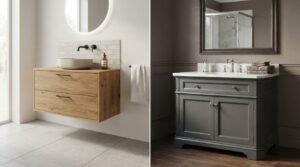
Wall-Hung vs Freestanding Vanity – Key Differences
The comparison between these two vanity types comes down to four practical factors: cost, installation complexity, space and visual impact, and ongoing maintenance. I’ll work through each one directly.
Cost Comparison
Wall-hung vanities cost more both in product price and installation. A quality wall-hung vanity unit in Sydney typically ranges from $800 to $2,500 for the cabinet alone, before basin, tapware, or installation. Freestanding vanities of comparable quality generally sit between $500 and $1,800.
The bigger cost difference is in the installation. Wall-hung vanity installation in Sydney involves a plumber, a carpenter or builder for wall blocking, and often a tiler to finish the wall and floor around the unit. Total installed cost for a wall-hung vanity, including all trades, commonly runs $1,500 to $3,500 depending on wall condition and plumbing rough-in location.
A freestanding vanity installation, where the rough-in is already in the right position, can be completed by a plumber alone in a few hours. Installed cost typically sits between $800 and $2,000 for a straightforward replacement.
Installation Complexity
Wall-hung vanities require more trades, more sequencing, and more lead time. The wall needs to be prepared before tiling, the plumbing needs to be roughed in before the wall is closed, and the vanity goes on last. Any change to the plan mid-sequence adds cost.
Freestanding vanities are simpler to sequence and easier to adjust if something changes on site. They are also the only realistic option when the bathroom wall is not suitable for structural mounting, for example, in older Sydney homes with double-brick construction where running concealed plumbing inside the wall is not practical without significant demolition.
Space and Visual Impact
This is where wall-hung vanities win clearly. The open floor beneath the unit makes the bathroom feel larger, lighter, and more open. In a compact Sydney ensuite, say, 3m x 2m, a wall-hung vanity can make a meaningful visual difference that a freestanding unit simply cannot replicate.
Freestanding vanities have more visual weight. They read as furniture in the space, which suits larger bathrooms and more traditional design directions. In a generous main bathroom, that visual weight can actually anchor the room and feel intentional.
Cleaning and Maintenance
Wall-hung vanities are easier to clean underneath; you mop straight through without moving anything. The floor is fully accessible, which matters in bathrooms that see heavy daily use.
Freestanding vanities collect dust, hair, and moisture in the gap between the cabinet base and the floor. That gap is also a common source of mould in poorly ventilated bathrooms. It is not a dealbreaker, but it is a real maintenance consideration, especially in Sydney’s humid coastal suburbs.
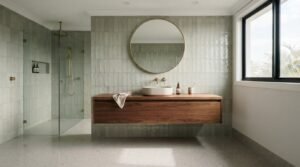
Which Vanity Adds More Value to a Sydney Home?
In Sydney’s renovation market, wall-hung vanities consistently read as a premium finish. Buyers and renters associate the floating aesthetic with high-quality, contemporary bathrooms, and that perception translates into real value at sale or lease.
For owner-occupiers renovating to sell, a wall-hung vanity in a well-executed bathroom renovation signals quality workmanship and modern design. It is one of the details that photographs well and holds up to inspection.
Renovation ROI Considerations for Sydney Properties
For investment properties, the calculus is different. A freestanding vanity in a durable, neutral finish delivers solid tenant appeal at a lower upfront cost and lower replacement cost over the life of the tenancy. The ROI on a wall-hung vanity in a rental is harder to justify unless the property sits in a premium rental market where presentation directly affects achievable rent.
For owner-occupiers, the ROI on a wall-hung vanity is stronger, particularly in Sydney’s inner suburbs and coastal areas where bathroom quality is a genuine price driver. A well-planned bathroom renovation budget that allocates correctly between vanity, tiling, and fixtures will always outperform one that overspends on a single element.
The honest answer is this: the vanity style that adds the most value is the one that fits the bathroom’s size, the property’s market position, and the renovation budget, not the one that looks best in isolation.
Common Mistakes to Avoid When Choosing a Vanity
The most common mistake I see is choosing a vanity based on appearance alone, without checking whether the wall can support it or whether the existing plumbing rough-in aligns with the new unit. Both issues are fixable, but both add cost that wasn’t in the original budget.
Choosing the wrong size is the second most common problem. A vanity that looks proportionate in a showroom can overwhelm a compact ensuite or look undersized in a generous main bathroom. Always measure the available wall run, the door swing clearance, and the distance to the toilet before committing to a size.
The third mistake is underestimating the trades required for a wall-hung installation. Homeowners who budget for a plumber only and then discover they also need a builder for wall blocking and a tiler to finish the surrounding surfaces end up with a cost blowout that could have been avoided with a proper bathroom renovation quote upfront.
Conclusion
Both vanity styles deliver a quality bathroom when they are matched correctly to the space, the budget, and the property’s purpose. Wall-hung vanities offer a premium aesthetic and better use of floor space. Freestanding vanities offer simpler installation, lower cost, and practical durability for high-use bathrooms.
The decision is not about which style looks better in a catalogue. It is about which one fits your wall, your plumbing, your renovation scope, and your long-term goals for the property.
At Sydney Home Renovation, we help homeowners and investors make that call with confidence, with honest cost guidance, proper trades sequencing, and renovations that stay on budget and on schedule. Reach out to us today to discuss your bathroom renovation.
Frequently Asked Questions
Can a wall-hung vanity be installed on any wall?
No. A wall-hung vanity requires a structurally sound wall with adequate blocking or masonry to carry the load. Older Sydney homes with double-brick walls or lightweight partition walls may need additional structural work before installation is possible.
Are wall-hung vanities more expensive than freestanding?
Yes, consistently. Wall-hung vanities cost more in both product price and installation. The total installed cost difference in Sydney typically ranges from $700 to $1,500 more than a comparable freestanding installation, depending on wall condition and plumbing position.
Which vanity is easier to clean?
Wall-hung vanities are easier to clean underneath because the floor is fully open and accessible. Freestanding vanities collect dust and moisture in the gap between the cabinet base and the floor, which requires more frequent attention in humid bathrooms.
Do freestanding vanities suit small bathrooms?
They can work in small bathrooms, but they are not the optimal choice. The visual weight of a floor-mounted cabinet makes a compact bathroom feel smaller. A wall-hung vanity with an open floor line is almost always the better choice for bathrooms under 5 square metres.
How long does vanity installation take in Sydney?
A freestanding vanity replacement takes a licensed plumber two to four hours in most cases. A wall-hung vanity installation as part of a full bathroom renovation adds one to two days across multiple trades, depending on wall preparation and tiling scope.
Can I switch from a freestanding to a wall-hung vanity?
Yes, but it is not a simple swap. Switching requires wall preparation, plumbing relocation inside the wall cavity, waterproofing, and tiling. It is best done as part of a broader bathroom renovation rather than as a standalone change.
Which vanity style is more popular in Sydney renovations?
Wall-hung vanities have become the dominant choice in Sydney bathroom renovations over the past five years, particularly in ensuites and contemporary main bathrooms. Freestanding vanities remain popular in family bathrooms, older-style homes, and investment properties where budget and practicality drive the decision.


