
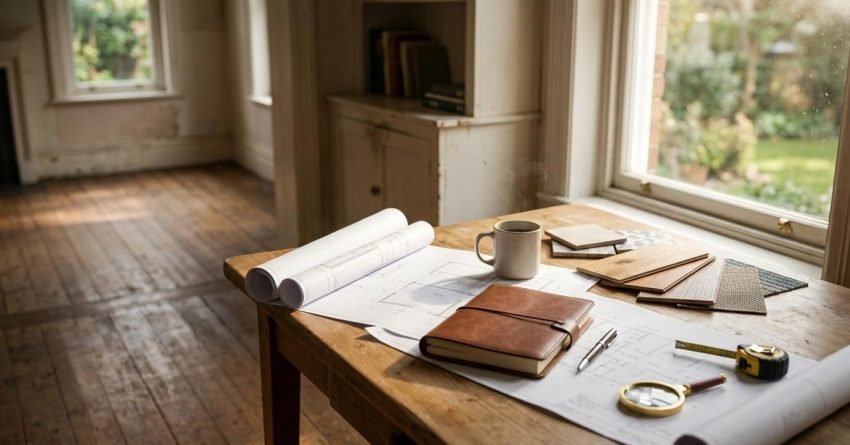
Living in your house before renovating protects your budget. You identify hidden defects, learn how you actually move through the space, and prioritise the upgrades that change daily life. We recommend three to six months of occupancy before committing to major works, especially for whole-home or bathroom projects where layout decisions lock in cost.
This is not about comfort. It is about stopping expensive mistakes before a single tile comes off the wall.
Below we cover the financial case, the genuine downsides, and how to decide which side of this you fall on.
Why Living in Your House First Can Save Your Renovation Budget
Living in a house before renovating saves money because it replaces assumptions with evidence. Three to six months of occupancy reveals water behaviour, ventilation performance, traffic flow and storage shortfalls that a single inspection misses. That evidence produces a precise brief, which cuts variations and change orders during construction.
We see the same pattern on almost every job. The bathroom that looked fine at the open home has poor water pressure every weekday morning. The kitchen layout that read well on the floor plan fights you the moment you cook dinner in it.
Budget protection comes from informed decision-making. Once you know how light moves through the rooms, where moisture collects, and which spaces feel tight in daily use, your brief becomes precise instead of speculative.
That precision translates directly into fewer variations, less scope creep, and a result that improves how you live.
Sydney homeowners routinely reorder their priorities after a few months in a property. The ensuite upgrade drops down the list once the main bathroom’s ventilation problem turns out to be feeding a recurring mould issue across the whole house.

The Financial Case for Waiting Before You Renovate
Understanding True Renovation Costs Through Experience
Renovation budgets built on assumptions carry real risk. Living in the house shows you the actual scope of work, not the optimistic version from the purchase campaign and not the minimal version you hoped to get away with.
Hidden costs surface through daily use. The small crack in the bathroom tiles points to waterproofing failure underneath. The slow drain signals pipe deterioration that needs full replacement rather than a clean-out.
Finding these during the observation period lets you budget accurately instead of absorbing them as mid-project surprises.
For Sydney properties built before the 1990s, this period regularly uncovers:
- Electrical systems needing upgrade before any bathroom renovation proceeds
- Plumbing configurations that complicate fixture relocation
- Structural elements that limit wall removal
- Ventilation deficiencies driving ongoing moisture problems
Where a Building Inspection Stops and Lived Experience Begins
A pre-purchase inspection is a snapshot. It tells you the condition of the property on one dry Tuesday morning, and Consumer Affairs Victoria notes that standard inspections are non-invasive and exclude anything concealed by walls, floors or stored belongings.
Lived experience fills that gap. You watch the property through a storm, through a humid week, through a full family morning routine.
We treat the inspection report as the starting hypothesis and the observation period as the test.
Building a Contingency That Reflects Reality
Contingency is where most first-time renovation budgets break. Industry guidance from the Housing Industry Association points to material and labour cost volatility continuing to affect residential build pricing, which makes a fixed-figure budget on an unknown property a poor bet.
We advise a 20 to 30 percent contingency on properties built before the 1990s where the condition of services is unverified. That figure drops meaningfully once occupancy has confirmed what is actually behind the walls.
Every month of observation converts contingency into scope.
Avoiding Costly Design Mistakes
Renovation regret comes from decisions made without lived experience. The double vanity that felt essential turns out to be irrelevant to your actual morning routine. The freestanding bath blocks the only sensible towel rail position.
Three to six months of daily use gives you clarity that floor plan analysis never delivers. You learn which storage you need, where the power points belong, and whether that window actually lights the room.
The Real Downsides of Living in First
Waiting has genuine costs, and we would rather set them out honestly than sell you a one-sided answer.
Comparing the Cost of Staying Versus Moving Out
Holding a property for three to six months before works begin carries a real cost. You are paying a mortgage or rent on a house you intend to pull apart, and in most cases you delay the point at which the property reaches its improved value.
Moving out later during construction adds its own cost. Sydney rental data from CoreLogic shows sustained pressure on median rents across Greater Sydney, and short-term leases plus storage compound that quickly.
The honest comparison weighs a few months of holding costs against the cost of a mid-project layout change. In our experience, a single structural variation outruns the holding cost comfortably.
Living With Defects You Have Already Decided to Fix
Observation means tolerating the problems you have identified. You shower in the bathroom you know has failing waterproofing, and you cook in the kitchen you have already condemned on paper.
That wears on people. Decision fatigue is real, and some households make worse choices at month five than they would have made at month one.
Dust, Asbestos and Air Quality Risks
If any part of the work begins while you occupy the property, air quality becomes a health question rather than an inconvenience. Sydney housing stock built before 1990 frequently contains asbestos in eaves, wet area sheeting and vinyl backing, and Asbestos and Silica Safety and Eradication Agency guidance is clear that disturbance requires licensed handling.
We isolate work zones and stage occupied projects around that constraint. Households with respiratory conditions get scheduled differently, and sometimes the right answer is a short-term move out.
Households With Children, Pets or Elderly Residents
Household composition changes this calculation more than any other factor. Young children and construction dust are a poor combination, and pets escape through gates trades leave open.
We plan occupied renovations around the most vulnerable person in the house. For families with infants or elderly residents, staged works with sealed zones handle it, and in tighter properties a temporary relocation during the noisiest phase is the cheaper answer overall.
When Living in First Makes the Most Sense
Whole-Home Renovations and Major Layout Changes
Structural modifications, room reconfigurations, and multiple bathroom upgrades all reward the observation period. These projects carry the highest financial stakes and the longest timelines, so planning accuracy pays the largest dividend.
Complex work benefits from extended observation. Knowing how your family moves through the house, which rooms get morning sun, and where noise carries gives your designers and builders something real to solve for.
This is where a whole home renovation brief either succeeds or quietly becomes a change-order pipeline.
Properties With Unknown History
Buying a home without maintenance records leaves you guessing about hidden conditions. Occupancy lets you watch the property through Sydney’s humid summers, through winter moisture, and through heavy rain that exposes how drainage actually performs.
Seasonal observation catches patterns a single inspection cannot. The bathroom that reads dry in autumn shows heavy condensation in February humidity, which points straight at a ventilation defect worth solving during the renovation.
First-Time Renovators
The learning curve on a first renovation is steep. Living in the house first buys you time to research contractors, understand approval requirements, and build realistic expectations about timelines and disruption.
Preparation improves outcomes. You collect multiple quotes, check references properly, and build working relationships with trades before anyone picks up a tool.
That groundwork produces better pricing, clearer communication, and far fewer misunderstandings once construction starts.

When Renovating Immediately Might Be Necessary
Safety and Habitability Concerns
Some properties are not safe to sit in and observe. Severe water damage, electrical hazards, and structural instability need attention immediately, regardless of the planning benefit of waiting.
Safety outranks planning every time. Where a building inspection flags urgent items, we address those before anyone moves in, and we still apply the observation principle to every non-urgent decision while those repairs run.
Investment Property and Timing Pressures
Property investors work from a different equation. Rental income lost during a long observation period outweighs the planning benefit on straightforward cosmetic upgrades, and vacancy carries no offsetting lifestyle value.
Investment decisions run on different inputs. For a lease-ready refresh, market research and rental comparables give you enough direction without personal occupancy.
Construction market conditions add a second timing pressure. Periods of better trade availability or stable material pricing justify moving faster, though we caution clients that these windows are difficult to forecast and rarely worth gambling a whole brief on.
How to Maximise the Living-In Period
Create a Systematic Observation Process
Random observations deliver less than structured ones. Build a simple system for recording issues, ideas and priorities as they surface in daily life.
Effective observation includes:
- Weekly walkthroughs noting new concerns or shifted priorities
- Seasonal assessments documenting performance in different weather
- Usage tracking identifying which spaces work and which create friction
- Photography capturing existing conditions before work begins
Engage Professionals Early
The observation period is the best time to talk to renovation professionals, precisely because nothing is urgent yet. Building relationships with contractors, designers and certifiers while you are still gathering information produces far better conversations.
Early engagement pays off. We help clients interpret what they are seeing, separate cosmetic concerns from structural ones, and set preliminary budget ranges against different approaches.
Prioritise Based on Impact
Renovation needs do not carry equal weight. Use your lived experience to separate genuine problems from aesthetic preferences that wait for a later phase.
Effective prioritisation considers:
- Health and safety implications
- Impact on daily functionality
- Long-term cost of delaying action
- Return on investment for resale or rental
Practical Considerations for Sydney Homeowners
Local Climate Factors
Sydney’s humid subtropical climate creates specific problems that occupancy exposes. High humidity, intense summer storms, and coastal salt air all affect building performance in ways that matter directly to your renovation brief.
Climate-related observations to record:
- Condensation patterns in bathrooms and kitchens
- Water intrusion during heavy rain events
- Mould or mildew developing in specific areas
- How well existing ventilation manages humidity
Council Approval Timelines
Sydney approval processes vary widely by local government area and project scope. The observation period gives you time to research requirements, prepare documentation and lodge applications before you are ready to build.
Preparing approvals during observation means construction starts promptly once the brief is final, rather than stalling after planning finishes. Larger projects such as a second storey addition benefit most from this lead time.
Heritage and Conservation Considerations
Plenty of Sydney properties sit inside heritage conservation areas or carry individual listings. Those designations govern what you are permitted to change and how the approval pathway works.
Researching heritage constraints during the observation period stops you from investing in detailed design that later needs substantial rework.

Making Your Decision: A Practical Framework
Questions to Guide Your Choice
Work through these before committing either way.
Regarding the property:
- How well do you understand its current condition?
- Are there known issues needing immediate attention?
- What maintenance history came with the purchase?
Regarding your renovation:
- How extensive are the planned changes?
- How confident are you in the current brief?
- What is your budget tolerance for unexpected discoveries?
Regarding your circumstances:
- Can you live comfortably in the current condition?
- Do you have flexibility in your renovation timeline?
- Is this your first major renovation project?
The Middle Ground Approach
Most households land here, and we think that is the right instinct. Move in, address urgent items straight away, and run detailed planning for the larger phases while you observe.
A staged renovation captures the benefit of lived experience while you keep making progress. Essential repairs and minor upgrades proceed on one track while information gathers on the other.
What Experienced Renovators Recommend
Renovation professionals consistently back understanding a property before committing to major works. A few months of patience costs far less than mid-project changes or post-completion regret.
From our own project history:
- Design decisions made with lived experience produce better outcomes
- Budget accuracy improves sharply with firsthand observation
- Client satisfaction tracks closely with adequate planning time
- Change orders fall when briefs reflect actual usage patterns
We meet homeowners regularly who wish they had waited longer to understand their property. We rarely meet one who regrets the months they spent observing it.
Conclusion
Living in your house before renovating is one of the most reliable ways to protect your budget and make sure the finished project genuinely improves how you live. Three to six months of observation prevents the costly mistakes that no pre-purchase inspection identifies.
It is not free. You carry holding costs, you live with defects you have already decided to fix, and household circumstances sometimes make waiting the wrong call. The honest answer depends on the property, the scope, and who lives there.
At Sydney Home Renovation, we help homeowners turn their observations into practical renovation plans that hold their budget. Contact our team to talk through what your property has already shown you and how we build a brief around it.
Frequently Asked Questions
How long should you live in a house before renovating?
We recommend three to six months minimum. That covers a seasonal change, establishes daily usage patterns, and exposes defects inspections miss. Complex structural projects benefit from longer.
Can you renovate a bathroom while living in the house?
Yes, though you need alternative facilities during construction. Single-bathroom homes require tighter scheduling and often a temporary setup. Multiple bathrooms give you far more flexibility.
What should you look for when living in a house before renovating?
Watch water behaviour, ventilation, natural light, traffic flow and storage. Record where moisture collects, which spaces feel tight, and how the house handles storms and humidity.
Is it cheaper to renovate before or after moving in?
Renovating before moving in looks cheaper because it avoids disruption. Decisions made without lived experience produce costly changes later, so the savings usually disappear.
What renovations should you do immediately versus wait?
Fix safety issues, water damage, and structural problems immediately. Cosmetic upgrades, layout changes, and fixture replacements all improve with observation time behind them.
How do you budget for a renovation when you haven’t lived in the house?
Carry a 20 to 30 percent contingency on older properties with unverified services. Treat early estimates as ranges. Tighten them as occupancy reveals actual conditions.
Should investors live in a property before renovating it?
Investment properties run on different maths, where rental timing dominates. Investors still gain from thorough inspection, tenant feedback, and rental market research on what drives returns.


