
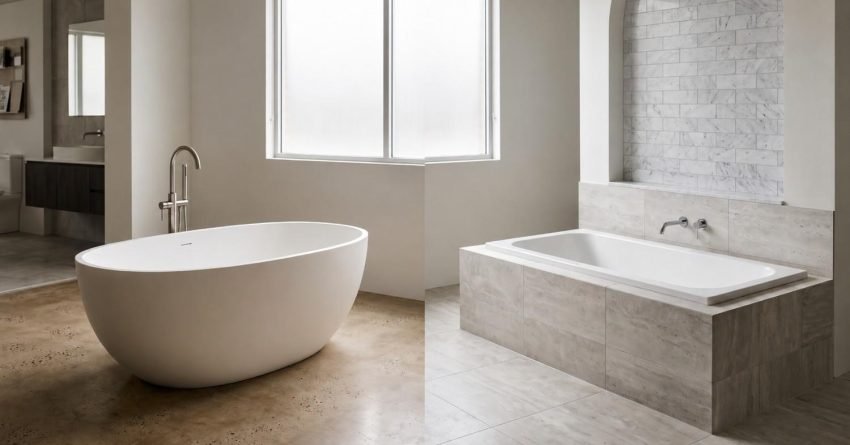
The bath you choose shapes the entire feel of your bathroom, and the wrong call costs you money, space, and resale appeal. Freestanding baths run $800 to $5,000+ for supply alone, while built-in baths start around $400 and keep installation simpler. Both work beautifully in the right setting.
This decision comes down to your bathroom size, renovation budget, and long-term goals, and getting it wrong is an expensive fix.
We cover costs, space requirements, installation realities, and which bath type suits which renovation so you can decide with confidence.
What Is a Freestanding Bath?
A freestanding bath sits independently on the floor with no surrounding walls or built-in structure supporting it. It is a self-contained unit; the tub, the feet or base, and the exposed exterior finish are all part of the design statement.
These baths are chosen as a feature piece. They draw the eye and anchor the room.
Key Design Features and Materials
Most freestanding baths are made from acrylic, stone resin, or cast iron. Acrylic is the lightest and most affordable option, stone resin offers a premium solid feel with excellent heat retention, and cast iron is the heaviest and most durable, though it demands a structurally sound floor.
Taps for a freestanding bath are either floor-mounted or deck-mounted directly on the bath rim. Floor-mounted mixers add to the cost and require precise plumbing rough-in placement before the slab or substrate is finished.
Where Freestanding Baths Work Best
Freestanding baths perform best in larger ensuites and master bathrooms where there is enough floor space to walk around the tub on at least three sides. They need breathing room to look intentional rather than cramped.
Open-plan bathroom layouts and high-end renovation projects are where freestanding baths genuinely shine. In a tight family bathroom, the same bath reads as an obstacle.
What Is a Built-In Bath?
A built-in bath, also called an alcove bath or drop-in bath, is set into a framed structure, recessed into an alcove, or surrounded by a tiled deck or panel. The bath itself is supported by the surrounding structure, and the visible exterior is typically tiled or panelled.
Built-in baths are the practical workhorse of Australian bathroom renovations. They are efficient, versatile, and easy to pair with a shower screen for a shower-over-bath setup.
Key Design Features and Materials
The majority of built-in baths are acrylic or fibreglass, both lightweight, affordable, and easy to install. The surrounding tiled surround or bath panel is where the design character comes from, giving you flexibility to match any renovation style.
A shower-over-bath configuration is only practical with a built-in bath. This makes them the default choice for family bathrooms where a separate shower and bath are not feasible within the floor plan.
Where Built-In Baths Work Best
Built-in baths suit family bathrooms, smaller bathrooms, and any renovation where the bath needs to double as a shower space. They tuck neatly into alcoves and use floor space efficiently.
They are also the right call when the renovation budget is tight. The supply cost is lower, the installation is more straightforward, and the tiling work is already part of the broader bathroom scope.
Freestanding vs Built-In Bath: Cost Comparison
Cost is where the two bath types diverge most sharply. The gap is not just in the purchase price; it runs through installation, plumbing, and the surrounding finishes.
Understanding the full cost picture before you commit saves you from a budget blowout mid-renovation.
Purchase Price and Supply Costs
Entry-level acrylic built-in baths start around $400 to $700. Mid-range options with better acrylic thickness and finish sit between $700 and $1,500. Premium built-in baths with stone resin or designer profiles push past $2,000.
Freestanding baths start higher. A basic acrylic freestanding bath runs $800 to $1,500. Stone resin models, the most popular choice for renovators wanting a premium look, typically cost $1,500 to $3,500. High-end designer or cast iron freestanding baths reach $5,000 and beyond.
Installation and Labour Costs in Sydney
Built-in bath installation in Sydney typically adds $500 to $1,200 in labour, covering the plumber’s connection work and any minor tiling adjustments. The plumbing rough-in for a built-in bath is standard and rarely requires repositioning.
Freestanding bath installation costs more. Floor-mounted tap rough-in requires precise placement before waterproofing; if the plumbing is already set for a wall-mounted configuration, repositioning adds $300 to $800 to the job. Total installation costs for a freestanding bath in Sydney, including plumber and any floor penetration work, run $800 to $2,000 depending on complexity.
Space and Layout Considerations
Space is the single biggest constraint in most Sydney bathroom renovations. The bath type you choose needs to work within your actual floor plan, not the floor plan you wish you had.
Getting this wrong means a bath that dominates the room and makes the space feel smaller than it is.
Minimum Room Size for Each Bath Type
A built-in bath fits comfortably in a bathroom from 4 to 5 square metres. Standard alcove bath dimensions run 1,500mm to 1,700mm long and 700mm to 750mm wide, and they tuck flush against three walls, leaving the remaining floor space open.
A freestanding bath needs more room to look right. The bath itself is typically 1,500mm to 1,800mm long, but you need at least 600mm of clear space on the sides and foot end for the bath to read as a feature rather than a squeeze. Realistically, a freestanding bath needs a bathroom of at least 7 to 8 square metres to work well.
Plumbing Placement and Floor Waste Requirements
Built-in baths use a standard waste outlet that connects through the wall or floor a straightforward connection for any licensed plumber. Tap connections are wall-mounted, which keeps the rough-in simple and cost-effective.
Freestanding baths with floor-mounted taps require the plumber to set the water supply lines through the floor at a precise location before waterproofing is complete. Change your mind about the bath position after waterproofing, and you are looking at costly remediation. The floor waste also needs to align with the bath’s outlet position something to confirm with your plumber and bathroom renovation contractor before the slab work is done.
Style, Aesthetics, and Bathroom Design
Both bath types can look exceptional. The difference is in what each one communicates about the space and how much design work the bath itself is doing.
A freestanding bath is a statement. A built-in bath is a foundation.
Which Bath Type Suits Which Renovation Style
Freestanding baths suit contemporary, Hamptons, and classic heritage renovation styles where the bath is meant to be the centrepiece. A stone resin oval freestanding bath in a white-tiled ensuite with brushed nickel fixtures is one of the most requested looks in Sydney renovations right now.
Built-in baths suit modern minimalist, industrial, and practical family bathroom designs where clean lines and efficient use of space matter more than a showpiece moment. A deep built-in bath with a frameless shower screen and large-format tiles reads as polished and intentional without the premium price tag of a freestanding setup.
Practical Maintenance and Long-Term Durability
Both bath types are durable when installed correctly and maintained consistently. The differences come down to where dirt accumulates and how easy each type is to clean.
Cleaning, Sealing, and Wear Over Time
Freestanding baths are easier to clean around the exterior because there is no tiled surround or grout lines to maintain. The underside and the floor beneath the bath are the areas that collect dust and moisture and they need regular attention to prevent mould buildup underneath.
Built-in baths have grout lines and silicone seals along the tiled surround that need periodic resealing, typically every two to three years, to prevent water ingress behind the tiles. Acrylic surfaces on both bath types scratch with abrasive cleaners, so non-abrasive products are the standard recommendation. Stone resin is more resistant to surface wear and holds its finish longer under regular use.
Resale Value and Property Impact in Sydney
A well-chosen bath adds genuine appeal to a Sydney property. The wrong choice or a bath that does not suit the bathroom’s size or the property’s price point can work against you at sale time.
What Buyers and Investors Look For
In Sydney’s mid-to-upper property market, a freestanding bath in a well-finished ensuite is a strong selling point. Buyers at this level expect it, and real estate agents consistently flag it as a feature that photographs well and drives inspection interest.
For investment properties and entry-level renovations, a quality built-in bath in a clean, well-tiled bathroom delivers better return on spend. Overcapitalising with a $3,000 freestanding bath in a property where the market ceiling does not support it is a common mistake we see from first-time investors. Match the bath to the property’s price point and the renovation budget that is where the real ROI sits.
Which Bath Type Is Right for You?
There is no universal answer. The right bath is the one that fits your bathroom’s actual dimensions, your renovation budget, your household’s daily needs, and the property’s position in the market.
Decision Framework: Budget, Space, Style, Goals
Choose a freestanding bath when your bathroom is 7 square metres or larger, your renovation budget comfortably covers the higher supply and installation cost, you want the bath to serve as a design feature, and the property’s price point supports the investment.
Choose a built-in bath when your bathroom is under 7 square metres, you need a shower-over-bath configuration, your renovation budget is focused on quality finishes across the whole room rather than one statement piece, or the property is an investment where practical value matters more than luxury appeal.
We help Sydney homeowners and investors make this call as part of a full bathroom renovation cost plan so the bath choice fits the budget, the floor plan, and the long-term goals from the start.
Conclusion
Freestanding and built-in baths both deliver excellent results when matched to the right bathroom, budget, and renovation brief. The decision is not about which bath is better; it is about which bath is right for your specific situation.
Space, cost, plumbing layout, and property goals all feed into that answer. Getting the brief right before you commit saves money and avoids costly mid-renovation changes.
We work through exactly this kind of decision with every client at Sydney Home Renovation. Reach out, and we will help you plan a bathroom renovation that fits your budget, your space, and your long-term goals.
Frequently Asked Questions
How much more does a freestanding bath cost to install?
In Sydney, freestanding bath installation typically costs $300 to $800 more than a built-in bath installation. Floor-mounted tap rough-in and precise floor waste positioning drive most of that additional cost.
Can a freestanding bath be installed in a small bathroom?
A freestanding bath needs at least 7 to 8 square metres to work well. In a smaller bathroom, the bath dominates the space and limits functionality. A built-in bath is the practical choice for compact layouts.
Is a built-in bath better for families?
For most families, yes. A built-in bath supports a shower-over-bath setup, uses floor space efficiently, and is easier to bathe young children in safely. It is the more practical choice for a shared family bathroom.
Do freestanding baths add value to a home?
In Sydney’s mid-to-upper property market, a freestanding bath in a well-finished ensuite adds genuine buyer appeal and photographs well for listings. In entry-level or investment properties, the return on the additional cost is less reliable.
What is the most popular bath type in Sydney renovations?
Built-in baths remain the most common choice across Sydney renovations overall, particularly in family bathrooms and investment properties. Freestanding baths are increasingly popular in master ensuite renovations at the mid-to-upper end of the market.
Which bath type is easier to clean?
Freestanding baths have no grout lines or tiled surrounds to maintain, making the bath surface itself easier to clean. Built-in baths require periodic resealing of grout and silicone joints. Both need consistent cleaning to prevent mould, particularly underneath and around the base.


