
Strata renovation approval in NSW typically takes between four and twelve weeks, depending on whether your works are classified as minor or major and how well your application aligns with the strata scheme’s by-laws.
That range matters. A four-week approval and a twelve-week approval represent very different project realities, different holding costs, different contractor scheduling windows, and different levels of stress for everyone involved. Understanding what drives that gap is the first step to managing it.
We work with homeowners and investors across Sydney who hit unexpected delays because they underestimated what strata approval actually involves. The timeline is rarely about the committee being difficult. It is almost always about documentation, scope classification, and preparation.
How Long Strata Renovation Approval Actually Takes in NSW
Strata renovation approval in NSW takes four to twelve weeks for most residential projects. Minor works, cosmetic updates, flooring replacements, or non-structural bathroom changes, typically clear in four to six weeks. Major works affecting common property, waterproofing membranes, or structural elements routinely take eight to twelve weeks, sometimes longer if a special resolution is required.
Minor Works vs. Major Works, Why the Category Decides the Timeline
The strata committee does not assess all renovation work the same way, and the classification of your project determines which approval pathway applies.
Minor works are generally approved by the strata committee alone, often at their next scheduled meeting. Most committees meet monthly, which means your application window is already fixed before you submit anything. Submit the week after a meeting and you are waiting a full cycle.
Major works, anything touching waterproofing, structural elements, or common property, require a higher level of scrutiny. These often need an owners corporation vote, which means waiting for a general meeting or calling an extraordinary general meeting. That process alone adds four to eight weeks before approval is even possible.
What the Strata Committee Reviews Before Approving Anything
The committee is not simply reading your renovation description. They are assessing by-law compliance, liability exposure for the owners corporation, and the impact on neighbouring lots and common areas.
For bathroom renovations specifically, waterproofing methodology draws the most attention. NSW strata schemes carry ongoing liability for water damage between lots, so committees scrutinise waterproofing specifications carefully. Noise and vibration management plans, working hours, and contractor licensing documentation are also standard review items.
Missing any of these from your initial submission restarts the clock.
The timeline question has a clear answer. The harder question is why so many applications take longer than they should, and that comes down almost entirely to strata by-law compliance requirements.
What Slows Down Strata Renovation Approval in NSW
Most delays are self-inflicted, not committee-driven. Two causes account for the majority of extended timelines we see on Sydney renovation projects.
Incomplete By-Law Compliance Documentation
Strata schemes in NSW operate under registered by-laws that specify exactly what owners can and cannot do to their lots. Submitting a renovation application without demonstrating by-law compliance, or without a by-law amendment where one is needed, gives the committee no path to approve your work.
The committee cannot approve what it cannot legally sanction. Incomplete documentation does not get rejected outright in most cases. It gets tabled, queried, and deferred to the next meeting cycle. That single deferral adds four to six weeks to your timeline before you have even addressed the gap.
Renovation Scope That Triggers Special Resolution Requirements
Some renovation works require a special resolution, a vote where 75% of lot entitlements must vote in favour. This applies most commonly when works affect common property in a way that changes its character or creates ongoing maintenance obligations for the owners corporation.
Bathroom renovations that involve relocating drainage, altering shared walls, or modifying common waterproofing systems can cross this threshold. If your scope triggers a special resolution and you did not anticipate it, your timeline extends significantly, often by two to three months beyond your original estimate.
Scoping your renovation accurately before submission is not optional. It is the single most effective timeline control available to you.
How to Move Through Strata Approval Faster
Speed in strata approval comes from preparation, not pressure. The committee cannot be rushed, but a complete, well-documented application removes every reason for delay.
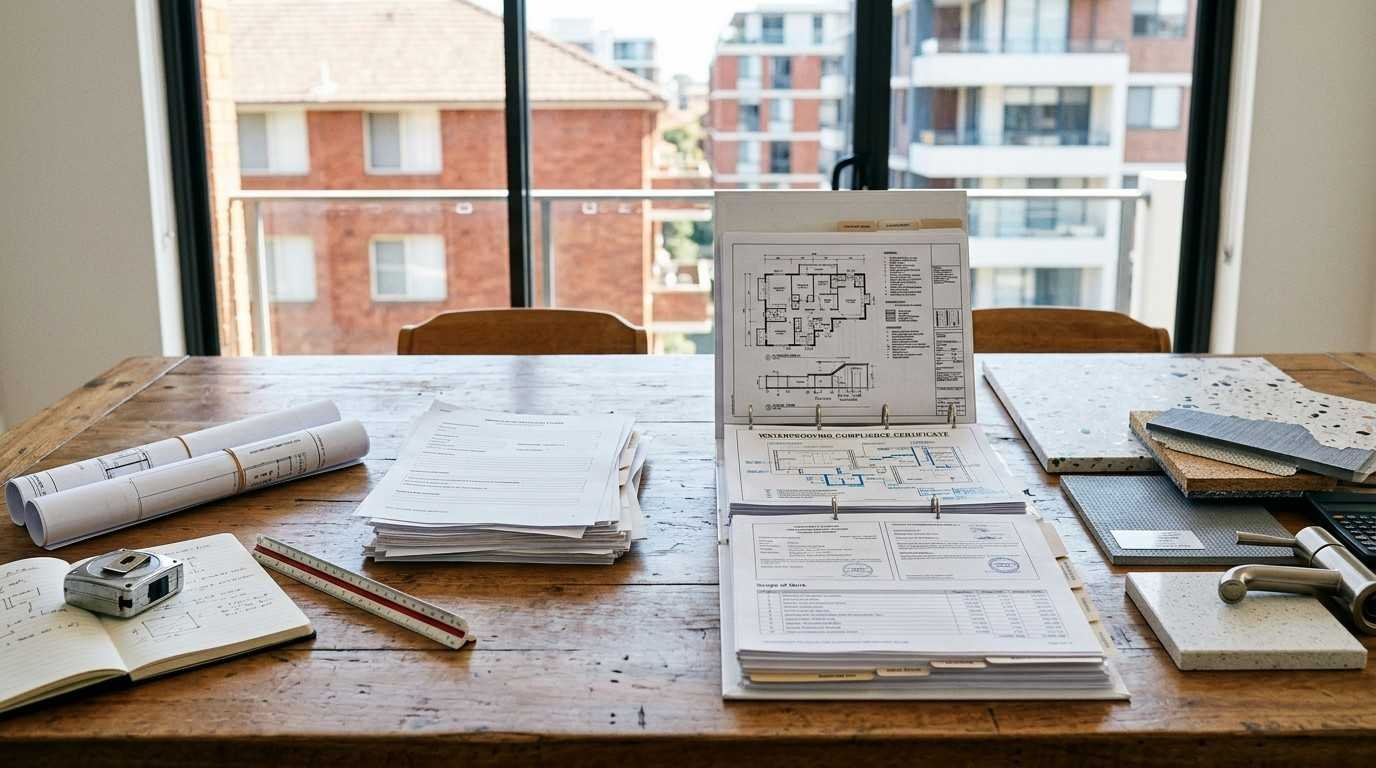
Submit your application at least two weeks before the committee’s next scheduled meeting. Include your full scope of works, contractor licence details, waterproofing specifications, a noise and vibration management plan, and written confirmation of by-law compliance or a draft by-law amendment where required.
Preparing a complete renovation application from the outset is the single most reliable way to hit the shorter end of the four-to-twelve-week range.
Engaging a renovation contractor who understands strata documentation requirements also removes a significant source of delay. When the paperwork is right the first time, the committee has nothing to defer.
Conclusion
Strata renovation approval in NSW takes four to twelve weeks. The category of your works and the completeness of your documentation determine where you land in that range.
For homeowners and investors planning a bathroom renovation, getting the application right the first time is the most valuable thing you can do before a single tile is lifted.
We help Sydney renovators navigate strata approval with confidence. Contact Sydney Home Renovation to plan your project with the documentation and scope clarity that gets approvals moving.
Frequently Asked Questions
Do I need strata approval for a bathroom renovation in NSW?
Yes. Any bathroom renovation affecting waterproofing, plumbing, or common property in a NSW strata scheme requires written approval from the owners corporation before work begins.
What happens if I renovate without strata approval in NSW?
The owners corporation can require you to restore the property to its original condition at your cost. You also carry full liability for any damage caused by unapproved works.
Can a strata committee reject my renovation application?
Yes. The committee can reject applications that breach registered by-laws, affect common property without authorisation, or lack sufficient documentation to assess compliance and liability.
How often does a strata committee meet in NSW?
Most strata committees in NSW meet monthly, though meeting frequency varies by scheme size. Missing a submission deadline typically means waiting a full meeting cycle before your application is reviewed.
Does a bathroom renovation in a strata unit require a by-law in NSW?
Often yes. Works affecting waterproofing, common property, or the structural fabric of the building frequently require a registered by-law amendment as a condition of approval under the Strata Schemes Management Act 2015.


