
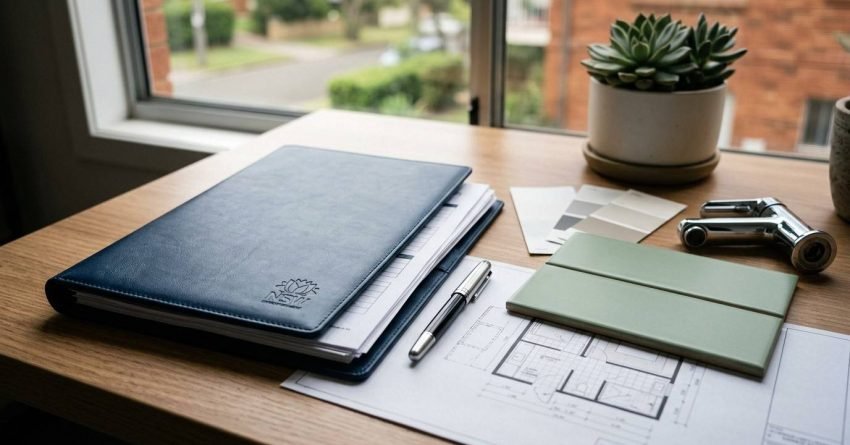
Getting strata approval for a bathroom renovation in NSW is a legal requirement for most lot owners, and skipping it can result in forced removal of completed works, NCAT orders, and serious financial penalties. The process follows a clear sequence under the Strata Schemes Management Act 2015, and understanding it before you lift a tile makes everything easier.
Bathroom renovations sit in a complicated space in strata schemes. They almost always touch common property, shared drainage, floor slabs, waterproofing membranes, which means the owners corporation has a direct say in what you do and how you do it.
This guide walks through every step of the strata approval process, from reading your by-laws to submitting a complete application and protecting yourself once works begin.
Why Bathroom Renovations Trigger Strata Approval Requirements
Most bathroom renovations in a strata scheme require some form of approval because they involve more than just cosmetic changes. Replacing tiles, moving plumbing, upgrading waterproofing, or altering drainage all have the potential to affect common property or neighbouring lots.
The owners corporation is legally responsible for maintaining common property under the Strata Schemes Management Act 2015. That responsibility gives them authority over any works that touch it, and bathrooms are full of elements that straddle the line between your lot and shared infrastructure.
Noise impact matters too. Bathroom renovations generate significant disruption, and strata schemes have obligations to all residents. That alone is enough to bring your project under the approval framework.
What Counts as Common Property in a Bathroom
Common property in a bathroom typically includes the structural floor slab, load-bearing walls, shared drainage stacks, and the waterproofing membrane beneath the tiles. These elements belong to the owners corporation, not to you as the lot owner.
The boundary between your lot and common property is defined by your strata plan. In most NSW schemes, the inner surface of the boundary walls and the upper surface of the floor slab mark where your lot begins.
Anything below the tile surface, the waterproofing layer, the screed, the slab, is generally common property. That is why even a straightforward retile can trigger an approval requirement.
Minor Works vs. Major Works, Where Bathrooms Usually Land
Under NSW strata law, renovations fall into three categories: cosmetic works, minor renovations, and major renovations. Most bathroom renovations land in the minor or major category, which both require some form of owners corporation approval.
Cosmetic works, things like painting, replacing tapware, or installing shelving, generally do not require approval. But the moment you touch waterproofing, move plumbing, or alter any structural element, you move into minor or major renovation territory.
Major renovations require a special resolution passed at a general meeting. Minor renovations require written consent from the owners corporation. Knowing which category your project falls into is the first real decision you need to make.
Step 1 Review Your Strata By-Laws Before Anything Else
Your strata scheme’s by-laws are the rulebook for everything that happens inside and around your lot. Before you contact a contractor or draw up plans, read them. They will tell you exactly what approval process applies to your renovation, what conditions are standard, and whether your scheme has a specific renovation by-law already in place.
Many schemes have adopted a model renovation by-law that sets out the application process, required documents, and standard conditions. If yours has one, it does the heavy lifting for you, follow it precisely.
By-laws can also restrict working hours, require specific waterproofing standards, or mandate that certain trades hold particular licences. Ignoring these details at the start creates problems at the approval stage.
Where to Find Your Strata Scheme’s By-Laws
Your strata manager holds a copy of the current by-laws and is your first point of contact. You can also access registered by-laws through NSW Land Registry Services by conducting a title search on your lot, the by-laws are registered on the strata plan.
If you are unsure who your strata manager is, check your levy notices or the common property noticeboard. The strata roll, which lists all lot owners and the managing agent, is also accessible to lot owners on request.
Get the most current version. By-laws are amended over time, and an outdated copy can send you down the wrong approval path.

Step 2, Identify Whether Your Renovation Needs a Special Resolution or Just Written Consent
This is the decision that shapes your entire approval timeline. Get it wrong and you either wait months for a general meeting you did not need, or you submit for written consent on a project that legally required a special resolution vote.
The NSW Fair Trading strata renovation guidance sets out the framework clearly. Written consent from the owners corporation or strata committee covers minor renovations. A special resolution, passed by at least 75% of votes at a general meeting, is required for major renovations.
Your by-laws may impose stricter requirements than the legislation. Always check both.
The Three Renovation Categories Under NSW Strata Law
Cosmetic works require no approval. This covers painting, installing hooks or shelves, replacing tapware, and similar surface-level changes that do not affect common property or structure.
Minor renovations require written consent from the owners corporation. Under Section 110 of the Strata Schemes Management Act 2015, this includes work such as installing or replacing hard flooring, reconfiguring kitchen layouts, and renovating a bathroom, provided the works do not involve structural changes or significant waterproofing alterations.
Major renovations require a special resolution. These involve structural changes, significant alterations to common property, or works that materially affect the appearance of the building or the use of common property.
Step 3, Prepare Your Renovation Application Package
A well-prepared application is the single biggest factor in getting approval quickly. Owners corporations and strata committees deal with incomplete submissions constantly, a thorough, professional package stands out and reduces the back-and-forth that drags timelines out.
Think of your application as a document that answers every question the committee might have before they ask it. The more detail you provide upfront, the fewer reasons they have to delay or request more information.
Your application needs to demonstrate that the works are safe, that common property is protected, and that the impact on other residents is managed.
Documents You Will Typically Need to Include
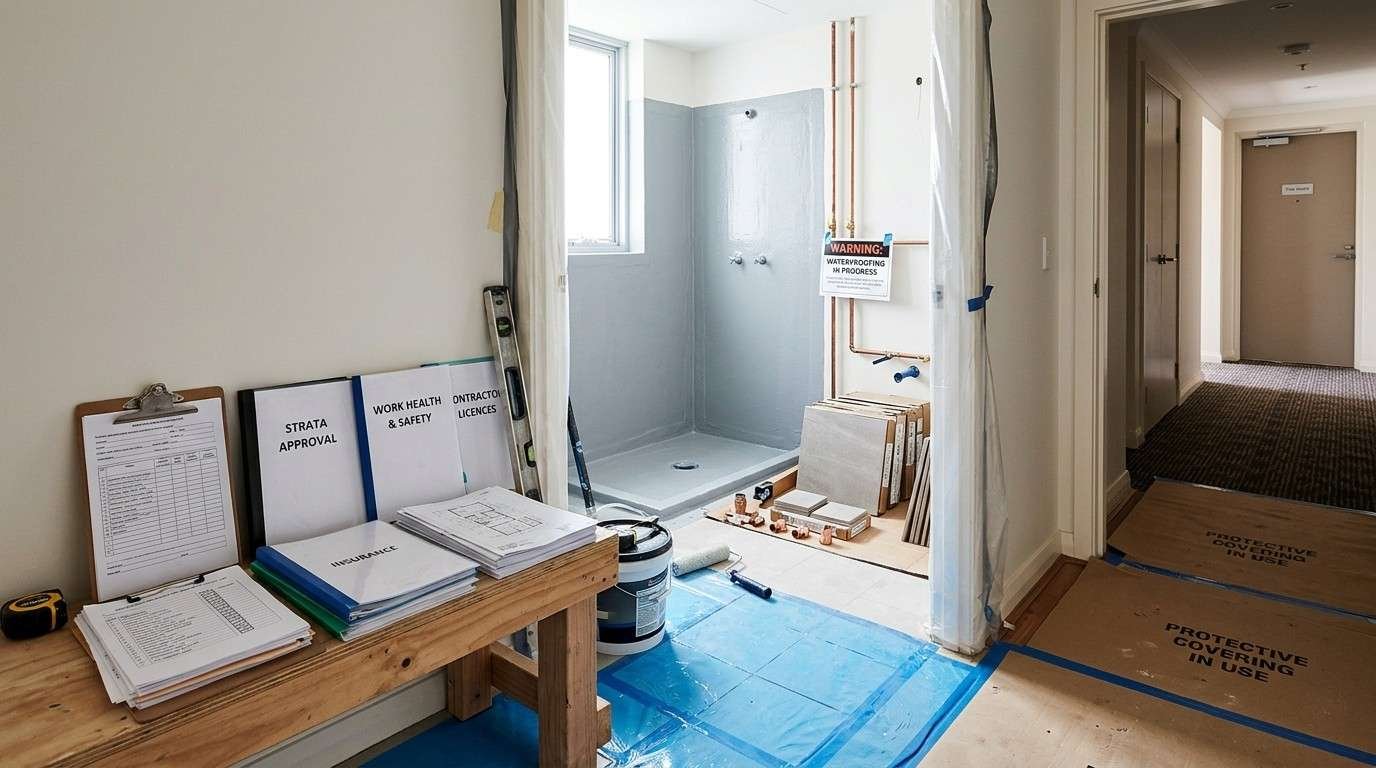
Most strata renovation applications for a bathroom require a detailed scope of works, copies of contractor licences and public liability insurance, waterproofing specifications or a waterproofing membrane product data sheet, and a noise and dust management plan.
You will also typically need to include proposed start and end dates, daily working hours, and confirmation that all trades are licensed under NSW requirements. Some schemes require a make-good undertaking, a written commitment to restore any common property damaged during the renovation.
Check your by-laws for the specific document list. Some schemes have a standard application form that consolidates these requirements.
How to Write a Scope of Works That Gets Approved
A scope of works is not a quote. It is a precise description of every task involved in the renovation, written clearly enough that someone with no construction knowledge can understand what is happening and why.
Include the materials being used, the sequence of works, how waterproofing will be applied and inspected, how waste will be managed, and how access to common areas will be handled. Vague language, “bathroom renovation” or “tile replacement”, gives the committee nothing to assess and almost always triggers a request for more information.
Be specific about waterproofing. It is the single most scrutinised element in any bathroom renovation application because waterproofing failure in a strata building creates liability that extends well beyond your lot.

Step 4, Submit to the Owners Corporation and Manage the Approval Timeline
Once your application package is complete, submit it to your strata manager in writing. Email is standard and creates a clear record. Confirm receipt and ask for the expected timeline for a committee decision.
For minor renovations requiring written consent, the strata committee can approve the application without calling a general meeting. This is significantly faster, decisions can come through within a few weeks depending on the committee’s meeting schedule.
For major renovations requiring a special resolution, you need a general meeting. Under the Strata Schemes Management Act 2015, at least 21 days’ notice is required before a general meeting. Factor that into your project timeline from the start.
What Happens After You Submit, Realistic Timelines
For minor renovations, expect a decision within two to six weeks. Committee meeting cycles vary — some meet monthly, others quarterly. If your submission lands just after a meeting, you may wait the full cycle before a decision is made.
For major renovations, the timeline from submission to approval is typically two to four months when you account for the notice period, the general meeting, and any conditions that need to be negotiated before a final resolution is passed.
Conditional approvals are common. The committee may approve your renovation subject to specific requirements, a waterproofing inspection at a set stage, restricted working hours, or a bond held against potential damage. These conditions are legally binding once you accept them.
Step 5, Comply With Conditions and Protect Yourself During the Renovation
Approval is not the finish line, it is the starting gate. Every condition attached to your approval is a legal obligation, and failing to meet them exposes you to the same consequences as having no approval at all.
Keep a copy of your approval letter and conditions on site throughout the renovation. Your contractor needs to know what they are. Conditions are not suggestions, and “I didn’t know” is not a defence at NCAT.
Document everything. Photograph waterproofing at each stage before it is covered. Keep records of contractor licences, inspection dates, and any communications with the strata manager during the works.
Common Approval Conditions for Bathroom Renovations
The most common conditions attached to bathroom renovation approvals in NSW include a requirement for a licensed waterproofer to carry out all waterproofing works, an inspection access clause allowing the owners corporation to inspect works at key stages, and restrictions on working hours, typically 8am to 5pm on weekdays only.
A make-good clause is standard. It requires you to repair any damage to common property caused during the renovation at your own cost. Public liability insurance from your contractor, usually a minimum of $20 million, is almost always required.
Some schemes require a completion sign-off from the strata manager before the renovation is considered formally closed. Do not skip this step. It protects you if a dispute arises later.
What Happens If You Skip Strata Approval
Carrying out unapproved renovation works in a strata scheme is a serious legal risk. The owners corporation has the right to apply to the NSW Civil and Administrative Tribunal (NCAT) for orders requiring you to restore the property to its original condition, at your expense.
NCAT orders can require complete removal of completed works, including tiles, fixtures, and waterproofing. The cost of undoing a finished bathroom renovation and reinstating the original condition routinely exceeds the cost of the renovation itself.
Beyond NCAT, unapproved works can void your building insurance, create liability if waterproofing fails and damages a neighbouring lot, and complicate or block the sale of your property.
Real Costs of Unapproved Bathroom Works in a Strata Scheme
The financial exposure from unapproved strata works goes well beyond the cost of rectification. Legal costs at NCAT, compensation claims from affected neighbours, and the cost of engaging a solicitor to defend an application can add tens of thousands of dollars to the bill.
Resale is a real issue too. Solicitors conducting due diligence on a strata purchase routinely check for unapproved works. A bathroom renovation carried out without approval becomes a disclosed defect that buyers use to negotiate price reductions or walk away entirely.
The approval process exists to protect everyone in the building, including you. It is not bureaucratic friction. It is the mechanism that keeps waterproofing standards high and liability clearly assigned.
How a Renovation Contractor Makes the Approval Process Easier
A contractor who understands strata renovations does more than swing a hammer. They know what the owners corporation is looking for, they prepare documentation that holds up to scrutiny, and they work within the conditions of approval without needing to be managed.
The right contractor has dealt with strata managers before. They know that a waterproofing scope needs to reference the relevant Australian Standard, that a noise management plan needs to be specific about hours and methods, and that a make-good clause means their work needs to be clean and careful from day one.
We work with homeowners and investors across Sydney on exactly this kind of project, and we handle the documentation side as part of the process, not as an afterthought.
What to Look for in a Contractor Who Understands Strata
Look for a contractor who can produce a detailed scope of works without being asked twice, holds current public liability insurance at the level your scheme requires, and has licensed trades for every element of the job, particularly waterproofing.
Ask directly whether they have worked on strata renovations before and whether they are familiar with the approval conditions typically attached to bathroom works in NSW. A contractor who goes quiet at that question is not the right fit for a strata project.
Licence verification matters. Check your contractor’s licence through Service NSW before signing anything. A licence check takes two minutes and removes a significant layer of risk from your project.
Conclusion
Getting strata approval for a bathroom renovation in NSW is a structured process, and when you follow it correctly, it protects your investment, your relationships with neighbours, and your legal standing as a lot owner. The owners corporation is not an obstacle. It is a stakeholder with legitimate authority over common property, and working with them rather than around them is always the right approach.
The documentation, the timelines, and the compliance conditions all exist for good reason. Waterproofing failures in strata buildings are expensive and contentious. A properly approved renovation, carried out by licensed trades, is the cleanest outcome for everyone.
We help Sydney homeowners and investors navigate the strata approval process from start to finish, documentation, contractor coordination, and compliance built in from day one. Reach out to Sydney Home Renovation and let’s get your bathroom renovation planned and approved the right way.
Frequently Asked Questions
Do I need strata approval for a bathroom renovation in NSW?
Yes, in most cases. Any bathroom renovation that touches waterproofing, plumbing, drainage, or structural elements requires either written consent or a special resolution from the owners corporation under the Strata Schemes Management Act 2015.
How long does strata approval take for a bathroom renovation in NSW?
Minor renovations requiring written consent typically take two to six weeks depending on the committee’s meeting schedule. Major renovations requiring a special resolution at a general meeting generally take two to four months from submission to approval.
What is the difference between minor and major renovations under NSW strata law?
Minor renovations require written consent from the owners corporation and cover works like bathroom renovations that do not involve structural changes. Major renovations require a special resolution, at least 75% of votes at a general meeting, and cover structural or significant common property alterations.
Can the owners corporation refuse my bathroom renovation application?
Yes. The owners corporation can refuse an application, particularly if the works pose a risk to common property, do not meet waterproofing standards, or conflict with the scheme’s by-laws. A well-prepared application with detailed documentation significantly reduces the risk of refusal.
What documents do I need for a strata renovation application?
You typically need a detailed scope of works, contractor licences, public liability insurance certificates, waterproofing specifications, a noise and dust management plan, and proposed start and end dates. Check your scheme’s by-laws for the specific list.
What happens if I renovate my bathroom without strata approval in NSW?
The owners corporation can apply to NCAT for orders requiring you to remove the works and restore the property at your own cost. Unapproved works can also void building insurance, create liability for water damage to neighbouring lots, and complicate the future sale of your property.
Does waterproofing require strata approval in NSW?
Yes. Waterproofing is one of the most scrutinised elements in any strata bathroom renovation because failure affects common property and neighbouring lots. Any works involving the waterproofing membrane require approval and must be carried out by a licensed waterproofer.


