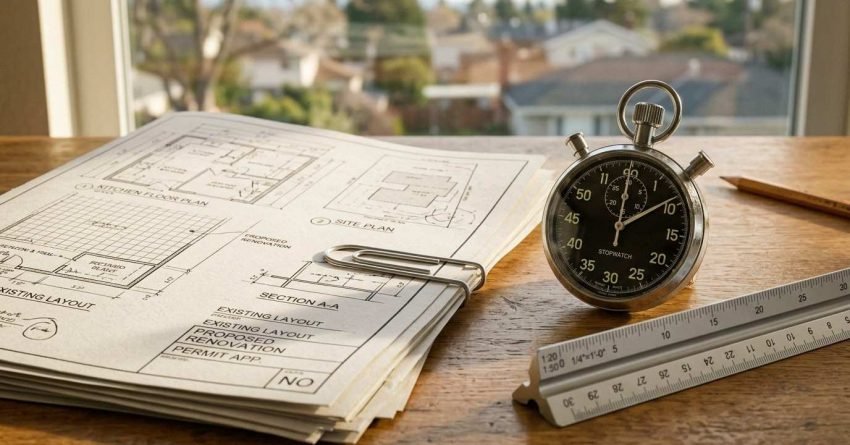
In Sydney, a kitchen renovation permit typically takes anywhere from 10 days to 40 business days, depending on whether you go through a Complying Development Certificate or a full Development Application. Getting that number wrong at the planning stage is one of the most common reasons kitchen renovations run over schedule and over budget.
Permit timelines are the single biggest planning unknown most homeowners face. Knowing the real numbers upfront changes how you sequence your entire project.
This guide covers DA and CDC timeframes, what slows approvals down, and how to build a realistic kitchen renovation timeline from day one.
What Is a Kitchen Renovation Permit and Do You Need One?
A kitchen renovation permit is formal approval from your local council or a private certifier confirming your planned work meets the Building Code of Australia and relevant state planning laws. It is not just paperwork, it is legal protection for you, your property, and anyone who buys it later.
In New South Wales, the requirement comes down to the scope of work. Cosmetic updates rarely need approval. Structural or services-related work almost always does.
When a Permit Is Required in Sydney, NSW
You need approval for any kitchen renovation that involves moving or altering load-bearing walls, relocating plumbing or drainage, changing the position of gas lines, or modifying electrical circuits beyond like-for-like replacement. Work that changes the footprint of the kitchen or affects the building’s structure also triggers the requirement.
The NSW Planning Portal is the authoritative source for checking whether your specific scope needs a DA, a CDC, or an exempt development determination. Most licensed builders in Sydney will assess this for you before quoting.
What Work Can Proceed Without a Permit
Replacing benchtops, swapping cabinet doors, installing new appliances into existing positions, and retiling within the existing layout are all typically classified as exempt development under the State Environmental Planning Policy (Exempt and Complying Development Codes) 2008. No council approval is needed for work that does not alter the structure, services, or footprint.
The line between exempt and complying development is not always obvious. When in doubt, confirm with your certifier before starting, not after.
How Long Does a Kitchen Renovation Permit Take in Sydney?
The honest answer is: it depends on the pathway. Sydney homeowners have two main approval routes, and the timeframes are very different.
A CDC is faster. A DA takes longer and involves more variables. Knowing which one applies to your project is the first step in building an accurate schedule.
Standard Council DA Approval Timeframes
A Development Application submitted to your local council in Sydney takes a minimum of 40 business days under the Environmental Planning and Assessment Act 1979, but the NSW Department of Planning reports that complex residential DAs regularly run to 60–80 business days or longer when neighbour notification periods, heritage overlays, or additional information requests are involved.
That is two to four months before a single tradesperson sets foot in your kitchen. Build that into your timeline from the start.
Complying Development Certificate (CDC) Timeframes
A CDC is assessed by a private certifier rather than council, and the NSW Environmental Planning and Assessment Regulation 2021 sets a statutory determination period of 10 business days for most residential complying development applications. In practice, straightforward kitchen renovation CDCs are often turned around in 10 to 15 business days.
The CDC pathway is only available when your project meets the specific development standards set out in the Codes SEPP. Your certifier confirms eligibility before lodgement.
What Affects Processing Speed
Four factors consistently slow permit approvals in Sydney. Incomplete documentation at lodgement is the most common, a missing site plan or unsigned owner’s consent form triggers a stop-the-clock information request that can add weeks. Heritage listings, flood overlays, or bushfire prone land classifications add mandatory assessment steps. Neighbour notification periods on DAs add a minimum 14 days. And peak lodgement periods at council, typically post-Easter and post-Christmas, stretch processing queues.
Submitting a complete, well-prepared application the first time is the single most effective way to protect your timeline.
The Kitchen Permit Application Process Step by Step
Understanding the sequence helps you prepare properly and avoid the delays that catch most homeowners off guard. The process is more straightforward than it looks once you know what is expected at each stage.
Working through a licensed builder or certifier who handles Sydney applications regularly makes every step faster and cleaner.
Documents and Plans You Need to Submit
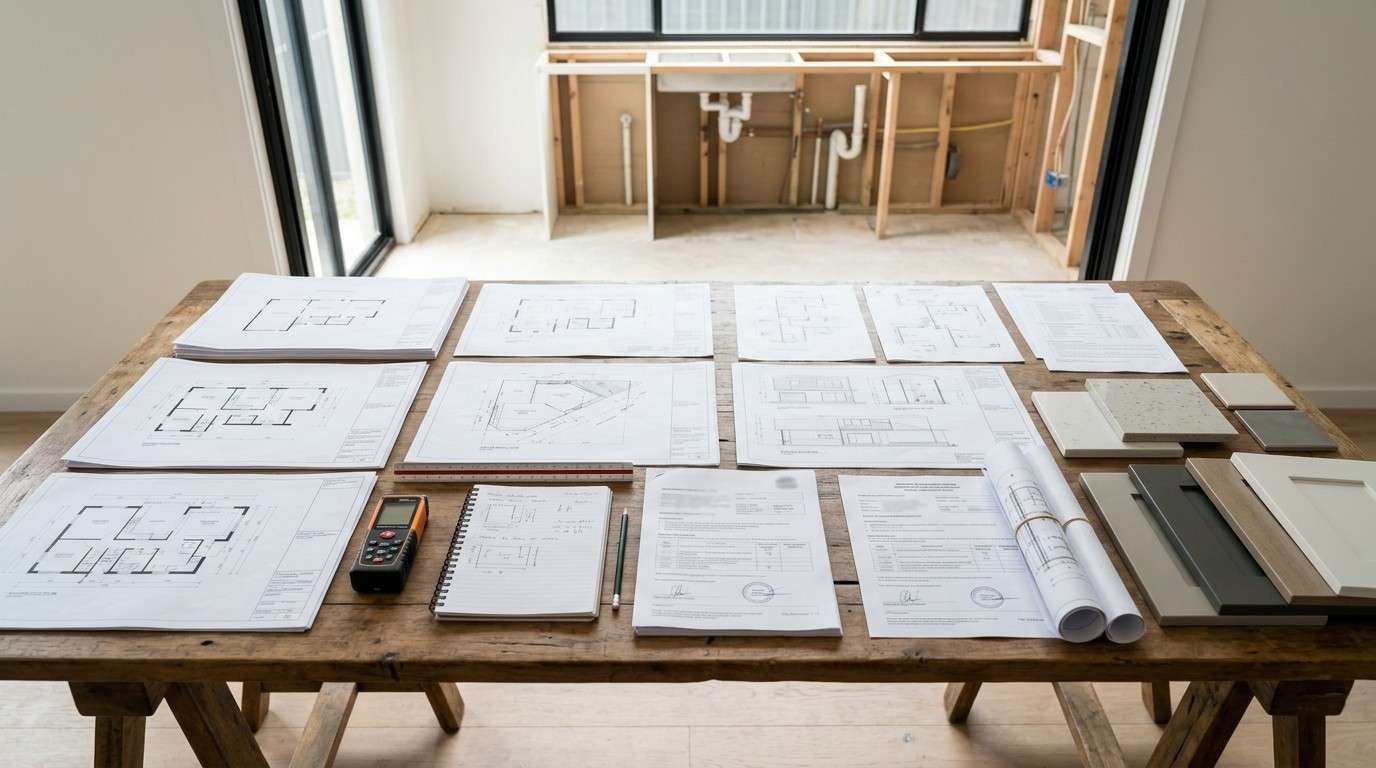
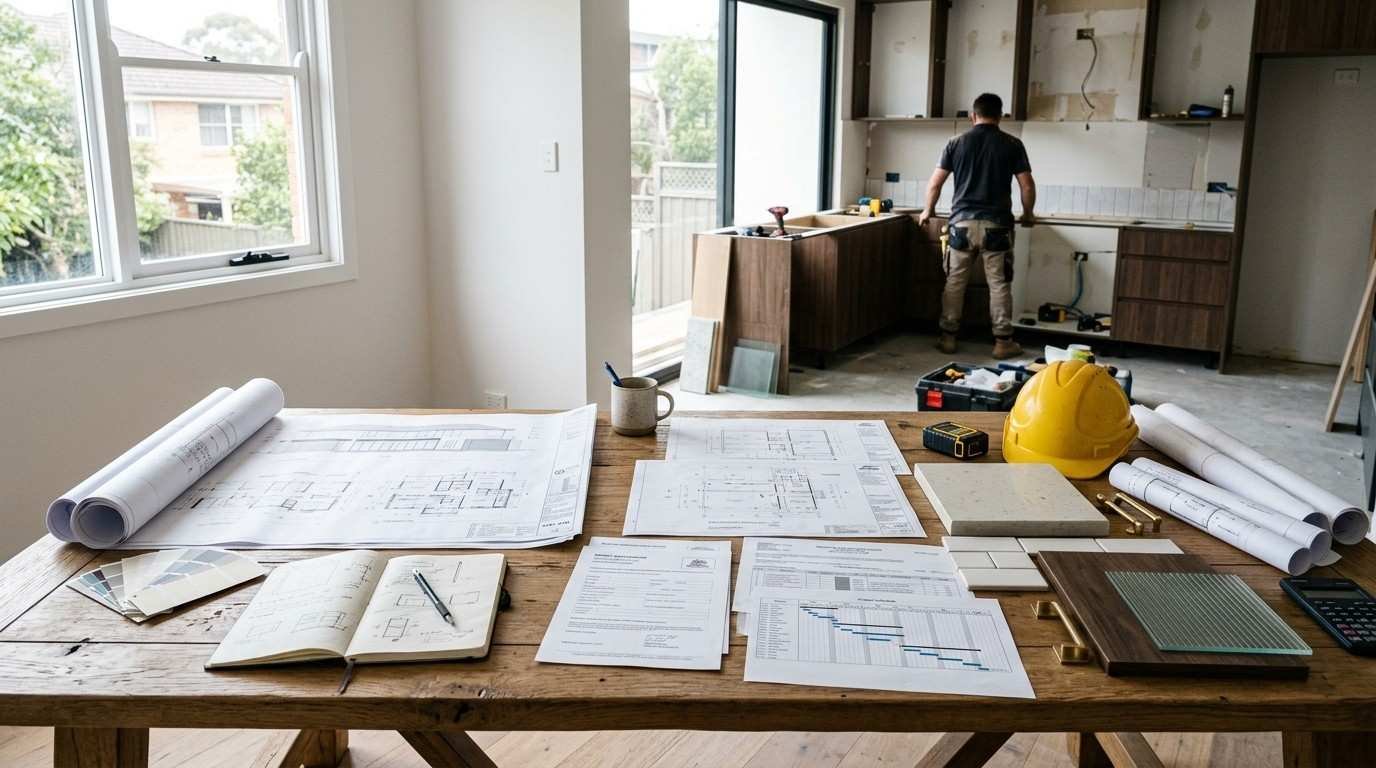
A standard kitchen renovation permit application in NSW requires a completed application form, a site plan showing the property boundaries and existing structures, scaled floor plans of the existing and proposed kitchen layout, a statement of environmental effects for DA applications, and evidence of owner’s consent if you are not the registered owner. Electrical and plumbing specifications are required when those services are being altered.
Your builder or draftsperson prepares the technical drawings. Your certifier reviews the package before lodgement to catch anything missing, that pre-lodgement check is worth doing every time.
Common Reasons Applications Are Delayed or Rejected
Missing or unsigned owner’s consent is the single most common stop-the-clock trigger. Drawings that do not show dimensions, north points, or existing versus proposed layouts clearly are returned for revision. Applications that do not address the relevant development standards, particularly for CDC pathways, are rejected outright rather than queried.
A kitchen renovation permit application prepared by someone who knows the local council’s requirements lands differently than one assembled without that context. The difference shows up in your approval timeline.
How to Speed Up Your Kitchen Renovation Permit Approval
The fastest approvals come from complete applications, the right pathway selection, and a certifier or builder who has submitted to your specific council before. None of those things happen by accident.
Choosing the CDC pathway where eligible cuts weeks off the process immediately. Engaging a private certifier early, before drawings are finalised, means the documentation is built to the assessment standard from the start rather than revised after lodgement.
Working With a Builder Who Knows the Process
An experienced Sydney kitchen renovation builder does not just manage the construction — they manage the approval process as part of the project. That means pathway assessment, documentation coordination, certifier relationships, and timeline management built around the real approval window rather than an optimistic guess.
At Sydney Home Renovation, we handle the permit process as part of every kitchen project. Our clients know their approval timeline before they commit to a construction start date, and we build the schedule around the real numbers.
What Happens If You Renovate Without a Permit?
Renovating without required approval in NSW carries serious consequences. The NSW Environmental Planning and Assessment Act 1979 gives councils the power to issue stop-work orders, require demolition of unapproved work, and issue penalty infringement notices. Fines for unlawful development can reach $1.5 million for corporations and $300,000 for individuals under current NSW legislation.
Beyond the legal exposure, unapproved work creates real problems at sale. Conveyancers and buyers’ solicitors check council records, and unapproved structural or services work can delay or collapse a property transaction.
The cost of doing it properly is always lower than the cost of fixing it later.
Planning Your Kitchen Renovation Timeline Around the Permit
A realistic kitchen renovation timeline in Sydney looks like this: allow two to four weeks for design finalisation and documentation, then add your approval window, 10 to 15 business days for a CDC, or 40 to 80 business days for a DA. Construction on a mid-range kitchen renovation typically runs four to eight weeks once approvals are in hand.
End to end, a kitchen renovation requiring a DA can realistically take four to six months from first consultation to completion. A CDC-eligible project can move faster — sometimes completing in eight to twelve weeks total when the application is well-prepared and lodged promptly.
The homeowners who stay on schedule are the ones who start the permit process before they finalise their material selections, not after.
Conclusion
Kitchen renovation permit timelines in Sydney range from 10 business days on a CDC to 80-plus days on a complex DA. The pathway, the documentation quality, and the experience of the team managing the process determine where your project lands in that range.
Planning around the real approval window, not an optimistic one, is what keeps kitchen renovations on schedule and on budget. The permit is not a formality; it is the foundation of the whole project timeline.
At Sydney Home Renovation, we manage the permit process as part of every kitchen renovation we deliver. Contact us today to get a clear timeline and a realistic plan built around your project from the start.
Frequently Asked Questions
How long does a kitchen renovation permit take in NSW?
In NSW, a Complying Development Certificate takes 10 to 15 business days through a private certifier. A full Development Application to council takes a minimum of 40 business days, with complex applications regularly running to 60 to 80 business days or longer.
Do I need a permit for a kitchen renovation in Sydney?
It depends on the scope. Cosmetic work like replacing benchtops or cabinets is typically exempt development. Any work involving structural changes, plumbing relocation, gas line alterations, or electrical circuit modifications requires approval under NSW planning legislation.
What is the difference between a DA and a CDC?
A Development Application is assessed by your local council and takes 40-plus business days. A Complying Development Certificate is assessed by a private certifier in 10 business days, but is only available when your project meets the specific standards in the NSW Codes SEPP.
Can I start my kitchen renovation before the permit is approved?
No. Starting work before approval is issued constitutes unlawful development under the NSW Environmental Planning and Assessment Act 1979. Council can issue a stop-work order and require unapproved work to be demolished at your cost.
How much does a kitchen renovation permit cost in NSW?
CDC fees vary by certifier but typically range from $800 to $2,500 for a residential kitchen renovation. DA fees are set by council and calculated on the estimated cost of works, most Sydney councils publish their fee schedules on their websites.
What documents do I need for a kitchen renovation permit?
A standard application requires a completed application form, site plan, scaled floor plans showing existing and proposed layouts, owner’s consent, and a statement of environmental effects for DAs. Electrical and plumbing specifications are required when those services are being modified.