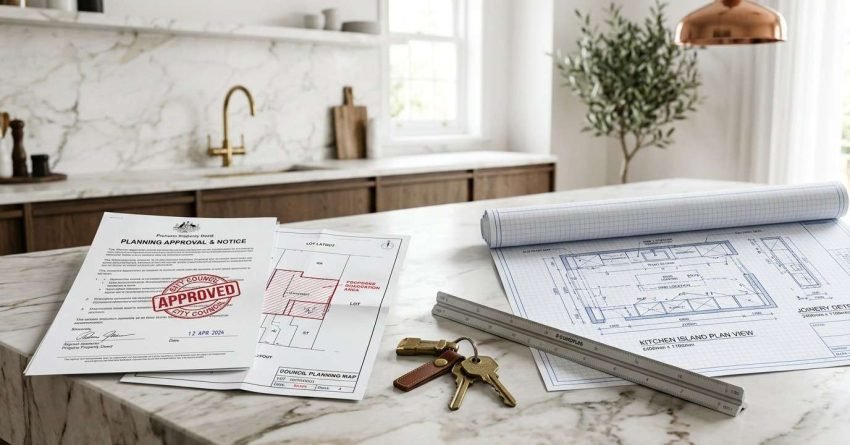
Most Sydney homeowners planning a kitchen renovation don’t realise these are two completely separate approvals, and confusing them is one of the most common and costly mistakes I see on residential projects. Council approval and a building permit serve different purposes, sit at different stages of the process, and are issued by different authorities. Getting clear on which one your reno needs, and when, is the first real step before any work begins.
Skipping this step doesn’t just slow a project down. It can stop it entirely, trigger fines, and create serious problems when you sell.
In this guide, I’ll walk through exactly what each approval covers, what kitchen work triggers them, and how to confirm what your specific renovation actually needs.
What’s the Actual Difference Between a Council Approval and a Building Permit?
These two terms get used interchangeably all the time, and that’s where the confusion starts. They are not the same thing, and they don’t do the same job.
Council Approval (Development Approval)
Council approval, formally called a Development Application (DA) in NSW, is permission from your local council to carry out a specific type of development or change to your property. It’s a planning decision. Council looks at whether your proposed work is appropriate for the zone, the neighbourhood, and the existing structure before anything gets built.
In NSW, this process is governed by the Environmental Planning and Assessment Act 1979, which sets out when a DA is required and what the assessment criteria are. Not every kitchen renovation triggers a DA, but structural changes, extensions, or work that alters the building’s footprint often do.
Building Permit (Construction Certificate)
A building permit in NSW is called a Construction Certificate (CC). It’s a technical approval that confirms your proposed construction work complies with the Building Code of Australia and relevant Australian Standards. Where council approval is about planning, a CC is about construction compliance.
The CC is issued either by your local council or by a private certifier, and it must be obtained before any physical work starts on site. According to NSW Fair Trading, a Construction Certificate is required for most structural building work in NSW, including significant kitchen renovations involving structural elements.
What Kitchen Renovation Work Triggers Each One?
This is where most homeowners get stuck. The scope of your kitchen renovation determines which approval, or approvals, you need. Here’s how to read it.
Work That Typically Needs Council Approval
- Removing or altering a load-bearing wall to open up the kitchen layout
- Extending the kitchen footprint into another room or outdoor area
- Adding a new window or door opening to an external wall
- Changing the use of an adjoining space as part of the kitchen renovation
- Any work on a heritage-listed property or in a heritage conservation area
These are changes that affect the structure, the building envelope, or the planning classification of the space. Council needs to assess them before you proceed.
Work That Typically Needs a Building Permit (Construction Certificate)
- Relocating plumbing, moving the sink, dishwasher connection, or waste lines
- Electrical work beyond like-for-like replacement, including new circuits or upgraded switchboards
- Structural alterations, including wall removal confirmed as load-bearing
- Installing a new rangehood that requires penetration through an external wall
- Any work that requires a licensed tradesperson to certify compliance
A Construction Certificate is the technical green light that says the work, as designed, meets the building code. Your certifier or council issues it once they’ve reviewed the plans.
Can a Kitchen Reno Need Both?
Yes, and this is more common than most people expect. A kitchen renovation that involves removing a load-bearing wall AND relocating plumbing will typically need both a Development Approval from council and a Construction Certificate before work begins.
The sequence matters here. The DA comes first. You get planning permission, then you apply for the CC to confirm the construction method complies with the code. Trying to get a CC without an approved DA, when a DA is required, will stall the project immediately.
For straightforward kitchen renovations that don’t touch the structure or building envelope, you may only need a CC, or in some cases, the work may qualify as exempt development under the NSW Planning Portal, meaning no formal approval is required at all.
What Happens If You Skip the Approvals?
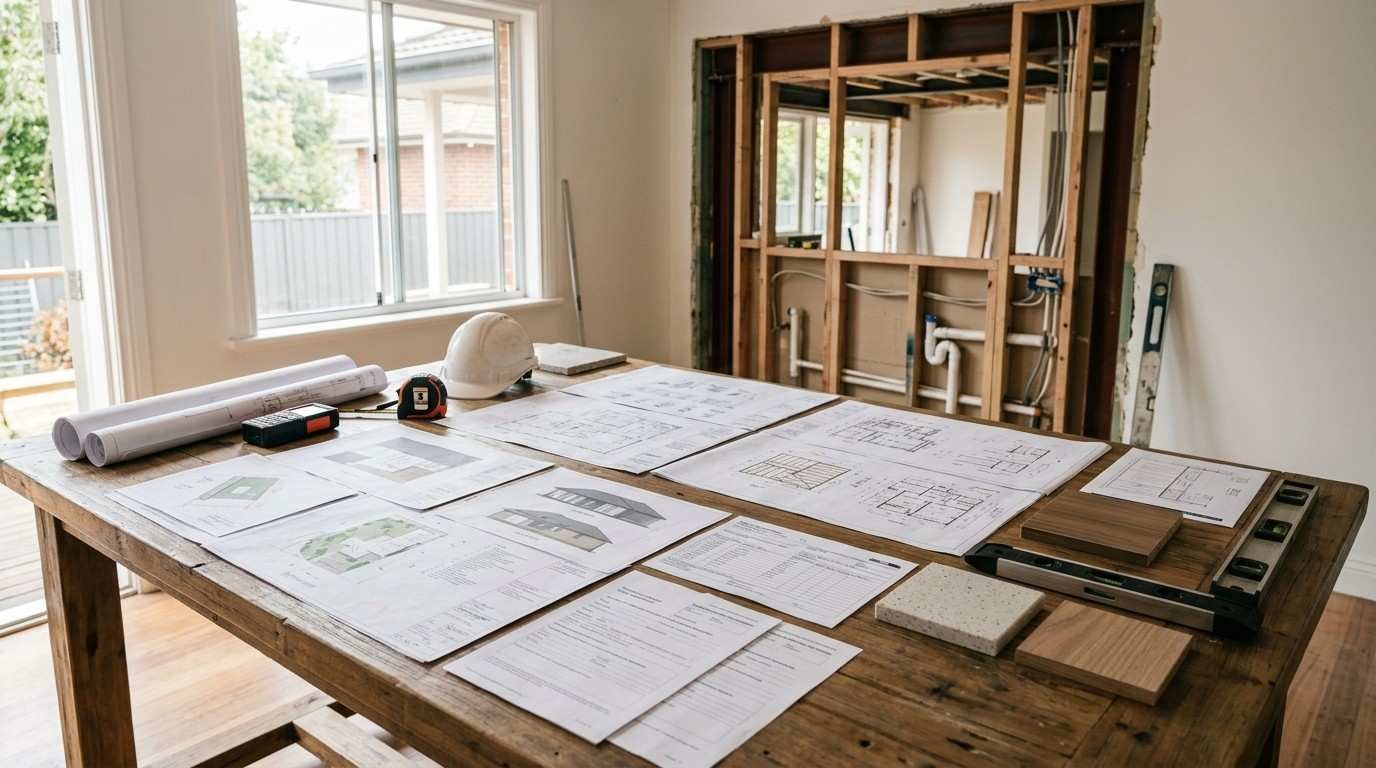
Renovating without the required approvals is a risk that catches up with homeowners, usually at the worst possible time. The NSW Department of Planning, Housing and Infrastructure has enforcement powers that include stop-work orders, mandatory rectification, and fines for unapproved building work.
Beyond the immediate penalties, unapproved work creates a disclosure problem when you sell. Conveyancers and buyers’ solicitors check council records. Unapproved structural changes or plumbing relocations that don’t appear on the record can delay settlement, reduce your sale price, or require you to fund rectification before contracts exchange.
Insurance is another exposure. If unapproved work contributes to a claim, a burst pipe from a relocated connection, or a structural issue from a wall removal, your insurer has grounds to deny it.
The cost of getting approvals right upfront is a fraction of the cost of fixing it after the fact.
How to Find Out What Your Specific Reno Needs
The fastest and most reliable way to confirm what your kitchen renovation requires is to speak directly with a certifier or your local council’s duty planner before you finalise your scope of work. Both can give you a clear read on whether your project needs a DA, a CC, or both, based on your actual plans, not a general rule.
We handle this as part of our pre-construction process at Sydney Home Renovation. Before we price a kitchen renovation, we confirm the approval pathway so there are no surprises mid-project. If your reno needs a DA, we factor the timeline into the schedule from day one.
The NSW Planning Portal is also a useful starting point, it lets you check your property’s zoning, applicable planning controls, and whether your proposed work might qualify as exempt or complying development, which can significantly reduce the approvals burden.
Get the Approvals Right Before You Lift a Tool
Council approval and building permits exist for good reason, they protect the structural integrity of your home, the safety of the people in it, and your financial position when you sell. Understanding which one your kitchen renovation needs isn’t bureaucratic box-ticking. It’s the foundation of a project that goes smoothly.
The difference between a DA and a CC comes down to planning versus construction compliance. Both matter, both have consequences if skipped, and both are manageable when you plan for them early.
At Sydney Home Renovation, we take the guesswork out of the approvals process. Reach out before your project starts and we’ll help you confirm exactly what your kitchen renovation needs, so the work begins on solid ground.
Frequently Asked Questions
Do I need council approval to replace kitchen cabinets in Sydney?
No, replacing kitchen cabinets is cosmetic work and doesn’t require council approval or a Construction Certificate in NSW. It’s considered exempt development under state planning policy, meaning no formal approval is needed as long as the work doesn’t affect the structure or services.
How long does it take to get a building permit for a kitchen renovation in NSW?
A Construction Certificate from a private certifier typically takes 5 to 15 business days once complete documentation is submitted. Council-issued CCs can take longer, sometimes 4 to 6 weeks. I always recommend engaging a certifier early so the approval doesn’t hold up your construction start date.
Can my builder organise the building permit for me?
Yes. A licensed builder or principal contractor can engage a private certifier on your behalf and manage the CC application as part of the project. At Sydney Home Renovation, we coordinate the certification process directly so homeowners don’t have to navigate it alone.
What is exempt development in NSW for kitchens?
Exempt development covers low-impact work that doesn’t require any formal approval. For kitchens, this typically includes replacing cabinets, benchtops, appliances, and fixtures, provided the work doesn’t involve structural changes, new penetrations through external walls, or alterations to the building’s footprint. The full criteria are listed on the NSW Planning Portal.
What’s the cost of a building permit for a kitchen renovation in Sydney?
Construction Certificate fees in Sydney vary depending on the certifier and the estimated construction value of the work. For a mid-range kitchen renovation, private certifier fees typically range from $800 to $2,500. Council-issued CCs are calculated using a fee schedule based on construction cost and can be higher. I recommend getting a quote from a certifier once your plans are finalised.