Applying for a kitchen permit in Sydney is not as complicated as most homeowners expect — but skipping it, or getting it wrong, creates real problems at resale, during inspections, and with your insurer. I’ve worked through this process with dozens of homeowners across NSW, and the confusion almost always comes from the same place: not knowing which work actually needs approval and which pathway to use.
Knowing your approval obligations before you start protects your investment and keeps your renovation on schedule. Getting caught without the right permits costs far more than the application itself.
This guide walks through every step of the kitchen permit process in Sydney, what triggers approval, how to apply, what it costs, and the mistakes worth avoiding.
What Is a Kitchen Permit and When Do You Need One?
A kitchen permit is formal approval from your local council or a private certifier confirming that your proposed renovation work meets the requirements of the Building Code of Australia and any applicable local planning controls. It is not a single document, it is an approval pathway, and the pathway you use depends on the scope of your work.
In NSW, most kitchen renovations fall under one of two frameworks: a Development Application (DA) lodged with your local council, or a Complying Development Certificate (CDC) assessed by a private certifier. Some minor work qualifies as exempt development, meaning no approval is needed at all.
The key question is always the same: does your work affect the structure, services, or footprint of the building?
Work That Always Requires a Permit
Structural alterations trigger a permit every time. Removing or modifying a load-bearing wall, relocating a kitchen to a different room, changing the roofline, or adding a window or door opening all require formal approval before work begins.
Changes to electrical circuits and plumbing drainage also require permits, not just for the building work, but because licensed tradespeople must issue compliance certificates for their portion of the job. Moving a sink, relocating gas appliances, or upgrading your switchboard as part of the renovation all fall into this category.
Any work on a heritage-listed property or within a heritage conservation area requires council approval regardless of scope. I always recommend checking your property’s heritage status before assuming your project is straightforward.
Work That Typically Does Not Require a Permit
Cosmetic work generally sits within the exempt development category under the State Environmental Planning Policy (Exempt and Complying Development Codes) 2008. Replacing cabinet doors, installing new benchtops, painting, tiling, and swapping out appliances for like-for-like models typically do not require council approval.
Replacing kitchen cabinets in the same location, without touching plumbing, electrical, or structure, is usually exempt. But the moment you move the sink or add a new power circuit, you cross into permit territory.
The safest approach is to confirm with your certifier before assuming anything is exempt.
What Does a Kitchen Permit Cover in Sydney?
A kitchen permit covers the approval of all regulated work within the scope of your renovation. It is not a single sign-off, it is a series of checks that confirm your work meets the National Construction Code, your council’s local environmental plan, and any applicable state planning policies.
Understanding what falls under the permit helps you plan your documentation correctly from the start. Missing a single regulated element in your application is one of the most common causes of delays.
Structural and Building Work
Structural work is the most straightforward permit trigger. Any alteration to a load-bearing element, walls, beams, lintels, or the floor structure, requires engineering documentation and council or certifier approval before work starts.
This includes opening up a kitchen to a living area, which is one of the most popular renovation requests I see. The structural assessment, engineer’s report, and approved plans all form part of the permit package.
Electrical and Plumbing Changes
Electrical and plumbing work in a kitchen renovation is regulated under both the building approval system and the licensing framework for tradespeople. A licensed electrician must issue a Certificate of Compliance — Electrical Work (CCEW) for any new circuits, and a licensed plumber must issue a compliance certificate for drainage and water supply changes.
These certificates are not optional extras, they are required for your occupation certificate at the end of the project. I always coordinate these directly with the trades on behalf of our clients to make sure nothing is missed.
Council-Specific Requirements in NSW
Every local government area in NSW has its own local environmental plan (LEP) and development control plan (DCP), and these can add requirements on top of the state-level framework. Properties in flood zones, bushfire-prone land, or heritage conservation areas carry additional controls that affect what you can do and how you need to document it.
The NSW Planning Portal is the starting point for checking your property’s planning controls. I use it at the beginning of every project to confirm the approval pathway before we commit to a programme.
How to Apply for a Kitchen Permit in Sydney
The application process in NSW follows a clear sequence. The steps below apply to the majority of kitchen renovations, those involving structural, electrical, or plumbing work that requires formal approval.
Step 1 Determine the Approval Pathway
Your first decision is whether your project suits a DA or a CDC. A CDC is faster and handled entirely by a private certifier, but your project must meet the specific development standards set out in the Complying Development Codes SEPP. Most straightforward kitchen renovations that involve structural or service changes qualify for the CDC pathway.
A DA is required when your project does not meet those standards, for example, if you are in a heritage conservation area, if the work exceeds certain size thresholds, or if your council’s DCP imposes controls that a CDC cannot override. DAs are assessed by council planners and take longer.
I recommend speaking with a private certifier early. They can tell you within a short consultation which pathway applies and what documentation you need.
Step 2, Prepare Your Documentation
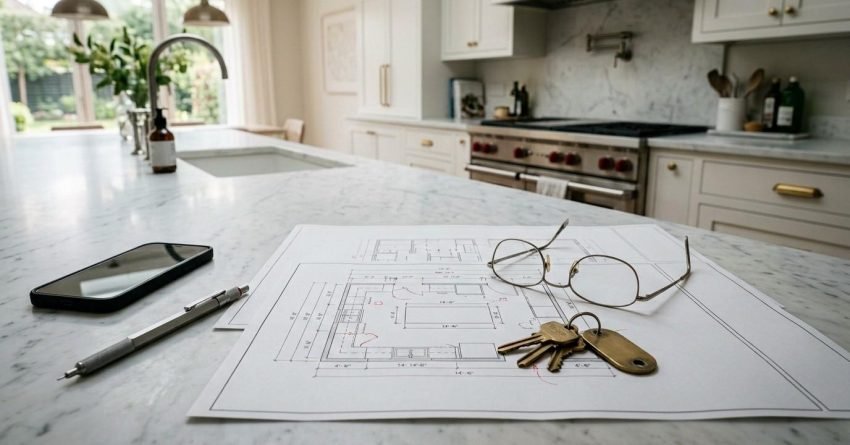
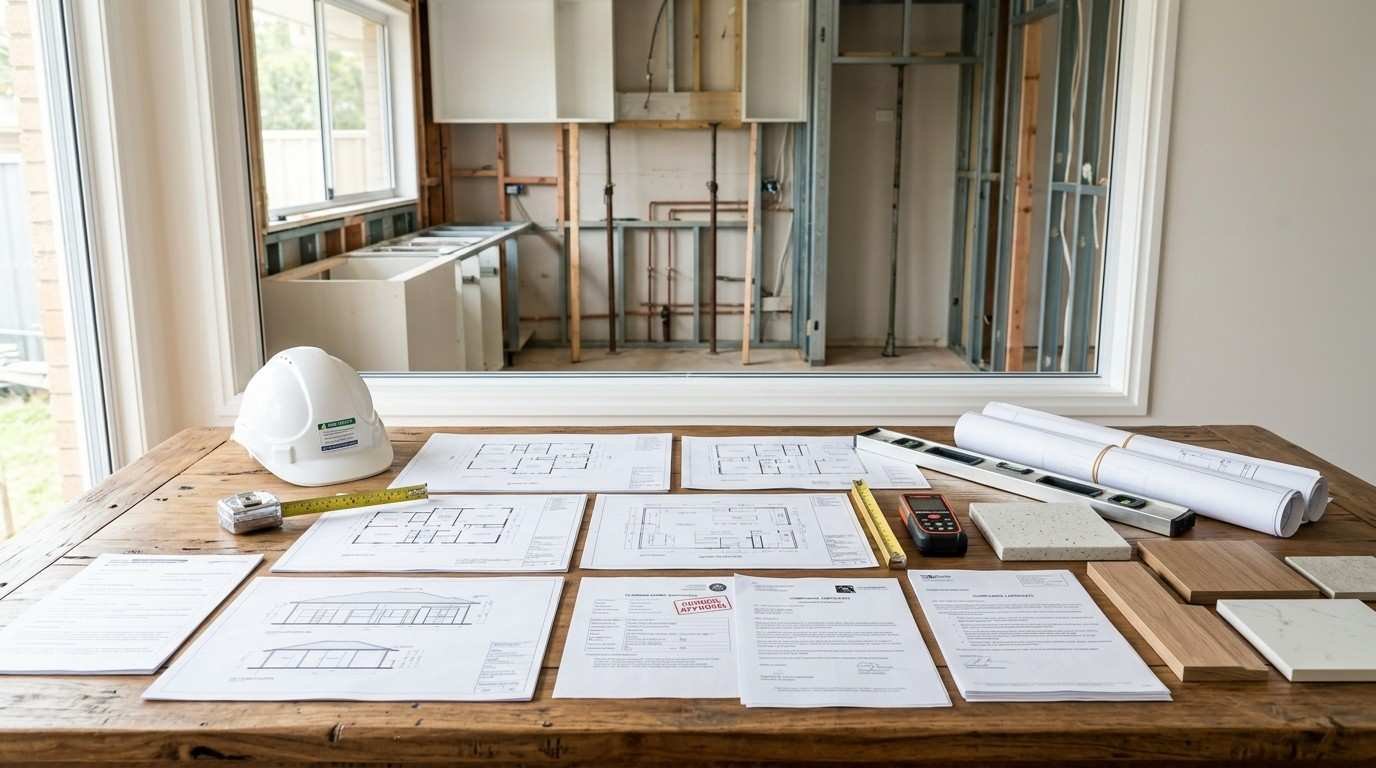
Documentation is where most applications stall. For a CDC, you typically need a site plan, floor plans showing existing and proposed layouts, a specification of works, and evidence that your project meets the relevant development standards.
For a DA, the requirements are broader and may include a Statement of Environmental Effects, shadow diagrams, and a BASIX certificate if your renovation affects energy or water performance. Your certifier or council’s pre-lodgement service will give you a checklist specific to your project.
Accurate, complete documentation submitted at lodgement is the single biggest factor in a smooth approval. Incomplete applications are returned, and that adds weeks to your timeline.
Step 3, Lodge Your Application
All development applications and CDC applications in NSW are lodged through the NSW Planning Portal. The portal handles document upload, fee payment, and tracking. Council DAs are routed to the relevant local government area; CDCs go directly to your nominated private certifier.
Create your account, complete the application form, attach your documentation, and pay the lodgement fee. Keep your portal login, all correspondence, requests for additional information, and the final determination come through the same system.
Step 4, Inspections and Sign-Off
Approval is not the end of the process. Most permits require mandatory inspections at specific stages of construction, typically before concrete is poured, before walls are closed, and at completion. Your certifier will issue an inspection schedule when they issue the approval.
At the end of the project, your certifier issues an Occupation Certificate (for new buildings or major alterations) or a Compliance Certificate confirming the work meets the approved plans. These documents are essential, they are what your conveyancer and insurer will ask for if you ever sell or make a claim.
How Long Does Kitchen Permit Approval Take?
A CDC for a straightforward kitchen renovation typically takes between 10 and 20 business days from lodgement of a complete application. A DA takes longer, the statutory timeframe is 40 business days for most residential DAs in NSW, though complex applications or those requiring referrals can take longer.
These are statutory timeframes, not guarantees. The actual time depends heavily on the completeness of your documentation and the current workload of your certifier or council.
Factors That Affect Approval Timeframes
Incomplete documentation is the most common cause of delays. When an application is returned for additional information, the clock effectively resets on that portion of the assessment. Submitting everything correctly the first time is the most reliable way to hit the statutory timeframe.
Heritage overlays, flood planning areas, and bushfire-prone land all add referral steps that extend the timeline. If your property carries any of these overlays, build additional time into your programme, typically four to eight weeks on top of the standard timeframe.
Council workload varies significantly across Sydney’s local government areas. Some councils process residential DAs faster than others, and this is worth factoring in when you are planning your renovation schedule.

How Much Does a Kitchen Permit Cost in Sydney?
Permit costs in Sydney vary based on the approval pathway, the estimated value of your works, and whether you use a private certifier or go through council. As a general guide, homeowners should budget between $1,500 and $5,000 for the combined cost of approval, certification, and inspections on a mid-range kitchen renovation.
This is a planning figure, not a fixed price. Your actual costs depend on your project scope and which local government area you are in.
Council Application Fees
DA fees in NSW are calculated based on the estimated cost of works, using a fee scale set by the NSW Environmental Planning and Assessment Regulation 2021. For a kitchen renovation valued at $50,000, the DA lodgement fee is typically in the range of $500 to $1,500, depending on the council.
Some councils also charge a long service levy and a planning reform levy on top of the base application fee. These are calculated as a percentage of the cost of works and are payable at lodgement.
Certifier and Inspection Costs
Private certifier fees for a CDC on a residential kitchen renovation typically range from $1,000 to $2,500, covering the assessment, any required inspections, and the issue of the final certificate. Inspection fees may be bundled into the certifier’s quote or charged separately per visit.
I always recommend getting a fixed-fee quote from your certifier upfront so there are no surprises at the end of the project. Most reputable certifiers in Sydney will provide a clear scope of services and a fixed price before you engage them.
Common Mistakes Homeowners Make With Kitchen Permits
Most permit problems are avoidable. The mistakes I see most often come down to two things: assuming approval is not needed, and underestimating what the application actually requires.
Skipping the Permit Entirely
Renovating without the required permits is one of the most expensive mistakes a homeowner can make. Unpermitted work can trigger council orders to demolish or rectify the work at your own cost, and it creates a disclosure obligation when you sell. Buyers’ solicitors routinely check for outstanding orders and unapproved works, and lenders can decline finance on properties with unresolved permit issues.
Your home insurer may also decline a claim related to unpermitted work. The short-term saving of avoiding the permit process is not worth the long-term financial and legal exposure.
Underestimating Documentation Requirements
The second most common mistake is lodging an incomplete application and assuming the certifier or council will ask for what they need. That is not how it works. An incomplete application is returned, and the assessment clock stops until the missing information is provided.
I always prepare a documentation checklist at the start of every project and review it against the specific requirements for the approval pathway before lodgement. It takes an hour upfront and saves weeks on the back end.
Frequently Asked Questions
Do I need a permit to replace kitchen cabinets?
Replacing kitchen cabinets in the same location, without moving plumbing or electrical connections, is generally exempt development in NSW and does not require a permit. The moment you relocate the sink, add circuits, or alter the structure, a permit is required.
Can I do kitchen work without council approval in NSW?
Some kitchen work qualifies as exempt development under the NSW planning framework and does not require council approval. Cosmetic work, painting, tiling, replacing benchtops, and like-for-like appliance swaps, typically falls into this category. Structural, electrical, and plumbing changes require formal approval.
Who is responsible for obtaining the kitchen permit?
The homeowner is ultimately responsible for ensuring the correct permits are in place. In practice, the builder or contractor often manages the application process on the homeowner’s behalf. We handle permit coordination for all our clients at Sydney Home Renovation as part of our project management service.
What happens if I renovate without a permit?
Renovating without a required permit exposes you to council enforcement action, including orders to rectify or demolish the work. It also creates a disclosure obligation at sale, can affect your home insurance, and may complicate future financing. The cost of rectification almost always exceeds the original permit fee.
Does a kitchen permit affect my home insurance?
Unpermitted work can affect your home insurance in two ways: your insurer may decline a claim related to the unpermitted work, and the presence of unapproved alterations can affect the accuracy of your sum insured. Always notify your insurer when you complete a renovation and confirm that the work is covered under your policy.
Conclusion
Kitchen permits in Sydney follow a clear process once you understand which pathway applies to your project. The approval framework exists to protect your investment, your safety, and your ability to sell or insure the property without complications.
Getting the permit right from the start is always faster and cheaper than dealing with the consequences of skipping it. The documentation, the fees, and the inspections are all manageable with the right guidance.
At Sydney Home Renovation, we manage the full permit process for our clients, from determining the right approval pathway to coordinating inspections and final sign-off. Reach out to our team to discuss your kitchen renovation and get a clear picture of what approval your project needs.