Bathroom renovation labour costs in Sydney typically run between $8,000 and $28,000 depending on scope, trades involved, and site conditions and in 2026, those numbers are climbing. Understanding exactly where that money goes is the difference between a renovation that stays on budget and one that blows out before the tiles are even laid.
Labour costs are the single biggest variable in any bathroom renovation budget. Getting them wrong even slightly creates financial stress, project delays, and decisions made under pressure rather than planning.
This guide breaks down every layer of renovation labour costs: what drives them, what hides inside them, how to budget for them, and how to get the best outcome for every dollar spent.
What Are Renovation Labour Costs?
Renovation labour costs are the fees paid directly to tradespeople and contractors for the physical work of completing a renovation. They cover time, skill, licensing, insurance, and the coordination required to deliver a finished result.
Labour costs are separate from material costs. They are what you pay for the hands doing the work not the tiles, fixtures, or fittings those hands are installing.
How Labour Costs Are Calculated
Most tradespeople in Sydney charge either an hourly rate or a fixed project rate. Hourly rates apply to smaller or unpredictable scopes. Fixed rates apply when the scope is clearly defined upfront.
Hourly rates include the tradesperson’s time on site, travel allowances in some cases, and a margin for overheads like insurance, licensing, and tools. Fixed project rates bundle all of that into a single agreed price which is why getting a detailed scope of works in writing before any project starts matters so much.
Some contractors also charge a call-out fee on top of hourly rates. That fee covers the cost of mobilising to site regardless of how long the job takes.
Labour vs. Material Costs What’s the Difference?
Labour and materials are the two core components of any renovation budget. Materials cover everything physical tiles, vanities, tapware, shower screens, waterproofing membrane, and fittings. Labour covers everything human the plumber relocating the drain, the tiler laying the floor, the electrician moving the exhaust fan.
In a bathroom renovation, labour typically accounts for 40–60% of the total project cost. The exact split depends on the quality of materials chosen and the complexity of the work involved.
Understanding this split matters because it changes how you prioritise. Cutting material costs is often easier than cutting labour costs and sometimes the smarter move.
Bathroom Renovation Labour Costs in Sydney for 2026
Sydney sits at the higher end of the national labour cost spectrum. Demand for licensed tradespeople remains strong, operating costs are high, and the cost of living flows directly into what skilled workers charge.
Here is a realistic breakdown of labour costs by renovation scope for 2026.
Small Bathroom Renovation Labour Costs
A small bathroom renovation typically a cosmetic refresh with like-for-like fixture replacement, no layout changes, and a floor area under 4 square metres carries labour costs in the range of $8,000 to $14,000 in Sydney.
This scope usually involves a plumber, tiler, and waterproofer at minimum. An electrician is required if the exhaust fan or lighting is being updated. The work is relatively straightforward, but licensed trades are still mandatory for all plumbing, electrical, and waterproofing work under Australian standards.
Standard Bathroom Renovation Labour Costs
A standard bathroom renovation new fixtures, full retiling, updated waterproofing, and potentially minor layout adjustments typically carries labour costs between $14,000 and $22,000 in Sydney.
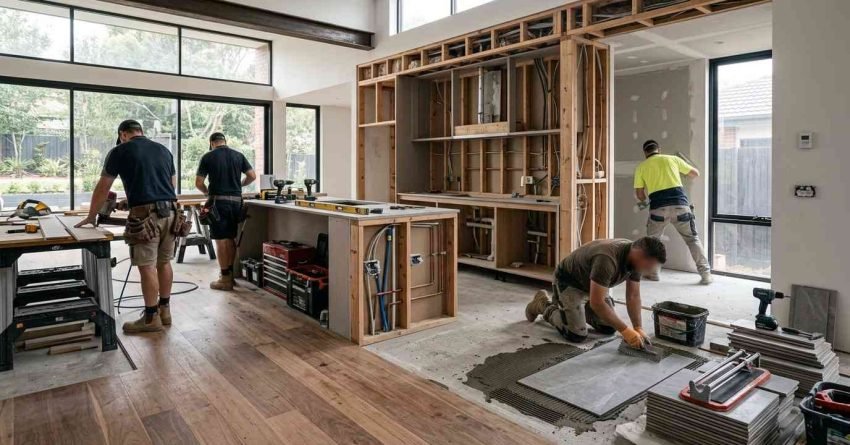
This scope involves more trades, more coordination, and more time on site. The plumber may need to move waste points or reposition the shower. The tiler is working across walls and floors with more complex layouts. A builder or project manager is often involved to coordinate sequencing and manage compliance.
Full Bathroom Gut and Rebuild Labour Costs
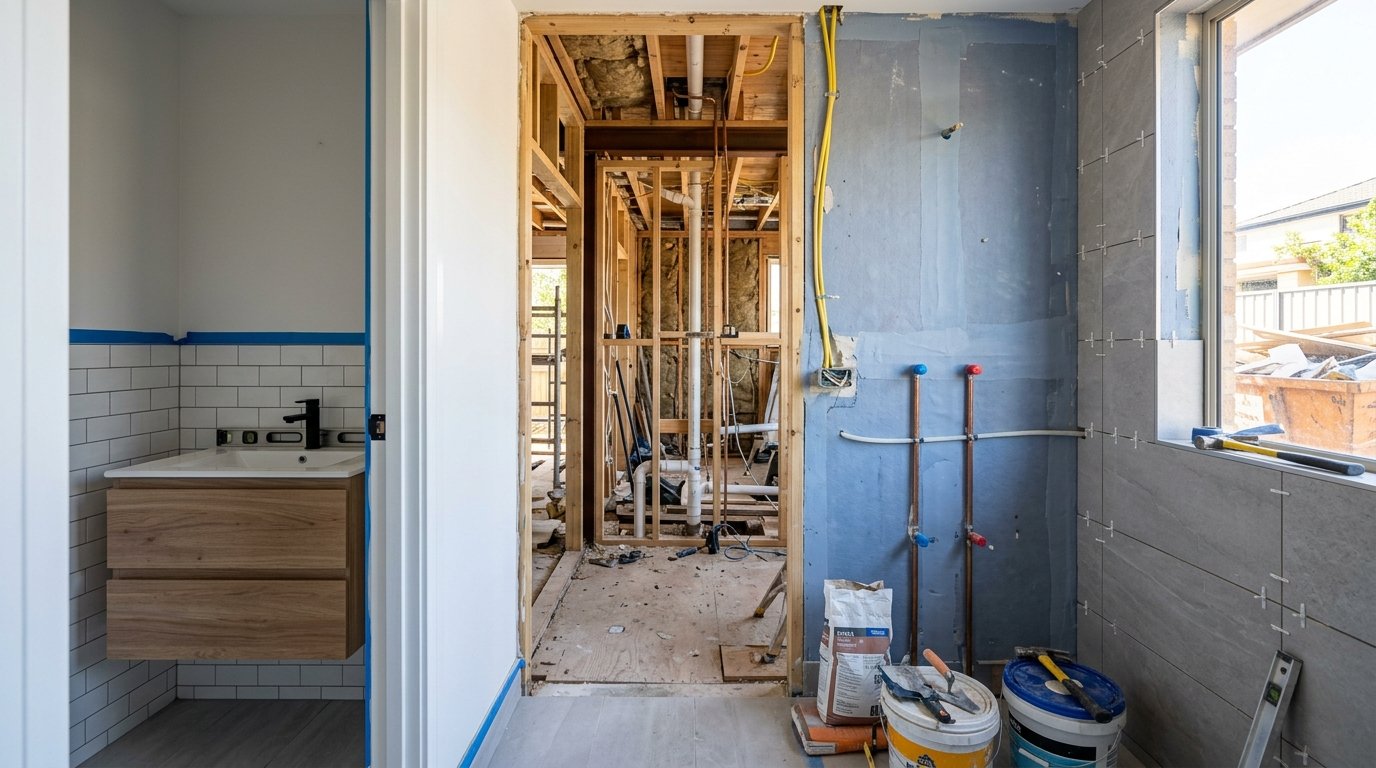
A full gut and rebuild stripping the bathroom to the frame, relocating plumbing, reconfiguring the layout, and rebuilding from scratch carries labour costs from $22,000 to $28,000 or more in Sydney.
This is the most labour-intensive scope. Every trade is involved, the project timeline extends to three to five weeks, and the complexity of coordinating inspections, approvals, and trade sequencing adds significant overhead. Rectification work fixing what is found behind the walls once demolition begins is also most likely at this scope level.
Trade-by-Trade Labour Cost Breakdown
Every bathroom renovation involves multiple licensed trades. Each one has its own rate structure, and understanding what each trade costs helps you read a quote accurately and spot anything that looks out of place.
Plumber Labour Rates for Bathroom Renovations
Plumbers in Sydney charge between $120 and $180 per hour for bathroom renovation work in 2026. A standard bathroom renovation typically requires 12 to 20 hours of plumbing labour across rough-in, fit-off, and inspection stages.
Plumbing is non-negotiable. All drainage, water supply, and fixture connections must be completed by a licensed plumber under NSW Fair Trading regulations. There is no legal pathway to DIY this work.
Electrician Labour Rates for Bathroom Renovations
Electricians charge between $110 and $160 per hour in Sydney. Bathroom electrical work exhaust fans, lighting circuits, heated towel rails, and safety switches typically requires four to eight hours of licensed electrical work.
All electrical work in a bathroom must comply with AS/NZS 3000 wiring standards and be completed by a licensed electrician. A Certificate of Compliance for Electrical Work (CCEW) is issued on completion and is required for insurance and resale purposes.
Tiler Labour Rates for Bathroom Renovations
Tilers in Sydney charge between $55 and $85 per square metre for supply-and-lay, or $45 to $65 per square metre for labour-only tiling. A standard bathroom of six to eight square metres of floor and 15 to 20 square metres of wall tiling represents a significant portion of the labour budget.
Complex tile layouts herringbone, large-format tiles, or feature walls attract higher rates. Rectification of uneven substrates before tiling also adds to the cost.
Waterproofer Labour Rates
Waterproofing is a licensed trade in NSW and one of the most critical steps in any bathroom renovation. Waterproofers charge between $800 and $2,500 for a standard bathroom, depending on the area being waterproofed and the membrane system used.
Skipping or underinvesting in waterproofing is the single most expensive mistake in bathroom renovations. Water damage behind walls and under floors costs far more to rectify than the waterproofing itself.
Builder / Project Manager Labour Rates
A builder or renovation project manager overseeing a bathroom renovation charges between $90 and $150 per hour, or a fixed management fee of $2,000 to $6,000 depending on project scope and duration.
Their role covers trade coordination, compliance management, council liaison, and quality control. On a full gut and rebuild, this role is essential. On a smaller cosmetic renovation, it may be optional but the coordination cost is always present, whether you pay someone to manage it or absorb it yourself.
What Drives Labour Costs Up The Key Variables
Two quotes for the same bathroom can differ by thousands of dollars. The variables below explain why and knowing them helps you assess quotes accurately rather than defaulting to the cheapest number.
Scope of Work and Complexity
The more complex the work, the more labour it requires. Moving a toilet waste point, relocating a shower drain, or reconfiguring the vanity position all add plumbing hours. Intricate tile patterns add tiling hours. Structural changes add builder hours.
Complexity compounds across trades. A single layout change can add hours to the plumber’s scope, the tiler’s scope, and the waterproofer’s scope simultaneously.
Access and Site Conditions
Difficult site access increases labour costs. A bathroom on the second floor of a terrace house with no rear lane access takes longer to demolish and remove waste from than a ground-floor bathroom with direct outdoor access.
Older homes present additional challenges. Asbestos-containing materials in pre-1990 buildings require licensed removal. Lead paint, deteriorated substrates, and non-standard plumbing configurations all add time and cost.
Existing Layout Changes vs. Like-for-Like Replacement
Like-for-like replacement putting the new toilet where the old one was, the new vanity where the old one sat is always cheaper than reconfiguring the layout. Every time a waste point moves, a water supply line relocates, or a wall is repositioned, labour hours increase across multiple trades.
The single most effective way to control labour costs in a bathroom renovation is to keep the layout as close to the existing configuration as possible.
Timing, Availability, and Market Demand
Sydney’s construction market in 2026 remains tight. Skilled tradespeople are in high demand, and availability directly affects pricing. Booking trades during peak periods spring and early summer typically costs more than scheduling work in quieter months.
Lead times for quality tradespeople in Sydney currently run four to ten weeks. Rushing a project by accepting whoever is available immediately often means paying a premium or accepting lower-quality work.
Hidden Labour Costs Most Homeowners Miss
The quoted labour cost is rarely the final labour cost. These three categories account for the majority of budget blowouts in bathroom renovations.
Demolition and Waste Removal
Demolition is a labour cost that many homeowners underestimate or forget to include entirely. Stripping a bathroom removing tiles, vanity, toilet, shower screen, and wall linings takes a full day of labour or more, and the waste has to go somewhere.
Skip bin hire, waste disposal fees, and the labour to load and remove debris add $800 to $2,500 to a bathroom renovation budget depending on scope. This cost is sometimes included in a builder’s quote and sometimes listed separately always confirm which.
Compliance, Inspections, and Council Approvals
Certain bathroom renovation work in NSW requires a Development Application (DA) or a Complying Development Certificate (CDC). Structural changes, changes to the building envelope, and some heritage-listed properties trigger approval requirements.
Even work that does not require a DA still requires licensed tradespeople to issue compliance certificates the plumber’s Certificate of Compliance for Plumbing and Drainage, the electrician’s CCEW, and the waterproofer’s compliance documentation. The labour time associated with inspections, re-inspections, and paperwork is real and billable.
Rectification Work Fixing What’s Behind the Walls
This is the hidden cost that catches the most homeowners off guard. Once demolition begins, what is behind the walls becomes visible for the first time. Rotted framing from old leaks, deteriorated waterproofing, non-compliant plumbing, and substandard previous work all require rectification before new work can proceed.
Rectification work is impossible to quote accurately before demolition. A contingency allowance exists specifically to absorb this cost. Homeowners who do not carry a contingency find themselves making rushed decisions under financial pressure which almost always leads to worse outcomes.
How to Budget for Renovation Labour Costs
Budgeting for labour costs is not about finding the cheapest quote. It is about building a realistic financial plan that accounts for what the work actually costs, what can go wrong, and what decisions you will need to make along the way.
Setting a Realistic Labour Allowance
Start with the scope. A cosmetic refresh has a very different labour requirement than a full gut and rebuild. Use the cost ranges in this guide as your starting framework, then get three detailed quotes from licensed contractors to calibrate against the actual Sydney market.
A realistic labour allowance for a standard bathroom renovation in Sydney in 2026 sits between $14,000 and $22,000. Budget at the midpoint of your expected range, not the bottom.
The 10–15% Contingency Rule
Every bathroom renovation budget needs a contingency of 10–15% of the total project cost set aside before work begins. This is not optional. It is the financial buffer that absorbs rectification work, scope changes, and the unexpected realities of working inside an existing building.
On a $20,000 labour budget, that means holding $2,000 to $3,000 in reserve. Do not spend the contingency unless you need it. If the project completes without drawing on it, you have a bonus not a mistake.
Getting Quotes What to Compare and Why
Three quotes is the minimum. But comparing quotes is not as simple as looking at the bottom line. A quote that is significantly cheaper than the other two is not necessarily a bargain it may reflect a narrower scope, unlicensed trades, or a contractor who will add variations once work begins.
Compare quotes on scope, not just price. Every quote should specify which trades are included, what compliance certificates are provided, how variations are handled, and what the payment schedule looks like. A detailed, transparent quote from a licensed contractor is worth more than a cheap number on a single page.
Labour Costs vs. DIY When to Call a Professional
The appeal of DIY is understandable. Labour costs are significant, and the idea of saving $5,000 to $10,000 by doing some of the work yourself is attractive. But in a bathroom renovation, the legal and practical limits on DIY work are tighter than most homeowners realise.
What You Can Legally DIY in NSW
In NSW, owner-builders can legally perform certain non-licensed work on their own property. Painting, basic carpentry, installing pre-made cabinetry, and some tiling work fall within what an unlicensed owner can do legally.
What you cannot legally DIY: all plumbing and drainage work, all electrical work, all waterproofing (which is a licensed trade in NSW), and any structural work. These trades require a licence, and the compliance certificates they issue are required for insurance, resale, and building approval purposes.
When DIY Costs More Than Hiring a Tradesperson
DIY work done incorrectly in a bathroom creates problems that cost more to fix than the original trade would have charged. Waterproofing failures, non-compliant plumbing, and electrical faults are the three most common and most expensive examples.
A waterproofing failure discovered two years after a renovation when water has been tracking through the substrate and into the floor structure can cost $15,000 to $40,000 to rectify. The waterproofing itself costs $800 to $2,500 done correctly the first time. The maths is not complicated.
How to Reduce Renovation Labour Costs Without Cutting Corners
Reducing labour costs does not mean finding the cheapest tradesperson. It means making smarter decisions before and during the project that reduce the hours required without compromising the quality of the outcome.
Sequencing Trades Correctly
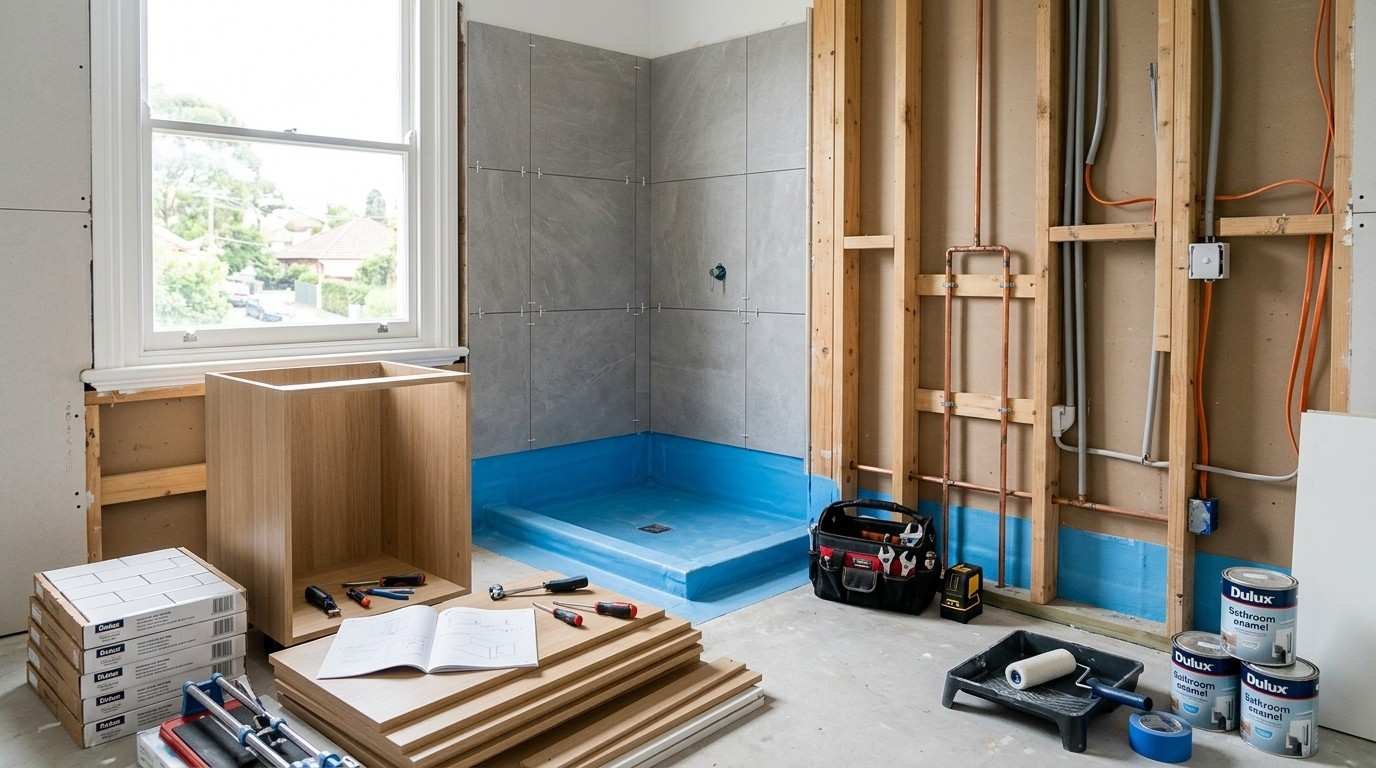
Trades must arrive in the right order. Plumbing rough-in before waterproofing. Waterproofing before tiling. Electrical rough-in before wall linings. Tiling before fit-off. Getting the sequence wrong means trades return to site, which means additional call-out fees and delays that push the whole project out.
A builder or project manager earns their fee by getting this right. On a DIY-managed renovation, sequencing errors are one of the most common and most expensive mistakes.
Preparing the Site Before Trades Arrive
Every hour a tradesperson spends on site costs money. Arriving to find the site unprepared access blocked, old fixtures not removed, materials not on site means paying trade rates for non-trade work.
Clear the bathroom before demolition begins. Confirm material deliveries are scheduled to arrive before the trades who need them. Have decisions made before work starts, not during it. These are free actions that directly reduce billable hours.
Choosing the Right Contractor for the Scope
A large renovation company managing a small cosmetic bathroom refresh will charge more than a specialist bathroom renovation contractor doing the same work. Match the contractor to the scope.
For a full gut and rebuild, a licensed builder with trade coordination experience is the right choice. For a cosmetic refresh with like-for-like replacement, a specialist bathroom renovator or a coordinated team of individual trades may deliver the same result at a lower management overhead.
Renovation Labour Costs and Return on Investment
Labour costs are not just an expense they are an investment in the property. Understanding the return that investment generates helps homeowners and property investors make smarter decisions about where to spend and where to hold back.
Which Bathroom Upgrades Deliver the Best ROI
Not all bathroom upgrades deliver equal returns. The highest ROI upgrades in a bathroom renovation are those that address functional deficiencies, modernise the aesthetic, and improve the perceived quality of the space without over-capitalising for the suburb.
New waterproofing and tiling, a modern vanity and tapware, updated lighting, and a frameless shower screen consistently deliver strong returns. These are the upgrades buyers and tenants notice and value. Custom joinery, heated floors, and premium imported fixtures deliver diminishing returns in most Sydney suburbs outside the top price brackets.
Labour Cost vs. Property Value Uplift in Sydney
A well-executed bathroom renovation in Sydney typically adds 1.5 to 2.5 times the renovation cost to the property’s market value, according to renovation and property market data. A $20,000 bathroom renovation labour and materials combined can add $30,000 to $50,000 in value in the right property and suburb context.
The key word is well-executed. A renovation completed with unlicensed trades, missing compliance certificates, or poor-quality workmanship does not deliver that uplift and can actively reduce value by creating liability for the next owner.
Renovation Labour Cost Checklist for 2026
Use this checklist before committing to any bathroom renovation budget or contractor.
Before Getting Quotes:
- Define the scope clearly cosmetic refresh, standard renovation, or full gut and rebuild
- Decide whether the layout is changing or staying the same
- Identify any known issues leaks, mould, old waterproofing, non-standard plumbing
- Set a realistic budget range using the cost figures in this guide
- Allow 10–15% contingency on top of your labour budget
When Reviewing Quotes:
- Confirm all trades are licensed and insured
- Check which compliance certificates are included
- Understand how variations are priced and approved
- Compare scope line by line not just the total
- Confirm the payment schedule is milestone-based, not front-loaded
During the Renovation:
- Confirm trade sequencing before work begins
- Ensure materials are on site before the trades who need them arrive
- Keep a written record of any scope changes and their agreed cost
- Do not release final payment until all compliance certificates are received
After Completion:
- Collect all compliance certificates plumbing, electrical, waterproofing
- Retain all warranties for fixtures and materials
- File the renovation documentation with your property records
Frequently Asked Questions
What is the average labour cost for a bathroom renovation in Sydney?
The average labour cost for a standard bathroom renovation in Sydney in 2026 sits between $14,000 and $22,000. Small cosmetic refreshes start around $8,000, while full gut-and-rebuild projects can reach $28,000 or more depending on scope and complexity.
How much do plumbers charge per hour for bathroom renovations in 2026?
Licensed plumbers in Sydney charge between $120 and $180 per hour for bathroom renovation work in 2026. A standard bathroom renovation typically requires 12 to 20 hours of plumbing labour across rough-in, fit-off, and inspection stages.
What percentage of a renovation budget goes to labour?
Labour typically accounts for 40 to 60 percent of the total bathroom renovation budget. The exact percentage depends on the complexity of the work and the quality of materials chosen higher-end materials shift the split toward materials, while complex scopes shift it toward labour.
Why are renovation labour costs higher in Sydney than other cities?
Sydney’s labour costs reflect the city’s higher cost of living, strong demand for licensed tradespeople, and the operating costs associated with running a licensed trade business in a major metropolitan market. Demand for skilled trades in Sydney consistently outpaces supply, which keeps rates elevated.
How long does a bathroom renovation take and how does that affect labour costs?
A cosmetic bathroom refresh takes one to two weeks. A standard renovation runs two to four weeks. A full gut and rebuild takes three to six weeks. Longer projects mean more total labour hours and more coordination overhead both of which increase the final labour cost.
Can I reduce labour costs by supplying my own materials?
Supplying your own materials can reduce the materials component of a quote, but it does not reduce labour costs. It can actually increase them if materials arrive late, are the wrong specification, or require additional handling. Discuss material supply arrangements with your contractor before the project begins.
What is a fair call-out fee for a tradesperson in Sydney?
Call-out fees in Sydney typically range from $80 to $150 for most trades. This fee covers the cost of mobilising to site and applies regardless of how long the job takes. It is separate from the hourly rate charged once work begins.
How do I know if a renovation quote is reasonable?
A reasonable quote is detailed, itemised by trade and scope, and sits within the market ranges outlined in this guide. Get three quotes minimum. A quote significantly below the others warrants scrutiny check what is excluded, whether all trades are licensed, and how variations are handled.
Conclusion
Renovation labour costs are the most significant and most variable line item in any bathroom renovation budget. Understanding what drives them, what hides inside them, and how to plan for them is what separates a renovation that delivers on its promise from one that runs over budget and under expectation.
The numbers in this guide reflect the real Sydney market in 2026 not optimistic estimates or worst-case scenarios. Use them as your planning baseline, build in your contingency, and make decisions based on scope and quality rather than the cheapest quote available.
We help homeowners and property investors in Sydney plan and complete bathroom renovations with transparent pricing, licensed trades, and clear communication from first quote to final certificate. Reach out to Sydney Home Renovation to start your renovation with confidence.