Asbestos is present in an estimated one in three Australian homes built before 1990, and for anyone planning a renovation, understanding it is not optional, it is a legal and safety requirement. Disturbing asbestos-containing materials without proper management can expose your family, your tradespeople, and your neighbours to fibres linked directly to mesothelioma and asbestosis.
We put this guide together because the gap between what homeowners think they know about asbestos and what they actually need to know before picking up a tool is significant, and that gap costs people money, time, and in the worst cases, their health.
This guide covers what asbestos is, where it hides in Australian homes, how to identify and test for it, risk levels, removal costs in Sydney, NSW licensing laws, the removal process, renovation budgeting, and how to choose the right removalist.
What Is Asbestos and Why Is It Still in Australian Homes?
Asbestos is a naturally occurring silicate mineral that was used extensively in Australian residential construction from the 1940s through to the late 1980s. Its appeal was straightforward: it was cheap, fire-resistant, thermally insulating, and mechanically strong. Builders and manufacturers used it in everything from wall sheeting to floor tiles, roofing, and pipe insulation.
Australia was one of the highest per-capita users of asbestos in the world. SafeWork Australia estimates that approximately 4,000 Australians are diagnosed with asbestos-related diseases each year, a figure that reflects decades of widespread residential and commercial use. The full ban on asbestos importation, manufacture, and use came into effect on 31 December 2003, but the material remains physically present in millions of homes built before that date.
The reason asbestos is still in Australian homes is simple: removing it is expensive, and undisturbed asbestos in good condition does not pose an immediate risk. Many homeowners choose to manage it in place rather than remove it, a legally acceptable approach under the right conditions. The problem arises when renovation work begins.
The Two Types of Asbestos Found in Residential Properties
The two broad categories are chrysotile (white asbestos) and the amphibole group, which includes crocidolite (blue) and amosite (brown). Chrysotile was the most commonly used in residential products, flat and corrugated sheeting, floor tiles, and textured ceiling coatings. Amphibole fibres are generally considered more hazardous because of their needle-like structure, which makes them more persistent in lung tissue.
In practical terms for a homeowner, the distinction matters less than the condition and location of the material. Both types are regulated under the same NSW framework, and both require licensed removal once they are disturbed or deteriorating.
When Was Asbestos Used in Australian Home Construction?
The peak period of residential asbestos use in Australia ran from roughly 1945 to 1987. Homes built during this window have the highest probability of containing asbestos-containing materials (ACMs). Homes built between 1987 and 2003 may still contain some ACMs, particularly in imported products. Homes built after 31 December 2003 should not contain asbestos, though renovation work on older sections of a property can still expose legacy materials.
Where Is Asbestos Commonly Found in Australian Homes?
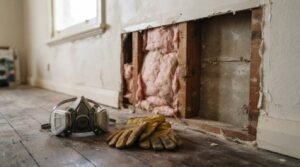
The challenge with asbestos in residential properties is that it does not announce itself. It was used in so many building products that a pre-1990 home can contain it in a dozen different locations simultaneously, some obvious, many not. Knowing where to look before you start any demolition, drilling, or cutting work is the first practical step every renovator needs to take.
SafeWork NSW identifies residential asbestos as a priority hazard precisely because of how broadly it was distributed across building materials. The material was not confined to one trade or one part of the construction process, it appeared in structural sheeting, surface finishes, insulation, and mechanical systems.
High-Risk Areas in Pre-1990 Homes
The most common locations for asbestos-containing materials in Australian residential properties include:
- Fibro wall and ceiling sheeting, flat compressed sheeting used extensively in homes built from the 1940s to the 1980s, often referred to as “fibro” or “AC sheeting”
- Corrugated roofing and eaves lining, particularly in garages, carports, and outbuildings
- Textured ceiling coatings, “popcorn” or “vermiculite” style spray-on finishes common in homes built in the 1960s and 1970s
- Vinyl floor tiles and the adhesive beneath them, both the tile and the black mastic adhesive can contain asbestos
- Pipe lagging and duct insulation, particularly around hot water systems and older heating ducts
- Backing boards behind wet area tiles, a critical point for bathroom and kitchen renovators
This list is not exhaustive. Any home built before 1990 should be treated as potentially containing asbestos until a licensed assessor confirms otherwise.
Asbestos in Bathrooms, Kitchens, and Wet Areas
Bathrooms and kitchens represent the highest-risk renovation zones in pre-1990 Australian homes. The wet area asbestos risks for bathroom renovators are particularly significant because asbestos cement sheeting was the standard substrate behind tiles in these rooms for decades. Removing tiles, cutting into walls, or replacing plumbing in these areas without prior testing is one of the most common ways homeowners inadvertently disturb asbestos.
Kitchen soffits, laundry walls, and the areas around hot water systems are similarly high-risk. We consistently see renovation projects where the asbestos is not in the obvious fibro wall, it is in the backing board behind the shower tiles or the vinyl tile adhesive under the kitchen floor.
How to Identify Asbestos in Your Home
You cannot identify asbestos by looking at it. This is the single most important thing for any homeowner or renovator to understand. Asbestos fibres are microscopic, and the materials that contain them look identical to non-asbestos versions of the same product. A fibro sheet containing asbestos and one that does not are visually indistinguishable.
The only reliable identification method is laboratory analysis of a physical sample, and collecting that sample incorrectly can itself create a hazard.
Visual Identification vs. Professional Testing
Visual inspection by a licensed asbestos assessor can narrow down which materials are likely to contain asbestos based on age, construction type, and product characteristics. This is a useful first step, but it is not a substitute for testing. The assessor will identify suspect materials and collect samples using correct containment procedures, which are then sent to a NATA-accredited laboratory for analysis.
Homeowners should not attempt to collect their own samples. Cutting or breaking a material to take a sample, even a small one, can release fibres if the material does contain asbestos. The cost of a professional asbestos inspection in Sydney typically ranges from $300 to $700 for a standard residential property, depending on size and the number of samples required.
When to Arrange an Asbestos Inspection
An asbestos inspection should be arranged before any renovation work begins on a pre-1990 property. This applies to bathroom renovations, kitchen renovations, structural alterations, roofing work, and any project that involves cutting, drilling, or demolishing existing building materials. It also applies before purchasing a pre-1990 property if you intend to renovate.
We recommend treating the inspection cost as a non-negotiable line item in your renovation budget, not an optional extra. The cost of an inspection is a fraction of the cost of emergency remediation if asbestos is disturbed without proper controls in place.

Understanding Asbestos Risk Levels Before You Renovate
Not all asbestos in a home presents the same level of immediate risk. The regulatory framework in NSW distinguishes between materials based on their condition and their physical form, and understanding this distinction directly affects how you plan and budget your renovation.
The key variable is whether the asbestos-containing material is likely to release fibres under normal conditions or renovation activities.
Friable vs. Non-Friable Asbestos, What the Difference Means
Non-friable asbestos (also called bonded asbestos) is the most common type found in residential properties. In non-friable materials, asbestos fibres are bound within a solid matrix, cement, vinyl, or resin. Flat fibro sheeting, corrugated roofing, and floor tiles are typical examples. When in good condition and left undisturbed, non-friable asbestos does not readily release fibres into the air.
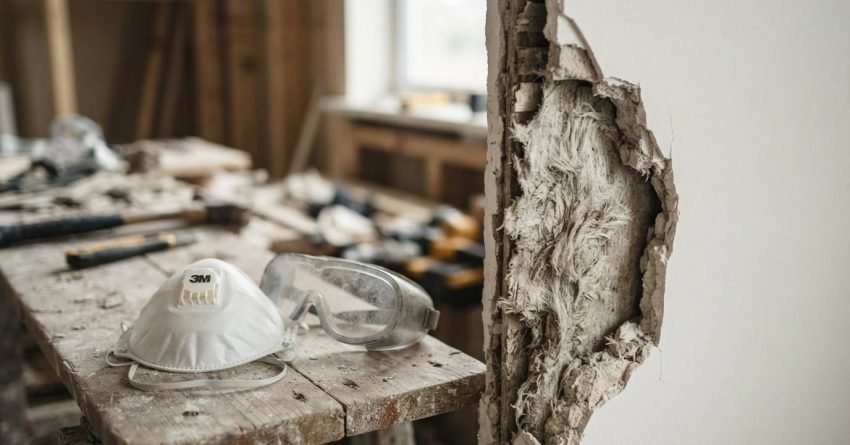
Friable asbestos is material that can be crumbled, pulverised, or reduced to powder by hand pressure. Pipe lagging, loose-fill insulation, and deteriorated spray-on coatings are common examples. Friable asbestos is significantly more hazardous because it releases fibres easily, including during normal building movement, air currents, or minor disturbance.
The distinction matters for licensing requirements, removal methodology, and cost. Friable asbestos removal requires a Class A licence in NSW and involves more stringent containment and disposal protocols than non-friable removal.
When Asbestos Becomes a Health Hazard During Renovation
Asbestos becomes a health hazard when fibres become airborne and are inhaled. This happens when asbestos-containing materials are cut, drilled, sanded, broken, or demolished without proper controls. The health risks, mesothelioma, asbestosis, and lung cancer, are well-documented and have a latency period of 20 to 40 years, meaning exposure today may not manifest as disease for decades.
Safe Work Australia’s asbestos health data confirms there is no known safe level of asbestos exposure. For renovators, this means the risk management approach is not about minimising exposure — it is about eliminating it through correct identification, licensed removal, and proper clearance before work proceeds.
Asbestos Removal Cost in Sydney, What Homeowners Actually Pay
Asbestos removal cost is the question we get asked most often, and the honest answer is that it varies significantly depending on the type of asbestos, the quantity, the location, and the access conditions. What we can give you are realistic price ranges based on current Sydney market rates, along with a clear explanation of what drives costs up or down.
Understanding these figures before you start a renovation is essential. Asbestos removal is not a cost you can defer or work around, it is a prerequisite for safe renovation work, and it needs to be in your budget from day one.
Typical Price Ranges for Residential Asbestos Removal
The following ranges reflect current Sydney pricing for licensed residential asbestos removal:
| Scope of Work | Typical Cost Range (Sydney) |
| Single room fibro sheeting removal (non-friable) | $1,500 – $3,500 |
| Full fibro house re-clad (non-friable) | $15,000 – $40,000+ |
| Asbestos roof removal (corrugated sheeting) | $5,000 – $15,000 |
| Vinyl floor tile and adhesive removal | $1,200 – $4,000 |
| Bathroom wet area backing board removal | $2,000 – $5,000 |
| Friable asbestos removal (pipe lagging, loose-fill) | $3,000 – $20,000+ |
| Asbestos inspection and testing | $300 – $700 |
These figures include labour, containment, disposal fees, and a clearance certificate. They do not include the cost of reinstating the area after removal, that is a separate scope of work.
For a detailed breakdown of what drives these figures, the asbestos removal cost breakdown for Sydney homeowners covers per-square-metre rates, disposal levy costs, and how to compare quotes accurately.
What Drives the Cost Up or Down
Several variables have a material impact on asbestos removal pricing in Sydney:
Type of asbestos: Friable asbestos removal costs significantly more than non-friable removal due to stricter containment requirements, Class A licensing, and more complex disposal protocols.
Quantity and area: Removal is generally priced per square metre for sheeting and per linear metre for pipe lagging. Larger areas attract lower per-unit rates but higher total costs.
Access and location: Roof removal, confined spaces, and materials behind existing finishes all increase labour time and therefore cost. A bathroom wet area with tiles over asbestos backing board costs more to remediate than an exposed fibro wall.
Disposal levy: NSW has a waste levy that applies to asbestos disposal at licensed facilities. This is a pass-through cost that removalists include in their quotes, it is not negotiable and has increased in recent years as the NSW EPA waste levy has been progressively raised.
Air monitoring: Some projects require independent air monitoring during and after removal. This adds cost but is sometimes mandatory under the NSW regulatory framework.
Asbestos Removal Cost vs. Asbestos Encapsulation Cost
Encapsulation, sealing asbestos-containing materials in place with a penetrating sealant rather than removing them, is a lower-cost alternative in some situations. For non-friable asbestos in good condition that will not be disturbed by renovation work, encapsulation can be a legitimate management strategy.
Encapsulation typically costs $15 to $30 per square metre, compared to removal costs that can range from $25 to $80 per square metre depending on the material and conditions. However, encapsulation is not appropriate for all situations, it does not eliminate the asbestos, it defers the issue, and it must be disclosed to future buyers and tradespeople. For renovation projects where the material will be disturbed, removal is the only viable option.
Licensed Asbestos Removal, What the Law Requires in NSW
NSW has a clear and enforceable licensing framework for asbestos removal work. Understanding what the law requires protects you as a homeowner, both from the health risks of unlicensed work and from the legal liability that comes with non-compliance.
The regulatory framework is administered by SafeWork NSW under the Work Health and Safety Act 2011 and the Work Health and Safety Regulation 2017.
Class A vs. Class B Asbestos Removal Licences
NSW issues two classes of asbestos removal licence:
Class B licence authorises the removal of non-friable asbestos-containing materials. This covers the majority of residential work, fibro sheeting, corrugated roofing, vinyl floor tiles, and wet area backing boards. Class B is the most common licence type you will encounter when getting quotes for residential renovation work.
Class A licence authorises the removal of both friable and non-friable asbestos. Class A work includes pipe lagging, loose-fill insulation (the “Mr Fluffy” type), and any deteriorated or damaged material that has become friable. Class A removal involves more stringent site controls, decontamination procedures, and disposal requirements.
You can verify a removalist’s licence status directly through the SafeWork NSW licence register. Always do this before signing a contract.
What Homeowners Can and Cannot Do Themselves
Under NSW regulations, a homeowner can remove up to 10 square metres of non-friable asbestos-containing material from their own residential property without a licence, provided the work is done safely and the material is disposed of correctly at a licensed facility.
In practice, we strongly advise against DIY asbestos removal for most homeowners. The 10 square metre allowance sounds generous, but it does not account for the correct containment procedures, personal protective equipment requirements, and disposal protocols that make the work genuinely safe. The cost of getting it wrong, both to your health and in terms of remediation, far exceeds the cost of hiring a licensed professional.
For any quantity above 10 square metres, or for any friable asbestos regardless of quantity, a licensed removalist is legally required.
The Asbestos Removal Process, What to Expect
Knowing what a licensed asbestos removal job actually involves helps you evaluate quotes, understand timelines, and set realistic expectations for your renovation schedule. The process is more involved than standard demolition work, and the additional steps are not optional, they are regulatory requirements.
Site Preparation, Containment, and Safety Protocols
Before any asbestos-containing material is touched, the work area must be prepared and contained. This involves sealing off the area with plastic sheeting, establishing a decontamination unit (a series of zones for removing and bagging contaminated PPE and clothing), and posting warning signs. The removalist’s team works in full PPE, P2 respirators, disposable coveralls, gloves, and eye protection.
For larger jobs or enclosed spaces, negative air pressure units may be used to prevent fibres from migrating outside the containment zone. All of this preparation takes time and is reflected in the labour component of your quote.
Disposal, Air Monitoring, and Clearance Certificates
Removed asbestos-containing materials must be double-bagged in heavy-duty plastic, labelled with the standard asbestos warning label, and transported to a licensed asbestos waste facility. Illegal dumping of asbestos waste carries significant penalties under NSW law.
After removal, the area is cleaned using wet methods and a HEPA vacuum. For Class A removal and some Class B jobs, independent air monitoring is conducted to confirm fibre levels are below the clearance standard. The removalist then issues a clearance certificate, a document confirming the area is safe for re-occupation and further work. Your renovation contractor should not proceed with reinstatement work until this certificate is in hand.
Asbestos and Renovation Planning, How to Budget Correctly
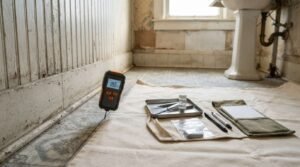
Asbestos is one of the most common sources of budget blowouts in Sydney renovation projects, not because removal is unpredictably expensive, but because homeowners fail to account for it at the planning stage. The cost is knowable in advance. The problem is that many people do not find out about it until a tradesperson discovers it mid-project.
Including Asbestos Costs in Your Renovation Budget
The correct approach is to treat asbestos assessment and potential removal as a fixed pre-construction cost for any pre-1990 property. Budget for an inspection before you finalise your renovation scope. If the inspection identifies asbestos-containing materials in the renovation zone, get removal quotes before you lock in your overall budget.
For a bathroom renovation in a pre-1990 Sydney home, we typically advise clients to include a $2,000 to $5,000 asbestos allowance as a contingency line item, even before inspection results are known. This covers the most common scenario, wet area backing board removal, and prevents the discovery from derailing the project budget entirely.
For whole-house renovations or projects involving fibro cladding, the allowance needs to be substantially higher. The renovation budget planning guide for Sydney homeowners covers how to structure contingency allowances across all major risk categories, including asbestos.
How Asbestos Discovery Mid-Renovation Affects Your Timeline
When asbestos is discovered after demolition has already begun, which happens more often than it should, the project must stop. The area must be contained, a licensed removalist engaged, and the clearance certificate obtained before any other trades can return to site. This sequence typically adds five to fifteen working days to a project timeline, depending on removalist availability and the scope of the removal work.
The downstream cost is not just the removal itself, it is the idle time for other trades, potential rescheduling fees, and the disruption to your living arrangements if you are in the property during the renovation. Getting the inspection done before work starts eliminates this risk entirely.
Choosing a Licensed Asbestos Removalist in Sydney
The quality and compliance of asbestos removal work varies significantly between operators in the Sydney market. Choosing the wrong removalist exposes you to health risks, legal liability, and the cost of remediation if the work is done incorrectly. The licence is the minimum requirement, it is not a guarantee of quality.
Licence Verification and What to Ask Before Hiring
Before engaging any removalist, verify their licence through the SafeWork NSW licence register. Confirm the licence class matches the work required, a Class B licence is not sufficient for friable asbestos removal.
Beyond the licence, ask the following before signing a contract:
- Does the quote include disposal fees, air monitoring (if required), and the clearance certificate?
- Who conducts the air monitoring, the removalist or an independent hygienist?
- What is the containment methodology for this specific job?
- Can you provide references from comparable residential projects?
A reputable removalist will answer these questions without hesitation. Vague answers or resistance to providing a clearance certificate as part of the scope are warning signs.
Red Flags to Watch for When Getting Quotes
The most common red flag is a quote that is significantly lower than others without a clear explanation. Asbestos removal has fixed cost components, disposal levies, PPE, containment materials, and licensed labour, that cannot be eliminated without cutting corners on compliance.
Other warning signs include: no written quote, no mention of a clearance certificate, pressure to proceed quickly without an inspection, and any suggestion that the material “probably does not need to be tested.” We have seen the consequences of engaging unlicensed or non-compliant operators, and the remediation costs consistently exceed what a licensed job would have cost in the first place.
Conclusion
Asbestos in Australian homes is a manageable risk, but only when it is identified correctly, assessed by a licensed professional, and removed or managed within the NSW regulatory framework. The combination of knowing where it hides, understanding the cost structure, and engaging the right licensed removalist is what separates a safe, on-budget renovation from a costly and dangerous one.
Every pre-1990 property in Sydney carries some probability of containing asbestos-containing materials. The cluster of resources linked throughout this guide goes deeper on each component, from inspection and testing to cost breakdowns and renovation budgeting.
At Sydney Home Renovation, we help homeowners navigate asbestos as part of a complete renovation plan, coordinating inspections, licensed removal, and reinstatement so your project stays safe, compliant, and on budget from day one.
Frequently Asked Questions
How much does asbestos removal cost in Sydney?
Residential asbestos removal in Sydney typically costs between $1,500 and $5,000 for a single room or bathroom, and $15,000 to $40,000+ for a full fibro house re-clad. Final cost depends on material type, quantity, access, and disposal requirements.
Do I need a licence to remove asbestos in NSW?
Homeowners can remove up to 10 square metres of non-friable asbestos from their own property without a licence. Any quantity above that, or any friable asbestos regardless of quantity, legally requires a licensed removalist under NSW Work Health and Safety regulations.
Can I renovate a home that contains asbestos?
Yes, but only after the asbestos-containing materials in the renovation zone have been assessed and either removed by a licensed removalist or confirmed as safe to leave undisturbed. Work must not begin until a clearance certificate is issued for any removed material.
What happens if asbestos is disturbed during renovation?
Work must stop immediately. The area must be contained, all personnel must leave, and a licensed asbestos removalist must be engaged to assess and remediate the site. Re-entry is not permitted until a clearance certificate confirms fibre levels are within safe limits.
How do I know if my home has asbestos?
The only reliable method is laboratory testing of a sample collected by a licensed asbestos assessor. Visual inspection alone cannot confirm or rule out asbestos. Any home built before 1990 should be professionally assessed before renovation work begins.
Is asbestos removal covered by home insurance in Australia?
Most standard home insurance policies do not cover the cost of asbestos removal as a routine renovation expense. Some policies may cover emergency remediation following an accidental disturbance. We recommend checking your policy wording and speaking directly with your insurer before assuming coverage.
How long does asbestos removal take?
A single room or bathroom removal typically takes one to three days, including containment setup, removal, cleaning, and air monitoring. Larger projects, full roof or whole-house cladding, can take one to two weeks. The clearance certificate is issued after the final air monitoring results are confirmed.