
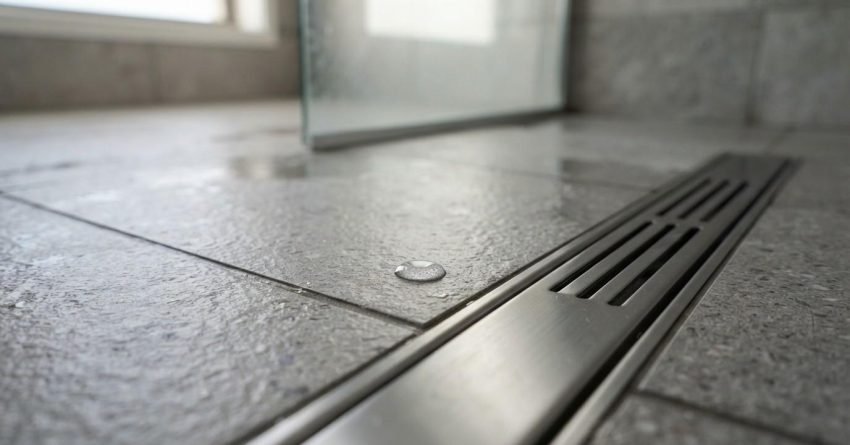
Bathroom waterproofing in Australia is governed by AS 3740-2010, the national standard that sets out exactly where membranes must go, how they must be installed, and what products qualify as compliant. Every licensed bathroom renovation in NSW must meet this standard, and getting it wrong creates serious structural, legal, and financial consequences.
Understanding these rules matters before a single tile goes down. Waterproofing failures are one of the most common and costly defects in Australian bathroom renovations.
This guide breaks down AS 3740-2010 in plain language, covering mandatory zones, membrane types, installation minimums, NSW licensing requirements, and what compliance actually looks like on site.
What Australian Standards Apply to Bathroom Waterproofing?
Two documents govern bathroom waterproofing in Australia: AS 3740-2010 and the National Construction Code. Together, they define what compliant waterproofing looks like and make it a legal requirement, not a recommendation.
AS 3740-2010, The Core Standard
AS 3740-2010, published by Standards Australia, is the primary technical document for waterproofing of domestic wet areas. It specifies the materials, installation methods, and performance requirements that all bathroom waterproofing must meet in residential construction and renovation.
The standard covers everything from membrane selection and substrate preparation through to minimum turn-up heights and curing periods. It applies to new builds and renovations equally. Any bathroom work that involves a wet area, shower, bath, floor waste, falls within its scope.
NCC / BCA Requirements and How They Connect
The National Construction Code (NCC), formerly known as the Building Code of Australia (BCA), references AS 3740-2010 as a deemed-to-satisfy solution for wet area waterproofing. This means that following AS 3740-2010 is the accepted pathway to demonstrating NCC compliance.
In NSW, the NCC is adopted through state legislation. Compliance with AS 3740-2010 is therefore a legal obligation, not optional guidance. Any bathroom renovation requiring development approval or a complying development certificate must demonstrate waterproofing compliance as part of the inspection process.
Where Waterproofing Is Required Under Australian Standards
AS 3740-2010 does not require waterproofing across an entire bathroom. It defines specific zones where membrane application is mandatory, and the boundaries of those zones are precise.
Mandatory Waterproofing Zones in a Bathroom
The standard requires waterproofing in the following locations:
- Shower recess floor, the entire floor area within the shower
- Shower walls, from floor level to a minimum height of 1,800mm, or to the full height of the wall if it is less than 1,800mm
- Floor waste area, a minimum 100mm radius around any floor waste fitting
- Bath surround, the floor area beneath and immediately surrounding a built-in bath
- Floor-to-wall junctions, all junctions within wet zones, including internal corners
These zones are non-negotiable. A membrane that stops short of any mandatory zone is a non-compliant installation, regardless of how well the rest of the work was done.
Wet Areas vs. Dry Areas, What the Standard Defines
AS 3740-2010 defines a wet area as any area of a building that is subject to wetting during normal use. Shower recesses, bath surrounds, and areas around floor wastes are classified as wet areas. The remainder of a bathroom floor, outside these defined zones, is classified as a dry area under the standard.
This distinction matters for membrane selection and installation method. Wet areas require full membrane coverage to the specified heights and dimensions. Dry areas have different, less stringent requirements, though many builders and waterproofers extend coverage beyond the minimum as a quality measure.
Waterproofing Membrane Types Recognised by AS 3740
AS 3740-2010 does not mandate a single membrane product. It sets performance criteria, and any product that meets those criteria qualifies as compliant. In practice, two main membrane categories dominate residential bathroom waterproofing in Australia.
Sheet Membranes vs. Liquid-Applied Membranes
Sheet membranes are pre-formed products, typically polyethylene or similar polymer sheets, that are bonded to the substrate using adhesive or heat. They offer consistent thickness across the application area and are particularly effective at floor-to-wall junctions and internal corners where movement is likely.
Liquid-applied membranes are brush- or roller-applied coatings that cure to form a seamless waterproof layer. They are the most common choice for residential bathroom renovations in NSW because they are easy to apply around complex shapes, penetrations, and junctions. Products must carry a current CodeMark or WaterMark certification to be used in compliant installations.
Both types are recognised under AS 3740-2010. The choice between them depends on substrate conditions, the complexity of the installation, and the waterproofer’s assessment of the specific project.
How to Choose the Right Membrane for Your Renovation
The substrate drives the decision more than anything else. Concrete substrates and fibre cement sheets behave differently under movement and moisture, and the membrane must accommodate that behaviour.
Liquid-applied membranes suit most standard residential renovations. Sheet membranes are often preferred where substrate movement is a concern or where the installation involves significant penetrations. A licensed waterproofer assesses the substrate, the wet zone configuration, and the expected movement before specifying a product.
Installation Requirements and Minimum Standards
Selecting a compliant membrane is only part of the requirement. AS 3740-2010 sets specific installation parameters that must be met for the membrane to perform as intended.
Minimum Membrane Thickness and Turn-Up Heights
The standard specifies minimum dry film thickness for liquid-applied membranes, typically 1.5mm for wet areas, though individual product specifications may require more. Applying a membrane below the minimum thickness is a non-compliant installation even if the product itself is certified.
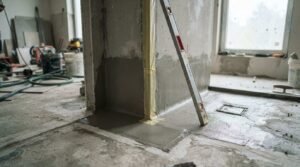
Turn-up heights are equally specific. At floor-to-wall junctions within a shower recess, the membrane must turn up the wall to a minimum of 150mm above the finished floor level. At the shower threshold, the membrane must extend a minimum of 50mm beyond the shower screen or door frame onto the bathroom floor.
These dimensions exist because water under pressure, from a showerhead or from pooling, will find any gap at a junction. The turn-up creates a continuous barrier that prevents water from tracking behind the wall lining.
Substrate Preparation and Curing Requirements
A membrane applied to a poorly prepared substrate will fail, regardless of product quality or application technique. AS 3740-2010 requires that substrates be clean, dry, structurally sound, and free from contamination before membrane application begins.
Priming is required for most liquid-applied systems. The primer improves adhesion and seals the substrate surface. Curing time between coats, and before tiling, must follow the manufacturer’s specification. Tiling over an uncured membrane is one of the most common causes of waterproofing failure in residential renovations.
Who Can Legally Apply Waterproofing in NSW?
In NSW, bathroom waterproofing is classified as specialist work under the Home Building Act 1989. Only a licensed contractor can legally carry out this work, and the licence class is specific.
Licensed Waterproofer Requirements in NSW
NSW Fair Trading requires waterproofers to hold a contractor licence with a waterproofing endorsement (CW licence class) to carry out wet area waterproofing work. This applies to any work valued above $5,000 in total contract value, which includes labour and materials.
The licence requirement exists to protect homeowners. A licensed waterproofer carries the qualifications, insurance, and accountability that unlicensed operators do not. Checking a contractor’s licence before work begins takes less than two minutes on the NSW Fair Trading licence check tool.
What Happens If Waterproofing Is Done Without a Licence?
Unlicensed waterproofing work in NSW creates serious downstream problems. The work is not covered by home building compensation insurance, which means the homeowner bears the full cost of any defect rectification. Building certifiers will not issue a compliance certificate for work carried out by an unlicensed contractor.
Beyond the financial exposure, unlicensed work can void a property’s building insurance policy. Insurers routinely investigate the compliance history of a property when a water damage claim is lodged, and non-compliant waterproofing is grounds for claim denial.
Inspections, Certificates, and Compliance in NSW
Waterproofing is a hold-point inspection item in NSW. Work cannot proceed past this stage until the inspection is completed and the waterproofing is confirmed as compliant.
When a Waterproofing Certificate Is Required
A waterproofing compliance certificate is required for any bathroom renovation that involves a development application (DA) or a complying development certificate (CDC) in NSW. The certificate is issued by the waterproofer or a licensed certifier after the membrane has been applied and inspected, before tiling begins.
For smaller renovations that fall below the DA threshold, a certificate may not be legally required. We always recommend obtaining one regardless. It documents that the work was done to standard, protects the homeowner in any future sale or insurance claim, and provides a clear record for any subsequent renovation work.
What Inspectors Check During a Bathroom Renovation
A principal certifying authority (PCA) or private certifier inspects waterproofing at the hold-point stage. They check membrane coverage against the mandatory zones defined in AS 3740-2010, verify turn-up heights at junctions, confirm that the membrane has cured before tiling, and review the waterproofer’s licence and product certification documentation.
The inspection happens before tiles go down, because once the membrane is covered, there is no way to verify compliance without destructive investigation. Skipping the inspection or tiling over an uninspected membrane is a compliance failure that can require full tile removal to rectify.
Common Waterproofing Failures and How Standards Prevent Them
Most waterproofing failures in Australian bathrooms trace back to the same small set of causes, and AS 3740-2010 addresses every one of them directly.
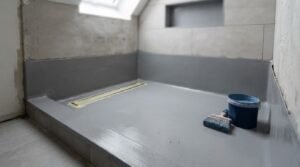
Insufficient turn-up height is the most common failure point. Water tracks behind wall linings at floor-to-wall junctions when the membrane does not extend high enough. The 150mm minimum turn-up requirement exists specifically to prevent this.
Inadequate membrane thickness allows water to penetrate the membrane under sustained pressure. The minimum dry film thickness requirement ensures the membrane has enough body to resist that pressure over time.
Poor substrate preparation causes delamination, the membrane separates from the substrate and loses its waterproofing function. The substrate preparation requirements in AS 3740-2010 prevent this by ensuring the membrane bonds properly from the start.
Tiling over uncured membrane is a renovation-site pressure problem. Schedules push waterproofers and tilers to move faster than the product allows. The curing requirements in the standard exist to prevent this, and a hold-point inspection enforces them.
Unlicensed installation removes the accountability layer entirely. A licensed waterproofer understands the standard, carries the right products, and knows what a compliant installation looks like. The licensing requirement is the standard’s enforcement mechanism at the human level.
Frequently Asked Questions
Does AS 3740 apply to all bathroom renovations in NSW?
AS 3740-2010 applies to all wet area waterproofing in domestic construction and renovation in NSW. Any work involving a shower recess, bath surround, or floor waste must comply with the standard, regardless of the renovation’s size or scope.
Can I waterproof my own bathroom in NSW?
Owner-builders can carry out their own waterproofing work under an owner-builder permit in NSW, subject to Fair Trading requirements. For any contracted renovation, the waterproofing must be carried out by a licensed contractor holding the appropriate CW licence class.
How long does waterproofing last under Australian Standards?
AS 3740-2010 does not specify a service life for waterproofing membranes. Most compliant liquid-applied membranes are designed to last 10 to 15 years under normal conditions. Longevity depends on product quality, installation standard, and the level of ongoing maintenance.
What is the minimum turn-up height for waterproofing in a shower?
The minimum turn-up height at floor-to-wall junctions within a shower recess is 150mm above the finished floor level under AS 3740-2010. At the shower threshold, the membrane must extend a minimum of 50mm beyond the screen or door frame onto the bathroom floor.
What happens if my bathroom waterproofing fails inspection?
A failed waterproofing inspection requires the defective work to be rectified before tiling can proceed. The waterproofer must address the non-compliant areas, allow the membrane to cure, and arrange a re-inspection. Tiling over a failed inspection is not permitted.
Is a waterproofing certificate required for a bathroom renovation?
A waterproofing certificate is required for any renovation proceeding under a DA or CDC in NSW. For smaller renovations below the approval threshold, it is not legally mandated, but we recommend obtaining one regardless as a record of compliant installation.
How do I know if my waterproofing meets AS 3740?
A compliant installation uses a CodeMark or WaterMark certified membrane product, applied by a licensed waterproofer to the minimum thickness and turn-up heights specified in AS 3740-2010. A waterproofing compliance certificate issued after a hold-point inspection is the clearest confirmation of compliance.
Bathroom waterproofing standards in Australia exist for a straightforward reason, water damage is expensive, disruptive, and largely preventable when the work is done correctly from the start. AS 3740-2010 gives every renovation a clear, enforceable baseline.
Getting the waterproofing right protects the structure, the finishes, and the long-term value of the property. It also protects the homeowner from the legal and financial exposure that comes with non-compliant work.
At Sydney Home Renovation, we carry out all waterproofing to AS 3740-2010 with licensed applicators, certified products, and full compliance documentation. Contact us to discuss your bathroom renovation and get it done to standard from day one.


