
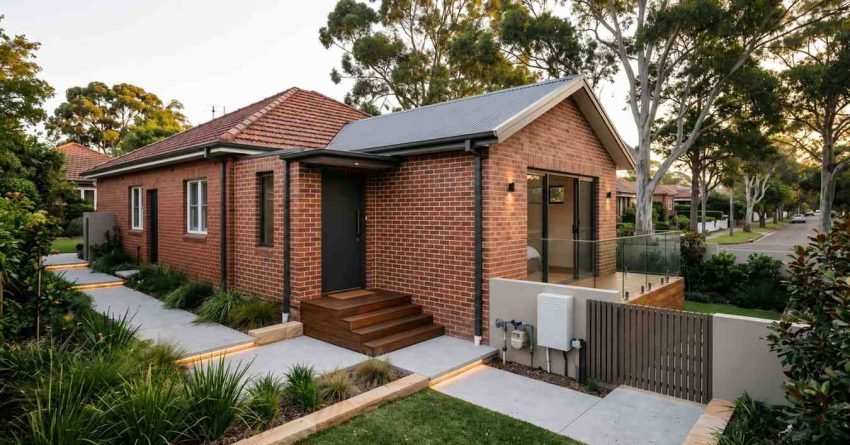
An attached granny flat in Sydney typically costs between $120,000 and $250,000 to build, depending on size, site conditions, finishes, and council requirements. That range covers a straightforward studio addition right through to a fully self-contained two-bedroom dwelling with a separate entrance, kitchen, and bathroom.
The Sydney housing market makes this one of the smartest property moves available to homeowners and investors right now. Rental demand is high, land is expensive, and a granny flat delivers income without buying a second property.
In this guide, I cover the full cost breakdown, the variables that shift your budget up or down, the financial and lifestyle benefits, and the hidden expenses most people miss before they start.
What Does an Attached Granny Flat Cost in Sydney?
The total cost of an attached granny flat in Sydney sits between $120,000 and $250,000 for most residential builds. Smaller studio configurations come in at the lower end, while larger two-bedroom layouts with premium finishes push toward the upper range and beyond.
That figure covers construction only. Approval, compliance, and connection costs sit on top of it, and I break those out separately below.
Construction Cost Breakdown
Labour is the largest single line item in any granny flat build. In Sydney, builder and trade rates are among the highest in the country, and an attached granny flat involves more coordination than a standalone structure because it ties directly into your existing home.
Expect to pay $1,800 to $3,500 per square metre for construction, depending on the complexity of the build and the specification level you choose. A 60sqm studio runs roughly $108,000 to $210,000 in construction costs alone before any site-specific work is factored in.
The structural tie-in to the existing dwelling adds cost that a detached granny flat avoids entirely. Shared walls, roof connections, and matching existing materials all require careful detailing and skilled trades.
Council Approval and Compliance Costs
In NSW, an attached granny flat can be approved either through a complying development certificate (CDC) or a development application (DA), depending on your site and local council requirements.
A CDC is faster and cheaper. CDC fees typically run $3,000 to $6,000 when you include the certifier’s fee, engineering reports, and any required surveys. A DA through your local Sydney council costs more and takes longer; budget $8,000 to $15,000 for the full approval process including application fees, architectural drawings, and specialist reports.
According to the NSW Department of Planning, complying development is available for granny flats on lots of 450sqm or more in most residential zones, which covers the majority of Sydney suburban properties. Always confirm your site’s eligibility before assuming CDC is an option.
Key Factors That Affect the Total Cost
No two granny flat builds cost the same. The variables below are the ones that move the budget most significantly, and understanding them upfront is how you avoid surprises mid-build.
Size and Layout Complexity
A studio layout one open-plan living and sleeping space with a bathroom and kitchenette is the most cost-efficient configuration. Every additional room adds structural cost, trade time, and materials.
A one-bedroom granny flat with a separate living area and full kitchen runs roughly 15 to 25 percent more than a comparable studio. A two-bedroom layout adds another 10 to 20 percent on top of that, depending on how the floor plan is arranged and how much structural work the tie-in requires.
Open-plan designs are generally cheaper to build than compartmentalised layouts because they require fewer internal walls, less plumbing routing, and simpler framing.
Site Conditions and Access
Site conditions are the biggest wildcard in any granny flat budget. A flat, accessible block with good soil is straightforward. A sloped block, reactive clay soil, or a site with drainage issues adds real cost before a single wall goes up.
Retaining walls, cut-and-fill earthworks, and engineered footings can add $10,000 to $40,000 to a build depending on severity. Tight access, a narrow side passage, overhead power lines, or a shared driveway limit machinery options and increase labour time.
I always recommend a site assessment before locking in a budget. What looks like a simple job from the street can carry significant hidden site costs.
Finishes, Fixtures, and Fittings
Specification level is where homeowners have the most direct control over their final cost. Entry-level finishes laminate benchtops, standard tiles, builder-grade fixtures keep costs down without compromising liveability.
Mid-range finishes add $15,000 to $30,000 over entry-level across a full granny flat. Premium finishes stone benchtops, large-format tiles, quality tapware, and custom joinery can add $40,000 to $60,000 or more to the total.
For a rental property, mid-range is usually the sweet spot. It attracts quality tenants, holds up to wear, and doesn’t overcapitalise the build relative to the rental return.
Financial Benefits of an Attached Granny Flat
The financial case for an attached granny flat in Sydney is strong. The combination of rental income, property value uplift, and relatively low ongoing costs makes it one of the better-returning residential investments available to existing homeowners.
Rental Income Potential in Sydney
Sydney granny flats command strong weekly rents. A well-presented studio in a middle-ring suburb typically rents for $400 to $550 per week. A one-bedroom granny flat in the same area achieves $500 to $700 per week, and two-bedroom configurations in high-demand areas push beyond that.
Domain’s rental data for Sydney consistently shows vacancy rates in the inner and middle rings below two percent, which means a well-located granny flat rarely sits empty for long. At $500 per week, a granny flat generating $26,000 per year in gross rental income pays back a $180,000 build cost in under seven years before accounting for any property value gain.
That payback period shortens further when you factor in the tax deductions available to investors on depreciation, interest, and maintenance costs.
Property Value Uplift
An attached granny flat adds measurable value to a Sydney property. The uplift varies by location and configuration, but a well-built granny flat typically adds $80,000 to $150,000 to a property’s market value in Sydney’s current conditions.
The value addition is strongest in suburbs with high rental demand and limited housing supply, where buyers actively seek dual-income properties. For investors, the combination of rental yield and capital growth makes the granny flat one of the most efficient uses of renovation capital available.
Owner-occupiers benefit too. The granny flat adds a saleable feature that broadens the buyer pool when the time comes to sell.
Lifestyle and Practical Benefits
The financial return is compelling, but it’s not the only reason Sydney homeowners build attached granny flats. The lifestyle benefits are just as real for many families.
Multi-generational living is one of the most common drivers. An attached granny flat gives ageing parents or adult children their own self-contained space while keeping the family close. It’s a practical solution to a problem that’s becoming more common as housing costs make independent living harder for younger generations.
For families with ageing parents, an attached granny flat is a genuine alternative to aged care, one that keeps family together while preserving everyone’s independence and privacy. The proximity of an attached design, sharing a wall with the main home, makes it particularly well-suited to this use case.
When family circumstances change, the space adapts. A home office, an art studio, a space for a live-in carer the flexibility of a self-contained dwelling means it earns its keep across different life stages.
Hidden Costs to Budget For
The construction quote is not the full cost of a granny flat. These are the line items that catch people off guard, and they add up faster than most people expect.
Utility connections are a significant one. Connecting a granny flat to water, sewer, and electricity as a separate dwelling, which is required for legal rental, costs $8,000 to $20,000 depending on the distance from existing and the complexity of the connection.
Landscaping and driveway modifications are often necessary to create a separate entrance and outdoor area for the granny flat. Budget $5,000 to $15,000 for basic landscaping, path work, and any fencing required to create privacy between the two dwellings.
Insurance needs to be reviewed and updated once a granny flat is added to the property. Your existing home and contents policy may not cover a separate dwelling, and landlord insurance is essential if you’re renting it out.
Ongoing maintenance is a cost that investors sometimes underestimate. Budget a maintenance allowance of one to two percent of the build cost per year to cover repairs, appliance replacement, and general upkeep over time.
Is an Attached Granny Flat Worth the Investment?
For most Sydney homeowners and investors, yes, an attached granny flat is worth the investment. The combination of rental income, property value uplift, and lifestyle flexibility delivers a return that few other renovation projects can match at a comparable cost.
The strongest case exists for owner-occupiers with a suitable block who want rental income without buying a second property, and for investors looking to maximise yield on an existing site. The numbers work in both scenarios when the build is planned carefully, and the specification is matched to the intended use.
The weakest case is a poorly planned build on a difficult site with premium finishes that overcapitalise relative to the local rental market. That’s where budget blowouts happen, and returns disappoint.
We help Sydney homeowners plan attached granny flat builds that stay on budget, meet compliance requirements, and deliver the return they’re expecting. If you’re ready to explore what’s possible on your property, get in touch with Sydney Home Renovation for a straightforward conversation about costs, feasibility, and next steps.
Conclusion
An attached granny flat in Sydney is a well-proven investment that combines real rental income, measurable property value growth, and genuine lifestyle flexibility in a single build. The costs are high, but the returns are clear.
The key is going in with accurate numbers, a realistic budget for the hidden costs, and a builder who understands both the construction and the compliance side of the project.
We’re here to make that process straightforward. Contact Sydney Home Renovation today and let’s talk through what an attached granny flat could deliver for your property.
Frequently Asked Questions
How much does an attached granny flat cost in Sydney?
An attached granny flat in Sydney costs between $120,000 and $250,000 for most builds. Studio configurations sit at the lower end, while two-bedroom layouts with mid-range to premium finishes push toward the upper range and beyond.
Do I need council approval for an attached granny flat in NSW?
Yes. Every attached granny flat in NSW requires either a complying development certificate (CDC) or a development application (DA). Most Sydney properties on lots of 450sqm or more qualify for the faster CDC pathway.
How much rent can I charge for a granny flat in Sydney?
A studio granny flat in Sydney typically rents for $400 to $550 per week. A one-bedroom configuration achieves $500 to $700 per week in most middle-ring suburbs, depending on location, presentation, and inclusions.
Does a granny flat add value to my property?
Yes. A well-built attached granny flat typically adds $80,000 to $150,000 to a Sydney property’s market value. The uplift is strongest in high-demand suburbs with limited housing supply and active investor buyer pools.
What is the difference between an attached and detached granny flat?
An attached granny flat shares at least one wall with the main dwelling. A detached granny flat is a fully separate structure on the same lot. Attached designs cost less to build because they share structural elements but require more careful integration with the existing home.
What are the hidden costs of building a granny flat?
The main hidden costs are utility connections ($8,000 to $20,000), landscaping and access works ($5,000 to $15,000), updated insurance, and an ongoing maintenance allowance of one to two percent of the build cost per year.
How long does it take to build an attached granny flat in Sydney?
Construction of an attached granny flat typically takes 12 to 20 weeks once approvals are in place. The approval process itself, CDC or DA, adds four to sixteen weeks depending on the pathway and council workload.


