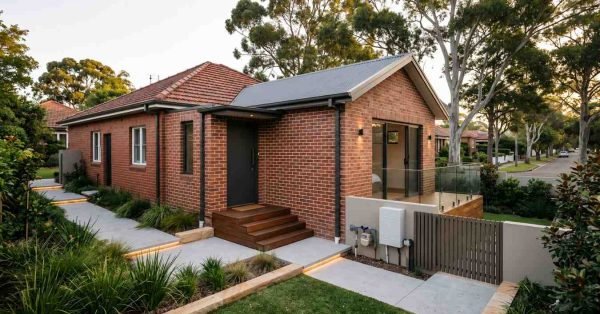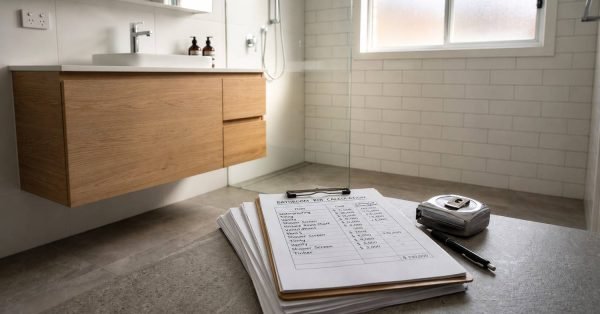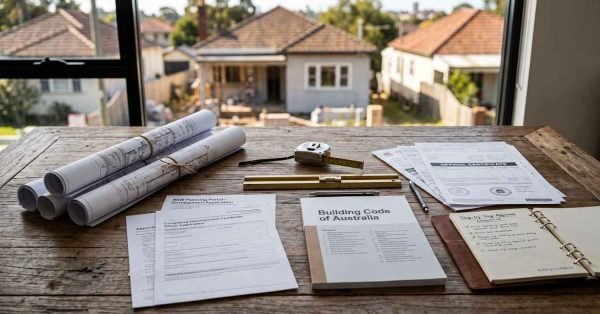
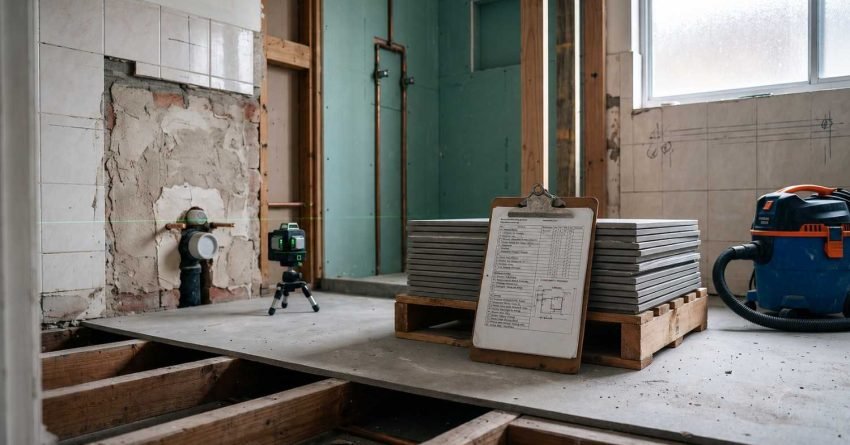
Bathroom renovation in Sydney is one of the most complex and cost-sensitive home improvement projects a homeowner can undertake. Without clear guidance on trades, budgets, and project management, costs spiral fast, and timelines collapse.
The same problems come up on almost every project we see: unclear pricing, wrong trade sequencing, and no contingency plan. A poorly managed bathroom renovation in Sydney runs 20–40% over budget before the tiles are even laid.
This guide covers renovation project management fundamentals, key trades and their sequencing, realistic 2026 cost breakdowns, hidden expenses, budgeting strategy, contractor selection, timelines, value-adding upgrades, and how to stay in control from start to finish.
What Is Renovation Project Management and Why Does It Matter?
Renovation project management is the process of planning, coordinating, and overseeing every trade, material, timeline, and budget decision involved in a renovation from first brief to final inspection. For a bathroom renovation in Sydney, that means managing licensed tradespeople, material procurement, council compliance, and client communication simultaneously.
We see it constantly: homeowners who treat project management as optional end up with trades arriving out of sequence, materials sitting on-site for weeks, and invoices that bear no resemblance to the original quote. The cost of poor project management is not abstract. It is real delays, real rework, and real money.
Good project management is what separates a renovation that finishes on time and on budget from one that becomes a months-long dispute.
The Role of a Renovation Project Manager
A renovation project manager is responsible for the full delivery of a project, not just the physical work. That includes scoping the job accurately, scheduling trades in the correct order, procuring materials ahead of need, managing variations, and keeping the client informed at every stage.
On a bathroom renovation, the project manager is the single point of accountability. They absorb the complexity so the homeowner does not have to.
For owner-occupiers and investors who cannot be on-site daily, this role is not a luxury. It is the mechanism that keeps the project moving.
How Project Management Differs From Trade Coordination
Trade coordination is a subset of project management: the scheduling and sequencing of individual tradespeople. Project management is broader. It encompasses budget control, contract administration, risk management, compliance oversight, and client communication.
A plumber who also “manages” a renovation is doing trade coordination at best. A licensed builder acting as project manager is doing the full job.
Understanding this distinction matters when you are comparing quotes. You need to know exactly what level of oversight you are paying for.
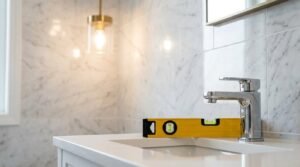
The Key Renovation Trade: Who Does What on a Bathroom Project
A full bathroom renovation in Sydney involves multiple licensed trades working in a defined sequence. Each trade has a specific scope, and each depends on the one before it being completed correctly. Getting the trade mix right, and in the right order, is one of the most important decisions in the entire project.
We manage trade coordination on every project we run, and the sequencing logic is non-negotiable. Rushing a trade or overlapping scopes creates defects that cost more to fix than they would have cost to prevent.
Licensed Trades Required for Bathroom Renovations
A standard full bathroom renovation in Sydney requires the following licensed trades:
- Licensed plumber rough-in, fixture installation, hot water connections
- Licensed electrician lighting, exhaust fans, heated towel rails, safety switches
- Waterproofer membrane application to wet areas, mandatory under AS 3740 waterproofing compliance requirements
- Tiler floor and wall tiling, including substrate preparation
- Plasterer or renderer wall preparation and finishing
- Cabinetmaker or joiner vanity installation, storage, custom joinery
- Builder or renovation contractor structural work, demolition, project oversight
Each of these trades must hold a current licence issued by NSW Fair Trading. Verifying licences before work begins is not optional. It is a legal and insurance requirement.
How Trades Are Sequenced on a Renovation Site
The correct trade sequence for a bathroom renovation follows a strict logic: structural work first, linings third, finishes last.
In practice, demolition and any structural changes happen before the plumber and electrician do their rough-in work. Waterproofing follows after the substrate is prepared, and tiling comes after waterproofing has cured. Fixtures and fittings are installed last, once all wet and structural work is complete and inspected.
Deviating from this sequence, even by a single day, creates compounding problems. A tiler who starts before waterproofing is signed off creates a defect that may not surface for months.
What Happens When Trade Sequencing Goes Wrong
When trades arrive out of sequence, the consequences are immediate and expensive. A plumber who cannot complete rough-in because demolition is unfinished holds up every trade behind them. An electrician who installs fittings before plastering is complete will need to return at additional cost.
We have seen projects where poor sequencing added three to four weeks to a timeline and tens of thousands of dollars in variation costs. The fix is always the same: a detailed programme locked in before work starts, with every trade briefed on their dependencies.
What Can You DIY and What Requires a Licensed Trade in NSW?
This is one of the most common questions we get from homeowners trying to reduce costs, and the answer is more restrictive than most people expect. In NSW, the scope of work a homeowner can legally perform without a licence is narrow.
Homeowners can legally do their own painting, tiling, and basic demolition on their own property without a contractor licence, provided the work does not involve structural elements. Everything else on a bathroom renovation requires a licensed tradesperson.
What NSW Law Requires a Licence For
The following work on a bathroom renovation requires a licensed contractor in NSW, regardless of who owns the property:
- All plumbing and drainage work, including tap installation and toilet connections
- All electrical work, including light fittings, exhaust fans, and safety switches
- Waterproofing to wet areas
- Any structural work, including wall removal or floor joist repair
- Gas fitting
Performing unlicensed work on these items is a breach of the Home Building Act 1989 and voids home insurance on the affected work. It also creates a defect liability that sits entirely with the homeowner, with no recourse against a contractor.
The Real Cost of Unlicensed Work
We see the aftermath of unlicensed work regularly, and it is always more expensive to fix than the original saving. Defective waterproofing installed without a licence is not covered by statutory warranty. Unlicensed electrical work fails safety inspections and requires full replacement.
The short-term saving on labour is real. The long-term exposure is larger.

Bathroom Renovation Costs in Sydney: What to Budget in 2026
Bathroom renovation costs in Sydney in 2026 vary significantly based on project scope, material selections, existing conditions, and the level of trade coordination required. Understanding the cost tiers and what drives movement between them is the foundation of any realistic budget.
We price bathroom renovations across all three tiers regularly. The single biggest mistake we see is homeowners budgeting at entry-level prices for mid-range or premium outcomes. The gap between expectation and reality is where budget blowouts begin.
Entry-Level, Mid-Range, and Premium Budget Tiers
Entry-level bathroom renovation (cosmetic refresh): $12,000–$20,000
This tier covers like-for-like fixture replacement, basic tiling, and cosmetic updates without moving plumbing or electrical. It suits investment properties where durability and function matter more than aesthetics.
Mid-range bathroom renovation (full remodel): $20,000–$40,000
This is the most common scope for Sydney owner-occupiers. It includes full demolition, new waterproofing, tiling, vanity, shower, bath if applicable, toilet, lighting, and exhaust. Plumbing and electrical are partially relocated in many cases.
Premium bathroom renovation (custom fit-out): $40,000–$80,000+
Premium projects involve custom joinery, imported or large-format tiles, heated floors, freestanding baths, frameless glass, and high-specification fittings. Full trade coordination and project management are standard at this tier.
According to the Houzz 2024 Australia Renovation Trends Study, the median spend on a master bathroom renovation in Australia was $19,000, with Sydney projects consistently tracking 15–25% above the national median due to higher labour rates and material costs.
Bathroom Renovation Cost Per Square Metre in Sydney
Cost per square metre is a useful cross-check against a total project quote, particularly when comparing contractors who have priced different scopes.
- Entry-level: $1,200–$2,000/m² for a standard 4–6m² bathroom
- Mid-range: $2,000–$4,000/m² for a full remodel with partial service relocation
- Premium: $4,000–$8,000+/m² for custom fit-outs with imported materials
These figures include labour and materials but exclude structural remediation, asbestos removal, and compliance costs. A quote that sits significantly below these benchmarks warrants close scrutiny of what has been excluded.
Labour Cost Breakdown by Trade
Labour is typically the largest single cost component in a Sydney bathroom renovation, accounting for 50–65% of total project cost at mid-range scope. The following are indicative 2026 rates for Sydney:
| Trade | Indicative Rate (Sydney, 2026) |
| Licensed plumber | $120–$180/hr |
| Licensed electrician | $110–$160/hr |
| Waterproofer | $800–$1,500 per bathroom |
| Tiler | $60–$120/m² (supply and lay) |
| Plasterer | $400–$800 per day |
| Builder/project manager | $800–$1,400 per day |
These rates reflect licensed, insured tradespeople operating under current NSW Fair Trading requirements. Unlicensed labour is cheaper upfront and catastrophically expensive when defects emerge.
Material and Fittings Allowances
Material and fittings costs depend almost entirely on specification level. A mid-range bathroom renovation in Sydney typically allocates:
- Tiles: $50–$150/m² (supply only; installation separate)
- Vanity and basin: $800–$3,500
- Shower screen (frameless): $1,200–$3,000
- Toilet suite: $400–$1,500
- Tapware and accessories: $600–$2,500
- Bath (if applicable): $800–$5,000+
We always recommend clients lock in material selections before work begins. Late changes to tile or fitting specifications are one of the most common causes of cost variations on renovation projects.
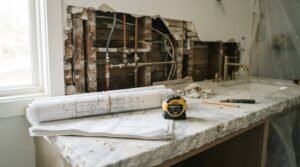
Hidden Costs and Budget Blowouts: What Most Homeowners Miss
The costs that appear in a renovation quote are rarely the costs that determine the final invoice. Hidden costs- the expenses that emerge once walls are opened and floors are lifted- are the primary driver of budget blowouts on Sydney bathroom renovations.
We build contingency into every project budget we prepare, and we brief every client on the categories below before work starts. Surprises are less surprising when you have planned for them.
Structural and Waterproofing Surprises
Older Sydney homes, particularly those built before 1990, frequently reveal structural and waterproofing defects once demolition begins. Rotted floor joists, failed waterproofing membranes, asbestos-containing materials, and substandard previous work are common findings.
Rectifying rotted floor framing in a Sydney bathroom typically adds $1,500–$5,000 to a project cost, depending on extent. These costs cannot be accurately quoted before demolition, which is precisely why contingency budgets exist.
Asbestos in Pre-1990 Sydney Homes
Asbestos-containing materials were used extensively in Sydney homes built before 1990, including in bathroom wall sheeting, floor backing, and ceiling materials. Before demolition begins on any pre-1990 property, an asbestos inspection by a licensed assessor is strongly recommended.
If asbestos is identified, removal must be carried out by a licensed asbestos removalist. Class A licence holders are required for friable asbestos; Class B covers non-friable materials such as fibro sheeting. An air clearance certificate from an independent hygienist is required before the site is cleared for other trades to re-enter.
Asbestos removal adds $1,000–$3,000 for a standard bathroom, depending on the extent and type of material. This cost is non-negotiable and non-avoidable on affected properties.
Compliance, Permits, and Inspection Fees
Bathroom renovations in Sydney that involve moving or adding plumbing or electrical require complying development certificates or development applications under the NSW planning framework. Plumbing work requires a plumbing and drainage approval and a final inspection by a licensed certifier.
Compliance costs are not optional and are not always included in trade quotes. Budget $500–$2,000 for permits, certificates, and inspections on a standard full bathroom renovation in Sydney.
Scope Creep and Change Order Costs
Scope creep, the gradual expansion of a project beyond its original brief, is the most controllable hidden cost and the one most homeowners underestimate. Changing tile selections mid-project, adding a heated floor after tiling has started, or deciding to relocate the vanity after plumbing rough-in is complete all generate variation costs.
Each variation requires a written change order with a revised price. We enforce this on every project we manage. Without a formal variation process, costs accumulate invisibly until the final invoice arrives.
How to Plan a Bathroom Renovation Budget That Actually Works
A bathroom renovation budget that works is not a single number. It is a structured financial plan that accounts for base costs, contingency, variations, and the real cost of decision-making delays. We help clients build this plan before a single trade is engaged.
The homeowners and investors who stay on budget are not the ones who spend the least. They are the ones who plan the most thoroughly before work begins.
Setting a Realistic Budget Before You Start
A realistic budget starts with an accurate scope of works, a written description of every element to be demolished, replaced, or installed. Without a defined scope, any quote is a guess, and any budget is fiction.
A complete scope of works document for a bathroom renovation must include: the full demolition scope, all plumbing and electrical work to be performed, waterproofing specification and standard, tiling areas and tile specification, all fixtures and fittings with model numbers or allowances, joinery and storage scope, and the project timeline with hold points. This level of detail is what makes quotes genuinely comparable and protects both parties when variations arise.
We recommend getting a minimum of two detailed, itemised quotes from licensed renovation contractors before setting a final budget. The budget should be set at the higher of the two quotes, not the lower. Optimistic budgeting is the single most common cause of financial stress on renovation projects.
Contingency Allowances: How Much to Hold Back
Industry standard for bathroom renovation contingency in Sydney is 10–15% of the total project budget for a straightforward cosmetic renovation, and 15–20% for a full structural remodel or a property built before 1990.
Contingency is not a slush fund for upgrades. It is a financial buffer for the unexpected: the rotted joist, the failed waterproofing, the asbestos find. Clients who spend their contingency on fitting upgrades and then hit a structural issue are the ones who end up in financial difficulty.
We hold contingency separately from the project budget and release it only against documented variations.
Prioritising Spend for Maximum Return
Not all renovation spend delivers equal return. In a bathroom renovation, the highest-return investments are waterproofing quality, tile substrate preparation, and fixture durability: the elements that determine how long the renovation lasts and how much maintenance it requires.
The lowest-return spend is typically on decorative accessories and trend-driven fittings that date quickly. We guide clients toward durable, timeless specifications at the mid-range price point, the combination that delivers the best long-term value for both owner-occupiers and investors.
How Sydney Homeowners Finance Bathroom Renovations
Most Sydney homeowners fund bathroom renovations through one of three mechanisms: redraw from an existing mortgage offset account, a home equity loan or line of credit, or a personal renovation loan. Each carries different interest rate and approval implications.
Redraw and equity access are typically the lowest-cost options for homeowners with sufficient equity. Personal renovation loans carry higher rates but faster approval timelines. Whichever route you take, the total finance cost should be factored into the project budget before work begins, not after.

Choosing the Right Renovation Contractor in Sydney
The contractor you choose determines the outcome of your renovation more than any other single decision. In Sydney’s competitive renovation market, the difference between a licensed, experienced renovation contractor and an unlicensed operator is not always visible in a quote. It becomes very visible once work begins.
We have seen the aftermath of poorly chosen contractors on dozens of projects. The pattern is consistent: low initial quote, escalating variations, defective work, and a dispute that costs more to resolve than the original saving.
What to Look for in a Licensed Bathroom Renovator
A licensed bathroom renovation contractor in Sydney must hold a current contractor licence issued by NSW Fair Trading. For projects over $20,000, they must also hold home building compensation (HBC) cover, formerly known as home warranty insurance.
Beyond licensing, look for:
- A portfolio of completed bathroom renovations with verifiable references
- A clear, itemised written quote, not a ballpark figure
- A formal contract that specifies scope, timeline, payment schedule, and variation process
- Evidence of public liability insurance and workers’ compensation cover
How to Verify a Contractor Licence Before You Sign
Verifying a contractor licence takes less than two minutes and is one of the most important steps in the contractor selection process. The NSW Fair Trading licence check is available at licence.fairtrading.nsw.gov.au.
Enter the contractor’s licence number or business name. The result shows the licence type, current status, expiry date, and any conditions or suspensions. A valid contractor licence for bathroom renovation work in NSW is a contractor licence (building) or a contractor licence (swimming pool building) for the relevant scope.
Confirm the licence is current, not expired or suspended, before signing any contract. Also confirm the licence holder’s name matches the entity named in the contract. A licence held by an individual does not automatically cover a company trading under a different name.
Statutory Warranties and Defect Liability in NSW
Under the Home Building Act 1989, all residential building work in NSW carries statutory warranties that cannot be contracted out of. These apply automatically to every licensed renovation contract.
The key warranties are:
- 6 years for major defects, including structural defects and waterproofing failures
- 2 years for all other defects, including workmanship and materials
- Work must be done with due care and skill, using materials fit for purpose
These warranties run from the date of practical completion. They apply regardless of what the contract says, and they are enforceable through NSW Fair Trading or the NSW Civil and Administrative Tribunal. Understanding this protection is part of knowing what you are buying when you engage a licensed contractor.
Getting and Comparing Renovation Quotes
Getting three quotes is the standard advice, and it is correct, but only if the quotes are genuinely comparable. Quotes based on different scopes, different material allowances, or different assumptions about existing conditions cannot be meaningfully compared.
We recommend providing every contractor with the same written scope of works and the same material specifications before requesting quotes. This creates a level comparison and reveals which contractors have priced the job accurately versus which have priced it to win.
The cheapest quote is almost never the best value. The most detailed quote, the one that has clearly accounted for every element of the scope, is the one most likely to reflect the actual cost of the project.
Red Flags to Watch for Before Signing a Contract
Several warning signs consistently precede problem renovations in Sydney:
- A quote provided verbally or without itemisation
- Pressure to sign quickly or pay a large deposit upfront
- No written contract or a contract that does not specify a completion date
- A contractor who cannot provide a current licence number or insurance certificate
- Significantly lower pricing than all other quotes without a clear explanation
Any one of these signals warrants caution. Two or more signals warrant walking away.
Renovation Timelines: How Long Does a Bathroom Renovation Take?
Renovation timelines in Sydney depend on project scope, trade availability, material lead times, and the efficiency of project management. A realistic timeline is not just a number of weeks. It is a programme that accounts for every dependency in the project.
We build detailed programmes for every project we manage, and we share them with clients before work starts. A client who understands the timeline and its dependencies is a client who makes better decisions during the project.
Typical Timeline by Project Scope
| Project Scope | Typical Duration (On-Site) |
| Cosmetic refresh (no structural work) | 1–2 weeks |
| Full bathroom remodel (mid-range) | 3–5 weeks |
| Premium custom fit-out | 5–8 weeks |
| Complex structural or heritage project | 8–14 weeks |
These durations reflect on-site construction time only. Add 2–6 weeks for design, quoting, material procurement, and trade scheduling before work begins.
What Causes Delays and How to Avoid Them
The most common causes of timeline delays on Sydney bathroom renovations are:
- Material lead times: Imported tiles, custom vanities, and specialty fittings carry 4–12 week lead times. Ordering materials before work starts eliminates this delay entirely.
- Trade availability: Licensed trades in Sydney are in high demand. Scheduling trades 4–6 weeks in advance is standard practice on well-managed projects.
- Variation decisions: Every client-initiated change to scope or specification during construction adds time. Decisions made before work starts cost nothing. Decisions made during construction cost time and money.
- Inspection hold points: Plumbing and waterproofing inspections are mandatory hold points. Work cannot proceed past these points until inspections are passed and documented.

Value-Adding Upgrades: Where to Spend and Where to Save
Not every dollar spent on a bathroom renovation returns equal value, and the upgrades that add the most value differ between owner-occupiers renovating for lifestyle and investors renovating for yield or resale. Understanding where to concentrate spend is one of the most practical decisions in the entire budgeting process.
We advise clients on specification strategy on every project, and the guidance is consistent: invest in durability and function first, aesthetics second.
High-ROI Bathroom Upgrades for Owner-Occupiers
For owner-occupiers in Sydney, the upgrades that consistently deliver the highest return in both lifestyle value and resale appeal are:
- Frameless shower screens: perceived quality uplift is disproportionate to cost
- Freestanding bath: high visual impact in master bathrooms; strong buyer appeal
- Heated floor: low installation cost relative to daily comfort value
- Large-format tiles: reduces grout lines, easier to clean, premium appearance
- Integrated storage and custom vanity: maximises space in Sydney’s typically compact bathrooms
According to the CoreLogic 2024 Renovation Value Report, bathroom renovations in Sydney deliver an average return of $1.71 for every $1.00 spent when completed to mid-range or above specification, the highest return of any single room renovation.
Investment Property Renovations: What Tenants and Buyers Want
For investment properties, the calculus is different. Tenants and buyers in Sydney’s rental and entry-level purchase market prioritise durability, cleanliness, and function over premium aesthetics.
The highest-return investment property upgrades are:
- Full retiling: eliminates the perception of age and poor maintenance
- New toilet suite and vanity: immediate freshness signal
- Exhaust fan upgrade: reduces mould risk and maintenance costs
- Neutral, durable tile selection: broad appeal, low maintenance, long lifespan
We consistently advise investors against premium fittings in standard investment properties. The rental premium does not justify the capital outlay, and the maintenance risk is higher with complex or imported fixtures.
Managing Your Renovation Communication, Contracts, and Control
The difference between a renovation that runs smoothly and one that becomes a dispute is almost always traceable to the quality of communication, the clarity of the contract, and the discipline of the variation process. These are not administrative details. They are the mechanisms that protect both the client and the contractor.
We operate with formal contracts, documented variations, and structured communication on every project we manage. It is not bureaucracy. It is how professional renovation projects are run.
What Your Contract Should Cover
A compliant renovation contract in NSW for projects over $20,000 must meet the requirements of the Home Building Act 1989. At minimum, it must include:
- A detailed description of the work to be performed
- The contract price and payment schedule
- A start date and a practical completion date
- A clear variation process with written approval requirements
- Dispute resolution procedures
- Contractor licence number and HBC insurance details
Any contract that omits these elements is non-compliant and exposes both parties to significant risk.
What Is Practical Completion and When Is Final Payment Due?
Practical completion is the point at which the work is complete in accordance with the contract, except for minor defects that do not prevent the homeowner from using the space. It is the formal trigger for final payment and the start date for the statutory warranty period.
At practical completion, the contractor issues a practical completion notice. The homeowner has the right to inspect the work and prepare a defects list before releasing the final payment. Minor defects identified at this stage are typically rectified within an agreed timeframe after final payment, not before.
Final payment should never be released before a practical completion inspection is completed and documented. Releasing final payment without inspection removes your primary leverage for defect rectification.
How to Communicate Effectively With Your Contractor
Effective communication on a renovation project is structured, documented, and consistent. We recommend weekly progress updates, either a brief site meeting or a written summary, covering work completed, work scheduled for the following week, and any decisions required from the client.
All decisions that affect scope, specification, or cost must be confirmed in writing before work proceeds. A verbal agreement on a variation is not an agreement. It is a future dispute.
Clients who are responsive, decisive, and available for timely decisions are the clients whose projects run on time. Delays in client decision-making are a more common cause of timeline overrun than trade availability.
Progress Payments and Financial Milestones
Progress payments on NSW renovation contracts must align with defined stages of work completion, not with calendar dates or contractor cash flow needs. Standard payment milestones for a bathroom renovation are:
- Deposit: Maximum 10% of contract price (required by law for contracts over $20,000)
- Demolition and rough-in complete: 20–25%
- Waterproofing and tiling complete: 25–30%
- Fixtures and fittings installed: 25–30%
- Practical completion: Remaining balance
Never pay ahead of completed work. Progress payments tied to verified milestones are the single most effective financial control available to a renovation client.
Conclusion
Bathroom renovation in Sydney involves licensed trades, structured sequencing, realistic budgeting, and disciplined project management, and every element connects. Understanding how trades, costs, timelines, and contracts interact is what separates a successful renovation from a costly one.
The legal protections available to Sydney homeowners, from statutory warranties to licence verification and compliant contracts, are as important as the physical work itself. Knowing your rights and your contractor’s obligations before work begins is what keeps a renovation on track when problems arise.
At Sydney Home Renovation, we deliver end-to-end bathroom renovations with transparent pricing, skilled trade coordination, and clear communication, so your project stays on budget, on schedule, and built to last.
Frequently Asked Questions
What is the average cost of a bathroom renovation in Sydney in 2026?
A mid-range full bathroom renovation in Sydney costs between $20,000 and $40,000 in 2026. Premium custom fit-outs range from $40,000 to $80,000 or more, depending on specification and structural complexity.
How long does a bathroom renovation take from start to finish?
A full mid-range bathroom remodel typically takes 3–5 weeks on-site. Add 2–6 weeks for design, quoting, and material procurement before construction begins.
Do I need council approval for a bathroom renovation in Sydney?
Most bathroom renovations in Sydney qualify as exempt or complying development and do not require a DA. Work involving moving or adding plumbing or electrical requires licensed trade approvals and inspections under NSW regulations.
What trades are needed for a full bathroom renovation?
A full bathroom renovation requires a licensed plumber, electrician, waterproofer, tiler, plasterer, and builder or renovation contractor. Each trade must hold a current NSW Fair Trading licence.
How do I avoid budget blowouts on a bathroom renovation?
Lock in a detailed scope of works before requesting quotes, hold a 15–20% contingency for structural projects, and require written change orders for every variation. Decisions made before work starts cost nothing. Decisions made during construction cost time and money.
What is a realistic contingency budget for a bathroom renovation?
Hold 10–15% contingency for cosmetic renovations and 15–20% for full structural remodels or pre-1990 properties. Contingency covers structural surprises, compliance costs, and unavoidable variations, not upgrades.
How do I choose a reliable bathroom renovation contractor in Sydney?
Verify their NSW Fair Trading contractor licence, confirm HBC insurance for projects over $20,000, request itemised written quotes, and check verifiable references from completed bathroom projects. Never sign a contract without a defined scope, timeline, and variation process.