Most bathroom renovations in NSW do not need council approval, but the ones that do can expose homeowners to serious legal and financial risk if the rules are ignored. Knowing which category your project falls into before a single tile is lifted is the most important step in the whole renovation process.
Getting this wrong costs real money. Unapproved structural work can void your insurance, delay a property sale, and trigger council enforcement action.
This guide covers what triggers approval, the difference between a CDC and a DA, how to apply, contractor licence rules, and the consequences of skipping the process entirely.
What Counts as a Bathroom Renovation Under NSW Planning Law
NSW planning law draws a clear line between cosmetic work and structural work, and that line determines whether your renovation needs any form of approval at all.
Cosmetic work covers things like retiling, replacing fixtures, updating tapware, repainting, and swapping out a vanity for a like-for-like replacement. None of that touches the structure of the building, and none of it triggers a planning requirement under the Environmental Planning and Assessment Act 1979.
Structural work is a different matter entirely. Moving walls, relocating plumbing beyond a minor adjustment, changing the room’s footprint, or altering load-bearing elements, these all fall under the planning framework and require some form of consent before work begins.
The distinction matters because many homeowners assume “it’s just a bathroom” means no rules apply. That assumption is where the problems start.
When You Do NOT Need Council Approval in NSW
The good news for most renovators is that a standard bathroom refresh sits comfortably within exempt development, meaning no council approval, no application, and no waiting period.
Exempt Development, What It Covers
Exempt development under the State Environmental Planning Policy (Exempt and Complying Development Codes) 2008 allows a wide range of internal works to proceed without any council or certifier involvement. For bathrooms, this includes replacing fixtures and fittings in the same location, retiling floors and walls, installing new cabinetry, and updating lighting, provided the work is internal, non-structural, and does not affect the building’s waterproofing membrane in a way that requires a new compliance certificate.
The key condition is that the work must not change the building’s structure, footprint, or use. Stay within those boundaries and no approval is needed.
Cosmetic and Like-for-Like Work That Qualifies
Like-for-like replacement is the clearest path to approval-free renovation. Replacing a toilet, basin, bath, or shower with a new model in the same position, without moving drainage or altering walls, qualifies as exempt work in virtually all NSW local government areas.
The same applies to cosmetic upgrades: new tiles, fresh paint, updated tapware, and new accessories. These are maintenance and improvement works, not development, and NSW planning law treats them accordingly.
A licensed plumber must still carry out any plumbing work, and a licensed electrician must handle any electrical changes, but no council sign-off is required for the renovation itself.
When Council Approval IS Required for a Bathroom Renovation
Some bathroom renovations cross the line into development, and that requires formal consent before work starts. Proceeding without it is not a grey area, it is a breach of the EP&A Act.
Structural Changes That Trigger a DA
Moving or removing a wall, load-bearing or otherwise, relocating plumbing to a new position, changing the bathroom’s footprint, or converting another room into a bathroom all constitute structural development. These works require either a Development Application (DA) lodged with your local council or a Complying Development Certificate (CDC) issued by a private certifier, depending on the scope and your property’s zoning.
Any work that alters the building’s structure, drainage layout, or waterproofing system in a way that requires a new compliance certificate under the Building Code of Australia also triggers the approval requirement.
Heritage-Listed Properties and Special Conditions
If your property is heritage-listed or sits within a heritage conservation area, the rules tighten considerably. Even cosmetic changes, new tiles, updated fixtures, altered finishes, can require council approval if they affect the heritage character of the building.
Heritage NSW provides guidance on what requires consent for listed properties, but the safest approach is to contact your local council’s heritage officer before any work begins. Assumptions about what is “minor” in a heritage context have a habit of being wrong.
Strata Properties, Additional Approval Layer
Bathroom renovations in strata units carry an additional approval layer that sits entirely outside the council system. Before any work begins — structural or not — you need written approval from the owners corporation under the Strata Schemes Management Act 2015.
Wet area work, waterproofing, and any changes that could affect common property or adjoining lots almost always require a by-law variation or a special resolution from the owners corporation. Council approval may also be required on top of that, depending on the scope of the work.
Complying Development Certificate (CDC) vs Development Application (DA), Which Path Applies to You
When approval is required, you have two pathways — and choosing the right one saves significant time and money.
A Complying Development Certificate (CDC) is the faster route. It is assessed by a private certifier against a set of predetermined standards under the SEPP (Exempt and Complying Development Codes) 2008. If your project meets those standards, approval is typically issued within 10 business days. There is no neighbour notification period and no council discretion involved, it is a compliance check, not a merit assessment.
A Development Application (DA) goes to your local council and involves a full merit assessment. Timeframes vary significantly, NSW Planning notes that straightforward DAs are assessed within 40 days, but complex applications or those requiring neighbour notification can take considerably longer. A DA is required when the project does not meet CDC standards, for example, when it involves heritage considerations, non-standard setbacks, or works that fall outside the complying development code.
For most bathroom renovations that require approval, a CDC is the appropriate and faster pathway. A DA becomes necessary when the project’s complexity or the property’s constraints take it outside the complying development framework.
How to Apply, The Council Approval Process Step by Step
Whether you are lodging a DA or obtaining a CDC, the process follows a clear sequence. Getting your documentation right the first time avoids delays and re-submissions.
Step 1 Confirm which approval pathway applies. Check your property’s zoning, heritage status, and strata by-laws before deciding between a CDC and a DA. Your local council’s duty planner can advise on this at no cost.
Step 2 Engage the right professional. For a CDC, engage a private certifier accredited under the Building and Development Certifiers Act 2018. For a DA, you may engage a town planner or submit directly, but professional preparation significantly improves outcomes.
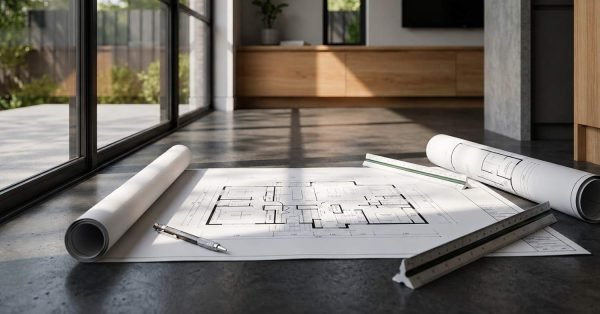
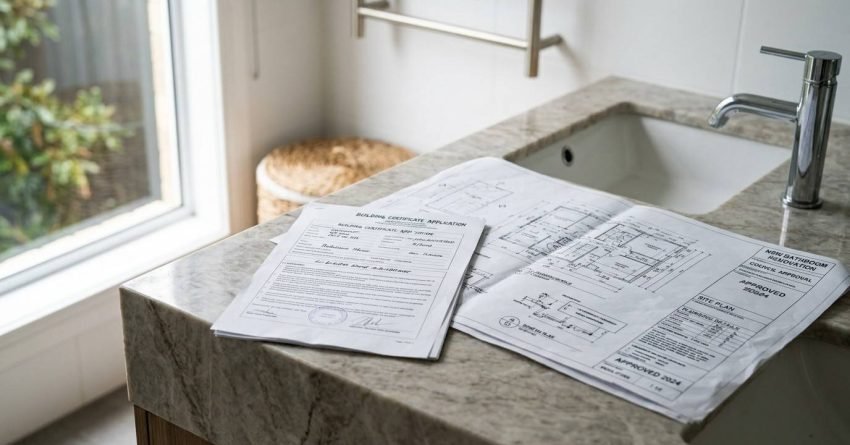
Step 3 Prepare your documentation. Standard requirements include a site plan, existing and proposed floor plans, a statement of environmental effects (for DAs), and any relevant engineering or heritage reports. Your certifier or planner will confirm the full list for your specific project.
Step 4 Lodge through the NSW Planning Portal. All DAs and CDC applications in NSW are lodged through the NSW Planning Portal. Create an account, complete the application form, upload your documents, and pay the application fee.
Step 5 Respond to any requests for information. Councils and certifiers may request additional information during assessment. Respond promptly, delays in responding extend your overall timeframe.
Step 6 Receive your consent and comply with conditions. Approval comes with conditions. Read them carefully. Common conditions include mandatory inspections at specific stages, waterproofing compliance certificates, and requirements for licensed trades to certify their work.
Owner-Builder Rules and Licensed Contractor Requirements in NSW
Approval pathway aside, NSW has strict rules about who can legally carry out bathroom renovation work, and these apply regardless of whether council approval is required.
An owner-builder permit from NSW Fair Trading is required for any residential building work valued over $10,000 where the owner intends to carry out the work themselves. The permit is property-specific and comes with conditions, including a requirement to obtain home building compensation fund cover for work over $20,000.
Plumbing and drainage work must be carried out by a licensed plumber, no exceptions. Electrical work must be carried out by a licensed electrician. These are not optional requirements that apply only when council is watching. They apply to every bathroom renovation in NSW, regardless of scope or approval status.
Checking a contractor’s licence through Service NSW takes two minutes and protects you from unlicensed work that can void your insurance and create liability issues at sale.
What Happens If You Renovate Without Approval
Skipping the approval process does not make the requirement disappear, it creates a problem that compounds over time and becomes significantly harder and more expensive to resolve.
Council has the power to issue a building notice requiring you to stop work, provide documentation, or demolish unapproved structures. In serious cases, a demolition order can be issued, meaning work you have paid for must be removed at your own cost. NSW Fair Trading and local councils both have enforcement powers that extend to penalty infringement notices and prosecution.
Unapproved works also create real problems at the point of sale. Vendors in NSW are required to disclose unapproved structures, and buyers, or their solicitors, routinely check council records. Unapproved bathroom work discovered during a sale can delay settlement, reduce the sale price, or require retrospective approval at the vendor’s expense before contracts exchange.
Insurance is the third risk. Home and contents policies typically exclude damage arising from unapproved building work. A water leak from a bathroom renovated without required approval, and without a waterproofing compliance certificate, can result in a claim being denied entirely.
Retrospective approval is possible in some cases, but it is more expensive, more time-consuming, and less certain than getting approval upfront. The cost of doing it right the first time is always lower than the cost of fixing it later.
Conclusion
Understanding NSW council approval requirements for bathroom renovations protects your investment, your insurance, and your legal standing as a property owner. The distinction between exempt development, complying development, and a full DA determines your entire project pathway.
Getting the approval question right before work starts is what separates a smooth renovation from one that creates problems at sale or triggers council enforcement. The process is manageable when you know the rules.
At Sydney Home Renovation, we guide homeowners and investors through every compliance step, from confirming your approval pathway to coordinating licensed trades and delivering a finished bathroom that meets every NSW requirement. Contact us to start your renovation the right way.
Frequently Asked Questions
Do I need council approval to retile a bathroom in NSW?
Retiling a bathroom is exempt development in NSW. No council approval is needed as long as the work is cosmetic, non-structural, and does not alter the building’s waterproofing system in a way that requires a new compliance certificate. A licensed tiler can carry out the work without any planning consent.
How long does a bathroom renovation DA take in NSW?
A straightforward Development Application for a bathroom renovation typically takes up to 40 days for council assessment in NSW. Complex applications, those requiring neighbour notification, or projects on heritage-listed properties can take longer. A CDC through a private certifier is usually faster, often within 10 business days.
Can I use a private certifier instead of council for my bathroom renovation?
Yes. A private certifier can issue a Complying Development Certificate (CDC) for bathroom renovations that meet the standards under the SEPP (Exempt and Complying Development Codes) 2008. This is typically faster than a council DA and does not involve a neighbour notification period. Not all projects qualify — your certifier will confirm eligibility.
Does a bathroom renovation in a strata unit need extra approval?
Yes. Strata bathroom renovations require written approval from the owners corporation before work begins, in addition to any council or certifier approval required for the scope of work. Wet area work, waterproofing changes, and anything affecting common property almost always require a by-law variation or special resolution from the owners corporation.
What documents do I need for a bathroom renovation DA in NSW?
A standard bathroom renovation DA in NSW typically requires a site plan, existing and proposed floor plans, a statement of environmental effects, and any relevant engineering or heritage reports. Your local council or town planner will confirm the full document list based on your specific project and property.
Is waterproofing a bathroom considered structural work in NSW?
Waterproofing itself is not structural work, but it is regulated work. A waterproofing compliance certificate is required under the National Construction Code for wet areas, and the work must be carried out by a licensed waterproofer. If waterproofing is being replaced as part of a broader renovation that involves structural changes, those structural elements trigger the approval requirement.
What is the penalty for renovating a bathroom without approval in NSW?
Carrying out development without consent in NSW is a breach of the Environmental Planning and Assessment Act 1979. Penalties include council enforcement notices, stop-work orders, demolition orders for unapproved structures, and penalty infringement notices. Fines for individuals can reach significant amounts, and retrospective approval, where available, is more costly and uncertain than obtaining consent upfront.