
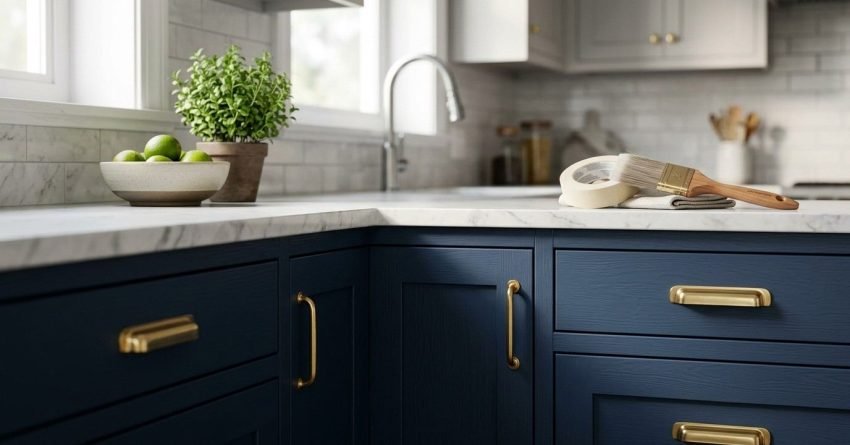
Repainting your kitchen cabinets is the least expensive way to update them, typically costing between $800 and $2,500 for a professional finish in Sydney. That is a fraction of what a full cabinet replacement would set you back. We find that targeted cabinet updates deliver the highest visual return per dollar spent for homeowners who want a meaningful kitchen refresh without a full renovation.
Kitchen cabinets cover more surface area than almost any other element in the room. When they look dated, tired, or worn, the entire kitchen feels the same way. The good news is that you do not need to gut the kitchen to fix that.
In this guide, we break down every low-cost cabinet update method available to Sydney homeowners, with real cost estimates, material considerations, DIY versus professional trade-offs, and practical budget planning advice.
Why Updating Kitchen Cabinets Is Worth the Investment
Kitchen cabinets are the dominant visual element in any kitchen. They occupy the most wall space, frame the room, and set the tone for everything else, including the benchtop, the splashback, and the appliances. When cabinets look outdated, no amount of new tapware or fresh wall paint will fully compensate.
Updating cabinets, even through low-cost methods, delivers a disproportionate visual impact relative to spend. Whether you are preparing a property for sale, refreshing a rental as a landlord, or simply want to enjoy your kitchen again as an owner-occupier, a targeted cabinet update is one of the most cost-efficient renovation decisions available.
The key is understanding which update method suits your cabinets, your budget, and your long-term goals before committing to any spend.
How Cabinet Updates Add Value Without a Full Kitchen Renovation
A full kitchen renovation in Sydney can cost anywhere from $15,000 to $45,000 or more depending on scope, layout changes, and material selections. Cabinet updates, by contrast, can achieve 60 to 80 percent of the visual transformation at 10 to 20 percent of the cost.
For property investors, a clean, refreshed kitchen, even one with repainted cabinets and new hardware, tends to photograph better and attract stronger rental interest, which can support higher appraisal values without the capital outlay of a full renovation. For owner-occupiers, it means enjoying a kitchen that feels new without the disruption and expense of a complete rebuild.
The financial logic is straightforward. If your cabinet boxes are structurally sound and the layout works, updating rather than replacing is almost always the smarter financial decision.

What Are the Cheapest Ways to Update Kitchen Cabinets?
We see five primary methods for updating kitchen cabinets at low cost. Each sits at a different price point, requires a different level of skill, and delivers a different quality of result.
Repainting Cabinets: The Most Affordable Cabinet Update
Repainting is the single most cost-effective way to transform kitchen cabinets. When done correctly, with proper surface preparation, a quality primer, and a durable topcoat, a repaint can make cabinets look brand new and last five to ten years before needing a refresh.
The process involves removing cabinet doors and drawer fronts, cleaning and degreasing all surfaces, sanding back the existing finish, applying a bonding primer, and then applying two or more coats of a hard-wearing cabinet paint. Some painters choose to paint carcasses in place without full removal on tighter budgets, though this generally produces a less consistent finish around hinges and edges than a full removal job. The quality of preparation is what separates a professional result from a DIY finish that chips and peels within twelve months.
We find repainting particularly effective on timber, MDF, and previously painted cabinets. It works less reliably on raw laminate without specialist preparation, which is worth factoring into your decision.
Replacing Cabinet Doors Only: A Mid-Range Budget Option
If your cabinet boxes are in good condition but the doors are damaged, warped, or simply too dated to paint over convincingly, replacing the doors only is the next most cost-effective option. You keep the existing cabinet carcasses, which represent the majority of the structural cost, and simply swap out the visible door and drawer front components.
New cabinet doors can be ordered through cabinet makers, flat-pack suppliers, or specialist door replacement companies. Costs vary based on material, profile, and finish, but this approach consistently delivers a cleaner, more durable result than repainting heavily damaged or delaminating doors.
This method also gives you the opportunity to change the door style entirely, moving from a raised panel traditional door to a flat shaker profile, for example. That kind of change can modernise a kitchen dramatically without touching the underlying structure.
Updating Cabinet Hardware: The Quickest Low-Cost Fix
Replacing cabinet handles, knobs, and hinges is the fastest and cheapest update available. New hardware costs relatively little, requires no specialist skills, and can shift the entire aesthetic of a kitchen from dated to contemporary in an afternoon.
The impact is most pronounced when existing hardware is visually dominant, such as large ornate handles, brass fittings, or mismatched knobs accumulated over years of replacements. Swapping these out for a consistent, modern handle profile in brushed nickel, matte black, or satin brass creates an immediate visual coherence.
Hardware replacement works best as a complement to another update method rather than a standalone fix. For very tight budgets, though, it is a legitimate starting point.
Applying Peel-and-Stick Veneer or Wrap Film
Cabinet wrap film, a self-adhesive vinyl product applied directly over existing cabinet surfaces, has improved significantly in quality over recent years. High-quality wrap films can replicate timber grain, stone textures, and solid colour finishes convincingly, and they are available through specialist suppliers across Sydney.
The appeal is obvious. No painting, no sanding, no drying time. Wrap film can be applied over existing laminate, MDF, or painted surfaces without the surface preparation that repainting requires.
The trade-off is longevity. Wrap film in a high-use kitchen environment typically lasts three to seven years before edges begin to lift or surfaces show wear, compared to a professionally repainted cabinet that can last a decade or more. For rental properties where a quick, low-disruption refresh is the priority, wrap film is a practical option.
Refacing Cabinets: A New Look Without New Boxes
Cabinet refacing sits at the higher end of the low-cost update spectrum. It involves applying a new veneer or laminate surface to the existing cabinet boxes and replacing all doors and drawer fronts simultaneously.
Refacing costs more than repainting or hardware replacement, but significantly less than full cabinet replacement. It is the right choice when cabinet doors are beyond repainting, the existing box structure is sound, and you want a cohesive, durable result that will last ten or more years.
For older Sydney kitchens where the cabinet boxes are solid timber or quality MDF but the surfaces are worn or delaminating, refacing offers a compelling middle ground between a cosmetic update and a full renovation.
How Much Does It Cost to Update Kitchen Cabinets in Sydney?
Cost is the central question for most homeowners considering a cabinet update. The figures below reflect general Sydney market pricing patterns for a standard kitchen with ten to fifteen cabinet doors and drawer fronts, though actual costs vary based on kitchen size, cabinet condition, material type, and whether you choose DIY or professional installation.
Cabinet Repainting Cost: Professional cabinet repainting in Sydney typically costs between $800 and $3,500 for a standard kitchen, depending on door count, surface condition, and paint system. A basic repaint using a standard cabinet enamel sits at the lower end, while a premium two-pack polyurethane finish, which is harder and more resistant to moisture and grease, sits at the higher end. DIY repainting using quality materials typically runs $150 to $400 in materials, though the result depends heavily on preparation skill and available tools.
Cabinet Door Replacement Cost: Replacement cabinet doors are typically priced per door, ranging from roughly $80 to $350 per door depending on material, profile, and supplier. For a standard kitchen of twelve doors and six drawer fronts, total door replacement costs typically fall between $1,500 and $5,500 for materials alone, with installation adding a further $300 to $800. Flat-pack and online cabinet door suppliers generally offer the most competitive pricing for standard cabinet openings.
Cabinet Hardware Replacement Cost: New cabinet handles range from roughly $5 to $80 per handle depending on material, brand, and profile. For a kitchen with twenty handles, a mid-range hardware update typically costs between $200 and $600 in materials. Soft-close hinges, where not already installed, add $8 to $25 per hinge and noticeably improve the functional feel of the kitchen at low cost.
Cabinet Refacing Cost: Cabinet refacing typically costs between $3,500 and $9,000 for a standard kitchen, depending on kitchen size, materials selected, and configuration complexity. This is significantly less than full cabinet replacement, which typically starts at $8,000 and can exceed $25,000 for a mid-to-large kitchen.
DIY vs. Hiring a Professional: Which Saves More Money?
The DIY versus professional question is not simply about upfront cost. It is about quality, time investment, and the risk of a poor outcome that costs more to fix than a professional job would have cost in the first place.
When DIY Makes Financial Sense
DIY makes financial sense for hardware replacement. It is low-risk, requires minimal skill, and the worst outcome is a misaligned handle that can be corrected easily. For wrap film application on a small kitchen with simple flat-panel doors, a careful DIYer can achieve a reasonable result.
DIY repainting is viable if you have painting experience, access to a spray gun or HVLP sprayer, and the patience for proper surface preparation. The material cost savings are real, typically $600 to $3,000 compared to a professional repaint, but the risk of a finish that chips, peels, or looks uneven within twelve months is significant without the right equipment and technique.
When to Hire a Professional
Professional cabinet painters and refacers bring specialist equipment, spray booths or HVLP systems, professional-grade primers and topcoats, and the surface preparation knowledge that determines whether a repaint lasts two years or ten. We recommend professional installation for door replacement and refacing too, where incorrect measurements or misaligned hinges can result in doors that do not close properly or gaps in the finish.
The general rule we follow: if the result matters and the cabinets will be in daily use for years, invest in professional workmanship. The cost difference between a DIY result that needs redoing in two years and a professional result that lasts ten is rarely as large as it initially appears.

What to Consider Before Choosing the Cheapest Cabinet Update Method
Choosing the right update method is not just about finding the lowest price. The condition of your existing cabinets, the materials they are made from, and your long-term plans for the property all influence which approach delivers the best outcome per dollar spent.
Cabinet Condition Assessment
Before committing to any update method, assess the structural condition of your cabinet boxes. Check for water damage around the sink base, delamination on interior surfaces, sagging shelves, damaged hinges or runners, and any signs of pest activity. If the boxes are compromised, updating the surfaces will not resolve the underlying structural issues, and you may end up spending money on a cosmetic fix that fails within months.
If the boxes are sound, with no water damage, no structural movement, and hinges and runners functioning correctly, any of the update methods described above are viable starting points.
Material Compatibility
Not all cabinet materials respond equally to all update methods. Timber and MDF cabinets are the most versatile; they can be sanded, primed, and painted with excellent adhesion and durability. Laminate cabinets require specialist preparation for repainting, including a bonding primer formulated for non-porous surfaces, and the adhesion risk is higher without professional application.
Wrap film adheres well to flat laminate surfaces but can struggle with textured or profiled doors. Refacing works on most cabinet box materials provided the surface is clean, flat, and structurally sound.
Long-Term Value vs. Short-Term Savings
The cheapest option upfront is not always the cheapest option over time. A $200 DIY wrap film application that needs replacing in three years can cost more over a decade than a $2,000 professional repaint that lasts ten. For owner-occupiers planning to stay in the property, we generally recommend investing in a more durable update method.
For investors or homeowners planning to sell within two to three years, a lower-cost, shorter-lifespan update may be entirely appropriate. The goal there is to improve presentation and support the sale price, not to install a finish that will last twenty years.
Budget Planning Tips for Updating Kitchen Cabinets
A clear, realistic budget prevents the two most common renovation mistakes: underspending on preparation and materials, and overspending on unnecessary upgrades.
Start by defining your goal. Are you refreshing the kitchen for personal enjoyment, preparing for a sale, or updating a rental property? Each goal implies a different appropriate spend level.
We recommend getting at least two to three quotes from Sydney cabinet painters or refacers before committing to any approach. Quotes vary significantly between operators, and understanding the market rate for your specific kitchen size and condition helps you identify both fair pricing and suspiciously low quotes that may indicate corner-cutting.
Build a contingency of ten to fifteen percent into your budget for unexpected costs, such as surface repairs, additional preparation work, or hardware that does not align with existing hole spacing. Contingency is not pessimism. It is practical budget management.
Hidden Costs to Watch Out For
Several costs catch homeowners off guard in cabinet update projects. Surface repairs, filling holes, repairing delamination, or addressing water damage add cost that is not always visible in an initial quote. Hardware that does not align with existing hole spacing requires new drilling, which adds labour time.
If you are repainting, factor in the cost of temporarily relocating kitchen contents, protecting bench tops and appliances, and managing without a functional kitchen for two to four days. This is a real consideration for families with young children.
When Is It Cheaper to Replace Cabinets Than Update Them?
There are circumstances where updating cabinets costs more than replacing them, or where the update result would be so compromised by the condition of the existing cabinets that replacement is the only sensible path.
If your cabinet boxes have significant water damage, structural movement, or pest damage, the cost of remediation before any cosmetic update can approach or exceed the cost of new flat-pack cabinets. Sydney flat-pack cabinet suppliers offer complete kitchen cabinet sets starting from approximately $2,000 to $5,000 for a standard kitchen, with installation adding a further $1,500 to $3,500. If your existing cabinets require $1,500 in structural repairs before a $2,500 repaint, the total cost of $4,000 begins to approach the cost of a flat-pack replacement that will last significantly longer.
Similarly, if the existing kitchen layout is genuinely dysfunctional, with insufficient storage or poor workflow, no cosmetic update will resolve the underlying problem. In these cases, a targeted replacement or partial reconfiguration may deliver better long-term value.
The decision point we use is straightforward. If the cost of preparing existing cabinets for an update exceeds thirty to forty percent of the cost of replacement, replacement deserves serious consideration.

How to Maximise the Impact of a Low-Cost Cabinet Update
A cabinet update does not exist in isolation. The visual impact of refreshed cabinets is amplified or diminished by the surrounding elements: the benchtop, the splashback, the lighting, and the overall colour palette.
Pairing Cabinet Updates with Affordable Benchtop Refreshes
Bench tops are the second most visually dominant element in a kitchen after cabinets. If your benchtop is heavily scratched, stained, or dated, a cabinet repaint alone will not fully transform the space.
Laminate benchtop overlays, thin laminate sheets bonded directly over existing bench tops, cost between $500 and $1,500 installed for a standard kitchen and can dramatically update the appearance of an existing surface. Pairing a cabinet repaint with a benchtop overlay typically costs between $1,500 and $4,500 total, still a fraction of a full kitchen renovation, while transforming the entire kitchen rather than just the cabinet surfaces.
Lighting and Splashback Changes That Amplify Cabinet Updates
Under-cabinet LED strip lighting is one of the highest-impact, lowest-cost additions available in a kitchen refresh. LED strip kits suitable for kitchen installation typically cost $80 to $300 for a standard kitchen, and installation is within reach of a competent DIYer in most cases.
Splashback updates are more involved but can be achieved cost-effectively using peel-and-stick tile products, painted glass panels, or budget ceramic tiles. A new splashback behind the cooktop, even a small section, creates a focal point that makes the entire kitchen feel more intentional.
Conclusion
Updating kitchen cabinets does not require a full renovation budget to deliver a meaningful result. Repainting, door replacement, hardware updates, wrap film, and refacing each offer a different cost-to-impact ratio, and the right choice depends on your cabinet condition, material type, timeline, and long-term goals for the property.
For most Sydney homeowners, we find that a professional cabinet repaint combined with new hardware represents the best balance of cost, durability, and visual transformation. Every renovation dollar needs to work hard, and getting the method right the first time protects that investment.
If you are ready to explore the most cost-effective way to update your kitchen cabinets, we invite you to contact Sydney Home Renovation for a detailed assessment and honest quote. We will help you identify the right approach for your cabinets, your budget, and your goals so you can move forward with confidence.
Frequently Asked Questions
What is the cheapest way to update kitchen cabinets?
Repainting is the cheapest way to update kitchen cabinets, with professional costs in Sydney typically ranging from $800 to $3,500 depending on kitchen size and condition. Replacing hardware is even cheaper as a standalone update, costing as little as $200 to $600 in materials.
How much does it cost to repaint kitchen cabinets in Sydney?
Professional cabinet repainting in Sydney costs between $800 and $3,500 for a standard kitchen. A basic enamel repaint sits at the lower end, while a premium two-pack polyurethane finish sits at the higher end. DIY repainting costs $150 to $400 in materials alone.
Is it cheaper to reface or replace kitchen cabinets?
Refacing is almost always cheaper than replacing, provided the existing cabinet boxes are structurally sound. Cabinet refacing typically costs $3,500 to $9,000, while full cabinet replacement starts at $8,000 and can exceed $25,000 for a mid-to-large kitchen.
Can I update kitchen cabinets without replacing them?
Yes. Repainting, refacing, applying wrap film, replacing doors only, and updating hardware are all methods that update the appearance of kitchen cabinets without replacing the existing boxes. The right method depends on your cabinets’ condition and your desired result.
How long does cabinet repainting last?
A professionally applied cabinet repaint using a quality two-pack polyurethane or hard-wearing enamel typically lasts seven to ten years in a standard kitchen. DIY repaints using brush or roller application may last two to five years before showing significant wear.
What cabinet hardware is best for a budget kitchen update?
Brushed nickel, matte black, and satin brass handles offer the best combination of contemporary aesthetic, durability, and value. Mid-range handles cost $15 to $40 per handle, and adding soft-close hinges at $8 to $25 per hinge improves the functional feel at low cost.
Should I DIY my kitchen cabinet update or hire a professional?
Hardware replacement is well-suited to DIY. Repainting and refacing are better handled by professionals if you want a result that lasts and looks genuinely new, since professional spray application and surface preparation significantly affect durability and finish quality.


