You renovate a room cheaply by spending only where the eye lands first: paint, lighting, and hardware. I have walked through hundreds of Sydney rooms where a $400 refresh read as a full renovation, and just as many where $8,000 went into changes nobody noticed. The difference was never the budget. It was knowing which surfaces carry a room and which ones quietly drain money.
Where Your Money Actually Shows
Cheap renovation is not corner-cutting. It is ruthless allocation, and the ranking almost never changes.
Paint delivers the largest visual change per dollar of any renovation task. A single bedroom takes four to eight litres, which lands between $90 and $210 for a quality product. Australian Bureau of Statistics data shows construction input costs have climbed steadily, which makes DIY paint labour the last genuinely cheap lever most homeowners still control.
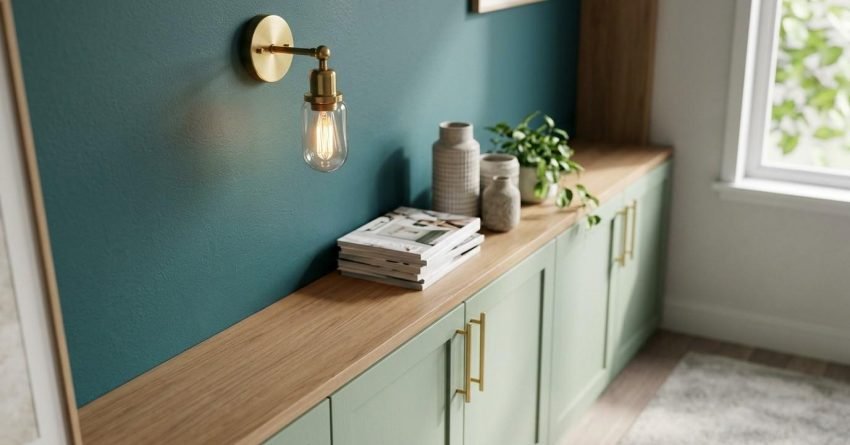
Lighting sits second. Swapping a dated batten fix for a modern flush mount or pendant resets the character of a room for $40 to $160 per fitting.
Hardware is third and the most underrated. Handles, knobs, switch plates and curtain rods are the jewellery of a room, and matching finishes across all of them costs under $120 in most bedrooms.
How Room Type Changes the Numbers
Bedrooms, studies and living areas are the cheap rooms. They are dry, they have no plumbing, and everything that matters is a surface you paint or unscrew.
Kitchens, bathrooms and laundries break the pattern completely. The moment waterproofing, tiling or plumbing enters the scope, we are into licensed trades and compliance, and a genuinely cheap outcome stops being realistic. For wet areas, I tell clients to budget from $15,000 and treat anything under that as a cosmetic touch-up, not a renovation.

Set the Budget Before You Buy Anything
Every blowout I have seen started with someone buying paint before deciding a ceiling number. Pick the figure first, then let it dictate the scope.
Build in a 15 to 20 percent contingency. Rooms hide things, and pulling up carpet or sanding a wall regularly exposes water damage or a cracked cornice that has to be dealt with before finishing work continues.
Budget Tier | Total Spend | What It Realistically Covers |
Refresh | $300–$600 | Paint, one light fitting, all hardware, deep clean, decluttering |
Solid Update | $600–$1,500 | Above plus layered lighting, rug, blinds, minor repairs and patching |
Cosmetic Renovation | $1,500–$4,000 | Above plus new flooring surface, built-in storage, feature wall, styling |
Allocation inside those tiers stays fairly constant:
- Paint and supplies: 30 to 40 percent
- Lighting: 15 to 20 percent
- Hardware and fixtures: 10 to 15 percent
- Soft furnishings and décor: 20 to 25 percent
- Contingency: 15 to 20 percent
Paint Is Your Most Powerful Tool
Preparation decides your result, not the brand on the tin. I have watched premium paint fail on an unwashed wall and mid-range paint look flawless on a properly prepped one.
Wash the walls, fill the holes, sand them flat, and spot-prime every patch. That sequence takes an afternoon, and it is the entire difference between a DIY finish and a professional one.
Mid-range products from Dulux, Taubmans or British Paints cover as well as anything dearer. I use paint-and-primer combinations because two coats beat three coats of budget paint on both time and total litres.
Stick to whites, warm neutrals and light greys if resale or rental is anywhere in your thinking. Neutral walls photograph larger and appeal to a broader pool of buyers and tenants.
Spend properly on brushes and rollers. A $20 brush lasts years and does not shed fibres into your finish.
Lighting Without Rewiring
Replacing a fitting on an existing circuit is a fifteen-minute job with the power isolated at the switchboard. Anything that moves a circuit, adds an outlet, or touches wiring beyond the fitting itself needs a licensed electrician under NSW law, and Fair Trading NSW is explicit that unlicensed electrical work voids insurance.
Layer It, Do Not Just Replace It
One overhead light flattens a room no matter how good the fitting is. Table lamps, a floor lamp and a task light give a room depth for very little money.
Op shops and Facebook Marketplace are where I send people for lamps. A $20 second-hand base with a $15 new shade reads as a custom piece.
LED strip lighting at $15 to $40 runs under shelving or behind a headboard and adds warmth with no electrical work at all.
Surfaces: Floors and Windows on a Budget
Full floor replacement is the fastest way to destroy a small budget, so start by cleaning what you already have. Professional carpet cleaning runs $50 to $100 per room and revives tired carpet more than people expect, while a DIY polish on timber or laminate costs under $50 in materials.
A large rug covers damaged flooring, adds warmth, and moves house with you for $100 to $300. Peel-and-stick vinyl planks at $20 to $50 per square metre are the honest middle ground, though wear-layer thickness varies enormously between products, so order samples first.
Windows follow the same logic. Machine-washable curtains often need a hot wash rather than replacement, and fabric dye under $15 turns dated beige into charcoal or navy.
Ready-made panels from IKEA, Spotlight or Kmart run $30 to $80 each, and basic blockout roller blinds sit at $20 to $50 per window.
Reversible Updates for Renters
Renting changes the rules, not the outcome. Peel-and-stick tiles, removable wallpaper, plug-in wall sconces, tension rods and freestanding shelving all deliver visible change and come off cleanly at the end of a lease.
Get written landlord approval before painting anything, even in a neutral colour. I have seen bond disputes over a wall the tenant genuinely improved.
What Not to Spend Money On
This is where most budgets die, and no competitor page will tell you.
Cheap flat-pack furniture looks worse within a year and photographs badly, so buy solid second-hand and refinish it instead. Feature wallpaper on a poorly prepped wall telegraphs every imperfection underneath rather than hiding it.
Bargain-bin light fittings under $25 almost always ship with visible plastic and poor diffusers, which undoes the upgrade you paid for. Partial flooring replacement in one room creates a transition mismatch that reads as damage, so either do the connected spaces or use a rug.

DIY Versus Professional: Know the Line
Painting, hardware swaps, like-for-like fitting replacement, cleaning, and styling suit any capable adult with patience. Those tasks reward care, not trade training.
Electrical work beyond a straight fitting swap, all plumbing modifications, and anything structural require licensed trades. The savings never cover the insurance and compliance exposure.
There is one Sydney-specific trap I raise with every pre-1980s property. Walls of that era frequently carry lead paint or asbestos-sheet linings, and SafeWork NSW requires specific controls before disturbing either. Sanding a wall blind is the one cheap decision that turns into a five-figure problem.
I also tell people when cheap is the wrong answer. If a room shows rising damp, active water ingress, sagging ceilings, or failing window frames, cosmetic work hides a defect that compounds. Fix the cause, then decorate.
Shop Smart and Phase the Work
Where you buy matters as much as what you buy. Facebook Marketplace, Gumtree, op shops and deceased estate auctions carry solid furniture and décor at a fraction of retail, and patience beats urgency every time.
Hardware retailers discount paint, tools and fittings heavily around public holidays and end of the financial year, so time large purchases rather than buying reactively. Factory seconds make complete sense for anything sitting behind furniture.
In sequence, do the messy work first. Paint before flooring, flooring before hardware, hardware before styling, and allow proper drying time between stages because rushing a cure is how finishes fail.
Build buffer days into the plan. Materials arrive late, and life interrupts, and a schedule with slack in it costs nothing while a rushed one costs money.
Conclusion
Renovating a room cheaply comes down to sequence and restraint rather than a large budget. Paint, lighting, and hardware carry almost all of the visual result, and the money you protect by skipping the low-impact extras is what funds a finish that actually looks intentional.
The honest version of this advice includes knowing when to stop. A cosmetic refresh over an unresolved defect is money spent twice, and wet areas or structural issues belong with licensed trades from the beginning.
At Sydney Home Renovation, we are glad to tell you which parts of your project genuinely suit DIY and which do not, even when the answer costs us the job. Contact our team for a straight conversation about your room, your budget, and the most effective path to the result you want.
Frequently Asked Questions
What is the cheapest way to renovate a room?
Painting delivers the most dramatic change for the least money. A full DIY repaint costs $100 to $300 in materials, and pairing it with decluttering and deep cleaning maximises the effect.
How much does a basic room renovation cost in Australia?
Basic DIY room renovations run $300 to $1,500 depending on scope and existing condition, covering paint, lighting, hardware and minor repairs. Professional single-room work starts around $3,000.
Can I renovate a room for under $500?
Yes. A $500 budget covers quality paint and supplies, one new light fitting, all hardware, and a modest décor refresh. Prioritise paint and lighting for maximum visual return.
What room renovations add the most value?
Fresh neutral paint, updated lighting, and modern hardware deliver the strongest return relative to cost. Flooring adds value too, but the spend is substantially higher for a smaller perceived gain.
Should I hire a professional for a budget renovation?
Most budget work suits DIY. Painting, hardware swaps, and like-for-like fitting replacement need patience rather than trade skills, but all plumbing and non-trivial electrical work require licensed tradespeople.
How long does a DIY room renovation take?
A basic refresh covering painting, hardware, and styling takes one to two weekends per room. Allow extra time for paint curing between coats and for moving furniture in and out.
What mistakes should I avoid when renovating cheaply?
Skipping wall preparation, buying the cheapest possible materials, rushing between stages, and attempting licensed work are the four costly ones. Preparation time and mid-range products protect the result.