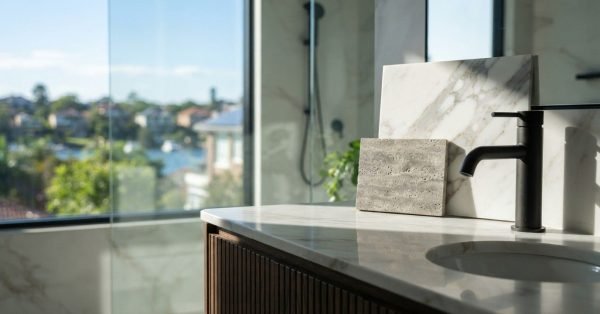
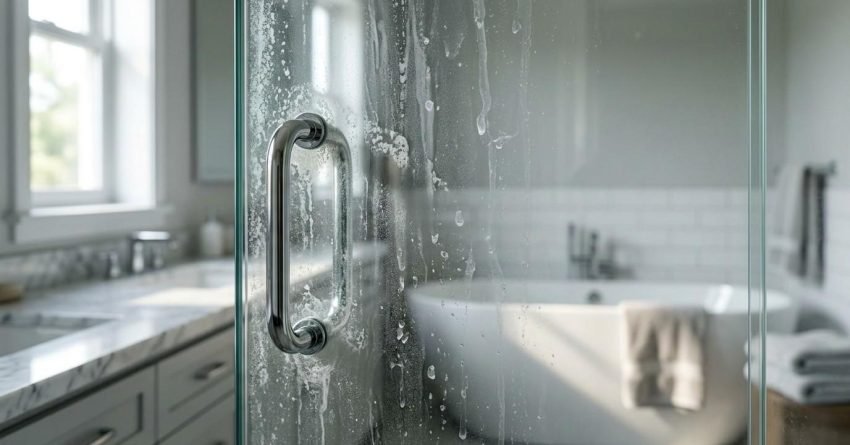
The bathroom is the hardest room to clean in any home. It takes more time, more products, and more physical effort than any other space, and after years of building them, we can tell you that this is not just perception.
We see the reason on every job. Moisture, bacteria, soap scum, and hard water deposits build up faster in a bathroom than anywhere else in the house, and most of that difficulty is decided long before anyone picks up a cloth.
Here is what makes this room so demanding, and what actually reduces the work.
Why the Bathroom Is Considered the Hardest Room to Clean
The bathroom is the hardest room to clean because it combines constant moisture, high bacterial load, and more surface types than any other room. Humidity feeds mould, water leaves mineral deposits, and tile, glass, chrome, stone, and timber each need a different product. No other room stacks all three problems together.
That combination is what separates it from every other space in the house. High humidity creates conditions where mould and mildew establish quickly, while daily use deposits body oils, soap residue, and mineral buildup across every surface at once.
Bathroom contamination also spreads further than kitchen mess does. Water, warmth, and organic matter reach floor tiles, wall grout, screen tracks, and ceiling vents alike.
Moisture and Humidity Create Persistent Problems
Bathrooms spike to roughly 80 to 100 percent humidity during a shower, far above the 30 to 50 percent range considered healthy indoors. [VERIFY + LINK] That moisture penetrates grout lines, settles behind fixtures, and gives mould colonies the conditions they need to establish within 24 to 48 hours of water exposure. [VERIFY + LINK]
Ventilation rarely clears it fast enough, especially in bathrooms with no window or an undersized exhaust fan. Surfaces never fully dry, so evaporating water leaves mineral deposits layer on layer.
This is the root cause behind almost every other bathroom cleaning problem.
Multiple Surface Types Require Different Approaches
One bathroom holds ceramic tile, porcelain fixtures, glass screens, chrome tapware, timber vanities and painted surfaces. Each one needs a specific product, and the wrong choice damages the finish while a generic cleaner fails to shift the contamination.
Grout is the worst of them. It is porous, so it absorbs stains and harbours bacteria, and harsh chemicals break it down over time.
High-Touch Areas Accumulate Contamination Rapidly
Toilet handles, tap fixtures, door handles and light switches collect bacteria from every person who uses the room. Bathroom touchpoints carry a heavier bacterial load than most kitchen surfaces, with the toilet zone and sink taps the worst offenders.
None of it is visible, which is exactly why it gets underestimated. A surface that looks clean still needs disinfecting, not just wiping.
How the Bathroom Compares to Every Other Room
We get asked constantly whether the kitchen is worse, and it is not. The kitchen produces more visible mess, but that mess concentrates around the cooktop and sink, wipes off non-porous benchtops, and dries within minutes.
The bathroom does the opposite. Contamination spreads across the whole room, sinks into porous grout and caulking, and never fully dries between uses.
Room | Difficulty | Why It Ranks There | Typical Deep Clean |
Bathroom | Hardest | Constant moisture, porous grout, 6+ surface types, invisible bacterial load | 30 to 45 min |
Kitchen | Second | Heavy grease and food soil, but mostly non-porous surfaces that dry fast | 25 to 40 min |
Laundry | Third | Damp and lint-heavy, though far fewer surface types and less touch contact | 15 to 25 min |
Living areas | Fourth | Dust and traffic marks only, no moisture cycle | 15 to 20 min |
Bedrooms | Easiest | Dust and linen, dry environment, minimal contamination | 10 to 15 min |
The pattern is simple. Difficulty tracks moisture and porosity, not visible mess.
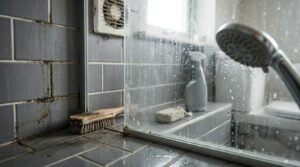
The Most Challenging Bathroom Areas to Clean
Not every zone in the room is equally hard. Knowing which areas take the most effort lets you spend your time where it changes the result.
Shower Recesses and Glass Screens
The shower combines every difficult element at once: constant water, soap and shampoo residue, body oils, and hard water minerals. Glass develops a cloudy buildup that resists standard cleaning, and the grout in a shower recess takes the heaviest moisture exposure in the house.
Soap scum forms when fatty acids in soap react with minerals in the water, creating a stubborn film that bonds to the surface. That is a chemical compound, not dirt, which is why a general cleaner slides straight over it.
Toilet Bowls and Surrounding Areas
Toilet cleaning extends well past the bowl to the base, the area behind the pan, and the joint where the fixture meets the floor. Urine splashes soak into grout and caulking, so odour survives a surface clean.
Hard water rings inside the bowl are mineral deposits, and brushing alone never removes them. They need an acidic cleaner or a pumice stone, used carefully to avoid scratching the porcelain.
Tile Grout Throughout the Bathroom
Grout lines across the floor and walls collect every type of bathroom contamination. Because grout is porous, surface cleaning lifts the visible dirt while embedded stains and mould roots stay below.
Badly discoloured grout needs professional-grade cleaning or a full regrout, and that is a labour-intensive job most homeowners underestimate.
Exhaust Fans and Ventilation Systems
Exhaust fans collect dust, lint, and moisture-laden debris that cuts their airflow over time. A clogged fan stops clearing humidity properly, which accelerates mould growth across the entire room.
Cleaning one means pulling the cover, cleaning the blades, and checking the ductwork, where mould often sits out of sight. From the build side, we also see fans defeated by the duct itself: a long flexible run with sags and bends loses a large share of the fan’s rated airflow, and a fan venting into a roof cavity instead of outside simply moves the moisture problem upstairs.
Common Bathroom Cleaning Mistakes That Make the Job Harder
Most people make the job harder without realising it. These are the patterns we see most often.
Using Abrasive Cleaners on Delicate Surfaces
Scrubbing powders and harsh abrasives scratch chrome, dull glass, and strip the protective coating off tiles. Those micro-scratches then trap dirt and bacteria, so every future clean takes longer than the last.
Chrome tapware suffers the worst. Once the protective layer goes, the surface spots and corrodes.
Neglecting Regular Maintenance Between Deep Cleans
Waiting for visible dirt lets contamination bond to surfaces and soak into porous materials. A quick daily wipe prevents the buildup that later demands intensive scrubbing.
A squeegee after each shower removes the bulk of the water that otherwise evaporates and leaves mineral deposits, commonly cited at around 75 percent. [VERIFY + LINK] That is a 30-second habit that saves hours of hard water removal later.
We rate it as the single highest-return cleaning habit in the room.
Mixing Incompatible Cleaning Products
Bleach mixed with an ammonia-based cleaner creates toxic chloramine gas, and bleach mixed with an acidic cleaner produces chlorine gas. Beyond the safety risk, mixing products often cancels out their cleaning power entirely.
Residue from a previous cleaner reacts with the next one too. Rinse properly between different products.
How Different Bathroom Materials Affect Cleaning Difficulty
Material choices made during a bathroom renovation set the cleaning workload for the next decade or two. This is where the difficulty is genuinely designed in.
Material or Fitting | Cleaning Difficulty | Why |
Large-format porcelain tile | Easiest | Chemical-resistant, very few grout lines |
Standard ceramic tile | Easy | Durable surface, but more grout per square metre |
Mosaic or small-format tile | Hard | Maximum grout line length, maximum absorption |
Natural stone (marble, travertine) | Hardest | Etches on contact with acid, needs pH-neutral cleaner and resealing |
Frameless glass screen | Moderate | No frame traps, but shows every water mark |
Framed glass screen | Hard | Frames and seals hold moisture, scum, and debris |
Natural Stone Versus Ceramic Tiles
Marble and travertine need pH-neutral cleaners and regular sealing to resist staining and etching. Most common bathroom products are acidic, and they damage stone permanently on contact.
Ceramic and porcelain handle chemicals far better and ask much less of you. The grout between them still needs attention regardless of which tile sits above it.
Frameless Versus Framed Shower Screens
Frameless glass removes the metal frames where mould and soap scum collect, which cuts the cleaning complexity noticeably. The trade-off is that clear frameless glass shows every water mark.
Framed screens hide some spotting but add frame edges and seals that trap moisture and debris. On balance, we specify frameless for lower long-term maintenance.
Matte Versus Gloss Fixture Finishes
Matte black and brushed finishes show water spots and fingerprints faster than polished chrome, so they need wiping more often. They do hide minor scratches better.
Weigh that trade-off during fixture selection, particularly on high-use items like taps and handles.
Layout and Design Decisions That Cut Cleaning Time
Layout changes the workload as much as materials do. A wall-hung vanity leaves clear floor underneath, so mopping takes one pass instead of working around a kickboard that traps moisture.
A recessed shower niche replaces the corner caddy that rusts and drips, and it removes the shelf edges where scum collects. Fewer internal corners, larger tile formats, and a properly sized fan ducted straight outside do more for long-term cleanability than any product on a supermarket shelf.
Design out the problem, and you stop cleaning it forever.
Practical Strategies for Easier Bathroom Cleaning
The right products, the right technique, and a consistent routine cut both the time and the effort. These are the approaches that work.
Establish Daily Quick-Clean Habits
Two minutes a day prevents the buildup that turns into a weekend deep clean. Wipe the tapware, squeegee the glass, and give the bowl a quick brush.
Keep the supplies in the bathroom, not in a cupboard down the hall. A caddy under the sink removes the friction that kills the habit.
A Realistic Cleaning Frequency Schedule
- Daily: squeegee the shower glass, wipe tapware and the vanity top, quick toilet bowl brush.
- Weekly: full toilet clean including base and behind, mop floors, clean mirror, wipe skirting and door handles
- Monthly: scrub grout lines, descale shower head and tap aerators, clean the exhaust fan cover
- Quarterly: deep clean and reseal grout as needed, clear the drain, check and clean caulking
- Annually: inspect silicone seals, service the exhaust fan and duct, reseal natural stone.
Use Appropriate Products for Each Surface
Surface-specific cleaners outperform multi-purpose alternatives every time. Dedicated glass, grout, and fixture products target the exact contamination each surface collects.
Read the label against your actual materials. That matters most with natural stone, specialty finishes, and older fixtures running different coating technology.
Address Ventilation to Reduce Moisture Problems
Upgrading the exhaust fan, extending its run time, and improving airflow attacks the moisture that drives most of these problems. Run the fan for at least 20 minutes after bathing to clear the humidity properly.
Open a window when the weather allows. Natural cross-ventilation clears moisture faster than most mechanical systems manage on their own.
When Professional Cleaning Becomes Necessary
Some problems sit beyond what household products fix. Knowing where that line falls saves time and prevents damage.
Deep Mould Remediation
Surface mould responds to household cleaners. Mould that has penetrated grout, caulking, or a wall cavity needs professional assessment, because DIY removal of an established colony spreads spores and leaves the cause untouched.
Proper remediation identifies the moisture source, contains the area during removal, and verifies the colony is gone. When mould keeps returning after remediation, the real fix is usually structural: failed waterproofing, a leaking seal, or a fan that never had the capacity for the room.
Grout Restoration and Resealing
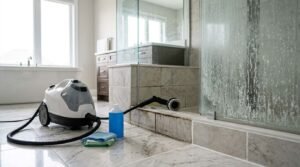
Severely discoloured or deteriorating grout needs equipment household tools cannot match. Steam cleaning and professional-grade chemical treatment restore grout that looks past saving.
Sealing afterwards protects it from staining again and stretches the interval between deep cleans.
Hard Water Damage Removal
Heavy hard water buildup on glass, fixtures, and tile needs professional-grade acidic treatment, and that carries real risk if applied incorrectly. Professionals assess the damage level and match the treatment to the surface.
In homes with persistent hard water, a water treatment system costs less over time than the ongoing intensive cleaning it replaces.
Conclusion
The bathroom is the hardest room to clean because moisture, porous grout, and half a dozen different surface types all land in the same small space. Every other room in the house deals with one of those problems. The bathroom deals with all of them at once, every single day.
Understanding that changes how you approach it. It also changes how you plan a renovation, because the grout lines, screen type, vanity mount, and fan capacity you choose set the cleaning workload for the next fifteen years.
At Sydney Home Renovation, we design and build bathrooms with that maintenance load in mind, and we would rather solve it at the drawing stage than leave you scrubbing it later. Talk to our team about a bathroom renovation cost breakdown, and we will show you where a low-maintenance specification pays for itself.
Frequently Asked Questions
How often should you deep clean a bathroom?
Deep cleaning every one to two weeks maintains hygiene standards for most households. High-traffic bathrooms need weekly attention, while guest bathrooms used occasionally need less frequent intensive cleaning.
What cleaning products work best for bathroom mould?
Bleach-based cleaners kill surface mould on non-porous surfaces, while hydrogen peroxide solutions work safely on grout and natural stone. Commercial removers with quaternary ammonium compounds give longer protection against regrowth.
Why does my bathroom smell even after cleaning?
Odours usually come from areas standard cleaning misses, including drain biofilm, caulking that has absorbed moisture, and the wax ring seal beneath the toilet. Those hidden sources need targeted cleaning or replacement.
Can you prevent hard water stains in bathrooms?
Daily squeegee use after showers prevents most hard water buildup on glass and tile. Water softening systems fix the problem at its source, and protective glass coatings make water sheet off instead of evaporating.
What makes bathroom grout turn black?
Black grout indicates mould growth inside the porous grout material rather than surface dirt. It happens when moisture penetrates unsealed grout and creates conditions for colonies to establish below the visible surface.
How long does bathroom cleaning typically take?
A thorough bathroom clean takes 30 to 45 minutes for an average-sized space, varying with size, contamination level, and cleaning frequency. Regular maintenance cuts deep-cleaning time substantially.
Is it worth hiring professional bathroom cleaners?
Professional cleaning is worth it for initial deep cleans of neglected bathrooms, periodic intensive maintenance, and specific issues like mould remediation or hard water damage. Routine maintenance stays a DIY job.