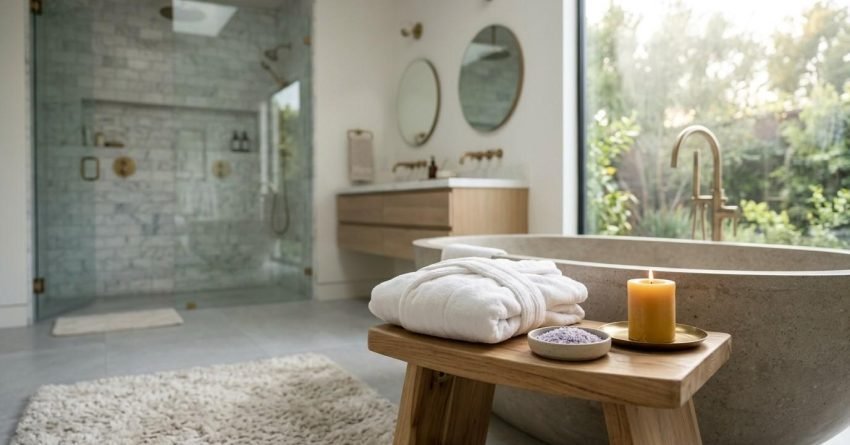
A family bathroom built for a busy household balances three things at once: a layout that handles two or three users at peak times, materials that withstand daily wear, and storage that keeps clutter under control. Get those three right and the space works for school mornings, bath nights, and weekend resets without constant friction or repair calls.
Sydney households juggle tight schedules, growing children, and homes that often share one main bathroom across three or more people. Smart design removes the daily bottlenecks.
This guide covers layouts, durable finishes, storage, safety features, time-saving upgrades, and budget-friendly choices that lift function and long-term value for your family.
What Makes a Family Bathroom Work for Busy Households
A family bathroom is a multi-user wet area designed to serve different ages, abilities, and routines under one roof. It differs from an ensuite or powder room because it must absorb concurrent use, frequent cleaning, and years of heavy traffic without showing strain.
The most successful family bathroom designs share four traits: a layout that lets two people move without crossing paths, materials engineered for daily moisture and abrasion, storage that keeps surfaces clear, and safety features that protect both young children and older relatives. Family bathroom design sits within the wider renovation picture, and our bathroom renovation guide walks through planning, costs, and project sequencing so your design choices line up with realistic execution.
Daily-use design priorities
Function precedes aesthetics in a family bathroom. Prioritise tap placement, door swing direction, towel reach from the shower, and how floor space behaves when two people stand at the vanity. Every fitting should pass a simple test: does it shorten the daily routine or lengthen it?
Smart Layout Ideas for Multi-User Family Bathrooms
Layout decisions drive 70 percent of how a family bathroom performs day to day. Even modest spaces can serve a family well when the floor plan respects user flow and isolates wet zones from dry zones.
Double vanity and dual-zone layouts
A double vanity is the single highest-impact upgrade for households with school-aged children. Two basins remove the morning queue at the mirror and create natural personal space for each user. Where width is tight, a single extra-wide vanity with two tap sets works on the same principle at lower cost.
Separating wet and dry areas
Compartmentalised layouts place the toilet, shower, or bath in a sub-room separated from the vanity. This lets one person shower while another brushes teeth or uses the toilet without compromising privacy. For homes with one bathroom, this is the most valuable structural change you can make.
Compact family bathroom layouts under 6m²
Smaller family bathrooms benefit from corner showers, wall-hung toilets, and slim-profile vanities that reclaim circulation space. For households planning broader renovations of confined wet areas, our small bathroom renovation ideas <!–NEW PAGE NEEDED–> resource explores layouts that maximise every square metre without sacrificing family function.
Durable Materials and Finishes for Daily Family Use
Family bathrooms see more wear in five years than guest bathrooms see in fifteen. Material selection determines whether the space looks fresh at year ten or tired at year three.
Slip-resistant flooring options
Porcelain tiles rated R10 or R11 deliver the best balance of slip resistance, durability, and easy cleaning for family bathrooms. Larger format tiles reduce grout lines and cut cleaning time. Vinyl plank flooring designed for wet areas offers a warmer underfoot feel at a lower price point.
Low-maintenance wall surfaces
Full-height tiling in wet zones eliminates mould-prone painted surfaces. Outside the shower, semi-gloss or satin acrylic paint resists splashes and wipes clean without streaking. Avoid matte finishes in any family bathroom — they hold marks and require frequent repainting.
Hardware and tapware built to last
Solid brass tapware with ceramic disc cartridges outlasts cheaper zinc-alloy alternatives by ten to fifteen years. Choose tapware with WaterMark certification and lever handles that children and older adults can operate without strain. The upfront cost difference pays back through fewer replacements.
Storage Solutions That Tame Family Bathroom Clutter
Clutter is the visual signal that a family bathroom design has failed. Every item — toothbrushes, towels, hair tools, medications, bath toys — needs a defined home that supports daily routines rather than fighting them.
Vertical and built-in storage
Wall-recessed niches in the shower, full-height mirror cabinets, and tall narrow cabinetry between studs reclaim storage without eating floor area. A mirror cabinet that runs the full vanity width can hold a family of four’s daily items above the basin where they are used.
Kid-accessible zones
Reserve the lowest drawer or a dedicated open shelf for children’s items so they can reach toothbrushes, bath toys, and step stools without help. This builds independence and reduces parent involvement during peak times. Wet-area storage planning often extends beyond the bathroom itself, and our laundry renovation guide shows how combined wet-area design improves daily flow for growing families.
Safety Features for Kids and Elderly Family Members
A bathroom carries higher injury risk than any other room in the home. Family bathroom design should reduce slips, scalds, and falls without making the space feel institutional.
Anti-scald tapware and water controls
Thermostatic mixing valves cap shower and basin water temperature at a safe maximum, protecting young children and elderly users from burns. Single-lever mixers with clear hot and cold marking add a second safeguard. Both are inexpensive at the rough-in stage and difficult to retrofit later.
Grab rails, ledges, and non-slip surfaces
Modern grab rails come in finishes that match contemporary tapware and double as towel rails. Install timber-look or chrome rails at the shower entry and beside the toilet. Pair with R11-rated floor tiles, a low-profile shower hob or hobless entry, and an integrated bench seat for older family members.
Time-Saving Design Features for Morning Rushes
The hardest hour in a family home is the school-day morning. Design choices that compress that window deliver value every weekday for years.
Quick-clean fixtures and finishes
Wall-hung toilets and vanities lift fittings off the floor and remove the cleaning bottleneck at the base of every fixture. Frameless shower screens with hydrophobic glass coatings shed water rather than holding hard-water marks. Hidden waste outlets and integrated benchtops eliminate the seams where grime collects.
Lighting, ventilation, and mirror upgrades
Layered lighting (overhead, vanity task, and a soft night-light) lets the space adapt from full-brightness morning routines to a calm bath-night atmosphere. Demister-pad mirrors stay clear after showers, removing wipe-down time. A correctly sized exhaust fan vented to outside prevents the mould issues that consume weekend hours later.
Budget-Friendly Family Bathroom Upgrades That Add Value
Smart spending in a family bathroom means investing where daily use is highest and saving where appearance can be achieved at lower cost. Households planning broader works can reference our bathroom renovation cost guide <!–NEW PAGE NEEDED–> for transparent pricing benchmarks across labour, materials, and fittings.
Where to spend vs save
Spend on tapware, the shower screen, the vanity carcass, and waterproofing — these fail expensively when cheap. Save on tile selection by mixing a designer feature wall with a cost-effective field tile, choosing standard vanity sizes over custom joinery, and selecting mid-range toilet suites that match higher-end aesthetics. Families weighing high-traffic upgrades across the home often compare bathroom and kitchen scope together, and our kitchen renovation guide outlines value-adding upgrades that mirror the same family-first design logic.
Renovation choices that boost resale value
Buyers in Sydney’s family-home market pay close attention to bathroom condition. A neutral palette, a double vanity, a quality shower screen, and good ventilation deliver the strongest resale signal without locking the design into a passing trend. Bathroom upgrades often spark broader plans, and our whole home renovation guide explains how to stage works, sequence trades, and maximise long-term value across every room.
Conclusion
A well-designed family bathroom balances layout, durable materials, storage, safety, and time-saving features so the space supports your household instead of slowing it down. Every choice should pass a daily-use test.
The strongest family bathroom designs are quietly practical first and visually appealing second. Done well, they hold their value, their function, and their finish for fifteen years or more.
At Sydney Home Renovation, we help busy households plan family bathrooms that work on day one and on day five thousand. Talk to our team about a renovation built around your routine.
Frequently Asked Questions
What size should a family bathroom be?
A functional family bathroom typically needs 6 to 8 square metres to fit a shower, bath, toilet, and double vanity comfortably. Smaller spaces work with careful layout choices, while larger bathrooms allow compartmentalised zones.
Is a bath or shower better for a family bathroom?
Most family bathrooms benefit from both, especially with young children. If space forces a choice, a shower over a bath with a glass screen offers the most flexibility and meets the needs of every family member.
What flooring is best for a family bathroom?
Porcelain tiles rated R10 or R11 are the best family bathroom flooring because they resist slips, water, and daily wear. Large-format tiles reduce grout lines and shorten cleaning time considerably.
How can I make a small family bathroom feel bigger?
Use wall-hung fixtures, large mirrors, large-format light tiles, frameless shower screens, and consistent flooring to expand visual space. Recessed niches and built-in storage keep surfaces clear and the room uncluttered.
What is the most important safety feature in a family bathroom?
A thermostatic mixing valve that caps water temperature is the single most important safety feature. It prevents accidental scalding for children and elderly users without affecting daily convenience or flow.
How much does a family bathroom renovation cost in Sydney?
Family bathroom renovations in Sydney typically range from $25,000 to $45,000 depending on size, fittings, and structural changes. Compartmentalised layouts, premium tapware, and waterproofing upgrades sit at the higher end.
What adds the most resale value in a family bathroom?
A double vanity, a quality frameless shower screen, neutral tiling, strong ventilation, and a well-maintained bath deliver the strongest resale signal. Buyers value timeless design and proven durability over trend-driven finishes.