
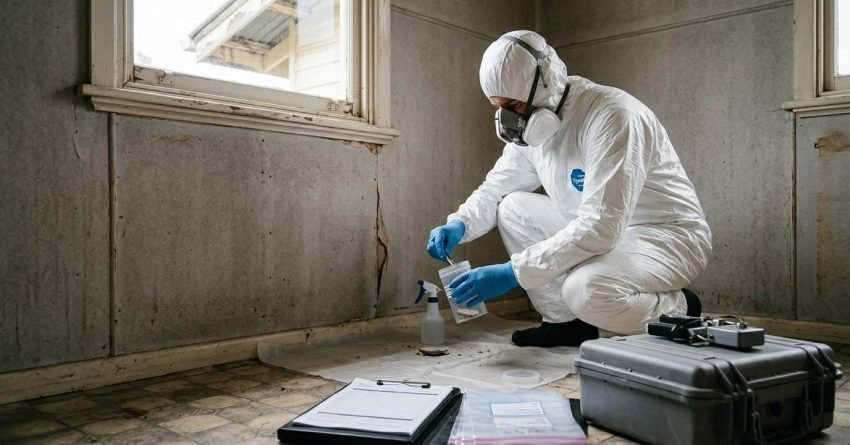
Before any renovation in a Sydney home built before 1990, asbestos testing is not optional it is the single most important step you take before a tool touches the building. Asbestos-containing materials (ACMs) were used in thousands of residential properties across New South Wales, and disturbing them without testing first puts everyone on site at serious health and legal risk.
The stakes are real. Airborne asbestos fibres cause mesothelioma and asbestosis, and there is no safe exposure threshold recognised by health authorities.
This guide walks through exactly how asbestos testing works, what it costs in Sydney, who is qualified to do it, and what NSW law requires of you as a homeowner or renovator before work begins.
Why Asbestos Is Still a Real Risk in Sydney Homes
Australia was one of the highest per-capita users of asbestos products in the world, and Sydney’s housing stock reflects that history. According to SafeWork NSW, asbestos was used in more than 3,000 building products and was not fully banned in Australia until 31 December 2003.
That means any home built or renovated before that date is a candidate for containing ACMs. And in Sydney’s older suburbs from Leichhardt to Penrith, Parramatta to the Northern Beaches the majority of the housing stock falls squarely in that window.
Which Properties Are Most at Risk
Fibro homes built between the 1940s and 1980s carry the highest risk, but they are far from the only concern. Brick veneer, weatherboard, and even rendered homes from the same era commonly contain asbestos in wall sheeting, eaves, roofing, floor tiles, pipe lagging, and textured ceiling coatings.
Pre-1990 properties of any construction type should be treated as potentially containing asbestos until testing proves otherwise. That includes terraces, semi-detached homes, and older apartment buildings.
What Happens When Asbestos Is Disturbed
Asbestos fibres become dangerous the moment they are released into the air. Cutting, drilling, sanding, or demolishing ACMs without proper controls sends microscopic fibres airborne fibres that are invisible to the naked eye and remain suspended in the air for hours.
Inhaling those fibres causes irreversible lung damage. Mesothelioma, asbestosis, and lung cancer are the documented outcomes, and symptoms often do not appear for decades after exposure. There is no cure for mesothelioma.
What Asbestos Testing Actually Involves
Asbestos testing is not a single action it is a process that moves from visual assessment through to laboratory confirmation. Understanding what is involved helps you plan the timeline and budget for your renovation correctly.
The goal is a confirmed, documented result: either the material contains asbestos and must be managed, or it does not and work can proceed safely.
Visual Inspection vs. Laboratory Testing
A visual inspection alone cannot confirm the presence or absence of asbestos. Experienced assessors can identify materials that are likely to contain asbestos based on age, appearance, and location but that is a presumptive assessment, not a confirmed one.
Laboratory testing is the only way to confirm asbestos content. A bulk sample of the suspect material is collected, sealed, and sent to a NATA-accredited laboratory for analysis under polarised light microscopy. The lab result is the definitive answer.
Who Is Qualified to Test for Asbestos in NSW
In New South Wales, asbestos sampling and assessment must be carried out by a competent person and for most residential renovation scenarios, that means engaging a licensed asbestos assessor. SafeWork NSW sets the competency requirements, and assessors must hold the relevant qualifications under the Work Health and Safety (Asbestos) Regulations.
Do not rely on a general building inspector to conduct asbestos sampling unless they hold specific asbestos assessment credentials. The two roles are not the same.
How to Get Your Property Tested Before Renovation
The process follows four clear steps. Each one builds on the last, and skipping any of them creates gaps in your documentation and your legal protection.
Step 1 Identify Suspect Materials
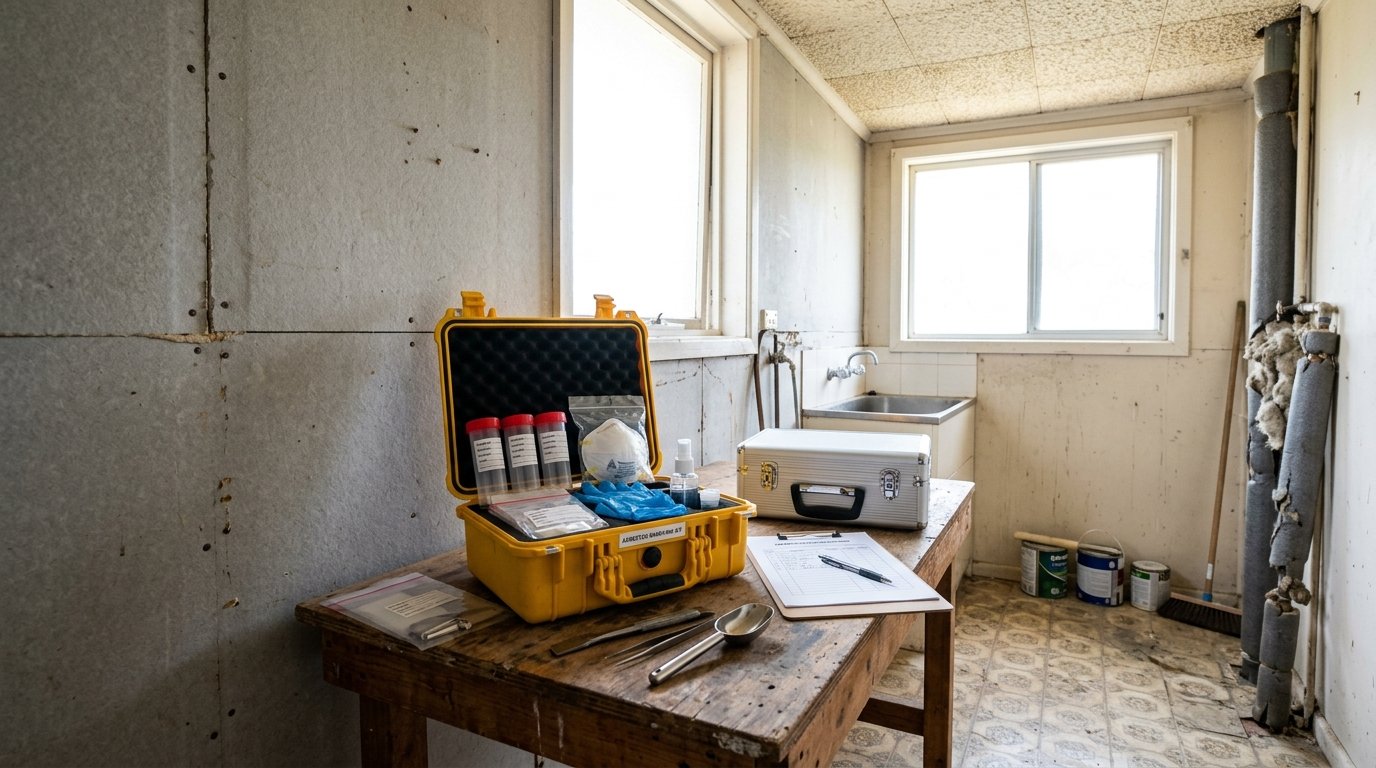
Before engaging anyone, walk through the areas you plan to renovate and note every material that could potentially contain asbestos. Focus on wall and ceiling sheeting, eaves, roofing, floor coverings, textured coatings, pipe insulation, and any material that looks like compressed fibre cement.
Do not touch, cut, or disturb any suspect material during this step. The purpose is identification only not sampling.
Step 2 Engage a Licensed Asbestos Assessor
Contact a licensed asbestos assessor and brief them on the scope of your planned renovation. They will conduct a formal inspection of the property, assess all suspect materials, and determine which ones require sampling.
Verify their credentials before engaging them. A legitimate assessor holds qualifications recognised under NSW WHS legislation and can provide documentation of their competency on request.
Step 3 Sample Collection and Lab Analysis
The assessor collects bulk samples from each suspect material using controlled procedures that minimise fibre release. Samples are sealed, labelled, and sent to a NATA-accredited laboratory for analysis.
Standard laboratory turnaround in Sydney is typically two to five business days. Expedited testing is available from most labs if your renovation timeline is tight, usually within 24 to 48 hours for an additional fee.
Step 4 Review the Asbestos Report and Act on It
The assessor provides a written report detailing which materials were sampled, the laboratory results, the location and condition of any confirmed ACMs, and recommended actions. This report forms the basis of your asbestos register and management plana legal requirement for many properties under NSW WHS legislation.
Read the report carefully. If ACMs are confirmed, the report tells you whether they are in a condition that requires immediate removal or whether they can be managed in place during the renovation.
How Much Does Asbestos Testing Cost in Sydney
Asbestos testing costs in Sydney vary depending on the size of the property, the number of suspect materials, and whether you need expedited laboratory results.
As a general guide, a residential asbestos inspection and report typically ranges from $300 to $700 for a standard property with a moderate number of suspect materials. Each additional bulk sample sent to the laboratory adds roughly $30 to $80 per sample depending on the lab and turnaround time selected.
Expedited results carry a premium, and larger properties with extensive suspect materials will sit at the higher end of the range. These are not costs to cut corners on. The expense of proper testing is negligible compared to the cost of a stop-work order, a contamination clean-up, or a workers’ compensation claim.
What Happens If Asbestos Is Found
Finding asbestos in your property does not automatically stop your renovation. What it does is change how the work proceeds and who is legally permitted to carry it out.
The confirmed presence of ACMs triggers specific obligations under NSW law, and the path forward depends on the type of asbestos identified and its condition.
Friable vs. Non-Friable Asbestos What the Difference Means
Non-friable asbestos is bonded within a solid matrix typically cement sheeting and is relatively stable when left undisturbed. It is the most common type found in Sydney residential properties.
Friable asbestos is loose, crumbly, and releases fibres easily when touched or disturbed. It is far more hazardous and requires a Class A licensed removalist to handle it. Non-friable asbestos removal is carried out by a Class B licensed removalist, though Class A licensees can handle both.
Licensed Removal vs. Encapsulation
Removal is not always the only option. In some cases, non-friable ACMs in good condition can be encapsulated sealed with a penetrating sealant or overcoated rather than removed, provided the renovation scope does not require disturbing them.
Encapsulation is a legitimate management strategy, but it requires documentation and ongoing monitoring. It is not a permanent solution if the material will eventually be disturbed by future work. Where removal is required, only a licensed asbestos removalist carries out the work, and a clearance inspection by an independent licensed assessor is required before the area is re-occupied or work continues.
The Legal Side NSW Regulations You Need to Know
NSW asbestos regulations sit under the Work Health and Safety Act 2011 and the Work Health and Safety Regulation 2017. These apply to residential renovation work, not just commercial construction.
The key rule most homeowners are unaware of: any removal of non-friable asbestos exceeding 10 square metres must be carried out by a Class B licensed removalist. Below 10 square metres, a competent person can remove non-friable ACMs but friable asbestos has no DIY threshold. It requires a Class A licensed removalist regardless of quantity.
SafeWork NSW publishes the current regulatory requirements and licence categories in full. Homeowners who engage unlicensed removalists or attempt to remove asbestos themselves outside the permitted thresholds face significant penalties and personal liability.
Common Mistakes Homeowners Make With Asbestos Testing
The most expensive mistake is skipping testing altogether. It happens more often than it should, usually because a homeowner assumes their property is too new to contain asbestos or because they want to avoid the cost and delay. Neither assumption holds up.
The second most common mistake is relying on a visual assessment alone. An experienced eye can flag suspect materials, but only a laboratory result confirms asbestos content. Proceeding on a presumptive assessment is a legal and health risk.
Engaging an unlicensed person to collect samples or remove materials is the third major error. It creates liability, voids insurance coverage in many cases, and most importantly puts people at genuine physical risk. The licensing requirements exist for a reason, and they are enforced.
Finally, many homeowners receive an asbestos report and then fail to act on it properly. The report is not the end of the process. It is the starting point for a management plan, a removal scope, and a clearance inspection. Treat it that way.
Conclusion
Asbestos testing before renovation is not a bureaucratic hurdle it is the foundation of a safe, legally compliant project. Sydney’s housing stock carries real asbestos risk, and the testing process exists to give you confirmed facts, not guesswork, before work begins.
The cost of testing is small relative to the cost of getting it wrong. A contamination event, a stop-work order, or a health claim from a tradesperson on your site carries consequences that no renovation budget can absorb.
We help Sydney homeowners plan and execute renovations the right way with proper pre-construction checks, licensed subcontractors, and full compliance built into every project. Reach out to Sydney Home Renovation before your next project starts.
Frequently Asked Questions
Do I need asbestos testing before a bathroom renovation?
Yes. Bathroom renovations in pre-1990 Sydney homes almost always involve disturbing wall sheeting, floor tiles, or ceiling materials that may contain asbestos. Testing before demolition is the only way to confirm what you are dealing with and proceed safely and legally.
How long does asbestos testing take in Sydney?
Standard laboratory turnaround is two to five business days after samples are collected. Expedited testing is available from most NATA-accredited labs within 24 to 48 hours for an additional fee. Factor this into your renovation timeline before booking trades.
Can I collect asbestos samples myself in NSW?
A homeowner can collect a small sample from their own property for testing purposes, but it carries real risk if done incorrectly. The safer and legally cleaner approach is to engage a licensed asbestos assessor who collects samples under controlled conditions and provides a formal written report.
What does an asbestos clearance certificate mean?
A clearance certificate is issued by an independent licensed asbestos assessor after removal work is complete. It confirms the area has been inspected, air monitoring results are within acceptable limits, and the space is safe to re-occupy. No renovation work should resume in a cleared area without this document.
Is asbestos testing required by law before renovation in NSW?
NSW WHS legislation requires that asbestos risks are identified and managed before work begins. While there is no single law that says “you must test,” the duty to identify hazards before disturbing materials effectively makes testing the only defensible way to meet that obligation. Proceeding without testing exposes you to significant legal liability.
How do I find a licensed asbestos assessor in Sydney?
SafeWork NSW maintains a public register of licensed asbestos assessors and removalists. Search the SafeWork NSW licence register to verify credentials before engaging anyone. Always ask for their licence number and confirm it is current before work begins.


