The world’s only restaurant widely called a 7-star venue sits inside the Burj Al Arab in Dubai. We looked into how this label came about, because no official 7-star rating exists anywhere in global hospitality. The title stuck to Burj Al Arab’s restaurants after a journalist described its unmatched luxury back in 1999, and today Al Muntaha and Al Mahara still carry that reputation.
The Only 7 Star Restaurant in the World
The only restaurant globally recognised as a 7-star venue is found at Burj Al Arab Jumeirah in Dubai, specifically Al Muntaha and Al Mahara. The 7-star label is unofficial, coined by a British journalist in 1999. No hospitality body issues a 7-star rating, which makes this status purely reputational.
Where Burj Al Arab’s 7 Star Status Came From
We traced the phrase back to a journalist who toured Burj Al Arab before its December 1999 opening and described the experience as beyond conventional 5-star standards. The hotel took roughly five years to build, rising on its own artificial island just off Jumeirah Beach. It never claimed the 7-star title officially, yet the description stuck because the property’s scale of luxury genuinely exceeded existing categories.
Gold leaf interiors, private butlers, and a private helipad reinforced the perception at the time. Decades later, the label remains attached to its restaurants because no competing venue has displaced it in the public imagination.
What Makes Burj Al Arab’s Architecture Iconic
Standing at 321 metres, Burj Al Arab is one of the tallest hotel structures in the world, designed to resemble the billowing sail of a traditional dhow ship. We think the building itself does as much work as the restaurants in creating the 7-star impression. Its skeletal steel exoskeleton and dedicated artificial island set it apart from any hotel built before it.
The interior atrium alone rises 180 metres, making it one of the tallest atriums on the planet. This kind of architectural ambition is part of why the “beyond 5 star” description felt earned rather than exaggerated.

Why No Official 7 Star Rating Exists
Global hospitality grading systems, including Forbes Travel Guide and the Michelin star framework, cap formal recognition at 5 stars or 3 Michelin stars. The AAA Five Diamond Award follows the same ceiling. There is no regulatory body anywhere that awards 7 stars.
We see the label as marketing shorthand for hospitality that transcends the standard luxury tier. It signals service ratios, material rarity, and design ambition that exceed what 5-star certification measures, rather than a verified classification a guest can look up.
What Makes a Restaurant Worth a 7 Star Label
A 7-star reputation rests on rarity, not certification. The defining markers include bespoke architecture, one-to-one service ratios, signature material palettes, and dining environments engineered as immersive theatre. Burj Al Arab’s restaurants demonstrate each of these through gold accents, underwater aquariums, helicopter access, and chef talent drawn from globally awarded kitchens.
Inside Al Muntaha and Al Mahara Experiences
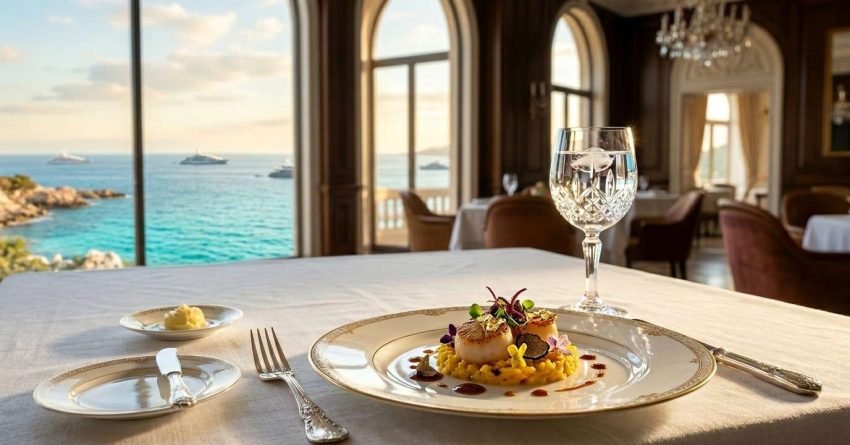
Al Muntaha sits 200 metres above the Arabian Gulf, accessed by a panoramic lift, with menus built around French technique and regional produce. Al Mahara places diners beside a floor-to-ceiling aquarium, with a focus on seafood prepared at Michelin-level execution.
Both venues lean heavily on premium fittings and material selection, from hand-finished metalwork to imported stone. We find that this tactile detail is just as central to the 7-star perception as the food itself.
Other Hotels That Claim Ultra-Luxury Status
A handful of properties worldwide have tried to adopt similar self-styled ratings. The Emirates Palace in Abu Dhabi and Town House Galleria in Milan have both been informally described in 7-star terms by press or marketing teams at various points. None of these labels come from a certifying body, and none have matched Burj Al Arab’s staying power in public recognition since 1999.
We think this matters because it shows the Burj Al Arab label isn’t really about a number. It’s about being first, and being distinctive enough that the description never faded.

How 7 Star Compares to 5 Star Fine Dining
A 5-star restaurant meets defined service, food, and facility benchmarks set by recognised guides. A 7-star venue exceeds these in scale and personalisation but lacks formal verification. The gap is experiential, not regulatory.
Where 5-star fine dining delivers excellence within standards, 7-star delivers spectacle beyond them. Few global venues can sustain the price points this level of experience demands.
How to Book a Table at Al Mahara or Al Muntaha
Al Mahara accepts external reservations from guests who aren’t staying at the hotel, subject to availability. We’d recommend booking several weeks ahead for weekend dinner slots, since demand consistently outpaces table count. Guests need to pass hotel security screening and meet the dress code before reaching the restaurant floor, and smart-casual attire is the realistic minimum standard.
Al Muntaha operates similarly, with its panoramic lift access adding a short check-in step before diners reach the dining floor itself.
Conclusion
The only restaurant carrying the 7-star label is found inside Burj Al Arab in Dubai, an unofficial title rooted in reputation rather than regulation. The story behind it says more about ambition and staying power than any certified rating ever could.
We find that stories like this one are a useful reminder of what genuine attention to material, detail, and craftsmanship can achieve at any scale. At Sydney Home Renovation, we bring that same level of care to every renovation project we take on, from bathrooms to full home transformations.
Frequently Asked Questions
Is Burj Al Arab really a 7-star hotel?
No official 7-star rating exists. The title is informal, originating from a 1999 journalist description, and remains a reputational marker rather than a certified hospitality classification.
How much does dining at Al Muntaha cost?
Al Muntaha tasting menus typically start around AED 1,200 per person, with premium pairings and chef’s table experiences pushing well above standard 5-star fine dining benchmarks globally.
Are there other restaurants called 7 star?
Only Burj Al Arab’s venues carry the 7-star reputation consistently. Some hotels market themselves as 7 star, but none hold the same global recognition or longevity.
What is the highest official restaurant rating?
Three Michelin stars represent the highest formal culinary recognition. Forbes Travel Guide awards a maximum of 5 stars for combined dining and hospitality excellence worldwide.
Can you visit Al Mahara without staying at Burj Al Arab?
Yes, Al Mahara accepts external reservations subject to availability. Guests must pass hotel security checks and meet dress code requirements before accessing the restaurant areas.