
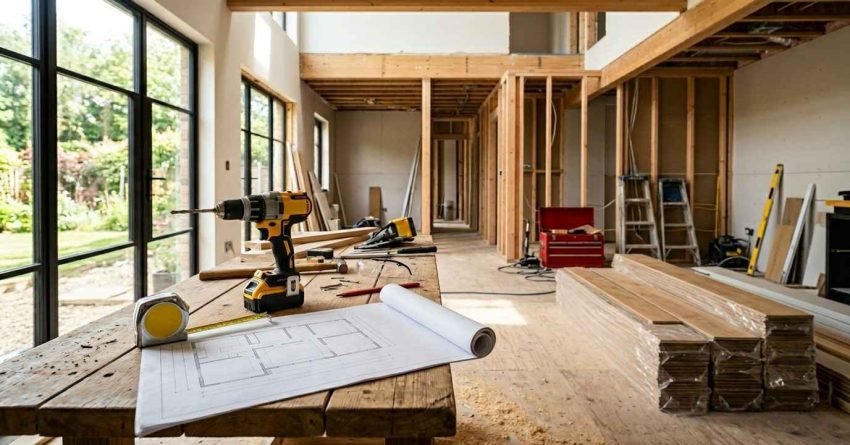
A whole home renovation in Sydney typically takes 3 to 12 months and costs anywhere from $150,000 to $600,000 or more, depending on the size of your home, the scope of work, and the quality of finishes you choose. Understanding what the process actually involves, from planning and permits through to construction and final handover, is the single most effective way to protect your budget, your timeline, and your sanity.
Most homeowners underestimate how much coordination a whole home renovation requires before a single wall comes down. Getting clear on the phases, the costs, and the decisions ahead of time puts you in control.
This guide covers every stage of the renovation process, what drives costs in Sydney, how timelines are structured, and what you can do to keep your project running smoothly from start to finish.
How a Whole Home Renovation Actually Unfolds
A whole home renovation is not a single event. It is a structured sequence of phases, each one dependent on the last, and skipping steps or rushing decisions early in the process is the most common cause of cost blowouts and delays later on.
The process moves through three broad stages: pre-construction, active construction, and completion. Each stage has its own decisions, dependencies, and risks.
The Pre-Construction Phase: Planning, Permits, and Design
Before any physical work begins, your renovation goes through a planning and approval phase that typically takes 4 to 12 weeks. This includes finalising your design brief, engaging an architect or draftsperson if structural changes are involved, and lodging any required approvals with your local council.
In New South Wales, most whole home renovations require either a Complying Development Certificate (CDC) or a Development Application (DA). A CDC is assessed by a private certifier against the State Environmental Planning Policy (Exempt and Complying Development Codes) and is generally faster, with approvals typically issued within 10 to 20 business days. A DA is assessed by your local council and can take anywhere from 40 to 120 days, depending on the complexity of the proposal and whether the property is in a heritage overlay area.
Structural changes, additions that exceed CDC thresholds, and any works on heritage-listed or heritage-conservation-area properties almost always require a DA. Understanding which pathway applies to your project at the outset is one of the most important planning decisions you will make.
During this phase, your contractor will also complete a detailed scope of works, prepare trade schedules, and lock in material specifications. The scope of works is a written document that defines every item of work included in the contract, the materials and finishes specified, and the exclusions. The more resolved your design is before work starts, the fewer variations you will face during the build.
Renovating a Heritage-Listed Property in Sydney
Heritage-listed properties and properties within heritage conservation areas are subject to additional controls under the NSW Heritage Act 1977 and local environmental plans. Works that would ordinarily qualify for CDC approval may require a DA when the property carries a heritage listing.
Heritage DAs typically require a Statement of Heritage Impact prepared by a heritage consultant, and council assessment periods are often longer than standard applications. Budget an additional 6 to 16 weeks for heritage DA assessment, and engage a heritage consultant early in the design phase to avoid costly redesigns after lodgement.
Construction Sequencing: What Gets Done First
Whole home renovations follow a strict trade sequence for home renovations. Demolition and structural work come first, followed by rough-in, including plumbing, electrical, and HVAC, before walls are closed. Insulation, plastering, and waterproofing follow, then tiling, joinery, and cabinetry. Painting, fixtures, and final finishes are completed last.
This sequence is not flexible. Each trade depends on the one before it being complete and inspected. Understanding this order helps you set realistic expectations about when specific rooms will be usable and why certain decisions cannot be made mid-build.

How Long Does a Whole Home Renovation Take in Sydney?
For a standard three-to-four bedroom home in Sydney, a whole home renovation typically takes between 4 and 9 months from construction start to practical completion. Larger homes, heritage properties, or projects involving significant structural changes can extend to 12 months or beyond.
The pre-construction phase adds a further 4 to 12 weeks before the build begins, meaning the total project duration from initial engagement to handover is commonly 6 to 14 months. These timelines assume a well-resolved design, approved permits, and a contractor with confirmed trade availability.
Projects that begin construction before design decisions are finalised almost always run longer than projected.
What Causes Renovation Timelines to Blow Out
The most common causes of timeline delays in Sydney renovations are late design decisions, variations to the approved scope, material lead times, and trade scheduling conflicts. Wet weather can also affect external works and concrete pours, particularly slab pours and external waterproofing, which cannot proceed in rain.
Council approval delays are a significant and often underestimated risk. A standard CDC takes 2 to 4 weeks; a DA in a standard zone takes 40 to 80 days; a heritage DA can take 3 to 6 months. Projects in heritage conservation areas that begin the design process without accounting for this approval timeline routinely miss their intended construction start dates by a full season.
Building in contingency time at the planning stage, rather than assuming best-case scenarios, is the most reliable way to manage timeline risk.
What Does a Whole Home Renovation Cost in Sydney?
Whole home renovation costs in Sydney vary significantly based on the size of the home, the extent of structural changes, the quality of materials and fittings, and the complexity of the site. As a general guide, budget-level renovations start from around $1,500 to $2,000 per square metre, mid-range projects typically fall between $2,500 and $3,500 per square metre, and high-end or bespoke renovations can exceed $4,500 per square metre.
For a 200 square metre home, this translates to a realistic cost range of $300,000 to $900,000 depending on scope and finish level. These figures include labour, materials, project management, and standard inclusions, but not all of the costs that commonly arise during a renovation.
Key Cost Variables That Affect Your Budget
The factors that most significantly affect your renovation cost are the extent of structural changes, including removing or adding walls, altering rooflines, or relocating wet areas, the quality of kitchen and bathroom fittings, the type of flooring specified, and whether the project requires asbestos removal or other remediation work.
Labour costs in Sydney are among the highest in Australia, and trade availability directly affects pricing. Projects scheduled during peak periods or with compressed timelines typically attract premium rates. Relocating a bathroom or kitchen, which requires moving drainage and water supply lines, adds $8,000 to $25,000 or more to the cost of those rooms compared with a like-for-like replacement.
Energy Efficiency and Sustainability Upgrades
Many homeowners use a whole home renovation as the opportunity to upgrade insulation, glazing, and mechanical systems to current energy efficiency standards. Adding bulk insulation to walls and ceilings during a renovation, when wall cavities are already open, costs a fraction of what it would cost as a standalone retrofit.
Upgrading to double-glazed windows, installing a heat pump hot water system, and specifying a split-system HVAC with a high energy star rating are among the highest-return sustainability investments available during a whole home renovation. These upgrades reduce ongoing energy costs and can improve the property’s NatHERS rating, which is increasingly relevant to resale value in the Sydney market.
Hidden Costs Most Homeowners Don’t Plan For
The costs that most frequently catch homeowners off guard are council fees and DA costs, structural engineer reports, asbestos testing and removal, unexpected subfloor or roof repairs uncovered during demolition, temporary accommodation during construction, and variations arising from design changes mid-build.
Council DA fees in Sydney typically range from $1,500 to $10,000 depending on the estimated cost of works. Structural engineer reports cost $1,500 to $4,000. Asbestos testing costs $300 to $800, and removal of asbestos-containing materials in a pre-1990 Sydney home can add $5,000 to $30,000 depending on the extent and type of material. Temporary accommodation for a family during a 6-month renovation adds $15,000 to $40,000 to the total project cost.
A realistic contingency allowance for a whole home renovation is 15 to 20 percent of your total construction budget. Accounting for unexpected expenses before work begins is one of the most effective ways to protect your project.

How to Choose the Right Builder for a Whole Home Renovation
Choosing the right builder is the single most consequential decision you will make on a whole home renovation. A builder with the right licence, experience, and process will protect your budget and timeline. The wrong choice creates the conditions for every problem this guide describes.
In New South Wales, any builder undertaking residential construction work valued above $5,000 must hold a current contractor licence issued by NSW Fair Trading. For whole home renovations, you need a builder holding a Contractor Licence in the Building category. Verify the licence at the NSW Fair Trading licence check before signing any contract.
Beyond licensing, look for a builder with demonstrated experience in whole home renovations of similar scope and scale to yours. Ask for references from at least three completed projects, and contact those clients directly. A builder who cannot provide references from comparable projects is a significant risk on a project of this size.
Assess the builder’s project management process before you commit. A professional builder will provide a detailed scope of works, a construction program with trade milestones, a clear variation process, and a defined communication protocol. These are not optional extras. They are the operational infrastructure that keeps a whole home renovation on track.
Red flags to watch for include requests for large upfront deposits before work begins, reluctance to provide a written scope of works, vague or verbal-only pricing, and an inability to explain the construction program in detail.
What Your Renovation Contract Should Include
A written contract is not a formality on a whole home renovation. It is the document that defines what you are paying for, what happens when things change, and how disputes are resolved. Under the NSW Home Building Act 1989, a written contract is legally required for residential building work valued above $20,000.
Your contract should include a detailed scope of works that specifies every item of work, the materials and finishes to be used, and any exclusions. It should include a fixed price or clearly defined cost-plus arrangement, a payment schedule tied to construction milestones rather than calendar dates, and a variation process that requires written approval before any additional work proceeds.
The contract should also specify the defects liability period, the process for practical completion, and the dispute resolution mechanism. A contract that is vague on any of these points creates the conditions for disagreement at the worst possible time.
Who Manages the Renovation and What That Means for You
On a whole home renovation, your licensed builder or principal contractor is responsible for coordinating all trades, managing the construction program, ordering materials, arranging inspections, and ensuring the project meets Australian building standards. Under the NSW Home Building Act 1989, the principal contractor carries statutory warranty obligations for the work, including a 6-year warranty for major defects and a 2-year warranty for all other defects.
This is not a role that can be effectively managed by a homeowner without construction experience. The volume of daily decisions, trade dependencies, and compliance requirements makes professional project management essential.
Your Role as the Homeowner During the Build
Your primary responsibilities during construction are making timely decisions when variations or unforeseen conditions arise, providing access to the property as scheduled, and reviewing progress at agreed milestones. Delays in homeowner decision-making are one of the most common causes of program disruption.
Establishing a clear communication protocol with your contractor at the outset, including response timeframes for variation requests, significantly reduces the risk of avoidable delays. Agree on a weekly site meeting or written progress update, and confirm in writing every decision that affects the scope, cost, or timeline.
How to Prepare Your Home and Family Before Work Begins
Preparation before construction starts reduces disruption, prevents delays, and protects your belongings. Begin by arranging temporary accommodation if the renovation affects your kitchen, bathrooms, or primary living areas. Most whole home renovations make the property uninhabitable for at least part of the build.
Remove or store all furniture, artwork, and valuables from areas being renovated. Disconnect or protect any items that will remain on site. Confirm utility disconnection and reconnection schedules with your contractor, noting that electrical disconnection must be performed by a licensed electrician and gas disconnection by a licensed gasfitter.
Ensure all neighbours have been notified of the upcoming works in accordance with your council’s requirements. Under the Protection of the Environment Operations Act 1997, construction noise in residential areas is restricted to standard hours, typically 7 am to 5 pm Monday to Saturday, and prohibited on Sundays and public holidays. Your contractor is responsible for compliance, but notifying neighbours in advance reduces friction and complaint risk.

Common Challenges During a Whole Home Renovation
Even well-planned renovations encounter challenges. The most common issues homeowners face are scope creep, variations arising from conditions discovered during demolition, trade scheduling conflicts caused by material delays, and communication breakdowns between the homeowner and contractor.
Scope creep occurs when additional works are added during the build without a clear understanding of the cost and time implications. Every addition, however small it seems, should be documented as a formal variation with a written cost and time impact before approval. A running variation log maintained by both the homeowner and the contractor is the most effective tool for keeping scope creep visible and controlled.
Managing these challenges effectively requires a clearly written contract that defines the scope, payment schedule, and variation process, a realistic contingency budget, and a contractor who communicates proactively rather than reactively. Homeowners who treat their renovation as a collaborative process, staying engaged without micromanaging, consistently report better outcomes than those who disengage entirely or attempt to direct trades directly.
Practical Completion, Defects, and Final Handover
Practical completion is the point at which the building work is complete except for minor defects that do not prevent the building from being used for its intended purpose. It is a defined legal milestone under the NSW Home Building Act 1989 and triggers several important obligations and rights.
At practical completion, your builder will issue a practical completion certificate and request the final progress payment. Before making that payment, conduct a thorough final inspection with your builder and document any defects or incomplete items on a formal defects list. Do not make the final payment until you have a written agreement on how and when each defect will be rectified.
The defects liability period begins at practical completion. Under the NSW Home Building Act, builders carry a statutory warranty of 6 years for major defects, including structural defects, and 2 years for all other defects. Any defects identified during the liability period must be notified to the builder in writing. Keep all documentation from the build, including the contract, variations, inspection reports, and correspondence, as these are essential if a warranty claim becomes necessary.
How to Keep Your Renovation on Track
Keeping a whole home renovation on track comes down to three things: a resolved design before construction starts, a contractor with a structured project management process, and a homeowner who makes decisions promptly and manages their budget with a realistic contingency.
Review your program at each milestone, ask for written confirmation of any variations before approving them, and maintain a running record of all decisions and approvals throughout the build. If something does not look right on site, raise it with your contractor immediately. Issues identified early are almost always cheaper and faster to resolve than those discovered at completion.
A variation log, a decision register, and a weekly written update from your contractor are the three practical tools that keep communication clear and accountability shared across the full duration of the build.
Conclusion
A whole home renovation is one of the most significant investments a homeowner can make, and one of the most complex to manage. Understanding the phases, costs, timelines, and common challenges before work begins is what separates projects that run smoothly from those that don’t.
The decisions you make during planning have a greater impact on your final outcome than any decision made during construction. A resolved design, a realistic budget with contingency, and a contractor with a structured process are the three foundations every successful renovation is built on.
We are here to guide you through every stage of your renovation, from your first cost conversation through to final handover. Contact Sydney Home Renovation today to start with a clear plan, honest pricing, and a team that keeps your project on time, on budget, and built to last.
Frequently Asked Questions
What is included in a whole home renovation?
A whole home renovation typically includes structural changes, kitchen and bathroom upgrades, new flooring, updated electrical and plumbing, fresh plastering and painting, and new joinery throughout.
Do I need council approval for a whole home renovation in Sydney?
Yes. Most whole home renovations require either a CDC or a DA. Structural changes, additions, and heritage properties almost always require a DA before construction can begin.
Can I live in my home during a whole home renovation?
In most cases, no. Dust, noise, utility disconnections, and restricted access to kitchens and bathrooms make temporary accommodation the practical choice for most of the construction period.
How do I avoid cost blowouts on a whole home renovation?
We recommend finalising your design before construction starts, including a 15 to 20 percent contingency, securing a detailed written contract, and avoiding scope changes once the build is underway.
What is the difference between a renovation and a knockdown rebuild?
A renovation retains the existing structure and upgrades it. A knockdown rebuild demolishes the home and builds new. Knockdown rebuilds suit homes with significant structural issues; renovations suit properties with sound bones and character value.
How do I choose the right contractor for a whole home renovation?
Verify their NSW Fair Trading contractor licence, ask for references from comparable completed projects, and assess their scope of works, construction program, and communication process before signing.
What happens if unexpected issues are found during demolition?
Your contractor should document the issue, provide a written variation with cost and time implications, and obtain your written approval before proceeding. This is why a 15 to 20 percent contingency is essential.
How is a whole home renovation financed?
Most homeowners use a construction loan, home equity loan, or refinance their existing mortgage to fund a whole home renovation. We recommend speaking with a mortgage broker before finalising your budget to confirm your borrowing capacity and the drawdown structure that suits your project.
What does practical completion mean?
Practical completion is the legal milestone at which the building work is complete except for minor defects. It triggers the final payment, the start of the defects liability period, and the handover of the property to the homeowner.