Choosing the right laundry tile turns a small utility space into a hardworking, beautiful room. The best laundry tile ideas combine durable floor surfaces with stylish wall finishes that resist water, stains, and daily wear without dating quickly.
Sydney homeowners rely on their laundries every day, so tile choices directly affect cleanliness, durability, resale value, and the overall feel of the home. We see this in every project we take on; the right laundry room tiles lift the entire space.
This guide covers wall and floor tile ideas, materials, layouts, colours, costs, and the practical specifications you need to make confident decisions for your Sydney laundry.
Why Laundry Tile Choice Matters for Wall and Floor
The laundry is one of the wettest, busiest rooms in the home. Detergent splashes, lint, footprints, leaking hoses, and dropped pegs all hit your tiles daily.
A well-planned tile selection sits at the heart of any successful laundry upgrade, connecting layout, plumbing, and finishes into one cohesive design.
Durability and Daily Wear
Laundry floor tiles need a high PEI rating and strong slip resistance. Walls behind the sink, washing machine, and dryer should handle splashes and steam without staining or warping.
Choosing the wrong tile can mean replacement within a few short years.
Style, Light, and Space Perception
Tile colour, format, and finish dramatically change how large and bright a laundry feels. Pale large-format tiles reflect light. Glossy walls bounce brightness around tight rooms.
Patterned floors add personality where cabinetry is plain and functional.
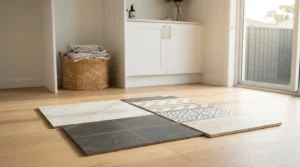
Best Floor Tile Ideas for Sydney Laundries
Floor tiles must perform first and look good second. These ideas balance both goals beautifully in Sydney homes.
Large-Format Porcelain Floors
Tiles sized 600×600mm or larger reduce grout lines, creating a clean, modern look that makes compact laundries feel bigger. Matt rectified porcelain in soft greys, warm whites, or charcoal works in almost any colour scheme and stands up to heavy traffic.
We recommend rectified edges for the crispest grout lines and the flattest finished floor.
How to Choose the Right Tile Size for Your Laundry
Tile size has a direct effect on how spacious a laundry feels. In rooms under 4 square metres, we find that 300×600mm or 600×600mm formats strike the best balance: large enough to reduce visual clutter, small enough to cut cleanly around tight corners and floor wastes.
Tiles larger than 800mm can work in open-plan laundry spaces but demand a very flat substrate and add to installation time and cost. For narrow galley-style laundries, a plank format (200×1200mm) laid lengthways visually extends the room.
Patterned Encaustic-Look Tiles
Encaustic-look porcelain delivers the personality of traditional cement tiles without the sealing maintenance. Geometric, Moroccan, or Mediterranean patterns work beautifully on laundry floors where cabinetry is simple, and walls are kept calm.
They suit Federation and Hamptons-style Sydney homes especially well.
Timber-Look Plank Tiles
Timber-look porcelain planks deliver warmth and texture while remaining fully waterproof. They pair perfectly with butler-style laundries, Scandinavian palettes, and homes that flow visually from a tiled laundry into adjoining timber-floored kitchens or hallways.
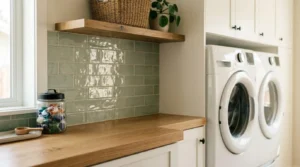
Wall Tile Ideas to Elevate Your Laundry
Wall tiles bring style, light, and personality. The key is choosing layouts that complement your cabinetry and benchtop without overwhelming the room.
Classic Subway Tile Layouts
White, gloss subway tiles remain a Sydney favourite for good reason. They are affordable, timeless, and reflect light beautifully. Standard 75×150mm or modern slimline 65×265mm formats both work.
Try a dark grout for contrast, or matching grout for a seamless finish.
Vertical Stack and Herringbone
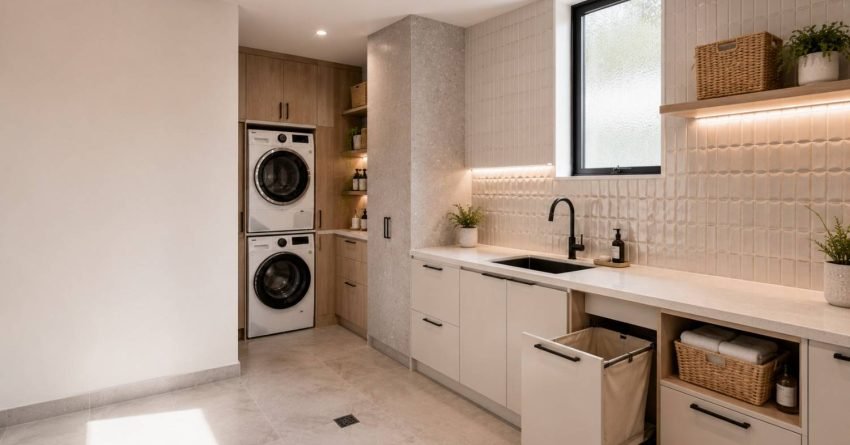
For a more contemporary look, lay subway or rectangular tiles in a vertical stack to add height to low ceilings, or use a herringbone layout behind the sink to introduce visual movement. Both work especially well when paired with matt-black tapware and timber accents.
Feature Splashbacks Behind the Sink
A small feature splashback adds character without dating quickly. Fluted ceramic tiles, fish-scale shapes, hexagons, or zellige-style handmade tiles create a focal point above the trough while the rest of the room stays neutral and practical.
Pairing Wall and Floor Tiles Like a Designer
Successful laundries balance wall and floor tiles so
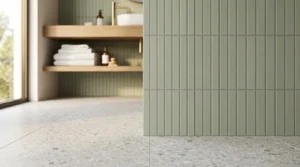
they complement rather than compete. When working with a compact footprint, the right tile pairing visually doubles the space.
Contrast vs. Continuity
Two simple approaches work consistently. Contrast pairs a patterned floor with a calm white wall tile. Continuity uses similar tones on both surfaces and adds interest through different tile shapes or layouts.
Avoid two busy patterns in the same room.
Choosing the Right Grout: Type, Colour, and Performance
Grout shapes the entire look of a tiled surface, and the type of grout matters as much as the colour. We always recommend epoxy grout for laundry floors and wet-area walls; it resists staining, moisture, and detergent far longer than standard cement grout, particularly around the trough and washing machine.
For colour, matching grout creates a soft, seamless finish that suits large-format tiles and neutral palettes. Contrasting grout such as charcoal with white subway tiles makes a geometric statement and hides daily marks better in high-traffic laundries. We find that mid-tone greys are the most forgiving choice for busy family laundries, sitting between the extremes of stark white (which stains) and very dark (which shows soap residue).
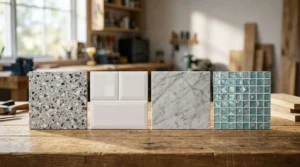
Popular Tile Materials Compared
Each material brings different trade-offs in cost, durability, and maintenance. Material choice directly shapes installation difficulty and long-term performance.
Porcelain
Porcelain is the gold standard for laundry floors and walls. It is dense, water-resistant, low-maintenance, and available in nearly any look from concrete to terrazzo to timber.
We specify rectified porcelain on most projects: the precision-cut edges allow tighter grout joints (as narrow as 1.5mm), producing a cleaner, more contemporary finish than non-rectified tiles. Slightly more expensive than ceramic, but the long-term value is hard to beat.
Ceramic
Ceramic tiles are budget-friendly and ideal for walls where impact resistance is less critical. They are easier to cut and install, which can reduce labour costs.
We keep ceramic off heavy-use floors, where chips and cracks are more likely over time.
Natural Stone
Marble, travertine, and limestone bring luxury but demand sealing and gentle cleaning. They suit feature splashbacks more than full laundry floors.
Detergent and bleach can etch unsealed stone quickly, so we always discuss this trade-off carefully with clients before specifying.
Mosaic and Glass
Mosaic sheets are perfect for splashbacks and feature strips. Glass mosaics reflect light brilliantly and resist moisture, while penny rounds and hexagons bring playful texture without dominating the room.
Colour Palettes and Trending Patterns in Sydney
Sydney laundries in 2025 lean toward warm neutrals, soft greens, and muted earthy tones. Off-white, mushroom, sage, and warm clay replace the cool greys of previous years.
We pair these palettes with timber benchtops, matt-black tapware, and brushed brass hardware for a finish that feels current without chasing trends. Sage green wall tiles against a warm white floor tile with brass tapware is one of the most requested combinations we see in Sydney’s inner suburbs right now.
Classic monochrome remains popular: white walls, charcoal floors, and contrasting grout deliver timeless appeal. For a more current look, try terracotta-look floors against creamy walls, or pair fluted vertical wall tiles with a soft, sandy floor for a textured, calming finish that suits coastal Sydney homes.
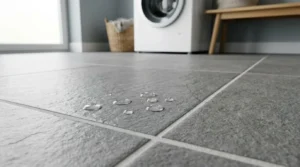
Practical Considerations: Slip, Water, and Maintenance
Style means nothing if the tiles fail under daily use. Three practical factors anchor every decision we make on a laundry tiling project.
Understanding PEI Ratings and Slip Resistance
Floor tiles in laundries should meet an R10 or R11 slip rating to remain safe when wet; this is the classification system used under Australian Standard AS 3740, which governs wet-area construction. The PEI (Porcelain Enamel Institute) rating measures surface hardness and wear resistance: we specify a minimum PEI 4 for laundry floors, which handles heavy residential traffic without surface degradation.
Choose rectified edges for crisp grout lines, and always confirm both ratings with your tile supplier before purchasing.
Matt vs Gloss: Choosing the Right Finish
Matt porcelain hides water spots, footprints, and everyday marks far better than gloss in a laundry environment. Gloss tiles reflect more light, which suits small, dark laundries, but they show every splash and smear, meaning more frequent cleaning.
We generally recommend matt for floors and a gloss or satin finish for walls, where the reflective quality adds brightness without the maintenance burden of a gloss floor.
Waterproofing and Wet-Area Compliance
Australian Standard AS 3740 requires a continuous waterproof membrane behind all tiled wet areas, including laundry floors and walls within 1,500mm of the trough. The membrane must turn up behind wall tiles to a minimum height of 100mm above the floor, and the floor must be laid to falls that direct water toward the floor waste.
Epoxy grout resists stains far longer than standard cement grout, especially around the trough and washing machine. Sealing natural stone every 12 to 24 months is non-negotiable if you choose that material.
Budgeting Your Laundry Tile Project in Sydney
Tile costs in Sydney vary widely. Budget ceramic walls start around $30 per square metre supplied, while premium porcelain or natural stone can exceed $150 per square metre. Installation typically runs from $70 to $130 per square metre depending on tile size, format, and substrate condition, figures consistent with HIA residential tiling benchmarks for the Sydney metro area.
A typical small laundry uses 8 to 15 square metres of tile across walls and floor combined, plus waterproofing, adhesives, grout, and trim. Plan a 10 to 15 percent contingency for cuts, wastage, and unexpected substrate repairs.
Larger formats reduce labour time but require flatter walls and floors. Patterned and mosaic tiles increase installation hours and material wastage, so we always allow for that in our quotes.
DIY vs Professional Tiling: What Sydney Homeowners Should Know
Laundry tiling is a licensed trade in NSW. When it involves wet-area waterproofing, the membrane application must be completed by a licensed waterproofer before any tiles go down. We see DIY tiling attempts most often fail at the waterproofing and substrate preparation stages, which are invisible once the tiles are laid but critical to long-term performance.
For straightforward wall tiling above an existing splashback, experienced DIYers can achieve good results. For floor tiling, falls to waste, and any work within the wet zone, we strongly recommend engaging a licensed tiler and waterproofer.
Conclusion
Laundry tile choices shape durability, daily function, and the visual flow of one of the busiest rooms in your home, pulling wall and floor finishes into one cohesive design story.
From large-format porcelain floors to fluted wall splashbacks, the right combination protects your investment while lifting the entire space into something genuinely enjoyable to use.
At Sydney Home Renovation, we plan, price, and install laundry tile solutions that perform beautifully for decades, and we bring the same transparent, detail-focused approach to every project. Reach out to our team today and let’s design a laundry that works as hard as you do.
Frequently Asked Questions
What is the best tile for a laundry floor in Sydney?
Rectified matt porcelain with an R10 or R11 slip rating is the best choice for Sydney laundry floors. It resists water, stains, chips, and daily traffic far better than ceramic or natural stone.
Should laundry walls be fully tiled?
Full wall tiling is not required, but tiling behind the sink, washing machine, and dryer is strongly recommended. A 600mm splashback above benchtop handles most splash zones without the cost of floor-to-ceiling tile.
Can I use bathroom tiles in my laundry?
Yes. Most bathroom tiles work perfectly in laundries because both rooms share wet-area requirements. Check the slip rating for floors and confirm the tile is rated for wet-area use before purchasing.
What is the cheapest way to tile a laundry?
Choose budget ceramic wall tiles in standard sizes, a simple straight-lay pattern, and a small splashback rather than full walls. Stick to one tile range to reduce wastage and keep installation labour predictable.
How long does laundry tiling take in Sydney?
Most small laundry tiling jobs take three to five working days, covering waterproofing, floor tiling, wall tiling, grouting, and silicone finishing. Larger or patterned tile layouts can extend this by a day or two.
What grout is best for a laundry?
Epoxy grout is the best choice for laundry wet areas. It resists moisture, staining, and detergent far longer than standard cement grout, particularly around the trough and washing machine.
What tile size suits a small laundry?
A 300×600mm or 600×600mm format works best in most small Sydney laundries. It reduces visual clutter, cuts cleanly around floor wastes, and makes the room feel larger without overwhelming the space.