The most reliable way to compare bathroom renovation quotes is to standardise the scope first, then evaluate each quote line by line against the same inclusions, allowances, and exclusions. Lowest price rarely means best value in a Sydney bathroom renovation.
Bathroom quotes vary widely because every contractor scopes labour, materials, and fittings differently, which makes side-by-side comparison difficult without a clear framework. This guide walks through what a complete quote includes, how to request like-for-like pricing, common hidden costs, and how to choose the right renovator with confidence.
What a Complete Bathroom Renovation Quote Should Include
A proper bathroom renovation quote is itemised, transparent, and leaves nothing open to interpretation. If you cannot see exactly what each dollar pays for, you cannot compare it fairly against another quote.
Every detailed quote should include four core components. The first is an itemised labour breakdown showing the trades involved plumbing, electrical, waterproofing, tiling, carpentry, and painting each with their own line and rate. The second is materials and fittings allowances, often shown as Prime Cost (PC) sums or provisional sums for items not yet chosen.
The third component is demolition, waste removal, and site protection, covering strip-out, skip bin hire, and protecting adjoining areas. The fourth is a clear list of inclusions, exclusions, and assumptions so there is no ambiguity about what is and is not covered.
Prime Cost Sums vs. Provisional Sums
A Prime Cost (PC) sum is a budgeted allowance for a specific item not yet selected tapware, a vanity, or tiles. If the item chosen costs more than the allowance, the difference is added as a variation. A provisional sum covers work where the full scope is uncertain until construction begins, such as waterproofing repairs to a substrate that cannot be fully assessed until demolition is complete. Both carry cost risk, and a good quote will flag which items fall into each category.
A quote that lumps everything under “supply and install bathroom $25,000” is not a quote anyone can compare. It is a guess.

How to Request Like-for-Like Quotes from Contractors
The biggest reason quotes look so different is that contractors are pricing different scopes. Two quotes for “a bathroom renovation” can vary by $15,000 simply because one assumes you keep the existing layout and the other prices a full re-plumb and waterproofing rebuild.
To get comparable quotes, you need to give every contractor the same brief. Prepare a written scope of works that describes the exact layout, any structural changes, the wet area zones, and the level of finish you expect. Specify whether fixtures and fittings are supplied by you or by the contractor, and provide a fixed fittings list where possible so allowances are not used as a hidden discount.
Invite each contractor to the same site visit conditions, ask for the quote in the same itemised format, and request that they list any assumptions in writing. The more controlled the input, the more meaningful the comparison.
How to Request Like-for-Like Quotes from Contractors
The biggest reason quotes look so different is that contractors are pricing different scopes. Two quotes for “a bathroom renovation” can vary by $15,000 simply because one assumes the existing layout is kept and the other prices a full re-plumb and waterproofing rebuild.
To get comparable quotes, every contractor needs the same brief. We recommend preparing a written scope of works that describes the exact layout, any structural changes, the wet area zones, and the level of finish expected. Specify whether fixtures and fittings are supplied by the homeowner or the contractor, and provide a fixed fittings list where possible so allowances are not used as a hidden discount.
Invite each contractor to the same site visit conditions, ask for the quote in the same itemised format, and request that they list any assumptions in writing. The more controlled the input, the more meaningful the comparison.
Key Cost Categories to Compare Across Quotes
When three quotes land in your inbox, do not compare totals. Compare categories. Sydney bathroom renovations typically break down into four major cost groups, and each one tells you something different about the contractor.
Labour by Trade
Look at the rates and hours allocated for plumbing, electrical, waterproofing, and tiling. Waterproofing in particular must always be performed by a licensed applicator and certified it should never be absorbed into a generic tiling line. In Sydney, licensed waterproofing labour typically runs $800–$1,800 for a standard bathroom, and any quote significantly below that range warrants scrutiny.
Materials, Tiles, and Fittings
Compare the allowance per square metre for tiles, the supply price for vanities and tapware, and whether brands and model numbers are specified. A $400 vanity allowance and a $1,800 vanity allowance produce very different bathrooms. Sydney bathroom renovations range from roughly $18,000 for a basic refresh to $40,000+ for a full layout change with premium fittings the allowances in each quote tell you which end of that range you are actually buying.
Compliance and Certification
Waterproofing certificates, electrical certificates of compliance, and plumbing compliance certificates are required under NSW regulations. They should appear in the quote, not be discovered later as additional costs.
Project Management and Contingency
A professional contractor will include site supervision and a contingency for hidden conditions such as rotten timber, old asbestos sheeting, or buried plumbing issues. A contingency of 10–15% of the project value is standard practice for Sydney bathroom renovations.
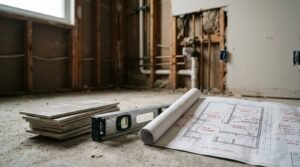
How Variation Clauses Work and How to Limit Your Exposure
A variation is any change to the agreed scope of works whether initiated by the homeowner or triggered by an unforeseen site condition. Every variation should be documented in writing before work proceeds, with a clear cost and timeline impact stated.
The risk with vague quotes is that they create variation exposure from the start. When a quote uses broad line items rather than itemised costs, almost any change becomes a variation the contractor can price at their discretion. We always recommend requesting a contract that defines the variation approval process explicitly: written notice, signed authorisation, and a fixed price before work begins.
Limit variation exposure by locking in your fittings selections before the contract is signed, confirming the waterproofing scope in writing, and asking the contractor to identify any provisional sum items that carry the highest uncertainty. The more that is fixed upfront, the less room there is for cost creep.
Deposits and Payment Schedules: What’s Fair in NSW
Under NSW home building legislation, a contractor cannot request a deposit exceeding 10% of the contract price for residential work over $20,000. Any request for a larger upfront payment is a red flag and may indicate cash flow problems or an unlicensed operator.
Payment schedules should be tied to construction milestones not to calendar dates or the contractor’s convenience. Typical milestone payments for a bathroom renovation cover demolition completion, rough-in completion (plumbing and electrical), waterproofing sign-off, tiling completion, and practical completion. Each payment should reflect the value of work genuinely completed at that stage.
Never pay the final progress payment until a practical completion inspection has been carried out and any defects identified are either rectified or formally agreed to be rectified within a set timeframe.
Hidden Costs and Red Flags to Watch For
The cheapest quote is rarely the cheapest project. Bathroom renovations are notorious for variations, and the gap between a low quote and the final invoice is almost always paid for in change orders, upgrades, and surprise costs.
Vague Line Items
Watch for entries like “tiling allowance $3,000” with no square metre rate, no tile cost per square metre, and no waste factor. A properly itemised quote specifies the tile area, the rate per square metre, the waste allowance percentage, and the supply cost separately from the labour.
Missing Compliance Items
Watch for missing waterproofing detail, missing rubbish removal, or “client to supply” lines that quietly shift cost back onto the homeowner. Compliance certificates waterproofing, electrical, and plumbing should be listed as inclusions, not discovered later as extras.
Cash-Only Operators and Unlicensed Work
Be cautious of cash-only operators, no written contract, no licence number on the document, or refusal to provide home building compensation insurance for jobs over $20,000 in NSW. A quote that is 25 to 40 per cent below the others is not a bargain. It is usually missing scope, and the savings disappear quickly once variations begin.
How to Evaluate Contractor Credibility Beyond Price
Price tells you what something might cost. Credibility tells you whether the project will actually be delivered. In Sydney, where licensing and compliance requirements are strict, a contractor’s credentials matter as much as their pricing.
Confirm the builder holds a current NSW licence appropriate for the value of the work verifiable through NSW Fair Trading’s public licence check. Request a certificate of currency for public liability and workers compensation insurance. For residential work over $20,000, home building compensation cover is mandatory and must be supplied before any deposit is paid.
Beyond the paperwork, ask for three recent bathroom projects to speak to directly not just photos. Read independent reviews on platforms with verified customer identities.
Questions to Ask Before You Sign
Five questions worth asking every contractor before signing a contract:
- Can you provide the licence number and insurance certificate of currency today?
- What is your variation process will all changes be in writing with a fixed price before work starts?
- Who is the licensed waterproofer, and will I receive the waterproofing certificate on completion?
- What is your defect liability period, and how are defects reported and rectified?
- Have you completed a bathroom of similar scope and finish level in the past 12 months and can I speak to that client?
A contractor who hesitates on any of these questions is showing you exactly how the project will run.

Making the Final Decision Value Over Lowest Price
The final comparison is rarely about who is cheapest. It is about who delivers the best total value across price, quality, certainty, and aftercare. A $28,000 bathroom that runs to schedule, with no surprise variations and a six-year structural warranty, is almost always a better result than a $22,000 bathroom that blows out to $31,000 with no recourse.
We use a four-criteria scoring approach when helping clients compare quotes. Score each contractor out of five on: total all-in cost including a realistic 10–15% contingency; quality and specificity of inclusions (brands, model numbers, allowance levels); strength of warranty and post-completion support; and communication quality during the quoting process. Weight communication and inclusions most heavily they predict the build experience more reliably than price alone.
The renovator who answers questions clearly, itemises everything, and refuses to cut corners on waterproofing or compliance is the renovator who will protect the budget once construction starts. That combination of transparency and technical rigour is what separates a renovation that finishes well from one that becomes a dispute.
Conclusion
Comparing bathroom renovation quotes is a structured process, not a price hunt. A standardised scope, itemised line items, verified credentials, and transparent inclusions turn three confusing documents into a clear, defensible decision.
The right quote is the one that protects the budget, the timeline, and the finishes over the entire project not the one with the smallest number on the bottom line.
At Sydney Home Renovation, we provide fully itemised, transparent bathroom renovation quotes so clients can compare confidently. Contact us today for a detailed, no-pressure quote built around your scope.
Frequently Asked Questions
How many bathroom renovation quotes should I get before deciding?
Three quotes is the standard. It gives enough range to identify outliers on both ends, compare inclusions fairly, and choose based on value rather than guessing whether one number is reasonable.
Why are bathroom renovation quotes in Sydney so different?
Quotes vary because contractors scope labour, materials, allowances, and compliance differently. The same bathroom can be priced anywhere from $18,000 to $40,000 depending on layout changes, fittings selected, and contractor overheads.
What should never be left out of a bathroom renovation quote?
Waterproofing, demolition, rubbish removal, plumbing and electrical compliance certificates, fittings allowances, and a clear list of exclusions. If any of these are missing, the quote is incomplete and not safely comparable.
Is the cheapest bathroom renovation quote ever the right choice?
Rarely. The cheapest quote is usually missing scope, using lower allowances, or excluding compliance items. The true cost almost always rises through variations, making the initial saving disappear quickly.
What is a Prime Cost (PC) sum in a bathroom renovation quote?
A PC sum is a budgeted allowance for items not yet chosen, such as tiles, tapware, or a vanity. If the item selected costs more than the allowance, the difference is added as a variation.
Do Sydney bathroom renovators need a licence?
Yes. For any residential work over $5,000, NSW Fair Trading requires the contractor to hold a current builder’s or tradesperson’s licence. For work over $20,000, home building compensation insurance is also mandatory.
What should I look for in a bathroom renovation contract before signing?
Check for a milestone-based payment schedule, a written variation approval process, a defect liability period of at least six months, clear timelines, and confirmation that all compliance certificates are included in the scope.