A complete Bunnings kitchen renovation in Sydney typically costs between $15,000 and $45,000 when you factor in flat-pack cabinetry, professional installation, trades, benchtops, appliances, and finishing work. Cabinet materials alone from Bunnings may start at $3,000 to $5,000 for a small kitchen. The full project cost is a different number entirely, and understanding that gap is what separates a well-planned renovation from a budget blowout.
For homeowners and property investors in Sydney, kitchen renovations represent one of the highest-value upgrades you can make to a property. Getting the numbers right from the start determines whether your project delivers a strong return or leaves you scrambling for extra funds mid-build.
This guide breaks down every cost layer of a Bunnings kitchen renovation, from flat-pack cabinet pricing and labour rates to hidden trade costs, benchtop selections, and common budgeting mistakes.
What Is a Bunnings Kitchen and What Does It Include?
Before you can budget accurately, you need to understand exactly what Bunnings sells and what it does not. Many homeowners assume the price tag on the showroom floor reflects the total project cost. It does not, and that misunderstanding is the single most common cause of kitchen renovation budget blowouts in Sydney.
Bunnings operates as a retail supplier of flat-pack kitchen cabinetry, hardware, and selected appliances. It is not a renovation contractor. What you purchase from Bunnings is the raw material component of your kitchen, including cabinets, doors, handles, and in some cases benchtops. Everything else, including design, delivery, installation, plumbing, electrical work, and finishing, is sourced and coordinated separately.
Flat-Pack vs. Custom Kitchens: What Bunnings Actually Sells
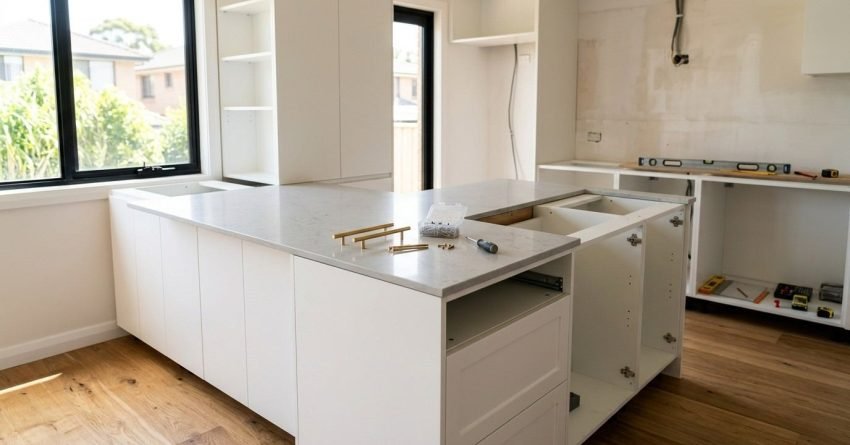
Bunnings sells flat-pack kitchens, which are pre-engineered cabinet carcasses and door panels that arrive in flat boxes and are assembled on-site. The primary range available through Bunnings in Australia is the Kaboodle kitchen system, a modular flat-pack product designed for DIY assembly or professional installation.
Flat-pack kitchens differ from custom kitchens in a fundamental way. Custom kitchens are designed and manufactured to exact measurements by a cabinet maker, with bespoke configurations, materials, and finishes. Flat-pack kitchens use standardised module sizes, typically in 100mm increments, which means your layout must be designed around available module widths rather than the precise dimensions of your space.
This distinction matters for budgeting. Flat-pack kitchens are significantly cheaper in material cost, but they require filler panels, scribing, and additional labour to achieve a clean, fitted finish in spaces that do not align perfectly with standard module sizes. In older Sydney homes with irregular walls or non-standard ceiling heights, this can add meaningful cost to the installation.
What’s Included in a Bunnings Kitchen Package?
A standard Bunnings Kaboodle kitchen package typically includes cabinet carcasses, door panels, drawer inserts, hinges, and handles. Some packages include a basic laminate benchtop, though most homeowners upgrade this component separately.
A Bunnings kitchen package does not include:
- Professional installation labour
- Benchtop fabrication and installation for stone, timber, or engineered surfaces
- Splashback materials or installation
- Sink and tapware
- Appliances, including oven, cooktop, rangehood, and dishwasher
- Electrical work, including power points, lighting, and rangehood ducting
- Plumbing, including sink and dishwasher connection
- Flooring
- Painting and finishing
- Waste removal and demolition of the existing kitchen
When you add these components together, the total project cost for a Bunnings kitchen renovation in Sydney is substantially higher than the cabinet price alone. Understanding this full cost picture is the foundation of accurate budgeting.
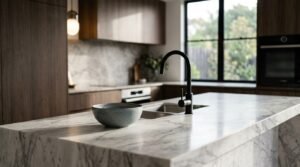
Average Bunnings Kitchen Cost in Sydney: Price Ranges by Budget Tier
The total cost of a Bunnings kitchen renovation in Sydney varies based on kitchen size, layout complexity, material selections, and the scope of trade work required. These figures reflect realistic all-in project costs, materials plus labour plus trades, for current Sydney conditions.
Budget Bunnings Kitchen (Under $5,000 in Materials)
For a small galley kitchen or a compact apartment kitchen with limited cabinetry, Bunnings cabinet materials can be sourced for under $5,000. A basic Kaboodle configuration covering 3 to 4 linear metres, including base units, wall units, and a laminate benchtop, typically falls in the $3,000 to $5,000 range for materials only.
The total installed cost for a budget-tier Bunnings kitchen in Sydney will generally land between $12,000 and $18,000. This accounts for installation labour ($2,500 to $5,000), basic trade work ($3,000 to $6,000), a sink and tapware ($400 to $1,200), and a basic appliance package ($1,500 to $3,000).
This tier suits rental property upgrades, investment property refreshes, and small apartment kitchens where the goal is functional improvement rather than premium finish.
Mid-Range Bunnings Kitchen ($5,000–$12,000 in Materials)
The mid-range tier covers medium-sized kitchens of 4 to 6 linear metres, typically in an L-shape or U-shape configuration. Kaboodle materials in this range, including upgraded door profiles, soft-close hardware, and an entry-level stone benchtop, typically cost between $5,000 and $12,000.
Total installed project costs for a mid-range Bunnings kitchen in Sydney generally fall between $20,000 and $35,000. This accounts for professional installation ($4,000 to $7,000), a full trade package covering plumbing, electrical, and gas ($5,000 to $9,000), a mid-grade stone benchtop ($2,500 to $5,000), appliances ($3,000 to $6,000), and finishing work ($2,000 to $5,000).
This is the most common budget tier for owner-occupier kitchen renovations in Sydney’s suburban market. It delivers a noticeably improved kitchen with quality finishes while keeping spend manageable.
Premium Bunnings Kitchen ($12,000–$20,000+ in Materials)
At the premium end, larger kitchens of 6 metres or more, including island bench configurations or butler’s pantries, can require $12,000 to $20,000 or more in Bunnings materials alone. This tier typically involves premium door profiles, full-height cabinetry, integrated appliance panels, and upgraded hardware throughout.
Total installed project costs for a premium Bunnings kitchen in Sydney typically range from $35,000 to $55,000 or higher. The significant cost drivers are stone benchtop fabrication ($5,000 to $12,000), a full appliance package ($6,000 to $15,000), complex trade work, and high-specification finishing.
At this investment level, some homeowners choose to compare Bunnings flat-pack against semi-custom or fully custom cabinetry, a comparison covered later in this guide.
Full Installation Cost Breakdown: What You’ll Actually Pay in Sydney
Understanding each cost component is the most effective way to build an accurate budget. Each layer below is a real line item that will appear in your renovation spend, regardless of which cabinet tier you select.
Labour Costs for Installing a Bunnings Kitchen in Sydney
Professional installation of Bunnings flat-pack cabinetry in Sydney is typically charged as a fixed project rate or a day rate. For a standard kitchen installation, expect to pay between $2,500 and $7,000 for cabinet assembly and installation labour.
A skilled kitchen installer in Sydney typically charges between $450 and $650 per day, according to industry data from the Housing Industry Association. A small kitchen installation may take 2 to 3 days, while a larger layout can take 4 to 6 days.
It is important to engage an experienced flat-pack kitchen installer rather than a general handyman. Proper installation requires precise levelling, accurate scribing to walls and ceilings, correct door and drawer alignment, and secure fixing to wall studs. Poor installation is one of the most common causes of ongoing kitchen problems and warranty issues.
Trades Required and Their Typical Costs
A kitchen renovation in Sydney requires licensed tradespeople for electrical, plumbing, and gas work. These are legal requirements under NSW building regulations, and unlicensed trade work will create serious problems at the point of property sale or insurance claim.
Typical trade costs include a licensed plumber ($1,500 to $4,000) for sink and dishwasher connections, a licensed electrician ($1,200 to $3,500) for power points and lighting, and a licensed gas fitter ($800 to $2,000) for cooktop connection or gas line relocation. A benchtop fabricator and installer typically charges $1,500 to $5,000 for templating, fabrication, and installation, separate from the material cost of the stone itself.
Demolition, Waste Removal, and Preparation Costs
Removing your existing kitchen before installation begins is a cost many homeowners underestimate. In Sydney, demolition and waste removal typically cost between $800 and $2,500, depending on kitchen size and whether asbestos testing is required.
Older Sydney homes built before 1990 may contain asbestos in wall sheeting or ceiling materials. If asbestos is identified, licensed removal is required before work can proceed, typically costing $1,500 to $5,000 or more. Wall preparation and priming after cabinet removal adds a further $500 to $1,500 to the pre-installation phase.
Key Factors That Affect the Total Cost of a Bunnings Kitchen
No two kitchen renovations cost the same, even when both use identical Bunnings products. The following variables have the most significant impact on total project cost.
Kitchen Size and Layout Complexity
Kitchen size is the most direct cost driver. Each additional linear metre of cabinetry adds $1,500 to $3,500 to the total installed cost of a Bunnings kitchen in Sydney.
Layout complexity matters too. A straight galley kitchen is the simplest and most cost-effective configuration to install. An L-shape adds corner cabinet complexity and typically requires a corner solution unit, which adds cost. A U-shape or island configuration introduces additional complexity and, if the island includes a sink or cooktop, extra plumbing or electrical work.
Cabinet Configuration and Door Style Choices
Within the Kaboodle range, door style has a meaningful impact on material cost. Upgraded profiles, including shaker-style doors and two-pack finishes, increase material cost by 20% to 40% compared to the base range.
Drawer configurations also affect cost. Kitchens with a higher proportion of drawer units are more expensive in materials but deliver significantly better functionality. For owner-occupiers planning to stay long-term, this investment typically delivers strong value. For investment properties, a more cost-effective door-heavy configuration is usually sufficient.
Benchtop Material Selection and Pricing
The benchtop has a major impact on both cost and perceived quality. The table below reflects supply and installation costs for common benchtop materials in Sydney.
| Benchtop Material | Supply and Install Cost (Per Linear Metre) | Notes |
| Laminate (Bunnings supplied) | $150–$350/lm | Included in some Kaboodle packages |
| Reconstituted stone (engineered) | $600–$1,200/lm | Most popular mid-range choice |
| Natural stone (granite, marble) | $900–$2,000+/lm | Premium option, requires sealing |
| Timber (hardwood) | $500–$1,000/lm | Warm aesthetic, requires maintenance |
| Porcelain slab | $800–$1,500/lm | Durable, growing in popularity |
For a standard 4-metre kitchen, upgrading from laminate to engineered stone adds approximately $2,000 to $4,000 to the total project cost. This is one of the most impactful upgrades available and is strongly recommended for owner-occupiers and investors targeting the mid-to-upper rental market.
Hidden Costs Most Homeowners Miss When Budgeting a Bunnings Kitchen
The gap between an initial budget estimate and the final project cost is almost always explained by hidden costs. These are standard components of any kitchen renovation in Sydney. The problem is that they are rarely visible in the initial quote or the Bunnings price tag.
Electrical, Plumbing, and Gas Compliance Costs
Compliance costs are among the most commonly underestimated line items. In NSW, all electrical, plumbing, and gas work must be performed by licensed tradespeople and comply with the current National Construction Code.
In older Sydney homes, compliance work frequently extends beyond the immediate scope. An electrician may find the existing circuit is undersized and recommend a switchboard upgrade. A plumber may find corroded waste pipes requiring replacement. Budget a contingency of $1,500 to $3,000 specifically for compliance-related trade work.
Waterproofing, Tiling, and Flooring Allowances
Many homeowners underestimate the full scope of floor preparation and tiling costs. In Sydney, tiling labour rates typically range from $60 to $120 per square metre for floor tiles and $80 to $150 per square metre for wall tiles, excluding tile supply.
For a standard 12 to 15 square metre kitchen, the total flooring and tiling allowance typically falls between $2,500 and $5,000. If your renovation involves removing existing floor tiles, add $500 to $1,500 for removal and preparation.
Appliance Upgrades and Splashback Costs
A functional mid-range appliance package, including a 600mm oven, cooktop, rangehood, and dishwasher, typically costs between $3,000 and $7,000 for supply only. Installation costs sit on top of this figure.
Splashbacks range from basic ceramic tiles ($500 to $1,500 installed) to glass splashbacks ($800 to $2,000 installed) to stone or porcelain slab ($1,500 to $4,000 installed). The splashback is a high-visibility element with a disproportionate impact on overall aesthetic quality. Underinvesting here is a common mistake.

Bunnings Kitchen vs. Custom Kitchen: Which Offers Better Value in Sydney?
The decision between a Bunnings flat-pack kitchen and a custom-manufactured kitchen is one of the most important financial decisions in any renovation. Both options have genuine merit depending on your budget, timeline, and goals.
Cost Comparison: Flat-Pack vs. Fully Custom Cabinetry
Kaboodle cabinetry is manufactured at scale, making it significantly cheaper per linear metre than custom cabinetry from a local cabinet maker.
| Kitchen Type | Cabinet Material Cost (Per Linear Metre) | Total Installed Cost (Medium Kitchen) |
| Bunnings Kaboodle (entry-level) | $400–$700/lm | $18,000–$28,000 |
| Bunnings Kaboodle (mid-range) | $700–$1,200/lm | $25,000–$38,000 |
| Semi-custom flat-pack (IKEA, Kinsman) | $800–$1,400/lm | $28,000–$42,000 |
| Custom cabinet maker (local Sydney) | $1,500–$3,500/lm | $40,000–$80,000+ |
A Bunnings kitchen can deliver a total installed cost that is 30% to 50% lower than a fully custom kitchen of equivalent size. For investment properties and budget-conscious renovations, this cost differential is highly significant.
When a Bunnings Kitchen Makes Financial Sense
A Bunnings flat-pack kitchen makes strong financial sense for investment properties and rental upgrades, where lower material cost supports positive cash flow. It also suits first-time renovators working within a defined budget, since the Kaboodle range is well-documented and widely available.
For homeowners planning to sell within 3 to 5 years, a well-installed Bunnings kitchen with quality benchtops and appliances can deliver a strong return without the premium cost of custom cabinetry. Custom cabinetry becomes more compelling for long-term owner-occupied homes, highly irregular layouts, or premium properties where buyers expect bespoke finishes.
How to Budget Accurately for a Bunnings Kitchen Renovation in Sydney
Accurate budgeting is the single most important factor in a successful kitchen renovation. Homeowners who complete renovations on budget are the ones who built their budget correctly from the start.
Building a Realistic Total Budget
A realistic budget should be structured across five categories. Get an actual quote for cabinet materials rather than estimating. Obtain at least two quotes from experienced installers, and confirm whether benchtop installation is included.
Get separate, itemised quotes from licensed tradespeople for plumbing, electrical, and gas work. Price finishing costs, including benchtop, splashback, and flooring, individually. Add a minimum 15% contingency for unexpected costs, rising to 20% in older Sydney homes.
Common Budgeting Mistakes and How to Avoid Them
The most common mistake is treating the cabinet material cost as a proxy for total project cost. Cabinet materials typically represent only 20% to 35% of the total installed cost.
The second mistake is relying on verbal estimates rather than written, itemised quotes. The third is setting a budget with no contingency, despite Sydney renovations routinely encountering unexpected costs during demolition.
Many homeowners also underinvest in finishing elements after overspending on cabinetry. Benchtops, splashbacks, and appliances have a disproportionate impact on perceived quality. Allocate your budget across all five categories before committing to any single component.

Is a Bunnings Kitchen a Good Investment for Sydney Properties?
For most Sydney homeowners and investors, a kitchen renovation is one of the highest-return upgrades available. The kitchen is consistently identified by valuers as one of the two rooms, alongside the bathroom, that most directly influence buyer perception.
Return on Investment and Property Value Considerations
For investment properties in Sydney’s mid-market suburbs, a well-executed Bunnings kitchen renovation costing $20,000 to $30,000 can support a rental increase of $50 to $150 per week, recouping the cost within 3 to 5 years. For properties being prepared for sale, a quality renovation in the $25,000 to $40,000 range can support a sale price increase of $40,000 to $80,000 in Sydney’s competitive market.
The key to maximising ROI is ensuring installation quality, benchtops, and appliances match buyer and tenant expectations in your specific suburb. A poorly installed Bunnings kitchen will not deliver the same return as one finished with quality selections and professional installation.
Conclusion
A Bunnings kitchen renovation in Sydney costs between $15,000 and $55,000 in total, depending on kitchen size, material selections, trade requirements, and finishing quality. The cabinet materials from Bunnings represent only one component of that total, and understanding every cost layer is what separates a well-planned renovation from a costly surprise.
We work with homeowners and property investors across Sydney to plan and deliver kitchen renovations that stay on budget, on schedule, and built to last. Our approach combines transparent cost planning, experienced project coordination, and quality workmanship, so you know exactly what you’re spending before a single cabinet is installed.
If you’re planning a Bunnings kitchen renovation in Sydney and want an accurate, itemised cost assessment for your project, contact Sydney Home Renovation today. We’ll help you build a realistic budget, avoid the hidden costs that catch most homeowners off guard, and deliver a renovation that adds genuine, lasting value to your property.
Frequently Asked Questions
How much does a Bunnings flat-pack kitchen cost in total?
A complete Bunnings flat-pack kitchen renovation in Sydney typically costs between $15,000 and $45,000 in total. Cabinet materials alone generally range from $3,000 to $20,000, representing only 20% to 35% of the total installed cost.
Does Bunnings install kitchens or do I need to hire a contractor?
Bunnings does not provide kitchen installation services directly. You will need to engage a professional flat-pack installer separately, along with licensed tradespeople for plumbing, electrical, and gas work.
How long does a Bunnings kitchen installation take in Sydney?
A standard installation typically takes 2 to 4 weeks from demolition to completion. Cabinet installation itself usually takes 2 to 5 days, but trade work and finishing extend the overall timeline.
What trades do I need to install a Bunnings kitchen?
A Bunnings kitchen renovation requires a licensed plumber, electrician, and gas fitter if you have a gas cooktop. Budget $3,500 to $9,500 for the full trade package depending on scope.
Can I save money by installing a Bunnings kitchen myself?
You can legally assemble and install flat-pack cabinet carcasses yourself, saving $2,500 to $7,000 in labour. All plumbing, electrical, and gas connections must still be performed by licensed tradespeople.
What is the cheapest way to renovate a kitchen in Sydney?
Retaining the existing layout avoids the cost of relocating plumbing and electrical connections. Using entry-level cabinetry and a basic appliance package, a small kitchen can be completed for $12,000 to $18,000.
How do Bunnings kitchen cabinets compare in quality to custom options?
Kaboodle cabinets use a moisture-resistant particleboard carcass with a melamine finish, suitable for standard residential use, and typically carry a manufacturer warranty of around 5 years on cabinetry. Custom cabinetry uses higher-grade materials and costs 2 to 4 times more per linear metre.