A granny flat in Sydney can generate between $400 and $700 per week in rental income while adding significant resale value to your property — making it one of the most accessible and high-return property investments available to existing homeowners. With Sydney’s rental vacancy rates sitting at historic lows and construction costs becoming more predictable through complying development pathways, the window to act is genuinely strong right now.
For homeowners, first-time investors, and landlords, understanding the full picture — costs, approvals, yields, financing, and design — is what separates a profitable granny flat from an expensive mistake. Getting the numbers right before you build is everything.
This guide covers every dimension of granny flat investment in Sydney: what it costs to build, what you can earn, how approvals work, how to finance the project, and how to avoid the pitfalls that derail most first-time granny flat investors.
What Is a Granny Flat and Why Sydney Homeowners Are Investing in Them
A granny flat is a self-contained secondary dwelling built on the same lot as a primary residence. It has its own entrance, kitchen, bathroom, and living space — fully independent from the main home. In NSW, secondary dwellings are formally defined under the State Environmental Planning Policy (Housing) 2021, which sets out the legal framework for how and where they can be built.
Sydney homeowners are building granny flats at record rates. The combination of a tight rental market, rising property values, and streamlined approval pathways has made secondary dwellings one of the most compelling residential investment strategies in the city.
Definition and Types of Granny Flats in NSW
In NSW, granny flats fall into several distinct categories, each with different cost profiles, approval requirements, and investment outcomes.
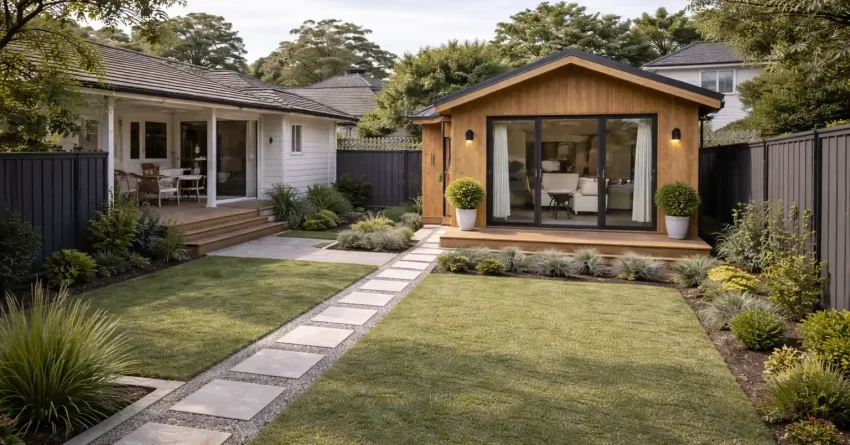
Detached granny flats are standalone structures built separately from the main home. They offer the most privacy for tenants and typically command the highest rental returns. They also carry the highest construction cost, generally ranging from $120,000 to $250,000 depending on size and specification.
Attached granny flats share a wall with the primary dwelling. They are generally less expensive to build because they share structural elements, but they offer less acoustic separation and privacy — which can affect tenant appeal and rental pricing.
Garage conversions involve transforming an existing garage or outbuilding into a habitable secondary dwelling. When the structure is sound, this can be the most cost-effective pathway, with conversion costs typically ranging from $60,000 to $120,000. However, council requirements around ceiling height, natural light, and ventilation can add unexpected costs.
Internal conversions involve reconfiguring part of the main home — such as a lower floor or separate wing — into a self-contained unit. These are common in larger homes and can be highly cost-effective, though they permanently reduce the main home’s living space.
Understanding which type suits your block, budget, and investment goals is the first decision every granny flat investor needs to make.
Why Granny Flats Are a Smart Investment in Sydney’s Property Market
Sydney’s property market creates a near-perfect environment for granny flat investment. Rental vacancy rates across Greater Sydney have remained below 2% for an extended period, meaning demand for rental accommodation consistently outstrips supply. A well-positioned granny flat in a middle-ring or outer suburb can be tenanted within days of listing.
Beyond rental income, granny flats add measurable value to the underlying property. Independent valuations consistently show that a compliant, well-built secondary dwelling adds between $100,000 and $200,000 to a property’s market value in Sydney — often more than the cost of construction.
For homeowners approaching retirement, a granny flat also provides a flexible living arrangement: house a family member, generate passive income, or use the space as a home office. The investment case is strong across multiple scenarios.
How Much Does It Cost to Build a Granny Flat in Sydney?
Build costs for granny flats in Sydney vary significantly based on construction type, size, site conditions, and finish level. A realistic budget for a standard detached granny flat in Sydney sits between $120,000 and $200,000 for a turnkey build, inclusive of design, approvals, construction, and connections. Smaller attached or converted dwellings can come in lower, while premium builds with high-end finishes can exceed $250,000.
Understanding what drives cost — and where budgets blow out — is essential before committing to a project.
Granny Flat Construction Cost Breakdown by Build Type
The table below provides a realistic cost guide for each granny flat type in Sydney, based on current market conditions.
| Build Type | Typical Cost Range | Key Cost Drivers |
| Detached (new build) | $120,000 – $250,000 | Size, site access, soil conditions, finish level |
| Attached (new build) | $90,000 – $160,000 | Shared wall construction, internal layout complexity |
| Garage conversion | $60,000 – $120,000 | Existing structure condition, compliance upgrades |
| Internal conversion | $50,000 – $100,000 | Plumbing relocation, soundproofing, separate entry |
| Modular/prefab | $100,000 – $180,000 | Transport, crane costs, site preparation |
These figures include construction costs but should be treated as a starting point. Design fees, council or certifier fees, utility connections, and landscaping are additional line items that many first-time investors underestimate.
Cost Per Square Metre: What to Expect in Sydney
In Sydney, granny flat construction typically costs between $2,000 and $3,500 per square metre for a standard build. Premium finishes, complex sites, or architecturally designed dwellings can push this figure higher.
A 60 square metre granny flat — the most common size built under complying development — will typically cost between $120,000 and $210,000 to construct, depending on specification. A smaller 40 square metre studio configuration can come in at $80,000 to $140,000 for a basic to mid-range finish.
The cost per square metre tends to decrease as the dwelling gets larger, because fixed costs — like kitchen fitout, bathroom fitout, and utility connections — are spread across more floor area. This is why a 60sqm granny flat often represents better value per square metre than a 30sqm studio.
Site-specific factors also affect cost significantly. Sloping blocks require additional earthworks and potentially a raised or split-level structure. Poor soil conditions identified in a geotechnical report can require engineered footings that add $10,000 to $30,000 to the foundation cost alone.
Hidden Costs That Blow Out Granny Flat Budgets
The quoted construction price is rarely the final project cost. Experienced investors budget for a contingency of 10% to 15% above the base contract price to absorb the costs that consistently catch first-timers off guard.
Utility connections are one of the most commonly underestimated costs. Connecting a new secondary dwelling to water, sewer, stormwater, and electricity can cost between $15,000 and $40,000 depending on the distance from existing services and the requirements of the local council or utility provider.
Geotechnical and survey reports are required before construction begins. A soil test (geotechnical report) typically costs $500 to $1,500. A site survey costs $1,000 to $2,500. These are non-negotiable and must be completed before design can be finalised.
Design and certification fees add another layer. A certifier for a complying development certificate (CDC) typically charges $2,000 to $5,000. If a development application (DA) is required, council fees, planning reports, and extended timeframes can add $5,000 to $15,000 or more to the pre-construction phase.
Landscaping and fencing are often excluded from builder quotes. Creating a private outdoor area, installing a separate letterbox, and fencing the granny flat from the main dwelling can add $5,000 to $20,000 depending on the scope.
Demolition and site preparation costs apply if an existing structure needs to be removed before construction begins. Demolishing a garage or shed typically costs $5,000 to $15,000.
Budgeting transparently from the start — including all of these line items — is what separates a well-planned granny flat investment from a project that runs over budget and erodes returns.
Granny Flat Regulations and Approval Requirements in NSW
NSW has one of the most investor-friendly regulatory frameworks for secondary dwellings in Australia. The State Environmental Planning Policy (Housing) 2021 allows eligible properties to build a granny flat through a fast-track complying development pathway, bypassing the traditional council DA process in most cases. Understanding the rules before you design is critical — building outside compliance creates serious legal and financial risk.
NSW Complying Development Certificate (CDC) vs. Development Application (DA)
The CDC pathway is the preferred route for most granny flat investors in Sydney. A CDC is assessed and approved by a private certifier rather than council, which dramatically reduces approval timeframes. Most CDC approvals are issued within 10 to 20 business days, compared to 40 to 120 days for a DA.
To qualify for CDC approval, the property and proposed dwelling must meet all the development standards set out in the Housing SEPP. If any standard cannot be met — such as minimum lot size, setbacks, or height limits — a DA must be lodged with the local council instead.
A DA is more flexible in that it allows for variations to development standards through a merit-based assessment process. However, it is slower, more expensive, and carries greater uncertainty around outcome. For most standard residential blocks in Sydney, the CDC pathway is achievable and strongly preferred.
Minimum Land Size and Zoning Requirements for Sydney Properties
Under the NSW Housing SEPP, a property must have a minimum lot size of 450 square metres to be eligible for a granny flat under complying development. The lot must also be zoned for residential use — typically R1 General Residential, R2 Low Density Residential, R3 Medium Density Residential, or equivalent zones under local environmental plans.
Properties smaller than 450 square metres are not eligible for the CDC pathway but may still be able to obtain DA approval for a secondary dwelling, subject to council assessment. Some councils have their own local provisions that are more or less permissive than the state standard.
It is also worth noting that the property must have a primary dwelling already constructed on it. You cannot build a granny flat on a vacant lot under the secondary dwelling provisions.
Council Setbacks, Height Limits, and Site Coverage Rules
Even under the CDC pathway, the granny flat must comply with specific development standards relating to setbacks, height, and site coverage.
Setbacks define how close the granny flat can be built to property boundaries. Under the Housing SEPP, rear setbacks for a granny flat are generally 3 metres from the rear boundary, and side setbacks are typically 0.9 metres for single-storey structures. These setbacks can vary based on lot size and local council overlays.
Height limits for granny flats under complying development are generally capped at 8.5 metres, though most single-storey granny flats sit well below this threshold at 3 to 4.5 metres.
Site coverage rules limit the total footprint of all structures on the lot as a percentage of the total lot area. Under the Housing SEPP, the combined site coverage of all buildings generally cannot exceed 50% of the lot area, though this varies by zone and council.
Maximum floor area for a granny flat under complying development is 60 square metres of internal floor space. This is a hard cap under the Housing SEPP and applies regardless of lot size.
Engaging a certifier or experienced granny flat builder early in the process to assess your specific block against these standards will save significant time and money before design work begins.
Granny Flat Rental Income Potential in Sydney
Rental income is the primary financial driver for most granny flat investors, and Sydney’s rental market makes the numbers compelling. A well-designed, well-located granny flat can generate consistent passive income that meaningfully offsets the cost of construction — and in many cases, pays for the entire build within a decade.
Average Weekly Rental Yields by Sydney Suburb
Rental returns for granny flats vary significantly across Sydney’s diverse suburbs. The table below reflects realistic weekly rental ranges based on current market conditions across key Sydney regions.
| Sydney Region | Typical Weekly Rent (1-bed) | Typical Weekly Rent (2-bed) |
| Inner West (e.g., Marrickville, Leichhardt) | $550 – $750 | $700 – $950 |
| Western Sydney (e.g., Parramatta, Blacktown) | $400 – $550 | $500 – $680 |
| Northern Beaches (e.g., Dee Why, Manly) | $600 – $800 | $750 – $1,000 |
| South West Sydney (e.g., Liverpool, Campbelltown) | $350 – $480 | $450 – $600 |
| Hills District (e.g., Castle Hill, Baulkham Hills) | $450 – $600 | $580 – $750 |
| Eastern Suburbs (e.g., Randwick, Maroubra) | $650 – $900 | $800 – $1,100 |
These figures are indicative and should be validated against current listings on platforms like Domain and realestate.com.au for your specific suburb before making investment decisions.
How to Calculate Your Granny Flat Return on Investment (ROI)
Calculating ROI for a granny flat investment requires accounting for both the gross rental yield and the net return after costs.
Gross rental yield is calculated as:
(Annual Rental Income / Total Build Cost) x 100
For example, a granny flat that costs $180,000 to build and generates $550 per week in rent produces an annual rental income of $28,600. The gross yield is ($28,600 / $180,000) x 100 = 15.9%.
This is a gross figure. Net yield accounts for ongoing costs including property management fees (typically 7% to 10% of rent), landlord insurance, maintenance, council rates apportionment, water usage, and vacancy periods. A realistic net yield after these deductions typically sits between 8% and 12% for a well-located Sydney granny flat.
Total return on investment should also factor in the capital value added to the property. If a $180,000 granny flat adds $200,000 to the property’s market value, the investor has already generated a paper gain before collecting a single week of rent.
Rental Income vs. Build Cost: When Does a Granny Flat Pay for Itself?
The payback period — the time it takes for cumulative rental income to equal the total build cost — is a useful metric for evaluating granny flat investment viability.
Using the example above: a $180,000 build generating $550 per week in net rent (after costs) produces approximately $26,000 per year in net income. At this rate, the granny flat pays for itself in approximately 7 years.
In higher-rent suburbs, the payback period shortens considerably. A granny flat in the Inner West generating $700 per week net could recover a $180,000 build cost in under 5 years.
These calculations assume consistent tenancy. Vacancy periods, major maintenance events, or interest costs on borrowed funds will extend the payback period. Building in a suburb with strong rental demand — and building to a quality that attracts and retains good tenants — is the most effective way to protect your payback timeline.
Financing a Granny Flat: Your Options Explained
Most homeowners do not pay for a granny flat build out of pocket. Financing the project through existing equity or a dedicated construction facility is the standard approach, and there are several pathways available depending on your financial position and lender.
Using Home Equity to Fund a Granny Flat Build
For homeowners with sufficient equity in their primary residence, accessing that equity through a home equity loan or redraw facility is typically the most straightforward and cost-effective financing option. If your property is worth $1,200,000 and your outstanding mortgage is $500,000, you have $700,000 in equity. Most lenders will allow you to borrow up to 80% of the property’s value without requiring lenders mortgage insurance (LMI), giving you access to up to $460,000 in usable equity.
Equity-based financing is attractive because it typically carries lower interest rates than personal loans or unsecured credit, and the interest may be tax-deductible if the granny flat is used to generate rental income. Speak with your mortgage broker or lender about whether a loan top-up, line of credit, or equity release product best suits your situation.
Construction Loans vs. Renovation Loans for Granny Flats
A construction loan is specifically designed for building projects. Funds are drawn down in stages as construction milestones are reached — slab, frame, lock-up, fit-out, and completion — rather than as a lump sum. This means you only pay interest on the funds drawn at each stage, which reduces interest costs during the build period.
A renovation loan or personal loan may be appropriate for smaller conversion projects where the scope is limited and the total cost is below $100,000. These products are simpler to access but carry higher interest rates and shorter repayment terms than construction loans.
For most granny flat builds in Sydney, a construction loan drawn against existing equity is the most financially efficient structure. Your mortgage broker can model the repayment impact and help you understand how the additional debt services against your current income.
Government Grants and Incentives for Granny Flat Builds in NSW
There are currently no direct government grants specifically for granny flat construction in NSW for investment purposes. However, several relevant programs and incentives are worth understanding.
The NSW Government’s Housing Diversity SEPP and associated planning reforms have streamlined the approval process, reducing the indirect cost of compliance and approval. This is a regulatory benefit rather than a financial grant, but it meaningfully reduces the time and cost of getting a project approved.
For homeowners building a granny flat to house an elderly parent or family member with a disability, some local councils offer reduced or waived development application fees. The National Disability Insurance Scheme (NDIS) may also provide funding for modifications to make a granny flat accessible, depending on the participant’s plan.
Investors should also be aware of depreciation benefits available through the Australian tax system, which are covered in detail in the tax section of this guide.
Design and Size Considerations That Affect Investment Value
The design of your granny flat directly affects both its rental appeal and its long-term contribution to property value. Getting the design right from the start — before construction begins — is one of the highest-leverage decisions in the entire project.
Optimal Granny Flat Size for Maximum Rental Appeal
The 60 square metre maximum under complying development is not just a regulatory limit — it is also close to the optimal size for rental appeal in most Sydney markets. A well-designed 60sqm two-bedroom granny flat commands significantly higher rent than a 40sqm studio, while the additional construction cost is relatively modest.
A two-bedroom configuration is the most versatile and in-demand layout. It appeals to couples, small families, and professional housemates — broadening the tenant pool and reducing vacancy risk. A one-bedroom or studio layout may be appropriate in high-density inner-city areas where single-person households are the dominant tenant demographic.
Prioritising ceiling height, natural light, and outdoor space within the design will make a 60sqm dwelling feel significantly larger than its footprint suggests. These design elements cost relatively little to incorporate at the planning stage but have a meaningful impact on tenant satisfaction and rental pricing.
Detached vs. Attached vs. Garage Conversion: Which Adds More Value?
From a pure investment value perspective, a detached granny flat consistently outperforms attached and converted options. The reasons are straightforward: detached dwellings offer complete privacy, are more attractive to tenants, command higher rents, and are more clearly valued by property valuers as a distinct income-producing asset.
Attached granny flats and garage conversions can still deliver strong returns, particularly where the cost of construction is significantly lower. A garage conversion that costs $80,000 and generates $450 per week in rent may deliver a better net yield than a $200,000 detached build generating $650 per week, depending on the specific numbers.
The right choice depends on your block, your budget, and your investment objectives. A site assessment by an experienced builder or designer will clarify which option is feasible and financially optimal for your specific property.
Key Design Features That Attract Quality Tenants
Tenants in Sydney’s competitive rental market have clear preferences. Incorporating the following features into your granny flat design will maximise rental appeal and reduce vacancy periods.
Separate private entry is non-negotiable. Tenants will not accept sharing an entry with the main dwelling. A clearly defined, private entrance — ideally with its own path and letterbox — is essential.
Dedicated parking is highly valued, particularly in suburban areas where street parking is limited. Even a single off-street parking space can add $30 to $50 per week to achievable rent in many Sydney suburbs.
Outdoor space — even a small private courtyard or deck — significantly improves tenant satisfaction and rental pricing. A 10 to 15 square metre private outdoor area is achievable on most blocks without compromising setback compliance.
Quality kitchen and bathroom fitout matters more than size. Tenants will pay a premium for a modern, functional kitchen with stone benchtops and quality appliances, and a bathroom with a full-size shower, good storage, and quality fixtures. These are the rooms that drive first impressions and rental decisions.
Insulation, ventilation, and energy efficiency are increasingly important to tenants. A well-insulated granny flat with ceiling fans, adequate cross-ventilation, and energy-efficient lighting will attract better tenants and reduce maintenance-related complaints.
Choosing the Right Builder for Your Granny Flat in Sydney
The builder you choose will determine whether your granny flat is delivered on time, on budget, and to a standard that protects your investment. In Sydney’s active construction market, there is significant variation in builder quality, pricing transparency, and project management capability.
What to Look for in a Granny Flat Builder or Contractor
A reputable granny flat builder in Sydney should hold a current NSW contractor licence issued by NSW Fair Trading, carry appropriate public liability and home warranty insurance, and have a demonstrable track record of completed secondary dwelling projects.
Look for builders who offer a fixed-price contract that clearly defines what is and is not included in the quoted price. Vague or incomplete contracts are the primary source of cost disputes and budget blowouts in residential construction.
References from previous clients are essential. Ask specifically about whether the project was delivered on time, whether the final cost matched the quoted price, and how the builder handled unexpected issues during construction. A builder who handles problems transparently and professionally is worth more than one who simply quotes the lowest price.
Questions to Ask Before Signing a Granny Flat Contract
Before committing to any builder, ask the following questions directly and expect clear, specific answers.
Is the quoted price fixed, or is it subject to variations? What specific items are excluded from the contract price? Who is responsible for obtaining the CDC or DA? Are utility connections included in the quote? What is the construction timeline, and what happens if it is not met? Who is the site supervisor, and how often will they be on site? What is the defects liability period, and what does it cover?
A builder who cannot answer these questions clearly and confidently is a builder who will create problems during the project.
Red Flags to Watch for When Getting Granny Flat Quotes
Several warning signs consistently appear in problematic granny flat projects. Recognising them early can save significant money and stress.
Unusually low quotes are the most common red flag. If one quote is 20% to 30% below all others, it almost certainly excludes significant items or reflects a builder who will recover margin through variations during construction. Get at least three quotes and understand exactly what each one includes.
Requests for large upfront deposits before any work begins are a serious warning sign. Legitimate builders typically require a deposit of 5% to 10% of the contract value, with progress payments tied to construction milestones. Requests for 30%, 50%, or more upfront should be declined.
No written contract or vague contract terms expose you to significant financial risk. Never proceed with a granny flat build without a detailed, signed contract that specifies the scope of work, inclusions, exclusions, payment schedule, and timeline.
Unlicensed contractors are a legal and financial liability. Verify your builder’s licence number on the NSW Fair Trading licence check register before signing anything.
Tax Implications and Depreciation Benefits of Granny Flat Investments
The tax treatment of granny flat investments in Australia is nuanced and has significant implications for both ongoing cash flow and long-term capital gains. Understanding the tax position before you build — not after — allows you to structure the investment correctly from the start.
Is Granny Flat Rental Income Taxable in Australia?
Yes. Rental income from a granny flat is assessable income under Australian tax law and must be declared in your annual tax return. This applies whether the granny flat is rented to a family member, a private tenant, or through a property management agency.
All reasonable expenses incurred in generating that rental income are tax-deductible. Deductible expenses include interest on loans used to fund the granny flat build, property management fees, landlord insurance, council rates (apportioned to the granny flat), repairs and maintenance, and depreciation on the building and its fixtures.
It is important to note that if you also live on the property — in the main dwelling — the property is not fully exempt from capital gains tax (CGT) when sold. The portion of the property used to generate rental income (the granny flat) will be subject to CGT on sale. This is a critical planning consideration that should be discussed with a qualified tax adviser before building.
Depreciation Schedules and Tax Deductions for Granny Flat Investors
Depreciation is one of the most valuable and underutilised tax benefits available to granny flat investors. A tax depreciation schedule prepared by a qualified quantity surveyor identifies all depreciable assets in the granny flat — from the building structure itself to fixtures, fittings, and appliances — and calculates the annual depreciation deduction available to the investor.
For a new granny flat, the building structure can be depreciated at 2.5% per year under the capital works deduction (Division 43). On a $180,000 build, this represents a $4,500 annual deduction simply for the building structure, before any plant and equipment depreciation is applied.
Plant and equipment items — including kitchen appliances, hot water systems, air conditioning units, carpet, and blinds — depreciate at higher rates under the diminishing value method. A comprehensive depreciation schedule for a new granny flat typically generates $8,000 to $15,000 in total annual depreciation deductions in the first year, declining over time as assets age.
Commissioning a depreciation schedule from a quantity surveyor typically costs $400 to $700 and is itself a tax-deductible expense. The return on this investment is immediate and substantial.
Capital Gains Tax Considerations When Selling a Property with a Granny Flat
When you sell a property that includes a granny flat used to generate rental income, the main residence CGT exemption does not apply to the portion of the property used for income-producing purposes. The ATO will apportion the capital gain between the exempt main residence portion and the taxable granny flat portion.
The apportionment is typically calculated based on floor area — the granny flat’s floor area as a proportion of the total dwelling floor area on the property. If the granny flat represents 25% of the total floor area, 25% of the capital gain on sale will be subject to CGT.
If the property has been held for more than 12 months, the 50% CGT discount applies to the taxable portion of the gain, significantly reducing the tax liability.
Careful record-keeping of all construction costs, improvement costs, and associated expenses is essential, as these form the cost base that reduces the taxable capital gain on sale. A tax adviser with experience in property investment should be consulted before selling any property with a granny flat.
Common Mistakes Granny Flat Investors Make (And How to Avoid Them)
Most granny flat investment mistakes are predictable and preventable. Understanding where other investors have gone wrong is one of the most efficient ways to protect your own project and returns.
Underestimating Total Project Costs
The single most common mistake is treating the builder’s base construction quote as the total project cost. As outlined earlier in this guide, utility connections, design fees, certification costs, landscaping, and contingency can add $30,000 to $80,000 above the base construction price.
Investors who budget only for the construction quote routinely find themselves short of funds mid-project, forcing them to either borrow additional money at short notice or compromise on quality to reduce costs. Neither outcome is good for investment returns.
Build a complete project budget from day one that includes every line item — design, approvals, construction, connections, landscaping, and a 10% to 15% contingency. Then add a further buffer for holding costs during the construction period, including any interest on borrowed funds.
Choosing the Wrong Build Type for the Block
Not every block suits every granny flat type. Investors who commit to a detached granny flat design before completing a proper site assessment sometimes discover mid-project that the block’s slope, soil conditions, or setback constraints make the chosen design significantly more expensive than anticipated — or impossible to build as designed.
A thorough site assessment — including a survey, soil test, and preliminary design review against the Housing SEPP standards — should be completed before any design work is finalised or any contract is signed. This assessment typically costs $2,000 to $5,000 and can save multiples of that amount by identifying constraints before they become expensive problems.
Ignoring Tenant Demand and Local Rental Market Conditions
Building a granny flat without researching local rental demand is a surprisingly common mistake. Not all Sydney suburbs have equal demand for secondary dwelling rentals, and the type of tenant — single professional, couple, small family — varies significantly by location.
Before committing to a design, research current rental listings in your suburb. How many granny flats or secondary dwellings are currently available? How long are they sitting on the market? What are they renting for, and what features do the most successful listings have?
This research takes a few hours and costs nothing. It will directly inform your design decisions — particularly around bedroom count, parking, and outdoor space — and give you a realistic rental income figure to use in your investment calculations.
Conclusion
A granny flat investment in Sydney offers a genuinely compelling combination of rental income, capital value uplift, and flexibility that few other residential investment strategies can match. The key to a successful outcome is thorough planning: understanding the real costs, the regulatory requirements, the financing options, and the design decisions that drive tenant appeal and long-term returns.
At Sydney Home Renovation, we work with homeowners and property investors across Sydney to plan and deliver granny flat projects that are built to budget, approved efficiently, and designed to maximise rental returns. Our approach combines transparent cost planning with practical construction expertise — so you go into your project with clear numbers and realistic expectations.
If you are ready to explore what a granny flat could deliver on your property, contact Sydney Home Renovation today for an obligation-free consultation. We will assess your block, walk you through the approval pathway, and give you an honest, detailed cost estimate — so you can make a confident, well-informed investment decision.
Frequently Asked Questions
How long does it take to build a granny flat in Sydney?
From initial design to completion, most granny flat projects in Sydney take between 4 and 9 months. The approval phase — whether CDC or DA — typically takes 2 to 8 weeks, and construction of a standard detached granny flat takes 12 to 20 weeks depending on size, site conditions, and builder capacity.
Can I build a granny flat on any property in NSW?
No. Under the NSW Housing SEPP, a property must have a minimum lot size of 450 square metres and be zoned for residential use to qualify for a granny flat under complying development. Properties that do not meet these criteria may still be eligible through a council development application, subject to merit-based assessment.
What is the average rental yield for a granny flat in Sydney?
Gross rental yields for granny flats in Sydney typically range from 10% to 18% of the total build cost per year, depending on location and rental rate. Net yields after management fees, insurance, and maintenance generally sit between 8% and 12%, making granny flats one of the highest-yielding residential investment options available to Sydney homeowners.
Do I need council approval to build a granny flat in NSW?
Most granny flats in NSW are approved through a Complying Development Certificate (CDC) issued by a private certifier, which bypasses the council DA process. However, if the property or proposed design does not meet the Housing SEPP development standards, a Development Application (DA) must be lodged with the local council.
How much value does a granny flat add to a property?
A compliant, well-built granny flat typically adds between $100,000 and $200,000 to a Sydney property’s market value, though this varies by location, build quality, and local market conditions. In high-demand suburbs, the value uplift can exceed the cost of construction, creating immediate equity for the homeowner.
Can I live in the granny flat and rent out the main house?
Yes. There is no legal requirement in NSW that specifies which dwelling on the property must be owner-occupied. You can live in the granny flat and rent the main house, or vice versa. However, be aware that renting the main house while living in the granny flat may affect your main residence CGT exemption — consult a tax adviser before making this arrangement.
What size granny flat can I build under complying development?
Under the NSW Housing SEPP, the maximum internal floor area for a granny flat approved under complying development is 60 square metres. This is a hard cap that applies regardless of lot size. Larger secondary dwellings may be possible through a DA, subject to council assessment and local environmental plan provisions.