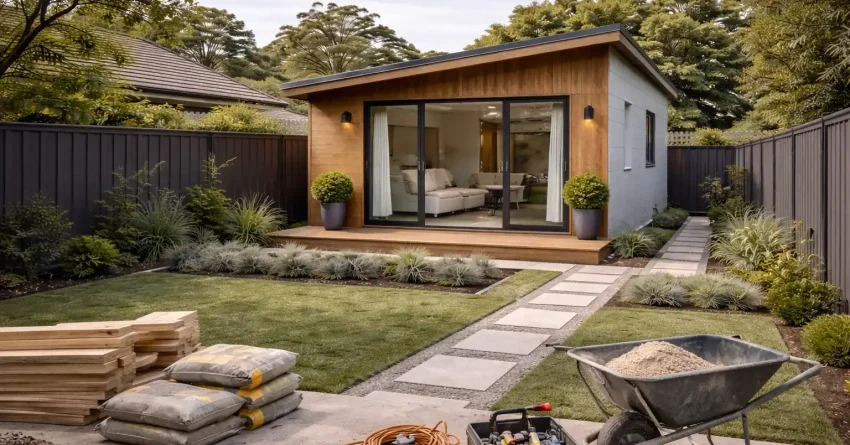
A granny flat in Sydney typically costs between $100,000 and $250,000 to build in 2025, depending on size, site conditions, design complexity, and the level of finishes you choose. That range covers everything from a basic 40sqm studio to a fully customised two-bedroom dwelling with premium fit-outs.
Whether you are a homeowner looking to add a secondary dwelling for family, a first-time builder exploring your options, or a property investor chasing rental yield, understanding where your money goes is the difference between a smooth build and a budget blowout.
This guide breaks down every cost category, explains the factors that shift pricing, compares granny flat types, and gives you practical budgeting strategies specific to the Sydney market.
How Much Does a Granny Flat Cost in Sydney?
In Sydney, a granny flat costs between $100,000 and $250,000 in 2025. A standard 60sqm two-bedroom build with mid-range finishes typically lands between $160,000 and $210,000. Size, site conditions, build method, and finish level are the four variables that move the number most.
The cost of building a granny flat in Sydney varies significantly based on the size of the dwelling, the builder you choose, and the scope of work involved. Getting a clear picture of average pricing helps you set a realistic starting budget before you commit to design or construction.
Sydney’s construction costs sit higher than the national average due to elevated labour rates, stricter council requirements across many local government areas, and the complexity of building on established residential blocks. According to Archistar’s 2024 granny flat research, the average cost to build a granny flat in Australia ranges from $120,000 to $250,000, with Sydney consistently sitting at the upper end of that spectrum.
Average Granny Flat Prices by Size
Size is the single biggest driver of total cost. Here is what you can expect to pay in Sydney for a standard build with mid-range finishes:
| Granny Flat Size | Bedrooms | Typical Cost Range (Sydney) |
| 35–40 sqm | Studio / 1-bed | $100,000–$140,000 |
| 45–55 sqm | 1-bed (larger) | $130,000–$170,000 |
| 55–65 sqm | 2-bed | $160,000–$210,000 |
| 60–65 sqm (max under CDC) | 2-bed (premium) | $200,000–$250,000+ |
These figures include construction, basic site preparation, standard council fees, and mid-range fixtures. They do not include significant demolition, major sewer diversions, or premium upgrades, which we cover in the hidden costs section below.
Cost Per Square Metre Breakdown
On a per-square-metre basis, granny flats in Sydney generally cost between $1,800 and $3,500 per sqm depending on the build method and finish level.
Kit homes and prefabricated granny flats sit at the lower end, typically between $1,800 and $2,400 per sqm. Custom-designed builds with higher-end finishes, complex rooflines, or integrated outdoor living areas push closer to $2,800 to $3,500 per sqm.
This metric is useful for comparing quotes. A builder quoting $180,000 for a 50sqm granny flat works out to $3,600 per sqm on the high side for a standard build and is worth questioning unless the specification includes premium inclusions.
How Location Affects Granny Flat Costs in Sydney
Where your property sits within Sydney has a measurable effect on your final build cost. Labour availability, council requirements, and site access all vary across the city’s 30-plus local government areas.
Inner West and Eastern Suburbs builds tend to cost more due to tighter access, heritage overlays, and higher trade rates in those areas. Western Sydney, including Blacktown, Penrith, and Campbelltown, generally offers more competitive builder pricing and simpler site conditions, keeping costs closer to the lower end of the range. Northern Beaches and Hills District builds sit in the middle, with some councils adding landscaping and parking requirements that push total project costs up.
Knowing your LGA before you start getting quotes helps you benchmark accurately and avoid comparing a Western Sydney price against an Inner West specification.
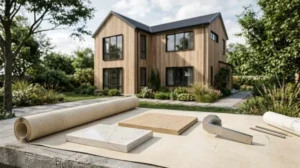
Granny Flat Cost Breakdown: Where Your Budget Goes
Understanding where your money is allocated across a granny flat project removes guesswork and helps you identify where to save and where to invest. Every granny flat build in Sydney involves four major cost categories: site preparation and approvals, construction and labour, materials and finishes, and fit-out.
Site Preparation and Council Approval Costs
Before any construction begins, your site needs to be assessed, cleared, and approved. This phase typically accounts for 10% to 15% of your total budget.
Council approval fees in Sydney range from $3,000 to $8,000 depending on whether you lodge a Complying Development Certificate (CDC) through a private certifier or a full Development Application (DA) through your local council. A CDC is faster and cheaper for most standard granny flat builds on lots over 450sqm, while a DA is required for heritage areas, flood zones, or non-standard setbacks.
Site preparation costs include demolition of existing structures (sheds, old garages), tree removal, levelling, and soil testing. On a flat, clear block, expect to pay $5,000 to $10,000. On a sloping site or one with poor soil conditions, this escalates to $15,000 to $30,000 or more due to retaining walls, excavation, and engineered footings.
You will also need a surveyor’s report and potentially a geotechnical report. Budget $2,000 to $4,000 for these combined, separate from the BASIX certificate covered below.
BASIX Certificate Requirements and Costs
A BASIX certificate is mandatory for all new residential dwellings in NSW, including granny flats. It confirms your build meets the state’s minimum benchmarks for water efficiency, thermal comfort, and energy performance.
The certificate itself costs $200 to $500 and is lodged online through the NSW Planning Portal before your CDC or DA is submitted. The real cost impact comes from what BASIX requires of your design insulation specifications, glazing ratios, hot water system type, and rainwater tank requirements; all flow from the BASIX assessment.
Choosing an electric heat pump hot water system (rather than a standard electric storage system) is the most common way to satisfy BASIX energy requirements without significant additional construction cost. Factor the BASIX assessment into your design process early, not as an afterthought, to avoid costly redesigns.
Construction and Labour Costs
Labour is the largest single expense in any granny flat build, typically representing 40% to 50% of the total project cost. Sydney’s construction labour rates reflect the city’s high cost of living and strong demand for residential trades.
Qualified tradespeople in Sydney carpenters, concreters, bricklayers, and roofers command rates that sit well above the national average. Project management and builders’ margin add another 15% to 25% on top of direct labour costs.
For a standard 60sqm two-bedroom granny flat, construction labour (including framing, roofing, cladding, internal lining, and finishing) typically costs between $60,000 and $100,000. Timber frame construction is generally faster and less expensive than brick veneer or steel frame alternatives.
Materials and Finishes
Materials account for roughly 25% to 35% of your total build cost. The range here is wide because material selection directly reflects the quality tier you choose.
Standard finishes include laminate benchtops, vinyl or ceramic tile flooring, basic cabinetry, and builder-grade tapware. This level keeps material costs between $25,000 and $45,000 for a typical two-bedroom granny flat.
Mid-range finishes step up to stone benchtops, timber-look hybrid flooring, soft-close cabinetry, and quality fixtures. Expect $45,000 to $65,000 at this level.
Premium finishes with engineered stone, custom joinery, high-end appliances, and designer fittings push material costs beyond $70,000.
The kitchen and bathroom are the most material-intensive rooms. A basic granny flat kitchen costs $5,000 to $12,000 installed, while a mid-range kitchen runs $12,000 to $20,000. Bathroom fit-outs follow a similar pattern, with basic builds at $8,000 to $15,000 and mid-range at $15,000 to $25,000.
Plumbing, Electrical, and Fit-Out Costs
Installation is where many budgets get stretched. Plumbing and electrical work for a granny flat in Sydney typically costs between $15,000 and $35,000 combined, depending on the distance from existing connection points and the complexity of the layout.
Plumbing includes water supply, hot water system, drainage, and sewer connection. A granny flat positioned close to the main house’s existing sewer line keeps connection costs at $5,000 to $10,000. A rear-of-block position requiring a sewer extension or pump system pushes this to $15,000 to $25,000.
Electrical work covers the switchboard, wiring, power points, lighting, smoke detectors, and any split-system air conditioning pre-wiring. A standard electrical fit-out runs $8,000 to $15,000. Adding ducted air conditioning or underfloor heating increases this significantly.
Hot water systems are a separate line item. An electric heat pump costs $3,000 to $5,000 installed. A gas continuous flow system sits around $2,000 to $3,500.
What Affects the Cost of Building a Granny Flat?
No two granny flat projects cost the same. Several variables shift your final price up or down, and understanding these factors before you start getting quotes helps you compare builders accurately and avoid surprises mid-build.
Site Conditions and Slope
Your block’s topography is one of the most significant cost variables. A flat, well-drained site with good soil bearing capacity is the cheapest scenario for construction. Sloping blocks require cut-and-fill earthworks, retaining walls, and potentially pier-and-beam foundations instead of a standard concrete slab.
A sloping site adds $10,000 to $40,000 to your build cost depending on the gradient. Reactive clay soils, common across Western Sydney, require deeper footings and may need engineered slab designs that cost more than a standard waffle pod slab.
Flood-prone land or bushfire-prone areas trigger additional compliance requirements under the NSW planning framework, which increase both design costs and construction specifications.
Design Complexity and Customisation
A simple rectangular floor plan with a standard roof pitch is the most cost-effective design. Every deviation from this baseline adds cost.
L-shaped or U-shaped layouts increase the linear metres of external wall and roofing, which raises both material and labour costs. Cathedral ceilings, large window openings, and integrated decking or alfresco areas all push the budget upward.
Custom architectural designs typically add $5,000 to $15,000 in design fees alone compared to using a builder’s standard plan. A well-designed granny flat that suits your block and maximises natural light and ventilation delivers better long-term value and higher rental appeal.
Council Requirements in Sydney
Sydney spans over 30 local government areas, and each council interprets the State Environmental Planning Policy (Affordable Rental Housing) slightly differently when it comes to granny flats.
Under the NSW Affordable Rental Housing SEPP, you can build a granny flat up to 60sqm on any residential lot of 450sqm or more using a Complying Development Certificate. This is the fastest and cheapest approval pathway, typically taking 10 to 20 business days through a private certifier.
Properties within a heritage conservation area, flood-affected land, or sites that do not meet standard setback requirements require a full Development Application through your local council. DAs take 40 to 90+ days to process and cost significantly more in application fees and consultant reports.
Some councils, particularly in the Inner West, Northern Beaches, and parts of the Hills District, have additional local provisions around landscaping, parking, and privacy screening that affect your design and budget.
Choosing Between a Kit Home and Custom Build
This decision has a major impact on both cost and quality. Here is how the two main approaches compare:
| Factor | Kit / Prefab Granny Flat | Custom-Built Granny Flat |
| Typical cost (60sqm) | $100,000–$150,000 | $160,000–$250,000 |
| Design flexibility | Limited to standard plans | Fully customisable |
| Build time | 8–14 weeks | 14–24 weeks |
| Quality of finishes | Standard / builder-grade | Mid-range to premium |
| Site adaptability | Best for flat, simple sites | Suits any site condition |
| Council approval | Usually CDC-ready | May require DA for complex designs |
| Resale / rental appeal | Moderate | Higher |
Kit homes offer a faster, more predictable build process with fewer variables. They work well for straightforward sites and budget-conscious projects. Custom builds cost more but allow you to design around site constraints, maximise space, and achieve a higher standard of finish that commands better rental returns.
Granny Flat Types and Their Price Ranges
The type of granny flat you build determines not just the cost but also the rental potential, livability, and long-term value it adds to your property. Sydney’s market supports everything from compact studios to full two-bedroom dwellings, and each serves a different purpose.
Detached, Attached, and Conversion Granny Flats: Cost Differences
The structural relationship between your granny flat and the main house is one of the first decisions you make, and it has a direct impact on cost.
A detached granny flat, a fully separate structure at the rear of the block, is the most common type in Sydney and typically the most expensive to build, ranging from $130,000 to $250,000 depending on size and finish. It offers the greatest privacy for both occupants and the strongest rental appeal.
An attached granny flat shares a wall with the main dwelling, which reduces external wall and roofing costs. Builds typically come in $10,000 to $30,000 cheaper than a comparable detached structure, though shared-wall acoustic requirements add some of that back. A garage or carport conversion is the most affordable path, often costing $80,000 to $130,000, but the existing structure must meet current building code standards and the conversion requires full council approval.
One-Bedroom Granny Flat Costs
A one-bedroom granny flat is the most common configuration in Sydney. Typically ranging from 40 to 50sqm, these dwellings include a separate bedroom, open-plan kitchen and living area, bathroom, and small laundry.
Expect to pay between $120,000 and $170,000 for a one-bedroom granny flat with mid-range finishes. This size strikes a balance between construction cost and rental appeal. In most Sydney suburbs, a well-finished one-bedroom granny flat rents for $350 to $500 per week depending on location and quality.
Two-Bedroom Granny Flat Costs
Two-bedroom granny flats maximise the allowable 60sqm footprint under NSW regulations. They include two bedrooms, a bathroom (sometimes with a separate toilet), an open-plan kitchen and living area, and internal laundry facilities.
These builds typically cost between $160,000 and $250,000 in Sydney. The higher end of this range reflects premium finishes, complex site conditions, or custom architectural design.
Two-bedroom granny flats attract a wider tenant pool, including couples, small families, and professional sharers. Weekly rents in Sydney for a quality two-bedroom granny flat range from $450 to $650+ in well-located suburbs, making them the strongest option for investment-focused builds.
Studio or Secondary Dwelling Costs
Studio granny flats, typically 35 to 40sqm, combine the sleeping, living, and kitchen areas into a single open-plan space with a separate bathroom. They are the most affordable option to build, usually costing between $100,000 and $140,000.
Studios suit properties where space is limited or where the granny flat is intended for a family member rather than a rental tenant. Rental returns are lower, typically $280 to $400 per week in Sydney, but the lower build cost means the return on investment remains competitive.
A studio is also the fastest type to build and approve. For homeowners who need a secondary dwelling quickly for an ageing parent or returning adult child, a studio on a straightforward site is the most efficient path to an approved, liveable space.
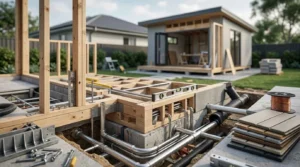
Hidden Costs When Building a Granny Flat
Every experienced builder knows that the quoted construction price is not the final number. Hidden costs catch first-time builders off guard and are the most common reason granny flat projects exceed their budget. Identifying these expenses upfront allows you to plan for them rather than react to them.
Utility Connections and Sewer Extensions
Connecting your granny flat to existing water, sewer, gas, and electricity infrastructure is a cost that varies dramatically based on your property layout.
A granny flat within 10 to 15 metres of the main house’s existing sewer connection point keeps costs at $3,000 to $8,000. A rear-of-block position requiring a sewer extension or pump-out system pushes this to $10,000 to $25,000.
Sydney Water charges a Section 73 compliance fee for new dwellings, covering water and sewer connection approval. This fee is typically $3,000 to $5,000 and is mandatory for all new granny flat builds. Electrical connection through Ausgrid or Endeavour Energy may require a new meter and switchboard upgrade, adding $2,000 to $5,000 to your budget.
Landscaping and Driveway Access
Once construction is complete, the area around your granny flat needs to be restored and finished. Landscaping costs are frequently underestimated.
Basic landscaping turf, garden beds, a small paved pathway, and fencing between the main house and granny flat typically costs $5,000 to $15,000. Councils requiring a separate driveway or parking space for the granny flat add another $5,000 to $20,000 depending on the length and surface material.
Privacy screening, whether through planting, fencing, or built screens, is often a condition of approval and must be factored into your landscaping budget.
Compliance Certificates and Inspections
Throughout the build, you need multiple inspections and certificates to satisfy NSW building regulations. These include:
- Construction certificate (if not covered by your CDC): $1,500 to $3,000
- Critical stage inspections (footings, framing, waterproofing, final): $2,000 to $4,000 total
- Occupation certificate (required before anyone can legally live in the granny flat): $1,000 to $2,000
- BASIX certificate: $200 to $500
- Strata or easement searches (if applicable): $500 to $1,500
In total, compliance and inspection costs add $5,000 to $10,000 to your project. These are non-negotiable expenses that must be included in every granny flat budget.
How to Budget for a Granny Flat in Sydney
A well-structured budget is the foundation of a successful granny flat project. The difference between a build that stays on track and one that spirals comes down to planning, contingency, and realistic expectations about what things cost in Sydney’s construction market.
Setting a Realistic Budget Range
Start by defining your total available budget, then work backwards. A useful rule of thumb is to allocate your budget across these categories:
- Construction (including labour and materials): 65% to 75%
- Site preparation and approvals: 10% to 15%
- Connections (plumbing, electrical, sewer): 8% to 12%
- Contingency: 10% to 15%
On a $200,000 total budget, that means roughly $140,000 to $150,000 for construction, $20,000 to $30,000 for site prep and approvals, $16,000 to $24,000 for, and $20,000 to $30,000 held in reserve.
The contingency allowance is not optional. Unexpected costs arise on nearly every residential construction project, from discovering rock beneath the slab to needing additional drainage work. A 10% to 15% contingency protects you from having to compromise on quality or halt the build mid-project.
Granny Flat Build Timeline and When Costs Are Due
Understanding when money leaves your account is as important as knowing the total. Most granny flat builders structure payments in stages aligned to construction milestones.
A typical payment schedule runs: deposit on contract signing (5% to 10%), slab completion (15% to 20%), frame completion (15% to 20%), lock-up stage (20% to 25%), fit-out completion (20% to 25%), and final payment on occupation certificate (5% to 10%). The exact percentages vary by builder and contract, but this structure is standard under NSW Home Building Act requirements.
From approval to handover, a standard granny flat build takes 14 to 24 weeks for a custom build and 8 to 14 weeks for a kit home. Add 2 to 12 weeks for the approval process before construction begins. Planning your finance drawdowns around these milestones avoids unnecessary interest costs during the build.
Financing Options for Granny Flats
Most homeowners finance a granny flat through one of three pathways.
A home equity loan or line of credit is typically the most cost-effective option for homeowners with sufficient equity. Interest rates are lower than personal loans, and the granny flat adds value to the security property. Most lenders finance a granny flat build when you can demonstrate council approval and a fixed-price building contract.
A construction loan draws funds in stages as the build progresses, which reduces interest costs during construction. It involves more paperwork and lender inspections than a standard equity loan, but suits larger builds where cash flow management matters.
Personal savings or a personal loan suit smaller builds, studios or basic one-bedroom flats where the loan term is short. Personal loan interest rates are higher, so this option works best when the total borrowing is modest. Speak with a mortgage broker experienced in granny flat financing, as lender policies vary significantly for secondary dwellings.
Tips to Avoid Cost Blowouts
The most common causes of granny flat cost blowouts in Sydney are preventable. Here are the strategies that keep projects on budget.
Get a fixed-price contract. A fixed-price building contract locks in the construction cost and protects you from price increases on labour and materials during the build. Avoid cost-plus contracts unless you have deep construction experience and can manage the risk.
Complete all site investigations before signing a contract. Soil testing, survey reports, and sewer location checks must happen before you commit to a builder. Discovering problems after construction starts is when costs escalate fastest.
Finalise your design and selections before construction begins. Changes made during the build, known as variations, are the number one cause of budget overruns. Choose your floor plan, finishes, fixtures, and fittings before the first slab is poured.
Compare at least three detailed quotes. Ensure each quote covers the same scope of work so you are comparing like with like. The cheapest quote is not always the best value when it excludes items that other builders include.
Build in your contingency and do not touch it unless genuinely needed. Treat your contingency as money that does not exist unless a legitimate unforeseen cost arises. It is not a fund for upgrades or scope changes.
Is a Granny Flat a Good Investment in Sydney?
Beyond the build cost, the financial case for a granny flat depends on what it returns. For many Sydney homeowners and investors, a granny flat is one of the highest-yielding property improvements available, but the numbers need to stack up for your specific situation.
Rental Return and Property Value Impact
A well-built granny flat in a desirable Sydney location generates $350 to $650+ per week in rental income. On an annual basis, that is $18,200 to $33,800 in gross rental revenue.
On a total build cost of $180,000 and weekly rent of $450, the gross rental yield on the granny flat investment is approximately 13%. That significantly outperforms the yield on most Sydney residential property purchases, where gross yields typically sit between 2.5% and 4% according to CoreLogic’s Sydney market data.
Beyond rental income, a granny flat adds to your property’s overall value. Properties with approved secondary dwellings in Sydney typically sell for $100,000 to $200,000 more than comparable properties without one, though this varies by suburb and market conditions. The strongest investment returns come from two-bedroom granny flats in suburbs with high rental demand, good public transport access, and proximity to employment centres.
Tax Depreciation on a Granny Flat
Investors who rent out a granny flat are entitled to claim depreciation on the building and its fixtures under the ATO’s capital works and plant-and-equipment schedules. This is a non-cash deduction that reduces taxable income without requiring any additional outlay.
A quantity surveyor’s depreciation schedule, which costs $500 to $800, documents every depreciable element of the build. For a $180,000 granny flat, annual depreciation deductions typically range from $4,000 to $7,000 in the early years of ownership, depending on the build date and asset mix. This deduction meaningfully improves the after-tax cash flow of the investment and is one of the most overlooked financial benefits of building new rather than buying an existing property.
Always obtain a depreciation schedule from a registered quantity surveyor before lodging your first tax return as a granny flat landlord.
Granny Flat vs Other Home Additions
When comparing a granny flat to other ways of adding value to your property, the numbers are compelling. Extensions can add significant value, but they do not generate independent rental income the way a granny flat does.
| Home Addition | Typical Cost (Sydney) | Potential Value Add | Rental Income Potential |
| Granny flat (60sqm, 2-bed) | $160,000–$250,000 | $100,000–$200,000 | $450–$650/week |
| Home extension (30sqm) | $120,000–$200,000 | $80,000–$150,000 | None (unless subdivided) |
| Swimming pool | $50,000–$100,000 | $20,000–$50,000 | None |
| Major kitchen renovation | $40,000–$80,000 | $30,000–$60,000 | None |
| Bathroom renovation | $20,000–$50,000 | $15,000–$35,000 | None |
A granny flat is the only common home improvement that generates independent rental income while also increasing property value. This dual benefit makes it the strongest financial proposition for homeowners with suitable land.
Conclusion
Building a granny flat in Sydney is a significant financial decision that rewards careful planning. From site preparation and council approvals through to construction, finishes, and hidden costs, every dollar in your budget needs a clear purpose. Understanding the full cost picture, including the variables that shift pricing and the expenses that catch first-time builders off guard, puts you in control of the outcome.
The Sydney market offers strong returns for well-built granny flats, particularly two-bedroom dwellings in high-demand rental areas. Whether your goal is rental income, accommodation for family, or long-term property value growth, the investment case is strongest when the build is properly budgeted, professionally managed, and delivered without costly surprises.
At Sydney Home Renovation, we bring transparent pricing, detailed cost breakdowns, and end-to-end project management to every granny flat build we deliver. We take the guesswork out of budgeting so you go into your build with a clear number, a realistic timeline, and a team that keeps both on track. Reach out to us for an obligation-free consultation and a detailed quote for your project.
Frequently Asked Questions
How much does it cost to build a granny flat in Sydney in 2025?
A granny flat in Sydney typically costs between $100,000 and $250,000 in 2025. A standard 60sqm two-bedroom build with mid-range finishes generally falls between $160,000 and $210,000.
Do I need council approval for a granny flat in NSW?
Yes, all granny flats in NSW require approval. Most standard builds on lots over 450sqm qualify for a CDC processed by a private certifier in 10 to 20 business days. Heritage zones, flood-affected areas, and non-standard setbacks require a full DA through your local council.
What is the cheapest type of granny flat to build?
A prefabricated or kit home studio granny flat (35 to 40sqm) is the most affordable option, typically costing $100,000 to $140,000 in Sydney. Kit homes use standardised designs and factory-built components, which reduce both labour time and material waste.
How long does it take to build a granny flat?
A typical granny flat build in Sydney takes 12 to 24 weeks from slab to completion. Kit homes and prefab builds are faster at 8 to 14 weeks. Custom builds with complex site conditions or premium finishes take 16 to 24 weeks. Add 2 to 12 weeks for the approval process before construction begins.
Can I finance a granny flat through my home loan?
Yes, many homeowners finance a granny flat by accessing equity through a home equity loan or line of credit. Some lenders also offer construction loan products specifically for secondary dwellings. Lender policies vary, so speak with a mortgage broker experienced in granny flat financing.
What size granny flat can I build on my property?
Under NSW regulations, you can build a granny flat up to 60sqm of internal floor area on any residential lot of 450sqm or more. This size limit applies to habitable floor space and does not include covered outdoor areas like porches or verandahs, provided they meet certain design criteria.
Are granny flats worth the investment for rental income?
For most Sydney homeowners, yes. A two-bedroom granny flat costing $180,000 to build generates $450 to $650 per week in rent, delivering a gross yield of approximately 13% to 18% on the build cost. This significantly outperforms typical Sydney residential property yields and adds to the overall value of your property at resale.
What is the difference in cost between a detached and attached granny flat?
A detached granny flat typically costs $10,000 to $30,000 more than a comparable attached build due to additional external walls, roofing, and separate utility connections. A garage conversion is the most affordable path at $80,000 to $130,000, though the existing structure must meet current building code standards.
Can I claim tax depreciation on a granny flat?
Yes, investors renting out a granny flat can claim depreciation on the building and its fixtures under ATO capital works and plant-and-equipment schedules. A quantity surveyor’s depreciation schedule costs $500 to $800 and typically generates annual deductions of $4,000 to $7,000 in the early years, meaningfully improving after-tax cash flow.