A rear extension is one of the most effective ways to add living space, natural light, and long-term value to a Sydney home, and for most homeowners, it delivers more usable area per dollar than any other renovation type. Whether you are working with a compact inner-west terrace or a suburban block with room to grow, extending at the rear lets you reshape how your household lives day to day.
The gap between a rough idea and a finished build is filled with decisions about cost, council rules, design trade-offs, and builder selection that can make or break your budget. Getting these right from the start is what separates a smooth renovation from a stressful one.
This guide walks you through every stage of a rear extension in Sydney from realistic 2025 costs and approval pathways to design principles, the build process, hidden expenses, and how to choose the right contractor.
What Is a Rear Extension?
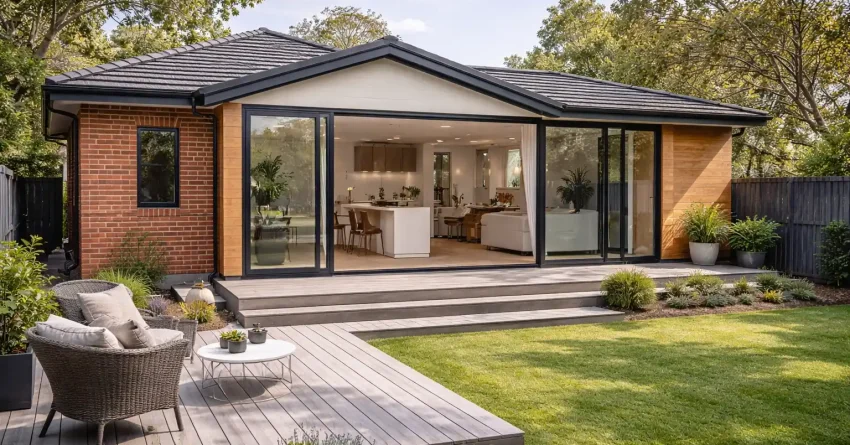
A rear extension is a structural addition built onto the back of an existing house to increase its floor area. It extends the ground floor into the backyard, or adds a second storey above that new footprint. In Sydney, it typically creates an open-plan kitchen, living, and dining area connected directly to outdoor space.
In Sydney, rear extensions are the most common type of home extension because most residential blocks have usable space behind the dwelling. The rear boundary setback, combined with the existing house footprint, usually provides enough room to add a meaningful amount of living area without affecting the streetscape or front facade.
The result is almost always a larger kitchen, an open-plan living and dining area, or a combination of both, often designed to connect directly to an outdoor entertaining space. For many Sydney homeowners, a rear extension is the practical alternative to selling and buying a bigger property in the same suburb.
Single-Storey vs Double-Storey Rear Extensions
A single-storey rear extension pushes the ground floor further into the backyard. It is the simpler, faster, and less expensive option. Most single-storey extensions in Sydney range from 15 to 40 square metres and focus on creating a combined kitchen-living-dining space with better flow to the garden.
A double-storey rear extension adds both ground-floor and first-floor space, requiring deeper foundations, structural steel, and more extensive engineering. It delivers significantly more usable area on the same footprint, making it the better option when backyard space is limited or when additional bedrooms and bathrooms are needed upstairs.
The choice between the two comes down to three factors: how much space you need, how much yard you are willing to sacrifice, and your total budget. A single-storey extension in Sydney typically costs between $150,000 and $350,000, while a double-storey extension generally starts around $300,000 and can exceed $600,000 depending on size, finishes, and site complexity.
Common Reasons Sydney Homeowners Extend at the Rear
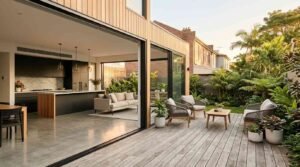
The most frequent driver is a lack of functional living space. Many Sydney homes, particularly older terraces, semi-detached houses, and post-war bungalows, were built with small, separated rooms and limited kitchen areas. A rear extension opens these up into a modern layout that suits the way families actually live.
Other common reasons include:
- Growing families needing more bedrooms, a second bathroom, or a larger kitchen to accommodate daily life without constant compromise
- Work-from-home requirements creating demand for a dedicated home office or multipurpose room that does not eat into shared living space
- Property value strategy where investors or owner-occupiers want to increase the home’s market value before selling or refinancing, a rear extension that transforms the layout is one of the most reliable ways to do this
- Lifestyle upgrades such as connecting indoor living to an outdoor deck, courtyard, or pool area
- Avoiding the cost of moving to suburbs where buying a larger home costs significantly more than renovating the existing one
In Sydney’s current property market, extending is often the more financially rational decision compared to upgrading to a bigger house in the same area.
How Much Does a Rear Extension Cost in Sydney?
Rear extension pricing in Sydney varies widely depending on size, structural complexity, site access, finishes, and whether you are building single or double storey. What follows are realistic 2025 figures based on current Sydney construction costs, not national averages or outdated estimates.
Average Cost Per Square Metre in 2025
| Extension Type | Cost Per Square Metre (Sydney 2025) |
| Single-storey (standard finishes) | $3,000 – $5,000 |
| Single-storey (high-end finishes) | $5,000 – $7,500 |
| Double-storey (standard finishes) | $3,500 – $5,500 |
| Double-storey (high-end finishes) | $5,500 – $8,500+ |
These figures include construction, standard site costs, and typical finishes. They do not include design fees, council or CDC application costs, structural engineering, or landscaping, which are covered separately below.
The wide range reflects the reality that two rear extensions of the same size can differ by tens of thousands of dollars depending on the materials selected, the structural requirements of the existing house, and how difficult the site is to access.
Single-Storey Rear Extension Cost Breakdown
For a typical 25-square-metre single-storey rear extension in Sydney with mid-range finishes, expect a total project cost in the range of $150,000 to $250,000. Here is how that budget typically breaks down:
| Cost Category | Estimated Range |
| Demolition and site preparation | $5,000 – $15,000 |
| Foundations and slab | $10,000 – $25,000 |
| Structural framing and roofing | $25,000 – $50,000 |
| External cladding and windows | $15,000 – $30,000 |
| Internal fit-out (plaster, paint, flooring) | $20,000 – $40,000 |
| Kitchen (if included) | $20,000 – $50,000 |
| Electrical and plumbing | $10,000 – $25,000 |
| Design and engineering fees | $8,000 – $20,000 |
| Council/CDC fees and certifications | $3,000 – $10,000 |
| Contingency (10–15%) | $15,000 – $35,000 |
The kitchen is often the single largest variable. A basic kitchen fit-out might cost $15,000, while a fully custom kitchen with stone benchtops, integrated appliances, and premium cabinetry can push past $60,000 on its own.
Double-Storey Rear Extension Cost Breakdown
A double-storey rear extension of approximately 50 square metres (25 sqm per level) in Sydney with mid-range finishes typically falls between $300,000 and $500,000. The cost breakdown shifts because of the additional structural requirements:
| Cost Category | Estimated Range |
| Demolition and site preparation | $8,000 – $20,000 |
| Foundations (deeper for two storeys) | $15,000 – $40,000 |
| Structural steel and framing | $50,000 – $100,000 |
| Roofing | $15,000 – $35,000 |
| External cladding, windows, doors | $25,000 – $50,000 |
| Internal fit-out (both levels) | $40,000 – $80,000 |
| Kitchen (if included) | $20,000 – $55,000 |
| Bathroom (if included upstairs) | $15,000 – $40,000 |
| Electrical, plumbing, HVAC | $20,000 – $45,000 |
| Scaffolding and crane hire | $5,000 – $15,000 |
| Design and engineering fees | $15,000 – $35,000 |
| Council/CDC fees and certifications | $5,000 – $15,000 |
| Contingency (10–15%) | $30,000 – $60,000 |
The structural engineering component is significantly higher for double-storey work. Steel beams, load-bearing calculations, and deeper footings all add cost that does not exist in a single-storey build.
What Drives the Final Price Up or Down
Several factors push your rear extension cost above or below the averages listed above.
Factors that increase cost:
- Difficult site access. When materials cannot be delivered directly to the rear of the property, common with terraces and narrow lots, manual handling and crane hire add thousands to the budget.
- Sloping blocks. Retaining walls, additional excavation, and engineered foundations increase the structural budget considerably.
- Heritage overlays or conservation areas. These require more expensive materials, sympathetic design, and longer approval timelines.
- High-end finishes. Engineered timber flooring, custom joinery, stone benchtops, and premium fixtures can double the fit-out cost compared to standard selections.
- Asbestos removal. Pre-1990 Sydney homes frequently contain asbestos in eaves, wall cladding, or wet areas, and licensed removal is a mandatory additional cost.
Factors that reduce cost:
- Simple rectangular footprint. Complex shapes with multiple roof junctions cost more to build than a straightforward box extension.
- Good site access. A wide driveway or laneway access at the rear reduces labour time and eliminates crane costs.
- Standard finishes. Choosing quality mid-range products instead of premium brands delivers meaningful savings on the fit-out without compromising durability.
- Combining work. Bundling the extension with internal renovation works often reduces overall costs through shared preliminaries and mobilisation.
Planning and Council Approval for Rear Extensions in Sydney
Before any construction begins, you need the right approvals. Getting this wrong can result in fines, stop-work orders, or being forced to demolish non-compliant work. The approval pathway depends on the size of the addition, your local council’s controls, and whether the property is heritage-listed or in a conservation area.
Do You Need Council Approval or a CDC?
In New South Wales, there are two main approval pathways for residential extensions.
A Complying Development Certificate (CDC) is a fast-track approval issued by a private certifier or council. It applies when your proposed extension meets all the predetermined standards in the State Environmental Planning Policy (Exempt and Complying Development Codes) 2008. A CDC can be approved in as little as 10 to 20 business days.
A Development Application (DA) is the traditional council approval pathway. It is required when your extension does not meet the complying development standards, when the property is heritage-listed, or when it is located in a heritage conservation area. A DA typically takes 2 to 6 months, sometimes longer if neighbour objections or design amendments are involved.
Most straightforward single-storey rear extensions on standard residential lots in Sydney qualify for a CDC, provided they comply with setback, height, and floor space ratio requirements. Double-storey extensions and projects on heritage-listed properties almost always require a DA.
Key Planning Controls That Affect Rear Extensions
The main planning controls you need to understand are:
- Floor Space Ratio (FSR). This limits the total floor area you can build relative to your lot size. When your existing house is already close to the FSR limit, your extension size will be restricted.
- Rear setback. Most councils require a minimum distance between the rear wall of the extension and the rear boundary, typically 3 to 6 metres for single-storey and 6 to 8 metres for double-storey, though this varies by council and zone.
- Height limits. Maximum building height is set by your local environmental plan. Single-storey extensions rarely trigger height issues, but double-storey additions need careful design to stay within limits.
- Overshadowing. Your extension must not cast excessive shadow on neighbouring properties, particularly their private open space and living areas. Shadow diagrams are usually required as part of the approval documentation.
- Privacy. Windows and elevated outdoor areas on the upper level of a double-storey extension must be designed to minimise overlooking of neighbours, often through highlight windows, frosted glass, or privacy screens.
- Heritage controls. Properties that are heritage-listed or in a conservation area face additional design requirements. The extension typically needs to be visually subordinate to the original building and may require specific materials or detailing.
Dilapidation Reports and Neighbour Notification
A dilapidation report is a photographic and written record of the condition of neighbouring properties before construction begins. Most builders and certifiers recommend one as standard practice; some councils require it. The report protects you from disputes about damage that may have pre-existed your build.
Neighbour notification is a separate obligation. Under the CDC pathway, adjoining owners are notified but have limited grounds to object. Under a DA, neighbours receive formal notice and have the right to lodge submissions. Engaging with neighbours early before lodging any application reduces the risk of objections and builds goodwill that makes the construction phase easier for everyone.
How Long Does the Approval Process Take?
| Approval Pathway | Typical Timeframe |
| CDC (Complying Development Certificate) | 10 – 20 business days |
| DA (straightforward, no objections) | 2 – 4 months |
| DA (heritage or complex, with objections) | 4 – 8+ months |
These timeframes do not include the time needed to prepare architectural drawings, engineering reports, and other supporting documentation before lodging the application. Allow 4 to 8 weeks for design development and documentation before the approval clock starts.
The total pre-construction phase from initial design through to approval typically takes 3 to 6 months for a CDC pathway and 6 to 12 months for a DA pathway. Planning for this lead time is critical to setting a realistic project timeline.
Designing Your Rear Extension for Maximum Value
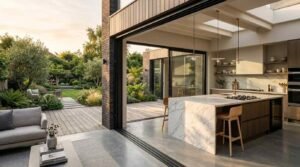
A well-designed rear extension does more than add square metres. It transforms how the house functions, how it feels to live in, and what it is worth on the market. The design phase is where you make the decisions that determine whether your extension delivers genuine long-term value or simply adds space that does not work properly.
Open-Plan Kitchen and Living Layouts
The most common and highest-value design outcome for a rear extension is a combined kitchen, living, and dining area. This open-plan layout is what most Sydney buyers expect in a modern family home, and it is the single biggest driver of both liveability and resale value.
Key design principles for open-plan rear extensions:
- Kitchen placement. Position the kitchen along one wall or as an island layout so it faces the living area and outdoor space. This creates a natural social hub where cooking, dining, and relaxing happen in the same zone.
- Ceiling height. Raising the ceiling in the extension to 2.7 metres or higher above the standard 2.4-metre height in many older Sydney homes makes the space feel significantly larger and allows for clearer sightlines to the garden.
- Zoning within open plan. Use flooring changes, bulkheads, or island benches to subtly define different areas within the open space without using walls. This prevents the “big empty box” feeling that poorly designed open-plan rooms can create.
- Storage integration. Built-in storage, a butler’s pantry, or a concealed laundry renovation within the extension footprint keeps the open-plan area clean and functional without sacrificing floor space.
Choosing External Materials: Brick, Cladding, and Render
The external finish of your rear extension affects cost, maintenance, and how well the addition integrates with the existing house. The three most common approaches in Sydney are brick, cladding, and render.
Brick is the most durable and lowest-maintenance option. It matches the existing fabric of most older Sydney homes naturally, which matters in heritage areas and conservation zones. The trade-off is that brick is typically the most expensive external finish per square metre.
Cladding fibre cement, timber, or metal is faster to install and offers a contemporary aesthetic that works well on modern extensions. It is lighter than brick, which reduces structural load on the frame, and it is generally less expensive. Maintenance requirements vary by material.
Render over a lightweight frame or masonry block is a popular middle ground. It gives a clean, contemporary finish that can be painted to match or contrast the existing house. Render requires periodic repainting and is susceptible to cracking on poorly prepared substrates, so surface preparation matters.
Indoor-Outdoor Flow and Connecting to Your Backyard
In Sydney’s climate, the connection between indoor living and outdoor space is one of the most valuable design features a rear extension can deliver. This is where the extension earns its keep not just as extra floor area, but as a bridge between the house and the garden.
Bi-fold or sliding doors spanning the full width of the rear wall are the standard approach. When open, they effectively double the usable entertaining space by merging the indoor living area with a deck, patio, or courtyard.
Floor level continuity is important. Designing the internal floor and the outdoor surface at the same level or with a minimal step creates a seamless transition that requires careful planning of slab heights and drainage during the design phase. Covered outdoor areas adjacent to the extension, such as a pergola, awning, or extended roofline, increase usability in rain and harsh sun and are worth including in the extension scope rather than treating as a separate project.
Natural Light, Ventilation, and Energy Efficiency
A rear extension that faces north or northeast in Sydney has a significant advantage. North-facing glazing captures winter sun and can be shaded in summer with eaves or external louvres, reducing heating and cooling costs and making the space more comfortable year-round.
Skylights and clerestory windows are effective solutions when the extension sits between the existing house and the rear boundary, limiting the available wall area for windows. A well-placed skylight can transform a deep floor plan that would otherwise feel dark.
Cross-ventilation should be designed into the layout. Operable windows on at least two sides of the extension allow natural airflow, reducing reliance on air conditioning during Sydney’s warmer months. Insulation standards for new construction in NSW are governed by the National Construction Code, and exceeding the minimum requirements with better insulation, double glazing, or thermally broken window frames pays back through lower energy bills and improved comfort over the life of the building.
The Rear Extension Build Process Step by Step
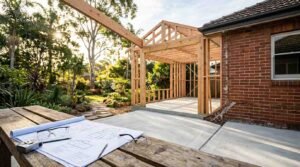
Understanding the construction sequence helps you plan around disruptions, track progress, and hold your builder accountable to a realistic schedule. Here is what happens from the day work starts on site to the day you move back in.
Site Preparation and Demolition
The first phase involves setting up the site and removing anything in the way of the new build. This typically includes:
- Demolition of the existing rear wall (or portion of the house being removed to connect to the extension)
- Removal of existing structures such as old decks, sheds, pergolas, or garden beds within the extension footprint
- Asbestos inspection and removal for houses built before 1990
- Temporary weatherproofing to protect the open rear of the house during construction
- Service disconnections and relocations for any plumbing, gas, or electrical lines running through the demolition zone
- Site fencing, skip bins, and temporary facilities for the construction team
This phase usually takes 1 to 2 weeks for a single-storey extension and 2 to 3 weeks for a double-storey project.
Structural Work, Framing, and Roofing
Once the site is cleared, the structural build begins. This is the most intensive phase and includes:
- Foundations. Concrete footings and slab are poured according to the structural engineer’s specifications. For double-storey extensions, these footings are deeper and reinforced with more steel.
- Framing. Timber or steel framing goes up to form the walls and roof structure of the extension. Steel is more common in Sydney for double-storey work and for spans over 4 metres where open-plan layouts require large openings without supporting walls.
- Roofing. The roof structure is completed and clad with tiles, metal sheeting, or a flat membrane roof depending on the design. The junction between the new roof and the existing house roof is a critical detail that must be properly flashed and sealed to prevent leaks.
- Structural steel. Large openings, cantilevered sections, or removal of load-bearing walls in the existing house all require structural steel beams installed during this phase.
The principal certifying authority (PCA) typically carries out a frame inspection at this stage, before walls are closed up, to confirm the structure complies with the approved plans and the National Construction Code. This inspection is a mandatory hold point; work cannot proceed to fit-out until it is passed. This phase typically takes 3 to 6 weeks for single-storey and 6 to 10 weeks for double-storey extensions.
Fit-Out, Finishes, and Final Inspections
With the structure enclosed and weathertight, the internal fit-out begins:
- Rough-in plumbing, electrical, and HVAC installed inside walls and ceiling before they are closed up
- Insulation fitted to external walls and the ceiling
- Plasterboard installed, joined, and sanded
- Waterproofing applied to any wet areas (bathrooms, laundries)
- Tiling, flooring, and painting completed
- Kitchen and joinery installation
- Final fix electrical and plumbing (power points, light fittings, tapware, toilets)
- External works including cladding, rendering, landscaping, and fencing
Once all work is complete, the PCA carries out final inspections to confirm compliance with the approved plans and the Building Code of Australia. An occupation certificate is issued when the extension passes all inspections. This document confirms the space is legally habitable and is required for insurance and future property transactions.
Typical Build Timeline for Sydney Projects
| Project Type | Design & Approval | Construction | Total |
| Single-storey rear extension (CDC) | 3 – 4 months | 3 – 5 months | 6 – 9 months |
| Single-storey rear extension (DA) | 6 – 10 months | 3 – 5 months | 9 – 15 months |
| Double-storey rear extension (CDC) | 4 – 6 months | 5 – 8 months | 9 – 14 months |
| Double-storey rear extension (DA) | 8 – 14 months | 5 – 8 months | 13 – 22 months |
Weather delays, material supply issues, and council processing times can all extend these timelines. Building a realistic buffer of 2 to 4 weeks into your schedule is standard practice.
Hidden Costs and Budget Pitfalls to Watch For
The quoted construction price is never the full cost of a rear extension. There are always additional expenses that sit outside the builder’s contract or emerge during construction. Knowing what these are before you start helps you budget accurately and avoid the stress of unexpected bills.
Structural Engineering and Unexpected Site Conditions
Every rear extension requires a structural engineer, and their fees typically range from $3,000 to $10,000 depending on the complexity of the project. This is a separate cost from the builder’s quote and the architect’s fees.
What catches many homeowners off guard is what the engineer finds once work begins. Common surprises include:
- Existing foundations that are inadequate to support the new structure, requiring underpinning or additional footings
- Soil conditions that differ from the geotechnical report (reactive clay, rock, high water table), requiring modified foundation designs
- Existing structural defects in the house that must be rectified before the extension can be connected
- Termite damage discovered during demolition of internal walls or subfloor areas
Each of these can add $5,000 to $30,000 or more to the project cost. A thorough pre-construction investigation including a geotechnical report and a detailed building inspection reduces the risk of major surprises but cannot eliminate it entirely.
Temporary Living Arrangements and Access Issues
Depending on the scope of work, you may not be able to live in the house during certain phases of construction. When the rear wall is removed and the kitchen is demolished, the house may be uninhabitable for several weeks.
Budget for temporary accommodation if needed. For a typical Sydney rear extension, this might mean 4 to 8 weeks of alternative living arrangements. Renting a short-term apartment or staying with family during the most disruptive phase is common.
Site access is another hidden cost driver. Properties with no rear lane access where the only way to deliver materials is through the house or over the roof attract additional labour costs and potentially crane hire at $1,500 to $5,000 per day depending on the equipment required.
Allowances, Variations, and Provisional Sums
Three contract terms every homeowner should understand before signing:
Allowances are estimated amounts included in the contract for items you have not yet selected, such as tiles, tapware, or light fittings. When your actual selections cost more than the allowance, you pay the difference. Builders sometimes set allowances low to make the overall quote look competitive; always check that allowances are realistic for the quality level you expect.
Provisional sums are estimates for work that cannot be accurately priced until construction is underway, such as excavation in unknown soil conditions or connection to existing services. These are adjusted to actual cost once the work is done, meaning the final price can be higher or lower than the estimate.
Variations are changes to the agreed scope of work after the contract is signed. Every variation, whether initiated by you or required by site conditions, comes with a cost. Minimising variations starts with thorough design and documentation before construction begins.
A well-drafted contract clearly defines what is included, what is an allowance, and what is a provisional sum. Ask for clarification on any of these before you sign.
How to Finance a Rear Extension in Sydney
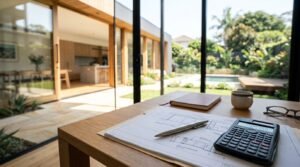
A rear extension is a significant capital outlay, and most Sydney homeowners do not fund it entirely from savings. Understanding your financing options before you approach a builder helps you set a realistic budget and avoid committing to a scope you cannot complete.
Construction Loans
A construction loan is a purpose-built finance product for building and renovation work. Unlike a standard home loan, funds are drawn down in stages as construction milestones are reached, typically at slab, frame, lock-up, fit-out, and completion. You pay interest only on the amount drawn at each stage, which reduces the carrying cost during the build.
Construction loans require a fixed-price building contract and approved plans before the lender will commit. This means your design and approval phase must be largely complete before finance is confirmed a sequencing point that catches many homeowners off guard.
Equity Access and Refinancing
Homeowners with existing equity in their property often access renovation funds by refinancing their home loan or establishing a home equity line of credit. This approach is typically simpler than a construction loan and does not require staged drawdowns, making it well-suited to projects where the builder is paid in progress claims rather than fixed milestones.
The amount you can access depends on your current loan-to-value ratio and the lender’s assessment of your property’s post-renovation value. A pre-renovation valuation from your lender gives you a clear picture of what is available before you commit to a scope.
Renovation Finance and Personal Loans
For smaller rear extensions, particularly single-storey additions at the lower end of the cost range, renovation finance products and secured personal loans are an option. Interest rates are typically higher than home loan rates, but the application process is faster and does not require the same level of documentation as a construction loan. These products suit homeowners who need to move quickly or who have limited equity in their property.
How to Choose the Right Builder for Your Rear Extension
The builder you choose will have more impact on your project outcome than almost any other decision. A good builder delivers on time, communicates clearly, manages costs transparently, and builds to a standard that lasts. A poor choice leads to delays, cost blowouts, defective work, and stress.
What to Look for in a Sydney Renovation Contractor
Start with the non-negotiables:
- Current NSW contractor licence appropriate for the value of work (check on the NSW Fair Trading website)
- Adequate insurance including home warranty insurance (mandatory for residential work over $20,000 in NSW), public liability, and workers’ compensation
- Demonstrated experience with rear extensions in Sydney, not just new builds or commercial work
- A portfolio of completed projects you can inspect or at least view in detail
- References from recent clients who had similar scope and budget
Beyond the basics, look for builders who provide detailed, itemised quotes rather than single-line lump sums. A builder who breaks down costs by trade and material gives you transparency and makes it easier to compare quotes fairly.
Questions to Ask Before Signing a Contract
- What is included in the quoted price and what is excluded?
- What are the allowances for key items (kitchen, tiles, flooring, tapware) and are they realistic?
- What provisional sums are in the contract and what triggers an adjustment?
- How are variations priced and approved?
- What is the expected start date and completion date?
- What are the payment milestones and are they tied to completed stages of work?
- Who will be the site supervisor and how often will they be on site?
- How do you handle delays caused by weather, materials, or subcontractor availability?
- What is the defects liability period after completion?
- Can I speak to three recent clients whose projects were similar in scope?
The answers to these questions reveal more about a builder’s professionalism and reliability than any marketing material or online review.
Fixed-Price vs Cost-Plus Contracts Explained
Fixed-price contracts set a total price for the agreed scope of work. The builder carries the risk of cost increases within the defined scope, and you know exactly what you will pay unless you request changes. This is the most common and generally safest option for homeowners.
Cost-plus contracts charge you the actual cost of labour and materials plus a builder’s margin. You get transparency on actual costs, but you carry the risk of the total price being higher than estimated. Cost-plus works best when the scope is uncertain or when the homeowner wants maximum flexibility to make decisions during construction.
For most rear extensions in Sydney, a fixed-price contract with clearly defined allowances and provisional sums provides the best balance of cost certainty and flexibility. A builder who is reluctant to offer a fixed price is signalling that the scope is not well enough defined, and that is a problem to resolve before construction starts, not during it.
Does a Rear Extension Add Value to Your Property?
A rear extension is a significant investment, and it is reasonable to ask whether the money you spend will come back when you sell. For most Sydney properties, the answer is yes, but the return depends on what you build, how well you build it, and where the property is located.
Return on Investment for Sydney Homes
A well-executed rear extension typically recovers a substantial portion of its cost in added property value at the time of completion. In high-demand suburbs, particularly in the inner west, eastern suburbs, lower north shore, and northern beaches, the return is strongest when the extension transforms a functionally outdated home into a modern, open-plan layout that matches buyer expectations.
The key phrase is “well-executed.” A cheap extension with poor design, low-quality finishes, or non-compliant construction can actually reduce a property’s appeal. Buyers and their building inspectors will identify substandard work, and it becomes a negotiation point rather than a selling point.
The extensions that deliver the highest returns share common traits: they create open-plan living connected to outdoor space, they use quality materials and finishes, they are fully compliant with all approvals and building codes, and they suit the character and price point of the surrounding neighbourhood.
It is also worth comparing a rear extension against a knockdown rebuild. For properties where the existing structure is in poor condition, or the layout is fundamentally unsuitable, a knockdown rebuild can deliver more value per dollar, but it involves a longer timeline, higher holding costs, and the loss of any heritage or character value in the existing building. For most Sydney homes in reasonable structural condition, a rear extension is the more practical and cost-effective path.
Rear Extensions vs Other Renovation Options
Compared to other renovation types, rear extensions consistently rank among the highest-value improvements for Sydney homes.
- Kitchen renovation only (no extension): Typically costs $25,000 to $70,000 and improves the existing space but does not add floor area. Good return but limited impact on total property value.
- Bathroom renovation: Important for presentation and liveability but rarely adds value proportional to cost unless the existing bathroom is severely dated or non-functional.
- Loft conversion or attic room: Can add a bedroom or study at lower cost than a full extension, but ceiling height restrictions and stair access often limit the result.
- Full second storey addition: Adds the most space but is the most expensive and disruptive option. Best suited to properties where the ground floor layout is already functional.
- Rear extension: Strikes the best balance between cost, disruption, and value for most Sydney homes. It addresses the most common functional deficiency: small, dark, disconnected living areas and delivers the layout that modern buyers want.
For homeowners who need more space and want the best return on their renovation dollar, a rear extension is typically the strongest option.
Conclusion
A rear extension is a practical, high-value way to transform a Sydney home. From understanding realistic costs and navigating council approvals to designing for light, flow, and long-term liveability, every decision you make during planning directly shapes the outcome of your build.
The difference between a rear extension that adds genuine value and one that creates problems comes down to preparation. Accurate budgeting, thorough design, the right approvals, and a reliable builder are not optional extras; they are the foundation of every successful project.
We work with Sydney homeowners at every stage of the rear extension process, from initial feasibility through to the final occupation certificate. If you are ready to explore what is possible for your home, get in touch with Sydney Home Renovation for honest advice, transparent pricing, and a team that delivers on its promises.
Frequently Asked Questions About Rear Extensions
How much does a rear extension cost in Sydney in 2025?
A single-storey rear extension in Sydney typically costs between $150,000 and $350,000, while a double-storey extension ranges from $300,000 to $600,000 or more, depending on size, site conditions, structural complexity, and finishes.
Do I need council approval for a rear extension in Sydney?
Most single-storey rear extensions that meet NSW complying development standards are approved through a fast-track CDC without a full council DA. Heritage-listed properties, conservation areas, and non-compliant designs require a Development Application.
How long does it take to build a rear extension?
Construction takes 3 to 5 months for a single-storey extension and 5 to 8 months for a double-storey extension. Including design and approval, the total project timeline ranges from 6 months to over 18 months depending on the approval pathway.
Can I live in my house during a rear extension?
Yes, for most of the build. There will be periods, particularly during demolition and when the rear wall is open, where the house may be temporarily uninhabitable. Plan for 4 to 8 weeks of potential disruption where alternative arrangements may be needed.
What is the difference between a CDC and a DA for a rear extension?
A CDC is a fast-track approval taking 10 to 20 business days, applying when your extension meets all predetermined standards. A DA is a full council assessment taking 2 to 8 months, required for complex projects, heritage properties, or non-compliant designs.
Does a rear extension add value to my Sydney home?
Yes. A well-designed and properly built rear extension adds meaningful value, with the strongest returns in high-demand Sydney suburbs where open-plan living connected to outdoor space is what buyers expect. Quality design and compliant construction are the deciding factors.
What are the most common hidden costs in a rear extension?
The most common hidden costs include structural engineering fees, asbestos removal, unexpected soil or foundation issues, temporary accommodation during construction, site access difficulties requiring crane hire, and the difference between quoted allowances and actual material selections. A contingency of 10 to 15 percent covers most of these.
Do I need a dilapidation report for a rear extension?
A dilapidation report is not always legally required, but most builders and certifiers recommend one before work begins. It records the pre-existing condition of neighbouring properties and protects you from disputes about damage that may have pre-dated your build.