
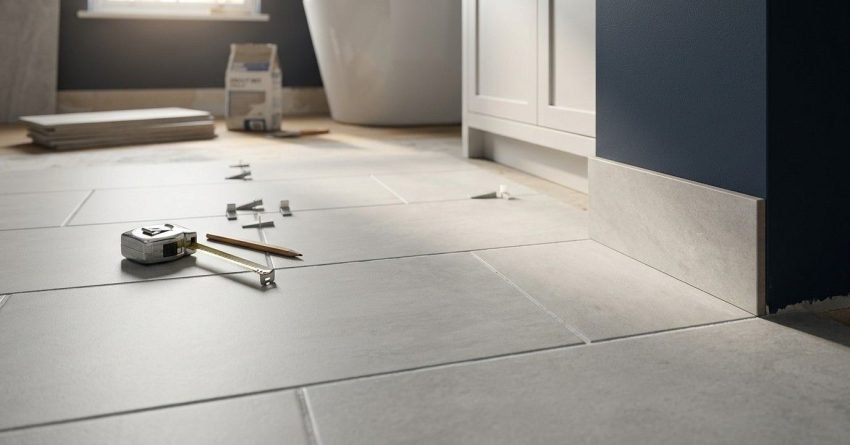
The one-third rule for tiles ensures no cut tile along a wall edge measures less than one third of a full tile’s width. This simple principle separates amateur-looking tile jobs from professional finishes. We apply it to every bathroom renovation we plan in Sydney, because it directly affects budget accuracy, material waste, and the balanced finish our clients expect.
Whether you’re a first-time renovator or a property investor upgrading for resale value, tile layout affects both aesthetics and costs. This guide explains how the one third rule works, when we apply it, and how it shapes your renovation budget.
What Is the One Third Rule for Tiles?
The one third rule is a tiling principle we follow to create visually balanced installations. It governs where tiles start and how cuts are distributed across a surface. Any cut tile visible along walls, edges, or corners should measure at least one third of a full tile’s dimension.
If a standard tile is 300mm wide, the smallest acceptable cut piece is 100mm. This prevents thin slivers of tile appearing at room edges. Slivers look unprofessional, are difficult to install securely, and often crack or lift over time.
Why We Use This Method
We apply this rule automatically because it delivers consistent results. A bathroom with properly balanced tile cuts looks intentional and well-planned. The eye naturally registers symmetry and proportion.
Beyond aesthetics, the rule reduces callbacks and repairs. Thin tile cuts are structurally weak. They chip during installation, crack under foot traffic, and create grout lines that collect dirt unevenly.
We know that spending extra time on layout calculations saves hours of remediation work later.
How the One Third Rule Works in Practice
Applying the rule means measuring the space, calculating tile placement, and selecting the optimal starting point. This happens before any adhesive touches the floor or wall.
Calculating Your Tile Layout
We start by measuring the total length of the surface being tiled. We divide this by the tile size to determine how many full tiles fit, plus the remainder.
Example calculation: Wall length: 2400mm. Tile width: 300mm. Full tiles: 2400 ÷ 300 = 8 tiles exactly.
When measurements divide evenly, there’s flexibility in where to start. When they don’t, the remainder determines the cut sizes.
Example with remainder: Wall length: 2500mm. Tile width: 300mm. Full tiles: 8 (2400mm). Remainder: 100mm.
A 100mm cut at one end meets the one-third minimum, since 100mm is exactly one third of 300mm. Centring the layout often produces a better result. Shifting the starting point gives two 150mm cuts, one at each end, creating visual symmetry.
Grout spacing factors into every calculation too. A 3mm grout gap across eight tiles adds 21mm to the total run, which shifts where cuts fall and can turn a comfortable 100mm cut into a sub-third sliver if it’s ignored.
Starting Point Selection
The rule influences where tiling begins. Rather than starting from a corner and working across, we often start from the centre of a room or wall.
Centre-starting distributes cut tiles evenly to both edges. Both sides of the room then show matching partial tiles, which looks deliberate rather than accidental.
We also consider focal points. The wall behind a vanity or the floor area visible from the doorway takes priority, while cuts get pushed to less visible areas behind toilets or under vanities.
Common Room Scenarios
Standard rectangular bathroom: We centre the layout on the longest visible wall and accept equal cuts at both ends.
Bathroom with shower recess: We treat the shower as a separate zone, applying the rule independently to the shower floor and walls, then to the main bathroom area.
L-shaped or irregular spaces: We break the room into rectangular sections and apply the rule to each one, keeping transitions visually consistent.
Common Tile Sizes and Minimum Cut Widths
Knowing the minimum acceptable cut for standard tile sizes helps when reviewing a layout plan.
| Tile Size | One Third Minimum Cut |
| 200mm | 67mm |
| 300mm | 100mm |
| 450mm | 150mm |
| 600mm | 200mm |
| 900mm (large format) | 300mm (see exceptions below) |

Why the One Third Rule Matters for Your Bathroom Renovation
Understanding this rule helps you evaluate quotes, set realistic expectations, and avoid costly mistakes.
Visual Balance and Professional Finish
Bathrooms are small spaces where every detail shows. Walls, floors, and fixtures create a contained environment where layout errors are immediately obvious.
A bathroom tiled without the one-third rule often shows thin tile strips along one wall, uneven grout lines, visible lippage, and asymmetrical patterns that feel “off.” These issues diminish the perceived value of the renovation.
Property investors particularly notice that bathrooms with professional tile work photograph better and attract stronger buyer interest.
Reducing Tile Waste and Costs
Following the one-third rule often reduces tile waste. Proper layout planning means fewer mistakes during installation, and tiles cut incorrectly or cracked during cutting represent direct material losses.
Without a calculated layout, a tiler frequently reaches a wall edge and discovers a 20mm sliver is needed. Cutting that thin piece wastes the remaining 280mm of the tile.
Accurate layout planning allows precise ordering too. We calculate exactly how many tiles are needed, plus a sensible allowance for cuts and breakage, typically 10% for straightforward layouts or 15% for diagonal patterns.
Avoiding Common DIY Mistakes
First-time renovators often underestimate tile layout complexity. The most common DIY error is starting from a corner without measuring the full room first, which guarantees unplanned cuts at the opposite end.
Other frequent mistakes include forgetting to account for grout spacing, ignoring the visual weight of large-format tiles, and failing to dry-lay tiles before applying adhesive. Each mistake either forces a compromise on the one-third rule or requires removing and re-laying tiles.
When to Apply the One Third Rule
The rule applies universally to tiled surfaces, but implementation varies by application area and tile orientation.
Floor Tiles
Floor layouts typically centre on the room’s main axis. For bathrooms, this usually means centring tiles between the two longest walls, then adjusting front-to-back placement to optimise cuts near the vanity and toilet. The same centring logic applies to kitchen tiling layouts, where floor and splashback runs follow identical principles.
Floor tiles must also account for floor wastes near drains. Tiles around circular drains require careful cutting regardless of the rule, but surrounding tiles should still follow balanced layout principles.
Wall Tiles
Wall tile layouts consider both horizontal and vertical dimensions. The rule applies to tiles meeting corners, ceilings or bulkheads, floors or skirting, and windows, niches, or recesses.
Vertical layout matters particularly in showers. A thin sliver of tile at the ceiling line draws the eye and cheapens the entire installation.
Feature Walls and Accent Areas
Feature walls with contrasting tiles or patterns need especially careful layout, since these areas are designed to attract attention. For feature walls, we generally recommend full tiles only, adjusting the feature area’s boundaries to accommodate complete tiles rather than accepting cuts.
Exceptions to the One Third Rule
Certain situations call for modified approaches.
Large Format Tiles
Tiles exceeding 600mm create unique challenges. A one-third cut on a 900mm tile still measures 300mm, a substantial piece, but large format tiles amplify visual imbalance more than smaller tiles do.
For large format installations, we aim for cuts no smaller than 40-50% of full tile size to maintain proportion as dimensions increase. Large format tiles also demand perfectly flat substrates, since any undulation causes lippage that’s far more visible than with smaller tiles. Budget accordingly for large format tile installation requirements, including floor levelling or wall preparation.
Patterned and Mosaic Tiles
Patterned tiles, including encaustic, geometric, and decorative designs, often have layout requirements that override the one-third rule, since patterns may need to start at particular points to maintain design continuity.
Mosaic tiles on mesh backing work differently. Individual pieces are small, so “cuts” typically mean trimming the mesh and removing whole small tiles rather than cutting individual pieces. The one-third rule applies to the overall sheet placement rather than individual mosaic elements.
Irregular Room Shapes
Bathrooms with curved walls, angled corners, or non-standard geometry need creative solutions. We prioritise the most visible areas and accept that hidden corners may require smaller cuts, since the goal remains visual balance in the spaces people actually see and use.

The One Third Rule and Your Renovation Budget
Tile layout directly affects renovation costs and helps when evaluating contractor quotes.
Material Cost Implications
Proper layout planning influences how many tiles you need to purchase. A well-calculated layout minimises waste from cutting errors and allows precise ordering.
Following the rule sometimes means purchasing slightly more tiles. If centring a layout calls for half-tiles at both ends rather than a full tile at one end, more material gets used overall. This additional cost is typically modest, and it should factor into your budget regardless.
Tile pricing in Sydney varies enormously by material and finish. At higher price points, even small efficiency gains from proper layout planning translate to meaningful savings across a full bathroom.
Labour Considerations
Tilers who follow the one-third rule may quote slightly higher than operators who skip the process entirely. This premium reflects time spent on layout calculations, careful cutting for precise dimensions, dry-laying to verify the plan, and attention to detail throughout installation.
The labour premium for quality work typically pays for itself through reduced material waste, fewer callbacks, and a superior finished result. A DIY approach can save on labour costs upfront, but miscalculated layouts often mean wasted tiles and repeat trips to the supplier, which erodes much of that saving.
Planning for Tile Allowances
Standard practice recommends ordering 10% extra tiles beyond calculated requirements. This covers cutting waste, breakage during handling, and future repairs where matching tiles are kept aside for later damage.
For diagonal layouts, herringbone patterns, or rooms with many cuts, we increase the allowance to 15%, since complex patterns generate more waste inherently.
When budgeting, calculate the tile area, add the appropriate allowance, then multiply by the chosen tile’s price per square metre. Add delivery costs too, since tiles are heavy and freight adds up quickly across a full order.
How to Discuss the One Third Rule with Your Tiler
Clear communication with your tiling contractor keeps expectations aligned and prevents misunderstandings about layout, quality, and cost.
Questions to Ask Before Work Begins
Layout approach: “How will you determine the tile layout for my bathroom? Will you centre tiles or start from a specific point?”
Cut tile placement: “Where will cut tiles fall in my space? Can you show me on a sketch or diagram?”
Minimum cut size: “What’s the smallest tile cut you’ll accept in visible areas?”
Focal points: “Which areas will you prioritise for full tiles versus cuts?”
Dry layout: “Will you dry-lay tiles before fixing to verify the layout works?”
These questions signal that you understand quality tiling and expect professional standards. Contractors who can’t answer confidently may lack the expertise for high-quality work.
What to Expect in a Professional Quote
A detailed tiling quote should include the square metre rate for supply and installation, preparation work such as waterproofing and levelling, the specific tile product and quantity, grout type and colour, timeline and access requirements, and the payment schedule.
Quality contractors often describe their layout approach upfront or note that layouts will be confirmed on-site before installation begins. This shows they take the planning process seriously.
Be cautious of quotes significantly below market rates. Budget tiling often means rushed work, ignored layout principles, and corners cut on preparation. The cost of rectifying poor tiling removal, disposal, re-waterproofing, and re-tiling far exceeds the initial savings.
Conclusion
The one-third rule for tiles transforms bathroom renovations from acceptable to exceptional. This principle, ensuring no visible cut tile measures less than one third of a full tile, delivers professional results, reduces waste, and protects your investment.
Understanding tile layout principles helps you evaluate contractors, set realistic budgets, and communicate expectations clearly. Whether you’re renovating your family home or preparing an investment property for market, proper tiling technique adds measurable value.
We apply professional tiling standards to every bathroom project at Sydney Home Renovation. Contact our team to discuss your renovation plans and receive transparent, detailed pricing that accounts for quality workmanship from the first tile to the last.
Frequently Asked Questions
What is the one third rule for tiles?
The one-third rule states that any cut tile along walls, edges, or corners should measure at least one third of a full tile’s width. This prevents thin slivers that look unprofessional and are prone to cracking.
Does the one-third rule apply to all tile sizes?
Yes, the rule applies universally regardless of tile dimensions. Large format tiles over 600mm often benefit from a higher threshold of 40-50% to maintain visual proportion.
How do I calculate tile layout using the one-third rule?
Measure your wall or floor length, divide by tile width, and note the remainder. Adjust your starting point if the remainder creates cuts smaller than one-third.
Can I ignore the one-third rule for small bathrooms?
Small bathrooms actually make the rule more important, not less. Limited space means every tile is visible and layout errors are immediately obvious.
Does following the one third rule cost more?
Layout planning may require slightly more tiles in some situations but typically reduces overall costs by minimising cutting waste and installation errors.
What happens if tiles are cut smaller than one third?
Thin tile cuts are difficult to install securely, prone to cracking under pressure, and create uneven grout lines that diminish the finish.
Should I discuss the one-third rule with my contractor?
Absolutely. Asking about layout approach, minimum cut sizes, and focal point priorities shows you understand quality standards and invites a confident, detailed answer.


