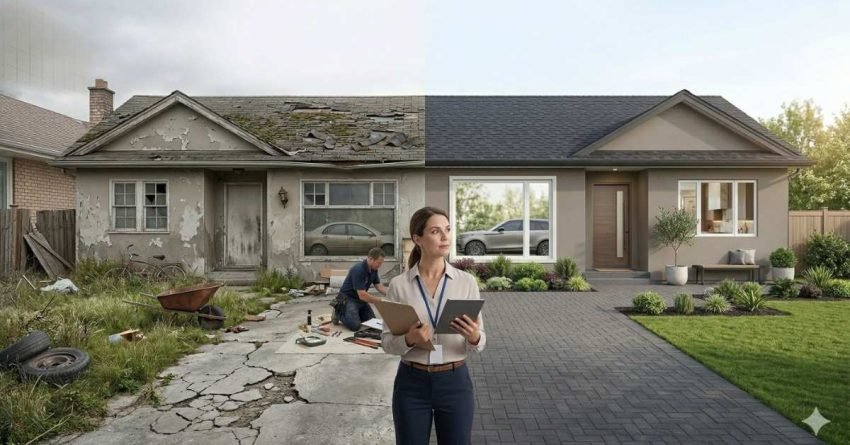
Structural damage, illegal modifications, and poor-quality renovations are the most significant factors that devalue a house—often reducing property value by 20-40% in Sydney’s competitive market. Foundation cracks, unpermitted work, and visible maintenance neglect send immediate red flags to buyers and valuers, triggering price reductions, failed inspections, and prolonged time on market.
For Sydney homeowners and property investors, understanding what truly devalues a house isn’t just about avoiding mistakes—it’s about protecting your largest financial asset. Whether you’re planning a whole home renovation or preparing to sell, or maintaining a rental property, knowing which issues cause the most damage helps you prioritise repairs, budget effectively, and make decisions that preserve long-term value.
This guide breaks down the seven critical categories that devalue houses most severely, from structural failures and location factors to renovation disasters and design flaws—plus practical strategies to protect and restore your property’s worth.
Structural Issues That Severely Impact Property Value
Structural problems represent the single most damaging category of property defects, often reducing house values by 15-30% or more depending on severity. Unlike cosmetic issues, structural damage signals fundamental integrity problems that require expensive specialist repairs, trigger mandatory disclosure requirements, and create immediate buyer resistance regardless of how well-presented the rest of the property appears.
Foundation Cracks and Subsidence Problems
Foundation damage is the ultimate deal-breaker for most Sydney buyers. Significant cracking, subsidence, or movement in foundations can devalue a property by 20-40%, particularly in Sydney’s reactive clay soil areas where seasonal ground movement is common. Hairline cracks may be cosmetic, but stepped cracking in brickwork, doors and windows that won’t close properly, and visible floor slopes indicate serious structural movement.
The financial impact extends beyond repair costs. Foundation issues typically require engineering assessments, council involvement, and specialist underpinning or restumping work that can cost $15,000-$80,000+ depending on severity. More critically, they create financing obstacles—many lenders refuse mortgages on properties with active structural movement, immediately shrinking your buyer pool to cash purchasers who demand steep discounts.
Sydney’s geology makes this particularly relevant. Properties in areas with reactive clay soils—including parts of Western Sydney, the Inner West, and Northern Suburbs—face higher subsidence risks during drought-wet cycles, as documented by Geoscience Australia’s national soil reactivity mapping. Regular monitoring, proper drainage, and early intervention when minor cracks appear can prevent catastrophic devaluation.
Roof Damage and Water Ingress
A compromised roof doesn’t just leak—it systematically destroys property value through cascading damage. Roof defects can reduce house values by 10-25%, particularly when water ingress has caused ceiling staining, timber rot, or structural damage to roof framing. In Sydney’s climate, even minor leaks during heavy rain events can cause extensive hidden damage over time.
The devaluation mechanism is twofold. First, roof replacement costs are substantial—$8,000-$25,000+ for a typical Sydney home depending on size and materials. Second, water damage rarely stays contained. Leaks compromise insulation, damage electrical systems, promote mould growth, and rot structural timber—creating repair bills that quickly exceed the roof replacement cost itself.
Building inspectors specifically target roof condition during pre-purchase assessments. Visible sagging, missing or damaged tiles, rusted valleys, and deteriorated flashing all trigger red flags. Properties with documented water ingress history face particular scrutiny, as buyers and valuers assume hidden damage exists even after repairs.
Rising Damp and Moisture-Related Structural Damage
Moisture problems in Sydney homes create both immediate devaluation and long-term structural threats. Rising damp, penetrating moisture, and poor drainage can reduce property values by 8-20%, with the impact increasing dramatically if moisture has compromised structural timber, caused concrete cancer in rendered walls, or created extensive mould growth.
Rising damp occurs when ground moisture wicks up through masonry walls due to failed or absent damp-proof courses—common in Sydney’s older housing stock. The visible signs—tide marks on internal walls, peeling paint, crumbling plaster, and musty odours—immediately signal problems to buyers. The invisible damage—rotted floor joists, corroded wall ties, and compromised foundations—creates far greater devaluation.
Modern moisture issues often stem from poor renovation work. Bathrooms and laundries without proper waterproofing, inadequate drainage around extensions, and blocked or damaged stormwater systems all create moisture ingress that progressively damages structural elements. In Sydney’s humid climate, even minor moisture problems escalate quickly without proper remediation.
Illegal or Unpermitted Structural Modifications
Unpermitted structural work creates a unique devaluation scenario—the modifications themselves may be well-executed, but the lack of proper approvals can reduce property values by 15-30% or make properties effectively unsaleable until rectified. Sydney councils actively enforce building regulations, and illegal work discovered during sale processes creates immediate legal and financial complications.
Common unpermitted modifications include removed or altered load-bearing walls, unapproved home extensions that lack development consent, converted garages, and enclosed balconies—all requiring development consent and construction certificates. The devaluation stems from multiple factors: buyers can’t obtain finance on properties with illegal structures, councils can issue orders requiring removal or rectification, and insurance policies may be void for unapproved work.
The rectification path is expensive and uncertain. Retrospective approval requires engineering certification, council fees, and often modifications to bring work up to current code standards—potentially costing $10,000-$50,000+ depending on the scope. Some illegal work simply can’t be approved and must be removed entirely, representing total loss of the original investment plus demolition costs.
Location and External Factors Beyond Your Control
Location-based devaluation factors are particularly challenging because they’re largely unchangeable, yet can reduce property values by 10-30% compared to otherwise identical homes in better positions. While you can renovate a bathroom or repair a roof, you can’t relocate your house away from a busy road or change your neighbourhood’s trajectory—making location factors critical considerations for purchase decisions and realistic value expectations.
Proximity to High-Traffic Roads and Noise Pollution
Main road frontage creates immediate and measurable devaluation. Properties on busy roads in Sydney typically sell for 10-20% less than equivalent homes on quiet streets, with the discount increasing for homes near major arterials, highways, or commercial vehicle routes. The impact combines noise pollution, air quality concerns, safety issues for families with children, and reduced privacy and amenity.
The devaluation isn’t uniform—it depends on traffic volume, speed limits, and physical barriers. A home on a local road that’s become a rat-run suffers less impact than one directly fronting Parramatta Road or the Pacific Highway. Properties with substantial setbacks, mature trees, or solid fencing experience smaller discounts than those with minimal buffering.
Noise pollution extends beyond roads. Flight paths near Sydney Airport, train lines, industrial areas, and even popular entertainment precincts all create acoustic impacts that reduce property appeal and value. While some buyers accept these trade-offs for location convenience or lower entry prices, the resale market consistently discounts affected properties.
Neighbouring Problem Properties and Visual Blight
Your property’s value is intrinsically linked to your immediate neighbours’ properties. Neighbouring homes in severe disrepair, hoarding situations, or with visible neglect can reduce your property value by 5-15%, regardless of your own property’s condition. The impact is particularly severe in tightly-packed Sydney suburbs where neighbouring properties dominate street views and buyer first impressions.
Visual blight takes many forms: collapsed fences, overgrown vegetation obscuring the property, accumulated rubbish, derelict vehicles, and severely deteriorated buildings. These issues signal neighbourhood decline to buyers and create immediate negative emotional responses during inspections. Even well-maintained homes struggle to achieve premium prices when surrounded by obvious neglect.
The challenge is limited recourse. While councils can enforce cleanup orders for extreme cases, most neighbouring property issues fall below intervention thresholds. Your options are largely limited to maintaining your own property immaculately, strategic landscaping to screen problem views, and realistic pricing that acknowledges the impact on buyer appeal.
Flood Zones and Environmental Hazards
Flood risk creates severe and permanent devaluation. Properties in mapped flood zones can experience 20-40% value reductions compared to flood-free equivalents, with the impact increasing dramatically for homes with documented flood history. Sydney’s flood-prone areas—including parts of Western Sydney, the Hawkesbury region, and low-lying coastal suburbs—face particular challenges as climate change increases flood frequency and severity, according to the NSW Government’s flood risk management framework.
The devaluation mechanisms are multiple and reinforcing. Flood-affected properties face higher insurance premiums or complete insurance unavailability, limiting buyer pools to those who can self-insure or accept the risk. Lenders impose stricter lending criteria or refuse mortgages entirely on high-risk properties. Council flood overlays restrict renovation and rebuilding options, limiting future improvement potential.
Beyond flooding, other environmental hazards create similar impacts. Bushfire-prone areas require expensive building standards and face insurance challenges. Properties near former industrial sites may have soil contamination issues. Coastal properties face erosion risks and increasingly strict development controls. All these factors create measurable devaluation that compounds over time as climate and environmental risks become more prominent in buyer decision-making.
Declining Neighbourhood Amenities and Infrastructure
Neighbourhood trajectory significantly impacts individual property values. Areas experiencing amenity decline—closing schools, reduced public transport, deteriorating shopping centres—can see property values stagnate or decline by 5-15% relative to improving neighbourhoods, even when individual properties are well-maintained. Sydney’s shifting economic geography means some suburbs rise while others plateau or decline.
The indicators are subtle but cumulative: increasing vacancy rates in local retail strips, schools losing enrolment, reduced public transport frequency, and delayed infrastructure maintenance. These changes signal reduced liveability and convenience, making areas less attractive to buyers who have alternatives. The impact is particularly severe for family-oriented suburbs where school quality and local amenities drive demand.
Conversely, improving infrastructure creates value uplift. New metro stations, school upgrades, shopping centre redevelopments, and improved parks all enhance neighbourhood appeal and property values. Understanding your area’s trajectory—through council strategic plans, infrastructure investment announcements, and demographic trends—helps set realistic value expectations and renovation investment decisions.
Poor Renovation Choices and DIY Disasters
Badly executed or poorly planned renovations can actually reduce property value rather than increase it, with the worst examples destroying 10-25% of potential value through over-capitalisation, quality shortcuts, or functionally damaging changes. While quality renovations add value, renovation mistakes represent double financial loss—the money spent on the work plus the devaluation caused by poor execution or inappropriate choices.
Over-Capitalisation and Mismatched Upgrades
Over-capitalisation occurs when renovation spending exceeds the value it adds—a common trap in Sydney’s expensive renovation market. Installing a $60,000 designer kitchen in an $800,000 home in a modest suburb typically returns only 50-70% of the investment, as the property’s ceiling value is constrained by comparable sales in the area regardless of individual upgrade quality.
The mismatch problem extends beyond pure cost. Ultra-modern minimalist renovations in traditional Federation homes, commercial-grade appliances in family suburbs, or luxury finishes in areas where buyers prioritise land value over improvements all represent misaligned investment. The renovations may be objectively high-quality, but they don’t match buyer expectations or willingness to pay in that specific market.
Smart renovation investment requires understanding your property’s value ceiling and buyer profile. In established Sydney suburbs, buyers often prefer original character features over modern interventions. In family areas, practical functionality outweighs designer finishes. In investor-focused markets, durable low-maintenance choices trump premium materials. Matching renovation scope and style to your specific market maximises value return.
Low-Quality Materials and Visible Shortcuts
Cheap materials and obvious cost-cutting create immediate buyer resistance and measurable devaluation. Properties with visibly poor-quality renovations can sell for 8-15% less than those with either quality updates or honest original condition, as buyers assume hidden problems exist and factor in complete renovation costs to their offers.
The telltale signs are obvious to experienced buyers and building inspectors: hollow-core doors, laminate benchtops with visible edge peeling, poorly fitted tiles with inconsistent grout lines, cheap tapware that’s already corroding, and paint finishes with visible roller marks and poor edge work. These details signal that the entire renovation was done to minimum cost rather than appropriate quality standards.
The devaluation extends beyond aesthetics. Low-quality materials fail faster, creating maintenance burdens for new owners. Cheap waterproofing in bathrooms leads to leaks. Budget electrical work may not meet code standards. Inadequate structural support for heavy stone benchtops creates cracking and movement. Buyers increasingly demand building inspections that identify these issues, leading to price reductions or failed sales.
Removing Bedrooms or Reducing Functional Space
Bedroom count is a critical value driver in Sydney’s family-focused housing market. Removing a bedroom to create larger living spaces or ensuites can reduce property value by 10-20%, particularly when it drops the property below key bedroom thresholds—four bedrooms to three, or three bedrooms to two. The impact is most severe in family suburbs where bedroom count directly determines buyer pool size.
The mathematics are straightforward. A four-bedroom home in a typical Sydney suburb commands a significant premium over three-bedroom equivalents—often $100,000-$200,000+ depending on location. Converting that fourth bedroom into an enlarged master ensuite or study may improve functionality for current occupants, but it permanently reduces the property’s appeal to families who need four separate bedrooms.
Similar devaluation occurs when renovations reduce other functional spaces. Converting garages to living areas without creating alternative parking reduces value in car-dependent suburbs. Removing laundries or combining them into bathrooms creates functionality issues—a point covered in detail in the complete guide to laundry renovation. Eliminating storage to create open-plan spaces reduces practical appeal. Understanding buyer priorities in your specific market prevents these value-destroying changes.
Bathroom and Kitchen Renovations Done Poorly
Bathrooms and kitchens are the highest-impact renovation areas—but only when executed properly. Poorly renovated bathrooms and kitchens can reduce property value by 5-12% compared to well-maintained original condition, as they combine the worst of both worlds: the cost and disruption of renovation without the value uplift of quality work.
Common bathroom renovation failures include inadequate waterproofing that leads to leaks, poor ventilation causing mould growth, incorrectly installed fixtures that fail prematurely, and layout choices that reduce functionality. In Sydney’s humid climate, proper waterproofing and ventilation are non-negotiable—failures in these areas create expensive rectification requirements that buyers heavily discount. The complete guide to bathroom renovation outlines the standards that separate value-adding work from value-destroying shortcuts.
Kitchen renovation disasters typically involve poor layout planning, inadequate storage, cheap cabinetry that warps or fails, insufficient electrical capacity for modern appliances, and benchtop materials that stain or damage easily. The kitchen is the most scrutinised room during property inspections—obvious quality issues or functional problems immediately reduce buyer confidence and trigger price negotiations.
The solution is engaging qualified, licensed contractors who understand building codes, use appropriate materials, and provide warranties on their work. The cost difference between budget DIY renovations and professional work is typically 15-25%, but the value difference can be 50-100% or more when comparing resale outcomes.
Maintenance Neglect and Visible Deterioration
Deferred maintenance creates compounding devaluation—minor issues that cost hundreds to address early can reduce property values by 10-20% when left to deteriorate into major problems. Unlike renovation choices or location factors, maintenance neglect is entirely preventable and reversible, making it one of the most controllable devaluation factors for property owners.
Peeling Paint, Cracked Render, and Exterior Decay
Exterior presentation creates immediate value impact through buyer first impressions. Properties with peeling paint, cracked render, or visible exterior deterioration typically sell for 8-15% less than well-maintained equivalents, as buyers assume interior neglect matches exterior condition and factor in complete repaint and repair costs.
The deterioration cycle accelerates in Sydney’s climate. Peeling paint exposes timber to moisture, causing rot. Cracked render allows water penetration, leading to internal damp and structural damage. Rusted gutters overflow, damaging fascias and causing foundation moisture problems. What starts as cosmetic neglect quickly becomes structural deterioration requiring expensive specialist repairs.
The financial logic of preventative maintenance is compelling. Repainting a typical Sydney home costs $8,000-$15,000 every 7-10 years. Allowing paint to fail completely and timber to rot increases costs to $15,000-$30,000+ for repairs plus repainting. The devaluation during the deterioration period—potentially $50,000-$100,000 in lost sale price—far exceeds the maintenance cost savings.
Overgrown Gardens and Poor Kerb Appeal
Kerb appeal directly impacts property values through buyer psychology and perceived maintenance burden. Properties with overgrown gardens, dead lawns, and poor street presentation can experience 5-12% devaluation, as buyers form negative first impressions before even entering the home and assume the interior matches the exterior neglect.
The impact extends beyond aesthetics. Overgrown vegetation damages fences, blocks drainage, harbours pests, and can cause structural damage when roots penetrate foundations or plumbing. Unmaintained gardens signal to buyers that the property has been neglected generally, triggering more thorough inspections and conservative valuations.
The solution is relatively inexpensive. Regular mowing, basic garden maintenance, and simple landscaping improvements cost $1,000-$3,000 annually for most Sydney properties—a fraction of the potential devaluation from neglect. Pre-sale garden cleanup and presentation improvements typically return 300-500% of their cost through higher sale prices and faster sales.
Outdated or Broken Fixtures and Fittings
Non-functional or visibly deteriorated fixtures create immediate buyer concerns about overall property condition. Properties with broken tapware, cracked tiles, damaged light fittings, and malfunctioning appliances can experience 5-10% devaluation, as buyers assume these visible issues indicate hidden problems and factor in complete replacement costs.
The psychology is important. A single dripping tap or cracked tile suggests neglect. Multiple broken fixtures signal systematic maintenance failure. Buyers extrapolate from visible problems to assume hidden issues exist—old wiring, deteriorated plumbing, roof leaks, and structural problems—even when these assumptions aren’t accurate.
The repair costs are typically modest—$500-$2,000 to address common fixture and fitting issues—but the devaluation impact can be $20,000-$50,000+ depending on property value and buyer perceptions. Pre-sale maintenance that addresses all visible defects consistently delivers strong returns through higher offers and reduced negotiation leverage for buyers.
Pest Infestations and Visible Damage
Pest problems create severe devaluation through both actual damage and buyer fear. Properties with active termite infestations can experience 15-30% devaluation, while even treated historical infestations reduce values by 5-10% due to buyer concerns about hidden structural damage and recurrence risk.
Sydney’s climate is ideal for termites, with subterranean termite species active throughout the metropolitan area, as confirmed by the CSIRO’s research on termite distribution in south-eastern Australia. Termite damage to structural timber can be extensive and expensive to repair—$10,000-$50,000+ for significant infestations. More critically, termite history triggers mandatory disclosure requirements and intensive building inspections that often reveal additional problems.
Other pest issues create similar devaluation. Rodent infestations suggest poor building maintenance and potential health hazards. Borer damage to timber floors and furniture indicates moisture problems. Cockroach or ant infestations signal cleanliness issues. All these problems are preventable through regular pest inspections ($200-$350 annually) and prompt treatment when issues are detected.
Layout and Design Flaws That Limit Appeal
Fundamental design problems reduce property values by 8-18% by limiting the buyer pool to those willing to accept compromised functionality or undertake expensive reconfiguration work. Unlike cosmetic issues, layout flaws are expensive to rectify and often constrained by structural limitations, making them persistent devaluation factors.
Poor Natural Light and Ventilation
Natural light is consistently ranked among the top buyer priorities in Sydney’s property market. Dark, poorly ventilated homes can sell for 10-15% less than light-filled equivalents, as buyers increasingly prioritise healthy, comfortable living environments and energy efficiency through passive solar design.
The problems are multiple. North-facing living areas blocked by poor additions, small windows in main rooms, internal bathrooms and laundries without ventilation, and single-aspect apartments all create dark, stuffy environments that feel smaller and less appealing than their actual size. In Sydney’s climate, poor ventilation also creates moisture and mould problems that compound the devaluation.
Rectification options are limited and expensive. Adding windows requires structural modifications, council approval, and careful integration with existing architecture—typically costing $3,000-$8,000 per window including installation. Skylights offer alternatives for some situations but require roof penetrations and waterproofing. The costs often exceed the value uplift, making light-deprived properties persistently discounted.
Awkward Floor Plans and Wasted Space
Functional floor plans create value through efficient space utilisation and logical room relationships. Properties with awkward layouts—long corridors, isolated rooms, wasted circulation space—can experience 8-12% devaluation as buyers recognise the inefficiency and limited improvement options without major structural work.
Common layout problems in Sydney homes include bedrooms accessible only through other bedrooms, kitchens isolated from living areas, bathrooms requiring passage through bedrooms, and living spaces fragmented into small disconnected rooms. These issues are particularly common in older homes that have been extended multiple times without coherent planning.
The challenge is rectification cost. Reconfiguring floor plans requires removing and rebuilding walls, relocating plumbing and electrical services, obtaining council approvals, and often addressing structural implications—easily costing $50,000-$150,000+ for comprehensive replanning. Most buyers prefer to purchase well-designed homes rather than undertake expensive reconfiguration projects.
Single Bathroom in Multi-Bedroom Homes
Bathroom count relative to bedroom count significantly impacts property values in family-focused markets. Three and four-bedroom Sydney homes with only one bathroom typically sell for 10-18% less than those with two bathrooms, as families recognise the morning congestion and lifestyle limitations of inadequate bathroom facilities.
The impact increases with bedroom count. A two-bedroom home with one bathroom is acceptable. A three-bedroom home with one bathroom is marginal. A four-bedroom home with one bathroom is significantly compromised. The devaluation reflects both reduced buyer appeal and the substantial cost of adding bathrooms—typically $25,000-$45,000 for a complete new bathroom including plumbing, tiling, fixtures, and ventilation, as detailed in the complete guide to bathroom renovation.
The solution for existing single-bathroom homes is either accepting the devaluation or investing in bathroom additions. The return on investment varies by location—in high-value family suburbs, adding a second bathroom to a four-bedroom home can return 120-150% of costs. In lower-value areas or investor-focused markets, the return may only be 70-90%, making it a marginal investment.
Lack of Storage and Practical Living Spaces
Storage is consistently undervalued during renovations but heavily weighted by buyers during purchase decisions. Homes with inadequate storage—no linen cupboards, minimal kitchen storage, no garage or shed—can experience 5-10% devaluation as buyers recognise the ongoing inconvenience and limited solutions without major renovations.
The problem is particularly acute in older Sydney homes where original designs assumed less possessions and different lifestyles. Modern families require storage for clothing, linen, cleaning equipment, tools, sporting goods, and seasonal items. Homes without adequate provision force visible clutter or expensive external storage solutions.
Practical living spaces extend beyond storage. Homes without dedicated laundries, adequate outdoor areas, or functional entry spaces all experience buyer resistance. The devaluation reflects both reduced liveability and the difficulty of adding these elements retrospectively. Creating storage and utility spaces typically requires sacrificing other areas—bedrooms, living space, or outdoor areas—creating difficult trade-offs.
How to Protect and Restore Your Property’s Value
Strategic maintenance, quality renovations, and professional expertise can prevent devaluation and restore lost value, with well-planned interventions typically returning 150-300% of costs through increased sale prices and expanded buyer appeal. The key is prioritising structural integrity and functional improvements over cosmetic updates, and engaging qualified professionals for work that impacts property value and safety.
Prioritising Structural Repairs Before Cosmetic Updates
Structural integrity is the foundation of property value—literally and figuratively. Addressing foundation issues, roof repairs, moisture problems, and structural timber damage before cosmetic renovations ensures your property maintains its value and avoids the compounding deterioration that creates severe devaluation.
The prioritisation logic is straightforward. A freshly painted home with foundation cracks still has foundation cracks—the paint doesn’t increase value when fundamental problems exist. Conversely, a structurally sound home with dated cosmetics retains strong underlying value and provides a solid foundation for value-adding improvements.
The financial sequencing matters too. Structural repairs often require invasive work that damages finishes. Repainting before fixing roof leaks means repainting again after leak repairs. Installing new flooring before addressing rising damp means replacing failed flooring when moisture damage occurs. Proper sequencing—structure first, services second, finishes last—minimises total costs and maximises value outcomes.
For Sydney homeowners planning renovations, professional building inspections ($400-$600) identify structural priorities and prevent expensive mistakes. Addressing identified issues systematically—most critical first, cosmetic improvements last—ensures renovation budgets deliver maximum value return.
Investing in Quality Renovations with Proper Permits
Quality workmanship and proper approvals are non-negotiable for value-adding renovations. The cost premium for licensed contractors, appropriate materials, and council-approved work is typically 15-25% compared to budget alternatives, but the value difference at resale is often 100-200% or more when comparing buyer appeal and sale prices.
Proper permits provide multiple value protections. They ensure work meets building codes and safety standards, create documented proof of legal compliance for future sales, maintain insurance validity, and avoid council enforcement actions that can force expensive rectification or removal. The permit costs—typically $1,500-$5,000 for standard renovations—are minor compared to the devaluation risk of illegal work.
Quality materials and workmanship create lasting value through durability, functionality, and aesthetic appeal. Properly waterproofed bathrooms don’t leak. Quality cabinetry doesn’t warp or fail. Correctly installed tiles don’t crack or lift. The initial cost premium is recovered through reduced maintenance, longer lifespan, and significantly higher buyer appeal at resale.
For bathroom renovations specifically—a core expertise area for Sydney Home Renovation—quality work includes proper waterproofing membranes, adequate ventilation, durable fixtures, and professional tiling that will perform reliably for 15-20+ years. The investment protects property value and eliminates the devaluation risk of failed budget renovations.
Regular Maintenance Schedules to Prevent Deterioration
Preventative maintenance is the most cost-effective value protection strategy available to property owners. Annual maintenance costs of 0.5-1% of property value—$4,000-$8,000 for a typical $800,000 Sydney home—prevent the deterioration that causes 10-20% devaluation over time.
Effective maintenance schedules address predictable deterioration before it becomes expensive damage. Annual tasks include gutter cleaning, pest inspections, HVAC servicing, and exterior inspection for paint or render damage. Biennial tasks include roof inspections and drainage system checks. Five-yearly tasks include exterior repainting and comprehensive building condition assessments.
The compounding benefits are significant. Regular gutter cleaning prevents overflow damage to fascias and foundations. Annual pest inspections catch termite activity before major structural damage occurs. Prompt repair of minor roof damage prevents water ingress and internal deterioration. The cumulative effect is maintained property condition and stable value over decades of ownership.
For investment properties and rental homes, systematic maintenance is particularly critical. Tenant-occupied properties experience higher wear rates and delayed problem reporting. Professional property management with structured maintenance schedules—typically costing 7-9% of rental income—protects value and prevents the severe deterioration common in neglected rental properties.
Working with Trusted Contractors for Long-Term Value
Professional contractor selection is critical for value-protecting renovations and repairs. Licensed, experienced contractors deliver quality workmanship, use appropriate materials, obtain necessary permits, and provide warranties that protect your investment—creating measurable value advantages over budget alternatives or DIY approaches.
The selection criteria should prioritise qualifications, experience, and reputation over lowest price. Licensed builders and tradespeople carry insurance, understand building codes, and face professional accountability for defective work. Established contractors with strong reputations have business incentives to deliver quality outcomes and maintain customer satisfaction.
Transparent pricing and detailed contracts protect both parties and ensure clear expectations. Quality contractors provide itemised quotes, explain material specifications, outline timelines, and document warranty terms. This transparency prevents the scope creep, hidden costs, and quality compromises common with budget operators.
For bathroom renovations—where waterproofing, tiling, plumbing, and electrical work all impact long-term value and functionality—professional expertise is essential. Sydney Home Renovation combines transparent cost planning, skilled workmanship, and quality materials to deliver bathroom renovations that add value, function reliably, and enhance property appeal for years to come.
Conclusion
Structural damage, poor renovations, and maintenance neglect are the primary factors that devalue Sydney homes, often reducing property values by 20-40% when multiple issues compound. Foundation problems, illegal modifications, and visible deterioration send immediate red flags to buyers and valuers, triggering price reductions and prolonged sales periods that cost owners tens of thousands in lost value.
The good news is that most devaluation factors are preventable or reversible through strategic maintenance, quality renovations, and professional expertise. Prioritising structural integrity, investing in proper permits and quality workmanship, and maintaining regular maintenance schedules protect your property’s value and prevent the deterioration that creates severe devaluation over time.
Whether you’re planning a bathroom renovation, addressing maintenance issues, or preparing your property for sale, working with experienced contractors who understand value protection ensures your investment delivers long-term returns. Sydney Home Renovation provides transparent cost planning, skilled workmanship, and quality finishes that enhance property value while staying on budget and on schedule—helping you protect and maximise your most valuable asset.
Frequently Asked Questions
What single issue devalues a house the most? Structural foundation damage typically causes the most severe devaluation, often reducing property values by 20-40%. Foundation problems require expensive specialist repairs, create financing obstacles for buyers, and signal fundamental integrity issues that trigger comprehensive buyer resistance regardless of other property features.
Can a bad renovation be fixed without losing more value? Yes, but it depends on the specific issues. Cosmetic problems like poor paint finishes or cheap fixtures can be corrected relatively inexpensively. Structural issues from unpermitted work or inadequate waterproofing require more extensive and costly rectification. Professional assessment helps determine whether repair or complete renovation replacement is more cost-effective.
How much does location really affect property value? Location factors can create 10-30% value differences between otherwise identical properties. Main road frontage, flood zones, and declining neighbourhoods all create measurable devaluation, while proximity to quality schools, transport, and amenities increases values. Location is largely unchangeable, making it critical for purchase decisions.
Does removing a bedroom always devalue a house? Not always, but usually. Removing bedrooms typically reduces value by 10-20%, particularly when it drops below key thresholds (four to three bedrooms, three to two). The impact is most severe in family suburbs where bedroom count drives buyer demand. In some luxury markets, larger master suites may offset bedroom loss.
What maintenance tasks have the biggest impact on value? Roof maintenance, exterior painting, and pest control deliver the highest value protection relative to cost. These tasks prevent deterioration that causes severe devaluation—roof leaks leading to structural damage, paint failure causing timber rot, and termite infestations destroying structural timber. Annual costs of $2,000-$4,000 prevent devaluation of $50,000-$100,000+.
How do I know if my renovation will over-capitalise? Compare your planned renovation cost to recent sales of renovated properties in your immediate area. If your total property value after renovation (purchase price plus renovation cost) would exceed the highest comparable sales by more than 10-15%, you’re likely over-capitalising. Professional valuers can provide pre-renovation assessments for $400-$600.
Can cosmetic updates hide structural problems from buyers? Not from competent building inspectors. Most Sydney buyers obtain professional building and pest inspections that identify structural issues regardless of cosmetic presentation. Attempting to hide problems through cosmetic work creates legal disclosure issues and can result in post-sale litigation. Addressing structural problems properly is always the better approach.