Smart toilets deliver genuine value but only when you choose the right features for your budget, your bathroom, and your renovation goals. Not every premium function justifies its price tag, and knowing the difference before you spend is what separates a smart investment from an expensive regret.
The bathroom renovation market in Sydney has shifted. Homeowners and investors are asking harder questions about where their money actually goes.
I put this guide together to walk you through real costs, honest feature assessments, and the practical considerations that matter before a smart toilet goes on your renovation plan.
What Makes a Smart Toilet Different From a Standard Model
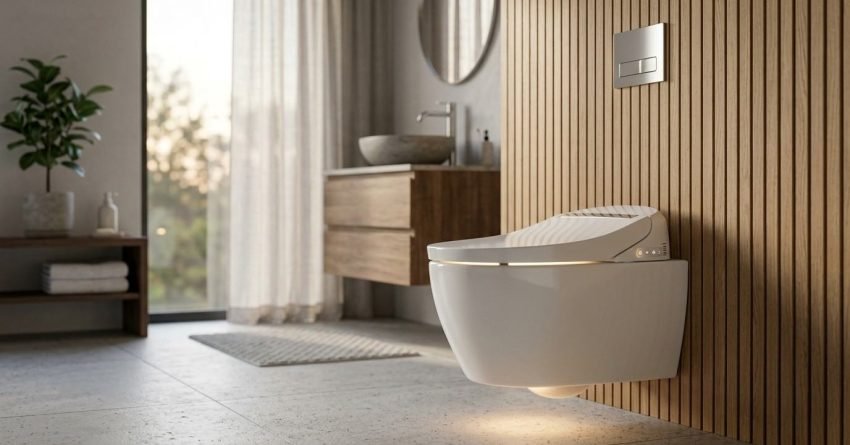
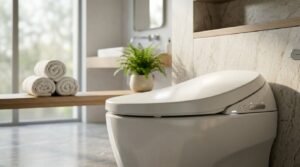
A smart toilet is a toilet unit or a toilet and seat combination that integrates electronic functions beyond basic flushing. The technology ranges from simple heated seats to fully automated systems with self-cleaning nozzles, sensor-activated lids, and built-in bidet functions.
The core distinction from a standard model is the reliance on a power connection. Smart toilets need a 240V GPO (general power outlet) within reach of the unit, which immediately adds an electrical trade requirement to any installation.
Core Technology Features to Know
The features you encounter most often across smart toilet ranges include:
- Auto-open and auto-close lid: sensor-activated, hands-free operation
- Heated seat: adjustable temperature settings
- Integrated bidet with self-cleaning nozzle: front and rear wash functions
- Warm air dryer: reduces or eliminates toilet paper use
- Auto flush: proximity sensor triggers the flush cycle
- Deodoriser: activated carbon or UV filtration built into the unit
- Night light: low-level illumination for night-time use
Each of these functions adds to the unit’s base price. The question is which ones are worth paying for, and I cover that directly in the section below.
How Smart Toilets Fit Into a Bathroom Renovation
Smart toilets work best when they are planned into a bathroom renovation from the start rather than retrofitted after the fact. Retrofitting creates complications around power access, rough-in distances, and wall framing that can push installation costs significantly higher.
When the electrical and plumbing rough-ins are coordinated early, a smart toilet installation adds a predictable, manageable cost to the overall project. Treating it as an afterthought is where budgets get stretched.
The Real Cost of Smart Toilets in Australia
The purchase price of a smart toilet in Australia ranges from around $500 for a basic smart seat attachment to over $5,000 for a fully integrated premium unit. Installation adds to that figure, and the total cost depends heavily on your existing bathroom setup.
Understanding the full cost picture unit price plus installation is the only way to make a sound budget decision.
Purchase Price Ranges by Feature Tier
| Tier | Price Range (AUD) | What You Get |
| Entry-level | $500–$900 | Heated seat, basic bidet, auto flush |
| Mid-range | $1,000–$2,500 | Full bidet suite, air dryer, deodoriser, auto lid |
| Premium | $3,000–$5,500+ | Tankless design, full sensor suite, self-cleaning, premium brands (TOTO, Kohler, Duravit) |
Entry-level units suit renovators who want the bidet function and heated seat without committing to a full smart system. Mid-range is where most homeowners land; the feature set is comprehensive, and the price is defensible against the renovation budget. Premium units are a genuine luxury purchase, and the ROI case is harder to make unless the property sits at the top end of the market.
Installation Costs and Trade Requirements
Installation of a smart toilet in Sydney typically costs between $300 and $700 for a straightforward swap-out where plumbing and power are already in place. That figure rises when a new GPO needs to be installed; add $150–$350 for a licensed electrician to run a dedicated outlet.
A licensed plumber handles the toilet connection itself. If the rough-in distance does not match the new unit, additional plumbing work applies. Budget $500–$1,200 all-in for installation when trades are coordinated through a single renovation contractor, which avoids the scheduling gaps and cost blowouts that come from managing trades separately.
Which Smart Toilet Features Actually Deliver Value
Not every feature on a smart toilet spec sheet earns its place in a real-world bathroom. I look at this through one lens: does this feature improve daily use, reduce ongoing costs, or add measurable appeal to the property?
High-Value Features Worth Paying For
An Integrated bidet with a self-cleaning nozzle is the single most valuable feature on any smart toilet. It reduces toilet paper consumption significantly, improves hygiene, and is the primary reason buyers choose smart toilets over standard models. According to Water Corporation research on water-efficient products, bidet use can reduce household toilet paper consumption by up to 75%, which translates to a real ongoing saving.
Heated seat delivers consistent daily comfort and is particularly valued in Sydney’s cooler months. It is standard across mid-range and premium units and adds minimal cost at the mid-range tier.
Auto flush reduces touchpoints and improves hygiene, a feature that resonates strongly with buyers and tenants in the current market.
Deodoriser is underrated. It works quietly and consistently, and it is one of those features users notice only when it is absent.
Premium Add-Ons That Rarely Justify the Price
Bluetooth speakers, ambient mood lighting, and voice-activated controls are the features most likely to inflate a unit’s price without delivering proportional value. They are novelty functions that date quickly and rarely influence a buyer’s or tenant’s decision.
I tell clients to treat these as optional extras pleasant if they come included in a unit you are already buying for other reasons, but not worth paying a premium tier price to access.
Smart Toilets and Long-Term ROI for Homeowners and Investors
The investment case for a smart toilet rests on three factors: ongoing utility savings, property appeal, and renovation return. None of these is dramatic on its own, but together they build a reasonable case, particularly at the mid-range price point.
Energy and Water Efficiency Savings
Smart toilets with dual-flush or reduced-flush systems carry WELS (Water Efficiency Labelling and Standards) ratings that directly affect water consumption. A 4-star or 5-star WELS-rated smart toilet uses as little as 4.5 litres per full flush, compared to 6–9 litres for older standard models.
For a household of four, that difference adds up to meaningful annual water bill savings. The Australian Government’s Your Home resource notes that water-efficient bathroom fittings are among the most cost-effective upgrades for reducing household water use over time.
Energy consumption from the heated seat and electronics is modest; most units draw between 20W and 60W in standby mode, which adds a negligible amount to the electricity bill.
Property Value and Renovation Return
A smart toilet does not independently drive a property’s sale price. What it does is contribute to a premium bathroom presentation that supports a higher overall valuation when the rest of the renovation is executed well.
For investors, the appeal is tenant attraction and retention. A well-specified bathroom with a smart toilet positions a rental property above comparable stock in the same suburb, which supports stronger rental yields and lower vacancy rates. The return is indirect but real.

What to Consider Before Adding a Smart Toilet to Your Renovation Budget
A smart toilet is not a drop-in replacement for a standard unit in every bathroom. There are three practical requirements that need to be confirmed before the unit goes on the order list.
Compatibility, Plumbing, and Electrical Requirements
Rough-in distance is the measurement from the wall to the centre of the toilet drain. Most Australian bathrooms use a 400mm or 450mm rough-in. Smart toilet units vary; confirm the unit’s rough-in specification matches your bathroom before purchasing.
Trap type matters too. Australian bathrooms use either an S-trap (floor outlet) or P-trap (wall outlet). Not all smart toilet models accommodate both, so verify compatibility with your plumber before committing to a unit.
Power access is non-negotiable. A 240V GPO must be within 1.5 metres of the toilet position. If one does not exist, a licensed electrician installs it; this is not optional and cannot be bypassed.
Water pressure should sit between 150–500 kPa for most smart toilet models to operate correctly. Your plumber can confirm this during the rough-in stage.
Getting these four points confirmed early, ideally during the bathroom renovation planning stage, eliminates the surprises that push installation costs beyond the original budget.
Conclusion
Smart toilets are a worthwhile addition to a bathroom renovation when the feature selection is deliberate, and the budget is realistic. The mid-range tier delivers the best value for most homeowners and investors: comprehensive features, defensible cost, and genuine daily utility.
The key is planning the installation into the renovation from the start, not bolting it on at the end. That is where the cost stays controlled, and the outcome stays predictable.
At Sydney Home Renovation, we help clients make these decisions with clear numbers and honest advice, so your bathroom renovation delivers real value, not just a higher invoice.
Frequently Asked Questions
How much does a smart toilet cost to install in Sydney?
A straightforward smart toilet installation in Sydney costs between $300 and $700 for labour, assuming plumbing and power are already in place. Add $150–$350 if a new GPO needs to be installed by a licensed electrician.
Do smart toilets require an electrician?
Yes. Smart toilets require a 240V power outlet within reach of the unit. If one does not exist in your bathroom, a licensed electrician must install it. This is a legal requirement; it cannot be bypassed or DIY’d.
Are smart toilets worth it for a rental property?
A mid-range smart toilet is a defensible investment for a rental property in a competitive Sydney suburb. It improves bathroom presentation, supports stronger tenant appeal, and positions the property above comparable rentals. Entry-level units offer the best cost-to-value ratio for investors.
What is the most useful smart toilet feature?
The integrated bidet with self-cleaning nozzle delivers the most consistent daily value. It improves hygiene, reduces toilet paper use, and is the feature most buyers and tenants specifically look for when a smart toilet is listed as a bathroom feature.
Can a smart toilet be installed in any bathroom?
Not without preparation. The bathroom needs the correct rough-in distance, compatible trap type, adequate water pressure, and a 240V power outlet nearby. Most Sydney bathrooms can accommodate a smart toilet, but these four points need to be confirmed before purchasing a unit.