
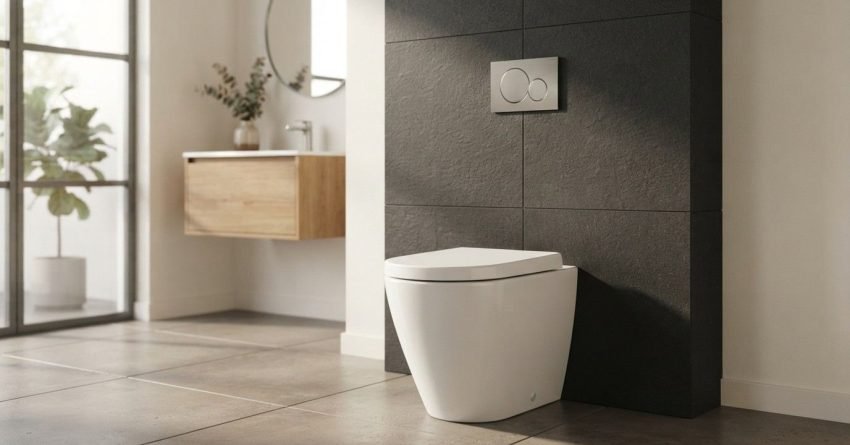
A back-to-wall toilet is one of the most popular choices in modern bathroom renovations, and once you understand how it works, it’s easy to see why. The pan sits flush against the wall or a furniture unit; the cistern is completely hidden, and the result is a clean, streamlined look that’s genuinely easier to keep clean.
Choosing the right toilet suite shapes the entire feel of a bathroom. It affects layout, cleaning time, plumbing requirements, and long-term maintenance.
In this guide, I’ll walk through exactly what a back-to-wall toilet is, how it differs from other toilet types, what it costs in Sydney, and whether it suits your renovation.
What Is a Back-to-Wall Toilet?
A back-to-wall toilet is a floor-mounted toilet suite where the pan is positioned directly against the wall or a vanity unit, and the cistern is fully concealed behind it. There are no exposed pipes, no visible cistern sitting on top of the pan, and no gap between the toilet and the wall for dust and grime to collect.
The defining feature is that concealed cistern. It sits inside a furniture unit, a tiled void, or a purpose-built frame, completely out of sight. The only visible components are the toilet pan itself and the flush button or plate on the wall or unit face.
This is what separates a back-to-wall toilet from a standard close-coupled suite. The look is intentional, minimal, and built for modern bathrooms.
How It Differs from a Close-Coupled Toilet
A close-coupled toilet has the cistern sitting directly on top of the pan, bolted together as one visible unit. It’s the most common toilet type in older Australian homes and the most straightforward to install.
A back-to-wall toilet removes that exposed cistern entirely. The pan still sits on the floor, but the cistern moves behind the wall or into a furniture unit. The visual result is dramatically cleaner, and the cleaning process is far simpler because there are no awkward joins or exposed surfaces to work around.
How It Differs from a Wall-Hung Toilet
A wall-hung toilet takes the concept further; the pan is mounted directly to the wall with no floor contact at all. That requires a structural in-wall frame, which adds cost and complexity, particularly in retrofit renovations.
A back-to-wall toilet keeps the pan on the floor. That makes it structurally simpler, more compatible with standard bathroom layouts, and generally more cost-effective to install. It delivers most of the aesthetic benefit of a wall-hung toilet without the same structural demands.
How a Back-to-Wall Toilet Works
The mechanics are straightforward. Water fills the concealed cistern, the flush button or plate activates the flush valve, and water moves through the pan in the same way as any other toilet. The difference is purely in where the cistern lives and how it’s accessed.
Because the cistern is hidden, the flush activation moves to a button or plate on the front face of the furniture unit or on the wall above the pan. Most back-to-wall systems use a dual-flush plate, which meets Australian water efficiency standards without any compromise on performance.
The Concealed Cistern Explained
The concealed cistern is the core component that makes a back-to-wall toilet work. It’s a standard cistern in terms of function: it holds water, fills after each flush, and releases on demand, but it’s designed to fit inside a furniture unit or tiled void rather than sit exposed on top of the pan.
Most concealed cisterns are slimline in profile to fit within standard wall or furniture depths. They connect to the water supply and waste outlet in the same way as any other cistern, but access for servicing happens through a removable panel rather than by lifting a lid.
Pan and Frame Configuration
The toilet pan in a back-to-wall setup is specifically designed with a back-entry waste outlet, meaning the waste pipe exits through the back of the pan into the wall, rather than through the floor. This is what allows the pan to sit flush against the wall or unit without exposed pipework running along the floor.
Some back-to-wall installations use a dedicated frame system, particularly when the cistern is being built into a tiled void rather than a furniture unit. The frame holds the cistern at the correct height, provides structural support, and positions the flush plate at the right level. Getting the rough-in measurement right at this stage is critical; it determines where the waste outlet lands relative to the existing plumbing.
Key Benefits of Choosing a Back-to-Wall Toilet
The reason back-to-wall toilets have become a standard specification in Sydney bathroom renovations comes down to three things: how they look, how easy they are to clean, and how well they work in smaller spaces.
These aren’t minor advantages. In a bathroom renovation, the toilet suite is one of the most-used fixtures in the home, and its placement and design affect the entire room.
Cleaner Aesthetics and Easier Cleaning
The visual impact of removing an exposed cistern is significant. The bathroom reads as more intentional, more modern, and less cluttered. There are no visible pipes running up the wall, no cistern lid to lift, and no awkward join between the pan and cistern to scrub around.
Cleaning a back-to-wall toilet takes less time and effort than cleaning a close-coupled suite. The pan sits cleanly against the wall or unit, the floor around it is fully accessible, and there are no recessed surfaces where grime builds up. For homeowners who want a bathroom that stays cleaner with less effort, this matters.
Space Efficiency in Smaller Bathrooms
Back-to-wall toilets work particularly well in compact bathroom renovation layouts because the cistern moves out of the room’s visual footprint. The pan itself takes up the same floor space as any other toilet, but the absence of an exposed cistern makes the room feel less crowded.
In a small ensuite or a narrow bathroom, that visual breathing room is genuinely valuable. It’s one of the reasons back-to-wall toilets appear so frequently in Sydney apartment renovations and compact terrace bathroom upgrades.
Flexibility in Bathroom Layout and Design
Because the cistern is concealed, the toilet suite integrates more naturally with the rest of the bathroom design. It can sit within a run of vanity cabinetry, be built into a tiled nib wall, or stand alone against a feature wall, all without the cistern dictating the layout.
This flexibility is useful during the planning stage of a bathroom renovation. The toilet placement becomes a design decision rather than a plumbing constraint, which opens up more options for how the room is laid out and how the space flows.
What to Consider Before Installing One
A back-to-wall toilet is not a direct swap for a close-coupled suite. There are structural, plumbing, and access considerations that need to be resolved before installation begins, and getting these right at the planning stage prevents costly changes during the build.
Wall Construction and Structural Requirements
The cistern needs somewhere to live. In most back-to-wall installations, that means either a furniture unit that houses the cistern, or a tiled void or nib wall built specifically to conceal it. If you’re building a tiled void, the wall construction needs to accommodate the cistern depth, typically 120–150mm without compromising the structural integrity of the wall.
Timber stud walls are the most straightforward to work with. Concrete or masonry walls require more planning, and in some cases a purpose-built frame or furniture unit is the more practical solution.
Access Panels and Maintenance Considerations
A concealed cistern still needs to be accessed for servicing. The flush valve, fill valve, and water supply connection all require periodic maintenance, and if something fails, a plumber needs to reach the cistern without demolishing the wall.
Access panels are the standard solution. They’re built into the front face of the furniture unit or tiled into the wall, and they allow the cistern to be serviced without disrupting the surrounding finishes. Planning the access panel location during the design stage rather than as an afterthought keeps the finished result looking intentional rather than patched.
Plumbing Rough-In and Cistern Placement
The rough-in measurement, the distance from the finished wall to the centre of the waste outlet, determines whether the existing plumbing aligns with the new pan. Back-to-wall pans have a back-entry waste outlet, which is different from the floor-entry outlet on a close-coupled suite.
If the existing waste outlet is a floor exit, the plumbing will need to be modified to suit the new configuration. This is standard work for an experienced bathroom plumber, but it needs to be scoped and priced before the renovation begins. Surprises at the rough-in stage are one of the most common sources of bathroom renovation cost blowouts.
Back-to-Wall Toilet Costs in Sydney
Budgeting for a back-to-wall toilet in Sydney means accounting for two separate cost components: the supply cost of the toilet suite itself, and the labour cost to install it. Both vary depending on the product specification and the complexity of the installation.
Supply Costs – Pan, Cistern, and Frame
A back-to-wall toilet suite pan, concealed cistern, flush plate, and any required frame typically ranges from $400 to $1,800 in Sydney, depending on the brand and specification. Entry-level suites from brands like Caroma or Fowler sit in the $400–$700 range. Mid-range European-style suites from brands like Villeroy & Boch or Duravit sit in the $800–$1,400 range. Premium or designer suites can exceed $1,800.
The flush plate is a separate cost in some configurations; budget $80–$250 for a quality dual-flush plate. If a dedicated frame system is required for a tiled void installation, add $200–$500 for the frame.
Installation Labour Costs in Sydney, NSW
Plumbing labour to install a back-to-wall toilet in Sydney typically runs $300–$600, depending on whether the existing plumbing requires modification. A straightforward swap where the rough-in aligns sits at the lower end. A job that requires relocating the waste outlet or modifying the water supply runs higher.
If the installation involves building a tiled nib wall or furniture unit to house the cistern, that work is scoped separately as part of the broader bathroom renovation labour costs. Total installed cost for a back-to-wall toilet supply plus labour typically lands between $700 and $2,400 in Sydney, depending on product choice and installation complexity.

Is a Back-to-Wall Toilet Right for Your Renovation?
For most Sydney bathroom renovations, a back-to-wall toilet is the right call. It delivers a cleaner look, easier maintenance, and better design flexibility than a close-coupled suite without the structural complexity of a wall-hung system.
It suits homeowners who want a modern, low-maintenance bathroom. It suits property investors who want a durable, appealing finish that holds up over time. And it suits first-time renovators who want a significant visual upgrade without an outsized budget commitment.
The main consideration is installation complexity. If the existing plumbing requires modification, or if a tiled void needs to be built, those costs need to be scoped accurately before the renovation begins. We always walk through the rough-in requirements and access panel placement with our clients before any work starts because getting those details right at the planning stage is what keeps the project on budget.
Conclusion
At Sydney Home Renovation, we handle back-to-wall toilet installations as part of complete bathroom renovation packages. If you’re planning a bathroom renovation in Sydney and want honest guidance on toilet selection, layout, and costs, get in touch with our team today.
Frequently Asked Questions
What is the difference between a back-to-wall and wall-hung toilet?
A back-to-wall toilet sits on the floor with the cistern concealed behind the wall or in a furniture unit. A wall-hung toilet has the pan mounted to the wall with no floor contact, requiring a structural in-wall frame. Back-to-wall toilets are simpler and less expensive to install.
Do back-to-wall toilets need a special frame?
Not always. Many back-to-wall toilets use a furniture unit to house the concealed cistern, which doesn’t require a dedicated frame. When the cistern is built into a tiled void, a purpose-built frame is typically used to support the cistern and position the flush plate correctly.
Are back-to-wall toilets harder to maintain?
No. The concealed cistern is accessed through a removable panel, which makes servicing straightforward for a plumber. The pan itself is easier to clean than a close-coupled suite because there are no exposed joins or recessed surfaces where grime accumulates.
Can I install a back-to-wall toilet in any bathroom?
In most cases, yes. The main requirement is that the plumbing rough-in suits a back-entry waste outlet, or that the existing plumbing can be modified to suit. A bathroom plumber can assess the existing configuration and confirm compatibility before the renovation begins.
How much does a back-to-wall toilet cost to install in Sydney?
Total installed cost, supply plus labour, typically ranges from $700 to $2,400 in Sydney. Supply costs for the pan, cistern, and flush plate run $400–$1,800 depending on the brand. Installation labour runs $300–$600 depending on whether the existing plumbing requires modification.
What is a concealed cistern?
A concealed cistern is a standard toilet cistern designed to be hidden inside a furniture unit, tiled void, or wall cavity. It connects to the water supply and waste outlet in the same way as an exposed cistern, but is accessed for servicing through a removable panel rather than a visible lid.
Do back-to-wall toilets add value to a home?
Yes. A back-to-wall toilet is a recognised quality finish in Sydney’s property market. It signals a well-considered renovation and contributes to the overall appeal of a modern bathroom, which supports both sale price and rental yield for property investors.


