
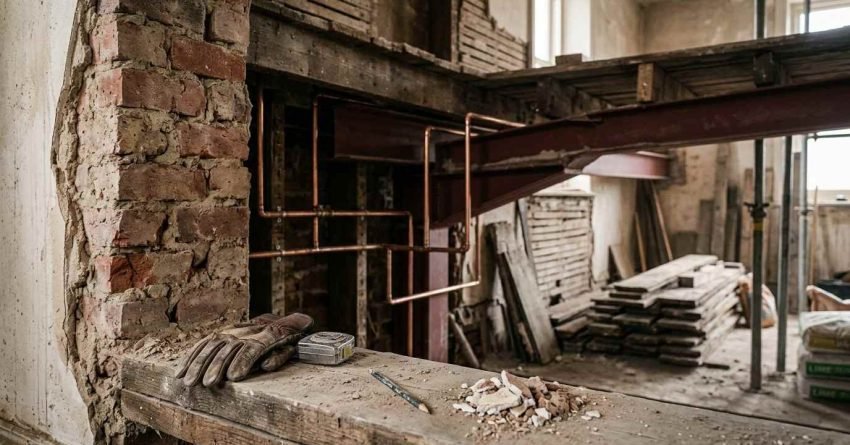
Restoring an old building costs 20 to 50% more than equivalent new construction, and the gap widens once hidden structural problems surface. Heritage compliance hurdles, scarce specialist trades, and difficult material sourcing catch even experienced renovators off guard.
We see the same pattern on nearly every heritage project we quote. Owners budget for what they can see, then meet the cost of what sits behind the plaster.
Knowing these disadvantages upfront is not about talking anyone out of restoration. It is about entering the process with a realistic budget, a flexible timeline, and no illusions.
Disadvantage | Typical Impact |
Cost overruns | 20–50% above new-build equivalent |
Hidden structural repairs | $30,000–$100,000 for foundation work alone |
Specialist trade rates | 2–3× standard trade pricing |
Heritage DA approval | 90–120 days vs 40–60 standard |
Project duration | 2–3× equivalent new construction |
Ongoing maintenance | Repainting every 5–7 years, periodic repointing |
Insurance and finance | Premium loading and conservative bank valuations |
Design freedom | Load-bearing and heritage fabric limits layout changes |
High Costs and Budget Overruns
Old building restoration consistently exceeds initial estimates, which makes financial planning the hardest part of the whole exercise.
We build a 20 to 30% contingency into every heritage restoration budget as standard practice. Projects on pre-1940 stock with unknown subfloor condition warrant closer to 30%, while a well-documented post-war brick home with recent inspection reports sits comfortably at 20%.
That contingency is not padding. It is the line item that keeps a project moving when the walls come off.
Unexpected Structural Repairs
What looks like a straightforward cosmetic update reveals deeper problems once walls open up. Termite damage, rotting timber frames, crumbling mortar, and corroded steel reinforcement sit hidden behind plaster and cladding for decades.
These discoveries arrive mid-project, at the exact moment stopping becomes impractical.
Foundation issues create particular headaches in older Sydney properties. Settlement cracks, footings undersized for modern loads, and moisture intrusion through failed damp courses all demand engineering assessment and substantial remediation. Foundation repair alone adds $30,000 to $100,000 depending on severity and site access.
Specialised Labour Expenses
Heritage restoration needs tradespeople whose skills command premium rates. Stonemasons, heritage plasterers, leadlight specialists, and timber craftsmen trained in traditional techniques grow scarcer every year.
Their expertise runs at two to three times standard trade rates, and their limited availability stretches programmes.
Finding contractors who understand lime mortar versus cement, traditional joinery, and period-appropriate finishes narrows the field sharply. Many general builders have no experience with pre-war construction, which produces inappropriate repairs that cause fresh damage or fail heritage compliance outright.
Premium Material Sourcing
Matching original materials proves both difficult and expensive. Period-correct timber species, handmade bricks, pressed metal ceilings, and heritage hardware come from salvage yards or custom manufacture, and imported stock carries shipping delays on top of premium pricing.
Reclaimed materials bring their own risks: hidden damage, inconsistent quality, and quantities too small to cover the full requirement.
Custom reproduction items such as heritage windows and decorative mouldings need specialist fabrication with lead times measured in months.
Restoration Versus Demolition and Rebuild
We run this comparison for owners more often than any other calculation. A knockdown rebuild on the same footprint delivers a compliant, insulated, warrantied house at a predictable price per square metre.
Restoration delivers character, streetscape continuity, and often the only legally permitted outcome on a listed site.
The honest arithmetic is that rebuild wins on cost and performance almost every time. Restoration wins when heritage controls remove the choice, when the building fabric holds genuine value, or when the streetscape premium justifies the spend. Owners who choose restoration for purely financial reasons usually regret the maths.

Structural and Safety Challenges
Older buildings carry structural limitations that modern construction standards addressed generations ago.
Outdated Construction Methods
Pre-war buildings used techniques now considered inadequate. Unreinforced masonry, thin bracing, and load-bearing walls where current design uses steel framing complicate any modification work.
Asbestos remains prevalent in anything built before 1990, turning up in fibro sheeting, insulation, floor tiles, and pipe lagging. Professional removal adds real cost and demands licensed contractors, proper containment, and certified disposal. SafeWork NSW sets the handling procedures that extend both programme and budget.
Lead paint across older interiors needs careful management during renovation. Sanding or disturbing it creates hazardous dust that requires containment, protective equipment, and controlled disposal.
Foundation and Load-Bearing Issues
Original foundations rarely carry the capacity for modern additions or altered load paths. Adding a second storey, removing internal walls, or installing heavy stone benchtops triggers underpinning or structural reinforcement.
Differential settlement across decades produces uneven floors, cracked walls, and doors that no longer close. Cosmetic fixes treat the symptom while the underlying movement continues, and comprehensive remediation runs past $50,000.
Compliance with Modern Building Codes
Bringing an older building to current standards demands upgrades well beyond the original restoration scope. Electrical systems need full replacement to meet present safety requirements, and corroded galvanised steel plumbing needs complete re-piping.
Fire safety provisions covering smoke alarms, egress, and fire-rated construction add further compliance cost. Accessibility requirements under the National Construction Code apply to certain property classes and bring ramps, wider doorways, and accessible bathrooms into scope.
Heritage and Regulatory Restrictions
Properties with heritage listing or a conservation-area address face extra layers of approval and restriction.
Heritage Listing Limitations
Heritage-listed buildings sit under strict controls over what changes are permissible. Exterior modifications, window replacements, roofing materials, and even paint colours need heritage approval before work starts, and that holds true even where the change improves function or energy performance.
Interior listings extend the same controls to fireplaces, ceiling roses, joinery, and original floor finishes. Removing or altering those elements requires formal approval, including damaged ones, and approval is refused regularly.
The approval process itself consumes time and money. Heritage impact statements, conservation management plans, and specialist consultant reports become prerequisites for the development application.
Council Approval Delays
Development applications on heritage properties draw additional scrutiny and stretch approval timeframes considerably. Standard residential DAs in Sydney run 40 to 60 days, while heritage-affected applications commonly reach 90 to 120 days or longer, a pattern consistent with the state’s published DA performance data.
Council heritage advisors request design modifications, extra documentation, and specialist reports before granting consent. Each revision cycle adds weeks, and appeals against conditions or refusals extend the delay further while legal costs accumulate.
Restrictions on Modern Upgrades
Energy efficiency improvements that are routine in modern homes hit heritage obstacles. Double-glazed windows are prohibited where they alter the building’s appearance, and street-visible solar panels need heritage approval that councils refuse regularly.
Insulation work in heritage buildings demands methods that leave original fabric and external appearance untouched. Air conditioning units, modern exhaust systems, and contemporary fixtures all enter heritage consideration before installation.
Insurance and Financing Complications
This disadvantage catches more buyers than any structural surprise, and almost nobody raises it before contracts exchange.
Lender Valuation and Loan Conditions
Banks value heritage-affected property conservatively because the restricted development potential narrows the resale pool. A conservative valuation shrinks borrowing capacity precisely when the restoration budget needs headroom.
Construction loans add a second complication. Progress payments release against completed stages, and discovery-driven scope changes disrupt that schedule, which forces owners to fund variations from cash while waiting for revised approvals.
Heritage Insurance Premiums
Insuring a restored heritage building costs more than insuring equivalent modern construction. Reinstatement obligations mean a claim must restore like-for-like using period materials and specialist trades, which pushes the sum insured well above standard rebuild cost.
We tell owners to obtain an indicative insurance quote before purchase, not after settlement. Premium loading of 30% or more on heritage stock is common enough to change a borrowing calculation.

Extended Project Timelines
Restoration projects run consistently longer than equivalent new construction, and several factors compound.
Discovery-Driven Scope Changes
Unlike a new build where full scope is known from the outset, restoration reveals its true extent progressively. Each demolition phase uncovers fresh problems needing assessment, redesign, and further approvals.
A bathroom renovation that exposes rotted floor joists, failed waterproofing, and asbestos-containing material transforms from a four-week job into a three-month undertaking. Nobody forecasts those discoveries accurately, which makes precise scheduling impossible.
Trade Availability Constraints
Specialist heritage trades operate at limited capacity against high demand. Booking a heritage stonemason or traditional plasterer means waiting months, and sequencing several specialists around each other multiplies the complexity.
General trades on heritage sites also need extra time to work carefully around original features, apply traditional methods, and meet heritage conditions that never apply to standard construction.
Weather and Seasonal Factors
Older buildings lack the weather protection a modern construction site enjoys. Work on exposed heritage roofing, external masonry, and lime-based renders depends entirely on suitable conditions, and Sydney’s wet season halts exterior work for extended stretches.
Traditional materials like lime mortar cure only within specific temperature and humidity ranges. Working outside those parameters risks material failure and costly rework.
Accommodation and Disruption Costs
An extended programme carries a cost that never appears on a builder’s quote. Owners living elsewhere pay rent alongside their mortgage, and a six-month overrun on a Sydney rental adds a five-figure sum to the true project cost.
Storage for furniture, temporary utility connections, and the practical strain of a long displacement all accumulate. We factor accommodation into every heritage budget we prepare, because a project that finishes on cost and eight months late still finishes over budget.
Ongoing Maintenance Demands
A restored heritage building asks more of its owner, permanently, than modern construction does.
Higher Long-Term Upkeep Costs
Original materials and traditional construction need regular attention to hold condition. Timber windows need repainting every five to seven years, lime mortar joints need periodic repointing, and cast iron guttering needs rust treatment before eventual replacement.
Those maintenance cycles cost more than their modern equivalents. Aluminium windows ask almost nothing; timber sash windows ask constantly. Colorbond roofing runs for decades untouched, while slate and terracotta need ongoing inspection and unit replacement.
Difficulty Finding Replacement Parts
As original fixtures age and fail, compatible replacements grow harder to source. Heritage door hardware, period light fittings, and original bathroom fixtures left production long ago, and salvage supply stays limited and unpredictable.
Custom reproduction carries real cost and lead time. A single heritage door handle reproduced to match existing fixtures runs into hundreds of dollars and takes weeks to manufacture.
Energy Inefficiency Concerns
Older buildings perform poorly against modern energy standards. Single glazing, minimal insulation, and draughty construction drive heating and cooling costs up, and heritage restrictions cap the upgrades available.
Solid masonry walls offer no cavity for insulation. Original timber floors over ventilated subfloors shed heat continuously. Addressing that within heritage constraints takes creative solutions that add cost without reaching modern performance.

Limited Design Flexibility
Restoration constrains design options in ways new construction never does.
Preserving Original Character
The core purpose of restoration, maintaining original character, limits contemporary intervention by definition. Open-plan layouts become impossible where heritage-significant walls must stay, and modern kitchen and bathroom configurations must work within existing room dimensions and window positions.
Ceiling heights, room proportions, and circulation patterns all reflect the era of construction. Adapting those spaces for contemporary living means genuine compromise between preservation and function.
Structural Modification Constraints
Load-bearing masonry, heritage-significant timber framing, and original structural elements stay where they are. Creating larger openings, removing walls, or changing floor levels needs engineering solutions that work inside heritage constraints.
Steel beams, new footings, and reinforcement add cost while staying concealed within the heritage fabric. Modifying an old structure is engineering-heavier than designing a new one.
Integration of Modern Systems
Running new electrical, plumbing, data, and HVAC through a heritage building takes careful planning to protect original fabric. Surface-mounted conduit is prohibited on heritage-significant walls, and concealed routing needs chase cutting plus making good that matches original finishes.
Bathroom and kitchen positions stay tied to existing drainage runs that resist modification. Wet area waterproofing in heritage buildings uses methods compatible with original construction, and some of those methods fall outside modern warranty terms.
Narrower Resale Market
Heritage constraint narrows the buyer pool. Families wanting open plan, high thermal performance, and expansion potential rule out a listed property early, which leaves a smaller and more specific market at resale.
That smaller pool cuts both ways. Genuine heritage buyers pay premiums for a well-executed restoration, but the property spends longer on market and price outcomes vary more widely than comparable modern stock. Owners restoring with a three-year exit in mind should treat that liquidity risk as a real cost.
Conclusion
Restoring old buildings demands realistic expectations about cost, timeline, and permanent commitment beyond anything a standard renovation asks. Hidden structural problems, heritage compliance, specialist trade dependency, and premium materials combine into a genuinely harder project than new construction.
None of that makes restoration wrong. Done properly on a building worth saving, it produces something no new build replicates, and on a listed site it is often the only permitted path forward.
At Sydney Home Renovation, we plan heritage restorations with the contingency, the approval timeline, and the accommodation cost written into the budget from day one. Talk to us before you commit to a heritage purchase, and we will give you honest numbers on what the restoration actually costs and how long it genuinely takes.
Frequently Asked Questions
How much more expensive is restoring an old building compared to new construction?
Heritage restoration typically costs 20 to 50% more than equivalent new construction, and complex projects exceed that. Hidden repairs, specialist trades, and premium materials drive the gap. Budget a 20 to 30% contingency.
Can I make modern upgrades to a heritage-listed property?
Modern upgrades are possible with heritage approval that respects the building’s significance. Councils refuse some changes, including double glazing and street-visible solar. Internal changes to non-significant areas face far fewer restrictions.
How long does a typical old building restoration take?
Restoration commonly runs two to three times longer than equivalent new construction. A project estimated at six months stretches to 12 or 18 months through scope discovery, heritage approvals, and trade availability. Schedule generous contingency time.
What hidden issues are commonly found during old building restoration?
Common discoveries include termite damage, asbestos materials, lead paint, undersized foundations, rotted timber framing, corroded plumbing, and outdated electrical systems. These sit behind intact surfaces and surface only once demolition or investigation begins.
Are there any financial incentives for restoring heritage buildings?
Some councils offer heritage grants or rate reductions for listed properties, and federal heritage programmes occasionally fund significant buildings. These incentives rarely offset heritage compliance costs and apply mainly to formally listed properties.
What happens if I renovate a heritage property without approval?
Unapproved heritage work brings stop-work orders, fines, and mandatory reinstatement of original features at the owner’s expense. Councils enforce actively, and neighbours or heritage groups report non-compliant work. Consequences far exceed proper approval costs.
Should I get a heritage assessment before buying an old property?
Yes, for anything built before 1950 or sitting in a conservation area. A pre-purchase assessment identifies heritage constraints, likely approval requirements, insurance implications, and probable restoration costs before you exchange. The fee is trivial compared with discovering restrictions after settlement.


