
Planning an ensuite renovation in Sydney starts with one decision: know your scope before you set your budget. Most cost blowouts happen because homeowners price a renovation before they have defined what the renovation actually includes. Get the scope right first, and everything else, budget, design, contractor selection, timeline, follows a logical sequence.
Skipping steps in the planning process costs real money. A clear plan protects your budget, your timeline, and your sanity throughout the build.
This guide walks through every stage of ensuite renovation planning, from defining your goals and setting a realistic budget to finding the right contractor and managing the build.
Step 1 Define Your Ensuite Goals and Scope
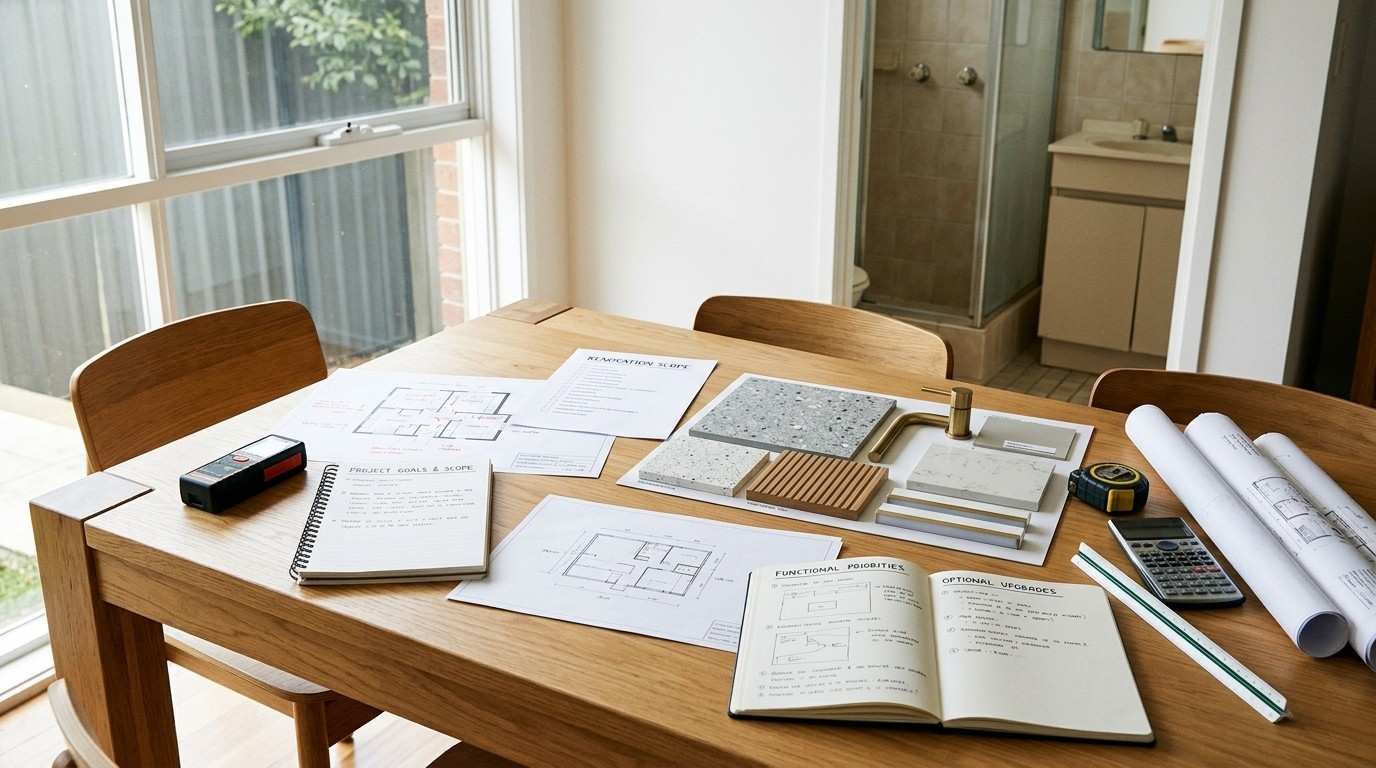
Every successful ensuite renovation starts with a clear brief. Before you call a single contractor or browse a single tile showroom, you need to know what you are actually trying to achieve.
This step is not about design. It is about purpose.
Clarify What You Actually Need vs. What You Want
Start by separating functional requirements from wish-list items. A functional requirement is something the space genuinely needs, a working shower, adequate ventilation, compliant waterproofing. A wish-list item is something you want but the renovation works without it.
Write both lists down. The needs list defines your minimum viable renovation. The wants list tells you where to spend if the budget allows.
This separation also protects you during the quoting process. Contractors price what you ask for. A clear needs-versus-wants list gives you a scope you can actually compare across multiple quotes.
Set a Realistic Scope Before Touching a Budget
Scope defines what work is included in the renovation. It covers the physical boundaries of the project, which walls, which floor area, which fixtures, and the trades required to complete it.
A full ensuite renovation typically includes demolition, waterproofing, tiling, plumbing, electrical, and installation of fixtures and fittings. A cosmetic refresh might cover only tiling, fixtures, and painting.
Knowing which category your project falls into before you approach a contractor saves weeks of back-and-forth and prevents you from comparing quotes that cover completely different scopes of work.
Step 2 Set Your Budget and Understand the Real Costs
Budget planning is where most ensuite renovations go wrong. The number homeowners start with rarely matches the number they end up spending, not because contractors are dishonest, but because the initial budget rarely accounts for the full scope of work.
Build your budget around real cost data, not round numbers.
What a Sydney Ensuite Renovation Actually Costs
In Sydney, a basic ensuite renovation typically runs between $12,000 and $18,000 for a straightforward like-for-like update with mid-range finishes. A mid-range renovation with layout changes, quality fixtures, and premium tiling sits between $18,000 and $30,000. A high-end ensuite with custom joinery, imported tiles, and premium fittings regularly exceeds $35,000.
These ranges reflect Sydney labour rates, which run higher than most other Australian cities. A tiler in Sydney charges between $60 and $90 per square metre for supply and lay. A licensed plumber charges between $120 and $180 per hour for bathroom work.
Factor those rates into your planning from day one.
Labour, Materials, and Fittings, Where the Money Goes
Labour typically accounts for 40 to 50 percent of a total ensuite renovation budget in Sydney. Materials, tiles, waterproofing membrane, adhesives, grout, and substrate, account for roughly 20 to 30 percent. Fixtures and fittings, vanity, toilet, shower screen, tapware, and accessories, make up the remaining 20 to 30 percent.
Understanding this split matters because it tells you where you have flexibility. You can move the needle on materials and fittings by adjusting specifications. Labour costs are largely fixed by the scope of work and the trades required.
Cutting labour by choosing an unlicensed tradesperson is not a saving. It is a liability.
Hidden Costs That Catch First-Time Renovators Off Guard
The costs that blow budgets are rarely the ones on the quote. They are the ones discovered once demolition starts.
Waterproofing rectification is one of the most common. If the existing waterproofing membrane is non-compliant or failed, it must be replaced before new tiling begins. This adds $1,500 to $3,500 to the project cost depending on the floor area and wall height.
Asbestos removal is another. Homes built before 1990 in Sydney frequently contain asbestos in wall sheeting, floor adhesives, or ceiling materials. Licensed asbestos removal in NSW is mandatory and adds $1,000 to $5,000 depending on the volume of material.
Plumbing relocation, structural issues behind walls, and inadequate subfloor conditions are also common surprises. Budget a contingency of 15 to 20 percent on top of your quoted price. That buffer is not pessimism, it is standard practice on any renovation project. 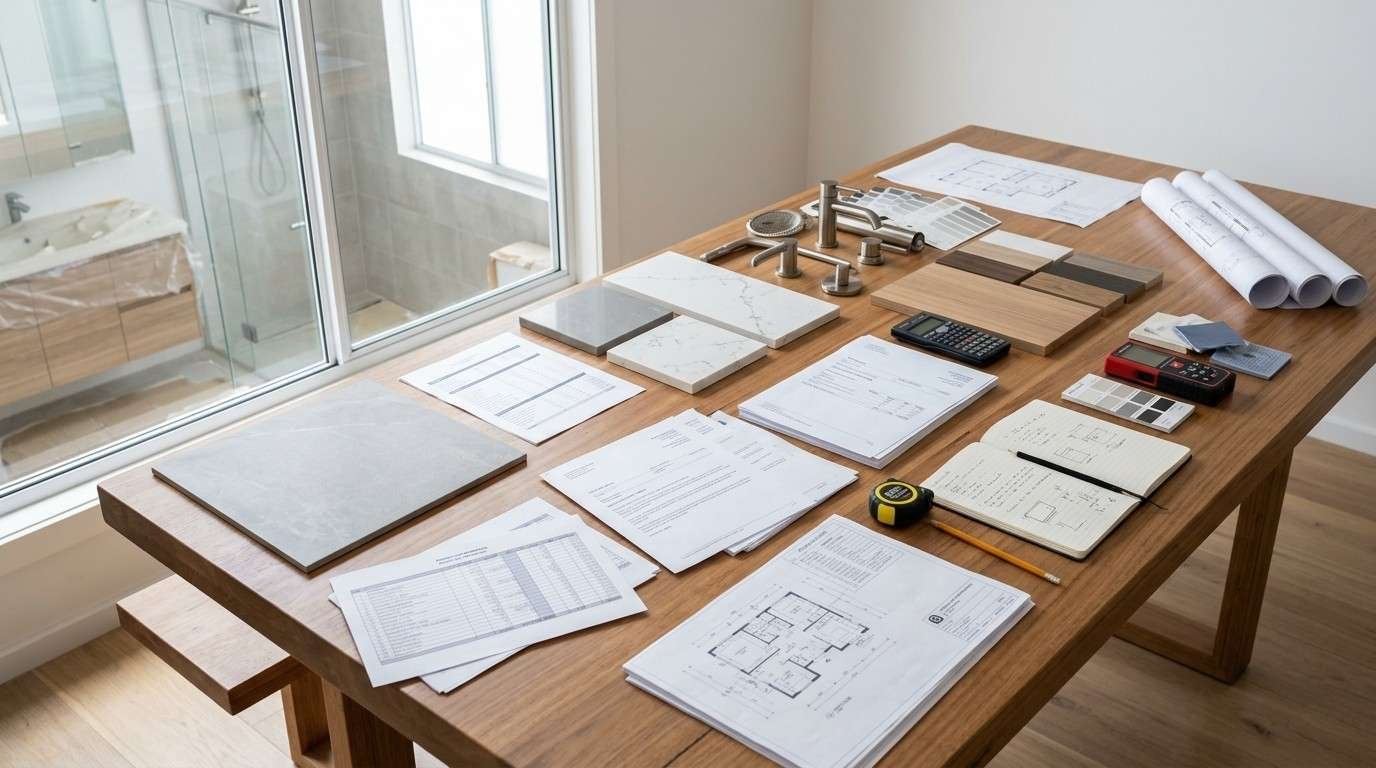
Step 3, Choose Your Layout and Design Direction
Layout decisions have the biggest impact on cost. Moving plumbing costs money. Keeping plumbing in place saves it. Your design direction should start with the constraints of your existing footprint, not a Pinterest board.
Work With Your Existing Footprint First
The most cost-effective ensuite renovation keeps the wet area, shower, toilet, and vanity, in the same position as the existing layout. Every time you move a drain or a water supply point, you add plumbing labour and potentially structural work to the project.
If your existing layout is functional, work with it. Spend the budget on finishes, fixtures, and waterproofing quality rather than on relocating pipes.
If the layout genuinely does not work, the shower is too small, the door swings into the toilet, the vanity blocks natural light, then relocation is worth the cost. But make that decision deliberately, with a clear understanding of what it adds to the budget.
Selecting Fixtures, Tiles, and Finishes That Last
Fixtures and finishes are where personal taste meets long-term value. The goal is not to spend the most, it is to spend wisely on the things that get daily use and hold up over time.
For tiles, rectified porcelain is the most practical choice for an ensuite. It is durable, easy to clean, and available at every price point. Large-format tiles (600x600mm or larger) reduce grout lines and make a small space feel bigger. For tapware and fittings, brushed nickel and matte black finishes are currently the most durable in terms of surface coating longevity.
Avoid trend-driven decisions on fixed elements like tiles and vanities. Trends change. Retiling an ensuite costs as much as the original renovation.
Step 4, Find and Brief the Right Contractor
The contractor you choose determines the quality of your renovation more than any other single decision. A good contractor delivers on scope, on budget, and on time. A poor one costs you more than the renovation itself.
What to Look for When Comparing Renovation Quotes
Get a minimum of three written quotes for any ensuite renovation. Each quote should itemise labour, materials, and fittings separately. A quote that provides only a single lump sum gives you nothing to compare and nothing to negotiate.
Check that each quote covers the same scope of work. If one contractor has excluded waterproofing or tiling from their price, the comparison is meaningless. Ask every contractor to quote against the same written scope document, the one you prepared in Step 1.
Verify that the contractor holds a current NSW contractor licence. The NSW Fair Trading licence check is free, takes two minutes, and is non-negotiable before signing anything.
Questions to Ask Before Signing Any Contract
Ask every contractor these questions before you commit. Who are the licensed trades on this project, are they employees or subcontractors? What is the payment schedule, and does it align with completed stages of work? What is included in the defects liability period, and how long does it run?
A reputable contractor answers these questions without hesitation. Vague answers or pressure to sign quickly are warning signs.
For any renovation over $20,000 in NSW, a written contract is legally required under the Home Building Act 1989. Read it before you sign it.
Step 5, Understand the Approvals and Compliance Process
Most homeowners underestimate the compliance requirements for a bathroom renovation. In NSW, the rules are specific, and non-compliance creates real problems, particularly when you sell the property.
When You Need a Building Permit in NSW
Most standard ensuite renovations in NSW fall under exempt development, meaning they do not require a Development Application (DA) or Construction Certificate. Exempt development applies when the work is internal, does not change the building’s footprint, and meets the standards set out in the State Environmental Planning Policy (Exempt and Complying Development Codes) 2008.
If your renovation involves structural changes, removing a load-bearing wall, changing the roofline, or altering the building envelope, you move out of exempt development and into complying development or a full DA. Your contractor should advise you on this before work begins.
When in doubt, contact your local council directly. A five-minute phone call is faster and cheaper than rectifying non-compliant work after the fact.
Licensed Trades and Waterproofing Requirements
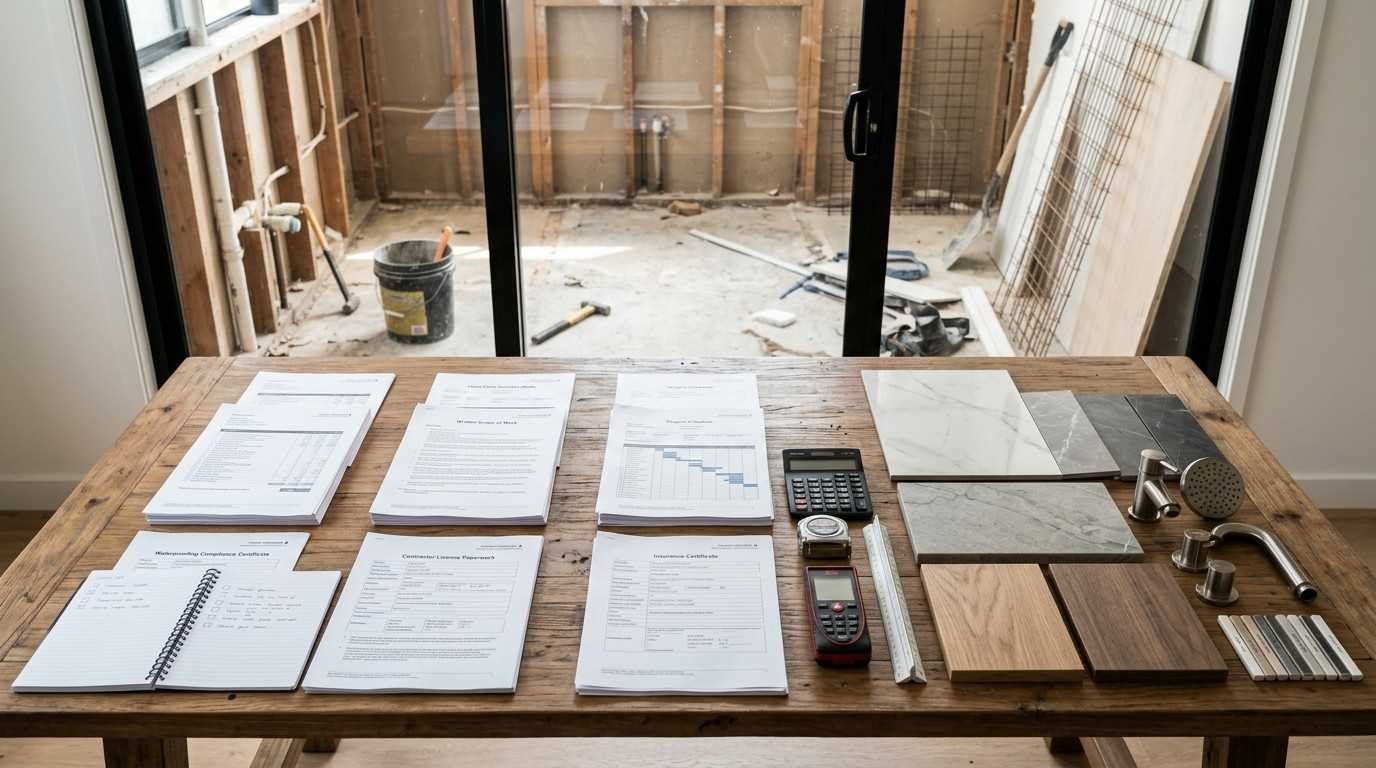
In NSW, plumbing and drainage work must be carried out by a licensed plumber. Electrical work must be carried out by a licensed electrician. These are legal requirements, not preferences.
Waterproofing is equally regulated. Under AS 3740-2021, waterproofing in wet areas must meet specific membrane application standards. In NSW, waterproofing work in bathrooms must be carried out by a licensed waterproofer and must be inspected before tiling begins.
A Certificate of Compliance for plumbing work is issued by the licensed plumber on completion. Keep this document, you will need it if you ever sell or refinance the property.
Step 6, Manage the Renovation Timeline and Stay on Budget
Once the build starts, your job shifts from planning to oversight. Staying on budget and on schedule during the renovation requires active management, not passive trust.
Typical Ensuite Renovation Timeline in Sydney
A standard ensuite renovation in Sydney runs between four and six weeks from demolition to completion. The trades sequence is fixed by the nature of the work: demolition first, then rough-in plumbing and electrical, then waterproofing and inspection, then tiling, then fixture installation, then final fit-off.
Lead times on fixtures and tiles add time before the build even starts. Allow four to eight weeks for tile orders and six to ten weeks for custom joinery or imported fixtures. Order everything before demolition begins.
Delays in Sydney renovations most commonly come from trade availability, material lead times, and scope changes during the build. All three are manageable with early planning.
How to Avoid Cost Blowouts During the Build
The single most effective way to avoid cost blowouts is to lock your scope before demolition and hold it. Every variation, every change to the agreed scope during the build, costs more than it would have cost in the planning stage.
Maintain a written variations log. Every change to the original scope should be documented in writing with a price agreed before the work proceeds. Verbal agreements on variations are the most common source of disputes between homeowners and contractors.
Your 15 to 20 percent contingency budget exists for genuine surprises, not for scope changes you decide to make mid-build. Keep those two categories separate in your budget tracking.
Conclusion
Planning an ensuite renovation well is the difference between a project that delivers and one that drains you. Define your scope, build a realistic budget, choose the right contractor, and manage the build actively.
The steps in this guide reflect how experienced renovators approach the process, not as a series of isolated decisions, but as a connected sequence where each stage informs the next.
At Sydney Home Renovation, we help homeowners and investors move through every stage of this process with confidence. Reach out to our team for a transparent, no-obligation renovation consultation.
Frequently Asked Questions
How long does an ensuite renovation take in Sydney?
A standard ensuite renovation in Sydney takes four to six weeks from demolition to completion. Lead times on tiles and fixtures add four to eight weeks before the build starts, so allow ten to fourteen weeks from planning to handover.
Do I need council approval for an ensuite renovation in NSW?
Most standard ensuite renovations qualify as exempt development in NSW and do not require a DA or Construction Certificate. Structural changes, removing load-bearing walls or altering the building envelope, move the project into complying development or a full DA.
What is the average cost of an ensuite renovation in Sydney?
A basic ensuite renovation in Sydney costs between $12,000 and $18,000. A mid-range renovation with layout changes and quality finishes runs $18,000 to $30,000. High-end ensuites with custom joinery and premium fittings regularly exceed $35,000.
How do I avoid budget blowouts on a bathroom renovation?
Lock your scope before demolition begins and hold it. Budget a 15 to 20 percent contingency for genuine surprises. Document every variation in writing with an agreed price before the work proceeds. Scope changes mid-build are the primary driver of cost overruns.
Should I move plumbing during an ensuite renovation?
Keep plumbing in its existing position unless the current layout is genuinely non-functional. Every drain or supply point relocation adds plumbing labour and potentially structural work to the project cost. Work with your existing footprint first.
What trades do I need for an ensuite renovation?
A full ensuite renovation requires a licensed plumber, licensed electrician, licensed waterproofer, tiler, and a builder or renovation contractor to coordinate the project. In NSW, plumbing, electrical, and waterproofing work must be carried out by licensed tradespeople.


